
Introduction (150–200 words)
Imagine walking into a kitchen early in the morning. The air is warm with the smell of fresh bread, coffee slowly rising in steam, and the soft sound of something simmering on the stove. Even if you are not hungry, something inside you responds. Food does not just fill the stomach—it speaks to the heart, the memory, and even the imagination.
Now think about how often we use food in the way we talk. We say someone is “the salt of the earth,” or that a situation is “hard to swallow.” We describe life as “a bitter pill,” success as “sweet,” and pressure as “too much on our plate.” These are not just poetic phrases—they are metaphors for food, and they shape how we understand emotions, relationships, and experiences.
This article explores how food becomes a powerful language in itself. By understanding these metaphors, we can better understand how humans express feelings, connect with others, and make sense of life’s complexities in simple, relatable ways.
What Are Metaphors for Food?
Metaphors for food are expressions where food-related words are used to describe emotions, situations, or ideas. Instead of talking directly, we borrow food imagery to make meaning clearer and more relatable.
For example, calling someone “a tough cookie” does not mean they are edible. It means they are strong and resilient. Saying a situation is “half-baked” suggests it is incomplete or poorly thought out.
Food metaphors work because food is universal. Everyone eats, tastes, and experiences hunger. So, when we connect emotions to food, the meaning becomes instantly familiar.
These metaphors also make language more colorful and emotional. Instead of saying “I am sad,” someone might say, “Life feels bitter today.” This small change adds depth and feeling.
In daily life, we use food metaphors without even noticing. They are part of how we naturally express ourselves. Understanding them helps us see how deeply connected language is to everyday human experience.
Food as Emotional Language
Food metaphors often reflect emotions in a way that direct words cannot. Taste becomes feeling, and meals become moods.
Bitter and Sweet Emotions
When people say life is “sweet,” they usually mean it is joyful or rewarding. On the other hand, “bitter” moments reflect sadness, regret, or disappointment. These taste-based comparisons help us express complex emotions simply.
Emotional Expression in Daily Life
Someone might say, “That news left a bad taste in my mouth,” meaning it felt unpleasant or upsetting. Another might say, “She brings sweetness into my life,” showing affection or gratitude.
Food metaphors make emotions easier to understand because taste is a shared human experience. Everyone knows what sweet, sour, or bitter feels like. So emotions become more relatable when described this way.
In this sense, food becomes a bridge between feeling and expression, helping people communicate what is often hard to say directly.
Food as Love and Care
One of the most powerful uses of food metaphors is in expressing love and care. Food is often tied to nurturing, family, and emotional connection.
When someone says, “She is the heart of the family kitchen,” it suggests warmth, care, and emotional support. Food becomes a symbol of affection.
Cooking as an Act of Love
Preparing food for someone is often seen as a loving gesture. Saying “She feeds everyone with love” does not only refer to cooking—it reflects emotional generosity.
In many cultures, sharing food is the first step in building relationships. Invitations to eat together symbolize trust and belonging.
Meal metaphors in this context remind us that love is not always spoken—it is often served, shared, and experienced through simple acts.
Food as Comfort and Healing
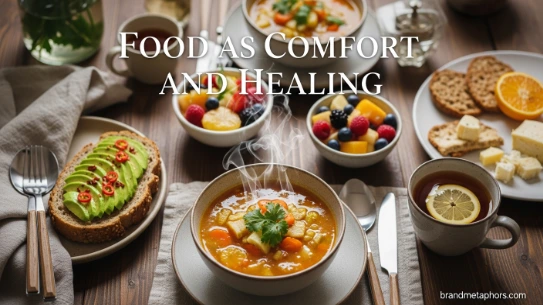
Food is often used as a metaphor for emotional healing and comfort. When life becomes stressful, people say they “need comfort food.” This does not only mean eating—it means finding emotional relief.
Comfort in Difficult Times
Expressions like “food for the soul” or “emotional nourishment” suggest that people need more than physical sustenance. They need care, kindness, and reassurance.
Healing Through Simplicity
A “warm bowl of soup” often represents peace, recovery, and safety. It symbolizes returning to stability after emotional struggle.
Food metaphors in healing contexts remind us that emotional recovery is slow and gentle, much like digestion. It takes time to process difficult experiences, just as the body processes food.
Food as Culture and Identity
Food metaphors are deeply tied to culture and identity. What people eat often reflects who they are, where they come from, and how they live.
Saying someone is “a mix of many spices” might describe a diverse cultural background or personality.
Cultural Expression Through Food
Food becomes a way of expressing heritage. For example, describing a tradition as “rich like a festival feast” connects culture with abundance and celebration.
Identity in Everyday Speech
People may describe themselves as “simple like home-cooked meals” or “bold like spicy street food.” These comparisons reveal personality traits using food imagery.
Meal metaphors in this context help people express identity in a creative and relatable way, connecting personal life with cultural meaning.
Food as Energy and Ambition
Food is often used as a metaphor for motivation, effort, and ambition. Just as food fuels the body, goals and dreams fuel the mind.
Fuel for Success
Phrases like “hungry for success” or “feeding ambition” suggest strong desire and determination. Hunger becomes a symbol of drive and motivation.
Working Through Effort
When someone says “I need to digest this idea,” it means they need time to understand something complex. Similarly, “feeding knowledge” suggests learning and growth.
Meal metaphors in this context highlight the idea that success requires nourishment—not just physical, but mental and emotional energy as well.
Food as Temptation and Excess
Food metaphors are also used to describe temptation, indulgence, and overconsumption in life.
Too Much of a Good Thing
Saying “eyes bigger than your stomach” means wanting more than you can handle. It reflects unrealistic expectations or overconfidence.
Indulgence and Control
Expressions like “biting off more than you can chew” warn against taking on too much. Food becomes a warning symbol for imbalance.
These metaphors remind us that moderation is important, whether in eating, working, or making life decisions.
Food as Memory and Nostalgia
Food is closely linked to memory. Certain smells or tastes can instantly bring back moments from the past.
Emotional Memory Triggers
A simple dish can remind someone of childhood, family gatherings, or special celebrations. Saying “that taste takes me back” shows how food connects to memory.
Nostalgia in Language
Expressions like “a taste of home” represent comfort and emotional connection to the past. Food becomes a time machine for emotions.
These metaphors show how deeply food is tied to personal history and emotional identity.
Food as Communication and Relationships
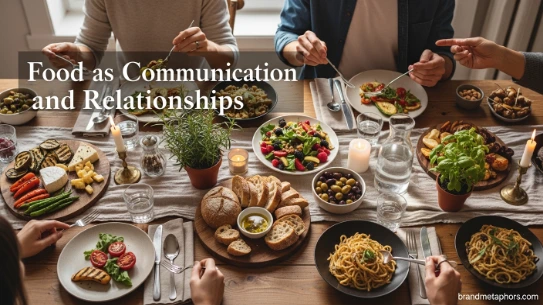
Food often symbolizes communication between people. Sharing food is a universal way of building connection.
Sharing and Bonding
Saying “breaking bread together” means building trust and friendship. Food becomes a symbol of unity.
Social Harmony
When people “sit at the same table,” it suggests equality and understanding. Food metaphors highlight the importance of togetherness in human relationships.
These expressions remind us that relationships often begin with something as simple as sharing a meal.
Food in Literature and Speech
Writers and speakers often use food metaphors to make language more vivid and emotional.
Storytelling Through Taste
Describing words as “spicy,” “sweet,” or “biting” adds emotional flavor to communication. It makes writing more engaging and expressive.
Everyday Speech Patterns
We often say things like “that’s a juicy story” or “she served a cold reply.” These phrases show how deeply food metaphors are embedded in language.
Food imagery helps people understand abstract ideas in a more concrete and sensory way.
Everyday Life Scenarios
Food metaphors appear constantly in daily conversations, often without us noticing.
Work and Stress
People say they have “too much on their plate” when they are busy. This reflects workload as food portions.
Relationships and Emotions
Someone might describe a complicated relationship as “hard to digest,” showing emotional difficulty.
These everyday uses show how natural food metaphors are in human communication.
Lessons We Learn from Food Metaphors
Food metaphors teach us important lessons about life, balance, and emotion.
They show that life is not just logical—it is sensory, emotional, and deeply human. Just like food, experiences can be sweet, bitter, rich, or bland.
They also remind us of balance. Too much or too little of anything can create discomfort, just like in diet or emotions.
Most importantly, food metaphors help us connect. They turn complex feelings into simple images everyone understands.
In learning these expressions, we learn more about how humans think, feel, and communicate.
Conclusion
Food metaphors are more than just language tools—they are reflections of how humans experience life. From sweetness and bitterness to hunger and satisfaction, these expressions turn emotions into something we can taste, imagine, and understand. They appear in love, work, culture, memory, and even stress, shaping the way we communicate every day.
By exploring these metaphors, we see that language is not separate from life—it is deeply connected to it. Food becomes a bridge between physical experience and emotional meaning. It helps us express what is difficult to say directly and makes abstract feelings more relatable.
In the end, understanding food metaphors helps us better understand ourselves and others. Life, much like a meal, is made of many flavors—and each one tells a story worth tasting.
FAQs
What are food metaphors?
Food metaphors are expressions that use food-related words to describe emotions, ideas, or situations in a symbolic way.
Why do we use food metaphors in language?
We use them because food is a universal experience that makes abstract ideas easier to understand and relate to.
What does “too much on my plate” mean?
It means a person has too many responsibilities or tasks to handle at once.
Are food metaphors cultural?
Yes, they often reflect cultural experiences, traditions, and shared ways of life.
What does “sweet life” mean?
It refers to a happy, enjoyable, or successful life experience.
Why are food metaphors powerful in communication?
They connect emotions with sensory experiences, making language more vivid and expressive.
Can food metaphors be used in writing?
Yes, writers use them to make descriptions more engaging, emotional, and relatable.