

Introduction
On a rainy evening, the stadium lights glow like distant stars through the mist. The crowd hums with restless energy, scarves waving, voices rising and falling like waves against the stands. On the pitch, twenty-two players move not just as athletes, but as characters in a living story—each pass, tackle, and sprint carrying emotion, pressure, and hope. Football is never just about scoring goals. It is about meaning, struggle, teamwork, and identity.
This is where metaphors come alive. When we try to understand football, we often compare it to things we already know—war, art, music, or life itself. These metaphors help us feel the game more deeply and explain its complexity in simple ways. They shape how fans see matches, how players understand their roles, and how coaches build strategies.
In this article, we will explore powerful metaphors for football. Each one reveals a different layer of the game, helping us see why football is not only a sport, but also a reflection of human experience.
Football as a Battlefield: The Fight for Glory
Football is often compared to a battlefield because of its intensity, competition, and emotional pressure. Two teams enter the pitch like opposing armies, each with a plan to conquer territory and win victory. Every tackle feels like a clash, every sprint like a charge forward.
But this metaphor is not about violence—it is about struggle. Players fight for space, possession, and control. Defenders stand like shields, blocking attacks. Strikers move like soldiers seeking openings in enemy lines.
The battlefield metaphor also highlights discipline. Just like in war, a single mistake can change everything. A missed pass can feel like a broken defense line. A successful counterattack can feel like a surprise strike.
Yet, unlike real war, football ends in respect. Players shake hands, showing that the “battle” was symbolic. This contrast teaches us something important: competition does not need hatred. It can exist with fairness, passion, and unity after the final whistle.
Football as a Chess Game: Strategy in Motion
Football is also like chess, but faster and more unpredictable. Every player has a role, just like chess pieces. The coach acts like a grandmaster, planning moves before the game even begins.
Midfielders are like queens—flexible and powerful, moving in all directions. Defenders are like rooks, protecting straight paths and holding strong positions. Strikers are like knights, surprising opponents with unexpected movement.
Thinking Several Steps Ahead
In chess, players think ahead. Football works the same way. A pass is not just about the present moment—it is about creating space for the next move. Coaches study opponents like chess players studying openings.
A well-timed pass can open the entire field, just like a chess sacrifice can unlock a winning position. This metaphor shows that football is not only physical but deeply intellectual. It rewards patience, awareness, and planning.
Football as a Symphony: The Music of Movement
Football can feel like music in motion. Each pass, run, and touch creates rhythm. A well-coordinated team moves like an orchestra, where every player has a role in creating harmony.
The defense sets the base rhythm, steady and calm. Midfielders control tempo, speeding up or slowing down the play. Strikers bring the final note—the moment of climax when a goal is scored.
When the Game Becomes Music
In great matches, fans often say, “That was beautiful football.” This beauty comes from coordination, like instruments playing together without missing a beat. One misplaced pass is like a wrong note—it breaks the flow.
This metaphor helps us understand why teamwork matters so much. Football is not about individual noise; it is about collective music. When everything works together, the game becomes art.
Football as Theater: Drama on the Pitch
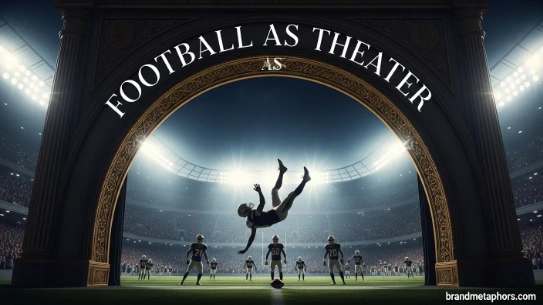
Football is also a stage where drama unfolds. The stadium becomes a theater, and players become actors performing a story written in real time.
There are heroes, villains, surprises, and emotional twists. A last-minute goal feels like a dramatic climax. A penalty miss feels like a tragic moment. Fans experience joy, heartbreak, and suspense like an audience watching a live play.
Unlike scripted theater, football is unpredictable. No one knows the ending. This makes every match exciting, like a story being written as it happens.
The theater metaphor shows that football is not only physical entertainment—it is emotional storytelling. It connects people through shared experiences of tension and release.
Football as a Journey: The Road to Success
Every football match can also be seen as a journey. Players travel across the pitch, facing obstacles and making decisions along the way.
A team’s season is also a journey. There are highs and lows, smooth roads and difficult paths. Injuries, defeats, and victories all become part of the story.
Lessons from the Journey
This metaphor teaches patience. Success does not happen instantly. Teams must grow, learn, and adapt over time. A young player starting their career is like a traveler beginning a long road with many destinations ahead.
The journey metaphor reminds us that football is about progress, not just results.
Football as a Heartbeat: The Pulse of Emotion
Football can feel like a heartbeat—fast, strong, and emotional. The rhythm of the game rises and falls with excitement.
When a team attacks, the heartbeat quickens. When defending, it slows but remains tense. A goal makes the heartbeat explode with joy.
Fans often feel this physically. Their emotions sync with the match. This is why football is so powerful—it connects directly to human feeling.
The heartbeat metaphor shows that football is alive. It is not static; it breathes through every moment of the game.
Football as a School: Learning Through Play
Football is also a classroom without walls. Players learn discipline, teamwork, leadership, and resilience.
Mistakes become lessons. A missed shot teaches timing. A lost match teaches improvement. Coaches act like teachers, guiding players to grow.
What Players Learn
- Teamwork through passing and coordination
- Discipline through training and rules
- Confidence through performance
- Resilience through losses
This metaphor shows that football shapes character. It is not just about winning games but also about building better individuals.
Football as a Storm: Unpredictable Energy
Football can feel like a storm—fast, unpredictable, and powerful. Momentum can change suddenly, just like weather shifts.
A quiet match can suddenly explode into action. A single mistake can create chaos. Rain, wind, and pressure add to the feeling of uncertainty.
This metaphor highlights unpredictability. No team is ever fully safe. Even the strongest side can be shaken by sudden changes.
Football’s storm-like nature is what keeps fans on the edge of their seats.
Football as a Machine: Precision and Efficiency
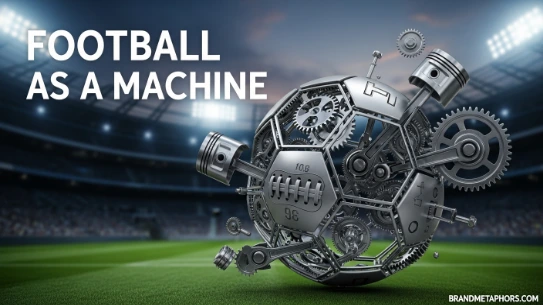
In another sense, football is like a machine. Each player is a part that must function correctly for the system to work.
Defenders build structure. Midfielders connect parts. Strikers finish the system’s output—goals.
When the machine works smoothly, the team performs perfectly. When one part fails, the whole system struggles.
This metaphor shows the importance of coordination and efficiency. Soccer is not random—it is structured movement.
Football as a Dance: Rhythm and Flow
Football also resembles dance. Players move gracefully, changing direction, spinning, and gliding across the field.
The Beauty of Movement
Like dancers, players must understand timing and space. A dribble is like a step in choreography. A pass is like a shared rhythm between partners.
Great teams move in flow, almost like they are rehearsed. This makes football visually beautiful, not just competitive.
The dance metaphor captures elegance, creativity, and freedom in the game.
Football as a Story: Every Match Has a Plot
Each football match is a story with a beginning, middle, and end. There are rising tensions, turning points, and final outcomes.
A team may start weak but grow stronger. Another may dominate early but lose control later. These shifts create a narrative full of emotion.
Fans become readers of this live story, waiting to see how it unfolds.
Soccor as a story reminds us that every match matters, no matter the result.
Football as a Mirror of Society

Football reflects society in many ways. It shows teamwork, conflict, diversity, and unity.
Different cultures, backgrounds, and identities come together on one field. The game becomes a shared language that crosses borders.
It also reflects social values like fairness, competition, and respect.
This metaphor shows that football is more than sport—it is a reflection of human life itself.
Conclusion
Football is not just a game played on grass—it is a world of meaning shaped by powerful metaphors. It can be a battlefield, a chessboard, a symphony, a journey, or even a mirror of society. Each metaphor reveals a different truth about the sport and about life itself.
These comparisons help us understand football not only as competition, but as emotion, strategy, art, and growth. They remind us why millions of people feel deeply connected to the game. Football teaches us about teamwork, patience, struggle, and joy.
At its heart, football is a shared human experience. It speaks a language beyond words, one that connects people through movement, emotion, and story. And through these metaphors, we see that every match is more than ninety minutes—it is a reflection of life in motion.
FAQs
What are metaphors in football?
Metaphors in football are comparisons that explain the game using ideas like war, music, or theater to make it easier to understand and more meaningful.
Why is football compared to war?
Football is compared to war because of its competitive nature, strategy, and intensity, though it is symbolic and non-violent.
How is football like chess?
Football is like chess because both require planning, strategy, and thinking several moves ahead to win.
Why do people say football is like music?
People say this because football has rhythm, flow, and coordination, similar to an orchestra playing in harmony.
What does it mean when football is called a journey?
It means that progress in football happens over time through learning, challenges, and growth.
How is football connected to emotions?
Football strongly affects emotions through excitement, tension, joy, and disappointment during matches.
Can football teach life lessons?
Yes, football teaches teamwork, discipline, patience, resilience, and decision-making skills useful in everyday life.