
Introduction
Imagine walking through a quiet garden just after sunrise. Dew still clings to petals, colors feel softer than usual, and the air carries a light fragrance that seems to slow down time itself. A single flower catches your attention—not because it is the biggest or brightest, but because it feels like it is telling a story without speaking. Why do humans so often compare life, love, pain, and hope to flowers?
Metaphors for flowers are everywhere in language, poetry, and everyday thinking. We say someone is “blooming,” a dream is “growing,” or a moment “wilts” away. These expressions are not random; they reflect how deeply flowers are tied to human emotions and experiences. Flowers represent beauty, fragility, change, and life cycles in a way almost nothing else can. Understanding these metaphors helps us understand ourselves better too. In this article, we will explore how flowers become powerful symbols in language, emotion, relationships, and personal growth—and why these simple natural forms carry such deep meaning in our lives.
1. What Metaphors for Flowers Really Mean
Metaphors for flowers are symbolic expressions where flowers represent human experiences, emotions, or ideas. Instead of describing something directly, we use flowers to make meaning richer and more emotional. For example, saying “she is a blooming flower” suggests growth, beauty, and development.
Flowers are perfect for metaphors because they naturally go through a life cycle—bud, bloom, and decay. This mirrors human life in a simple but powerful way. A bud can represent potential, a blooming flower represents success or joy, and a wilting flower can represent loss or aging.
These metaphors help people express complex feelings in a softer, more relatable way. Instead of saying “I am changing,” someone might say, “I am blooming.” It feels more hopeful and visual. Flowers also carry emotional flexibility—they can represent love, sadness, peace, or even strength depending on context.
In daily life, flower metaphors help us communicate emotions that are difficult to explain directly. They make language more poetic, gentle, and human.
2. Flowers as Symbols of Emotion
Flowers are often used to represent emotions because they visually reflect how feelings grow and change. Just like emotions, flowers are not static—they open, close, and shift with time and conditions.
A red rose may symbolize deep love or passion, while a white lily may represent peace or purity. These emotional associations help people express what they feel without saying too much. Instead of explaining sadness, someone might say their “spirit is wilting like a flower.”
Emotional Blooming
When someone becomes happier or more confident, we may say they are “blooming.” This metaphor suggests emotional awakening and growth.
Emotional Wilting
On the other hand, stress, heartbreak, or disappointment can be described as wilting. It creates a gentle but powerful image of energy fading.
Flowers make emotions easier to understand because they connect feelings with visible natural changes. This is why they appear so often in poetry, therapy language, and personal reflection.
3. Flowers as Metaphors for Love
Love and flowers are deeply connected in metaphorical language. Flowers are often used to describe different stages of love—beginning, growth, and maturity.
Love as a Blooming Flower
At the beginning of love, everything feels fresh and exciting, like a flower just starting to bloom. There is curiosity, hope, and beauty in small moments.
Love as a Garden
A long-term relationship is often compared to a garden. It needs care, attention, patience, and time. Without nurturing, it can fade.
Love as a Wilting Flower
When love is neglected or hurt, it may be described as wilting. This does not always mean the end—it can also suggest the need for healing and care.
Flowers help describe love in a way that feels soft and natural. Instead of being harsh or logical, flower metaphors make love feel alive, growing, and delicate.
4. Flowers and the Cycle of Life
Flowers naturally represent life cycles—birth, growth, and death. This makes them powerful metaphors for human existence.
A seed represents beginning and potential. A bud represents youth or early development. A full bloom represents adulthood, success, or peak life. Finally, a wilting flower represents aging or the end of a cycle.
This cycle is comforting because it shows that change is natural. Nothing stays in bloom forever, and nothing remains a bud forever. Life moves in phases.
People often use flower metaphors to accept change more easily. For example, losing opportunities may be seen as petals falling, not failure. It reminds us that every stage has meaning.
Flowers teach us that life is not about staying the same but about moving through different seasons with grace.
5. Flowers as Symbols of Beauty and Fragility
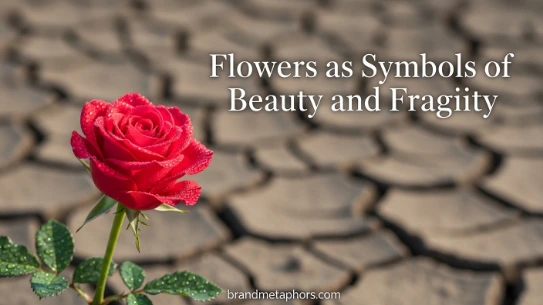
Flowers are admired for their beauty, but they are also fragile. This combination makes them perfect metaphors for delicate things in life.
Beauty can be temporary. A flower may look perfect today and wither tomorrow. This reminds us that beautiful moments in life are often short and should be appreciated.
Fragile Strength
Even though flowers are delicate, they still grow through soil, weather, and seasons. This creates a metaphor for quiet strength—being gentle does not mean being weak.
Human Reflection
People are often compared to flowers when they are emotionally open or vulnerable. It suggests that sensitivity is a form of beauty, not a weakness.
Flowers teach us to respect both beauty and fragility together. They remind us that what is delicate can also be powerful in its own way.
6. Flowers as Growth and Resilience
Flowers also represent growth, especially in difficult environments. A flower pushing through soil is a strong image of resilience.
H3: Growing Through Challenges
Just as flowers grow through cracks in stone or harsh weather, humans also grow through challenges. This metaphor is often used to describe personal development after hardship.
H3: Blooming After Struggle
When someone overcomes difficulties and becomes stronger, they are often described as “blooming after the storm.” This shows recovery and transformation.
Flowers do not rush their growth. They follow natural timing, which teaches patience. Growth is not always visible, but it is always happening beneath the surface.
This metaphor encourages people to trust their process, even when progress feels slow.
7. Flowers in Relationships
Relationships are often compared to flowers because they require care, attention, and time to grow.
A healthy relationship is like a well-tended flower—watered with communication, sunlight of trust, and soil of understanding.
When neglected, relationships can fade like flowers without care. This does not always mean they are beyond repair, but it shows the importance of effort.
Flowers also represent different roles in relationships. One person may be the gardener, while both partners contribute to growth. This metaphor highlights teamwork and balance.
It reminds us that relationships are living things, not fixed structures. They need constant attention to stay healthy and beautiful.
8. Flowers in Grief and Healing
Flowers are often used in times of grief because they represent both life and impermanence.
A wilted flower can symbolize loss, while fresh flowers at a funeral may represent remembrance and respect.
Healing Through Metaphor
Flowers also represent healing. Just as flowers regrow after seasons change, people can recover emotionally over time.
Gentle Acceptance
Flower metaphors help people process grief gently. Instead of focusing on pain directly, they offer a softer way to understand loss as part of a natural cycle.
This makes emotional healing feel less harsh and more natural, like seasons changing in a garden.
9. Cultural Meanings of Flower Metaphors
Different cultures use flowers in unique metaphorical ways. In some cultures, flowers represent honor and celebration, while in others they symbolize purity or remembrance.
For example, in many traditions, lotus flowers represent spiritual growth and rising above difficulties. In Western symbolism, roses often represent romantic love or deep emotion.
These cultural meanings shape how people interpret flower metaphors in language and art.
Even though meanings vary, the core idea remains the same—flowers are connected to human emotions and life experiences across cultures.
This shared symbolism shows how universal flower metaphors really are.
10. Flowers in Literature and Storytelling
Writers often use flowers to add depth to stories. A flower can represent a character’s inner growth, emotional state, or transformation.
A blooming flower in a story might show hope, while a dying flower might show loss or change.
Flowers also help create atmosphere. A garden scene can feel peaceful, romantic, or nostalgic depending on how flowers are described.
In poetry, flowers are especially powerful because they combine visual beauty with emotional meaning. They allow writers to say more with fewer words.
11. Flowers in Everyday Speech
Flower metaphors are not limited to literature—they appear in everyday language too.
We say:
- “She is blooming”
- “That idea is growing”
- “He is a late bloomer”
- “Their love is blossoming”
These expressions make communication more vivid and emotional. Instead of using technical language, flower metaphors make speech feel natural and expressive.
They also help people understand abstract ideas quickly by connecting them with something familiar and visual.
12. How to Use Flower Metaphors in Life and Writing
Using flower metaphors can improve both communication and self-expression. In writing, they make ideas more vivid and emotionally engaging.
H3: In Writing
Writers can use flowers to describe emotions, character development, or life changes. Instead of saying “she changed,” saying “she bloomed into confidence” creates a stronger image.
H3: In Personal Reflection
People can also use flower metaphors to understand their own experiences. Thinking of yourself as “growing like a flower” can encourage patience and self-compassion.
These metaphors are not just artistic—they are practical tools for thinking more deeply about life.
Conclusion
Flowers are more than beautiful parts of nature—they are powerful symbols that help us understand life, emotions, and change. Through metaphors, flowers become reflections of love, growth, fragility, resilience, and healing. They show us that life moves in cycles, and every stage has meaning, whether it is blooming, resting, or fading. By using flower metaphors, we can express complex feelings in a gentle and meaningful way. They remind us to appreciate beauty while it lasts and to trust growth even when it is invisible. In the end, flowers teach us that life, like a garden, is always changing—but always full of meaning.
FAQs
What are metaphors for flowers?
Metaphors for flowers are symbolic expressions where flowers represent emotions, life stages, or ideas like love, growth, and change.
Why are flowers used as metaphors?
Flowers are used because they naturally reflect life cycles—blooming, growing, and wilting—similar to human experiences.
What does “blooming” mean as a metaphor?
“Blooming” means growing, improving, or becoming more confident, often used for personal or emotional development.
What do wilting flowers symbolize?
Wilting flowers often symbolize sadness, loss, aging, or emotional exhaustion.
How are flowers used in love metaphors?
Flowers represent love as something that grows, needs care, and can fade if neglected.
Can flower metaphors help in writing?
Yes, they make writing more vivid, emotional, and relatable by connecting ideas to natural imagery.
What is the main lesson from flower metaphors?
The main lesson is that life is a cycle of growth and change, and every stage has beauty and meaning.