
The Night Anger Spoke in Flames
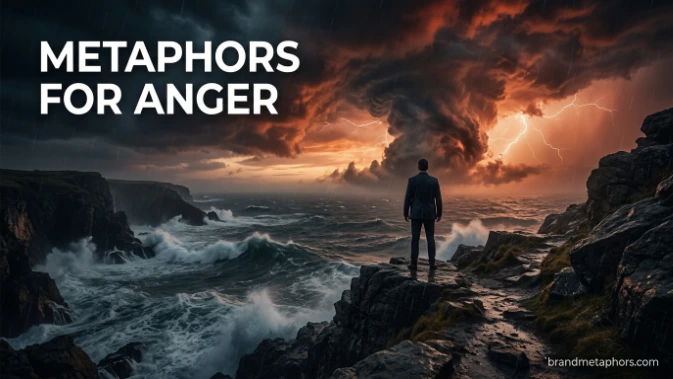
It begins quietly. A tightness in your chest. A flicker behind the ribs, like a match struck in a dark room. Then, suddenly, the heat spreads—your thoughts sharpen, your pulse quickens, and words press urgently against your lips. Anger rarely announces itself politely; it arrives like a storm rolling over a still lake, transforming calm into chaos in seconds.
I remember a moment when a friend’s careless remark ignited something deep inside me. It wasn’t just irritation—it felt like a wildfire leaping from tree to tree, consuming reason. Later, when I tried to describe how I felt, plain words failed. “I was upset” sounded thin, almost dishonest. But when I said, “It felt like a fire had been lit inside me,” people understood instantly.
That’s the power of metaphors.
What Are Metaphors for Anger—and Why Do They Matter?
Metaphors are bridges between emotion and understanding. They take something invisible—like anger—and give it shape, color, and texture. Instead of saying “I’m angry,” you might say, “I’m boiling over,” or “I’m a ticking bomb.” These phrases don’t just describe anger—they make others feel it.
Why is this useful? Because anger is complicated. It can be explosive or quiet, righteous or destructive. Metaphors help us:
- Express emotions more vividly
- Communicate clearly with others
- Process and reflect on our inner world
- Add richness and creativity to writing and speech
In short, metaphors turn raw emotion into meaningful language.
🔥 Fire Metaphors for Anger: When Emotions Burn Bright
Fire is one of the most common and powerful metaphors for anger—and for good reason. It captures both intensity and danger.
Meaning & Explanation
Fire represents anger that grows quickly, spreads uncontrollably, and can destroy if left unchecked.
Example Scenario
“Her words lit a fire in me that I couldn’t put out.”
Alternative Expressions
- “I was burning with rage”
- “My temper flared up”
- “I felt like I was on fire inside”
Sensory Details
Imagine heat rising to your face, your skin flushing, your breath quickening—like standing too close to flames.
Mini Story
Think of a character like a warrior in a heated battle—rage fueling every move, like embers turning into a blazing inferno. In literature, fire often symbolizes both destruction and transformation. Anger, too, can burn away illusions—or burn bridges.
🌊 Storm Metaphors for Anger: The Chaos Within
Anger isn’t always explosive like fire—it can also feel like a storm gathering strength.
Meaning & Explanation
Storm metaphors describe anger as overwhelming, turbulent, and sometimes unpredictable.
Example Scenario
“A storm was brewing inside him, though he hadn’t said a word.”
Alternative Expressions
- “I was a whirlwind of emotions”
- “Thunder was rolling in my chest”
- “My thoughts were crashing like waves”
Sensory Details
Dark clouds, heavy air, the crack of thunder—this metaphor captures both tension and release.
Real-Life Reflection
We’ve all seen someone who looks calm on the surface but is quietly building toward an emotional outburst. Like a storm, anger can build silently before it breaks.
💣 Explosion Metaphors for Anger: When Emotions Detonate
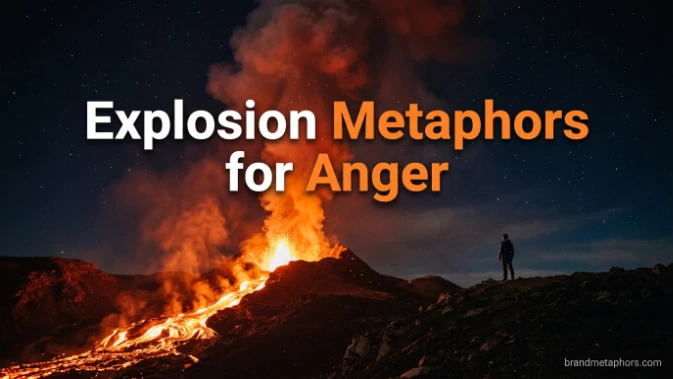
Some anger doesn’t simmer—it erupts.
Meaning & Explanation
Explosion metaphors describe sudden, intense bursts of anger that can’t be contained.
Example Scenario
“He exploded when he heard the news.”
Alternative Expressions
- “I snapped”
- “I blew up”
- “She went off like a bomb”
Emotional Detail
This kind of anger is sharp, loud, and immediate—like pressure building until it can no longer be held.
Cultural Note
In movies and storytelling, explosive anger often marks a turning point—a character can no longer suppress what they feel.
Why Using Metaphors for Anger Improves Communication
When you describe anger metaphorically, you invite others into your experience. Instead of explaining your feelings in abstract terms, you give them something tangible.
Compare:
- “I was very angry.”
- “I felt like a volcano ready to erupt.”
The second sentence paints a picture—it’s unforgettable. Metaphors make your communication more:
- Relatable
- Memorable
- Emotionally impactful
Creative Writing Tips: Crafting Unique Anger Metaphors
Want to create your own metaphors? Here’s how:
1. Start with Sensation
Ask yourself: What does anger feel like in your body? Heat? Pressure? Noise?
2. Connect to Nature or Objects
Think of things that behave similarly—storms, fires, machines, animals.
3. Add Detail
Instead of “a storm,” try “a storm tearing through a quiet village.”
Bonus Tip
Avoid clichés by adding unexpected twists. For example:
- Instead of “boiling,” try “simmering like a forgotten pot about to spill over.”
Mini Storytelling: Anger in Literature and Life
Anger has shaped some of the most memorable moments in storytelling. From heroes seeking justice to characters losing control, it often drives the plot forward.
In everyday life, too, anger can be a catalyst. It can push people to speak up, set boundaries, or demand change. The key lies in how it’s expressed—and metaphors help guide that expression.
Interactive Exercises: Practice Your Anger Metaphors
Exercise 1: Fill in the Blank
Complete this sentence in three different ways: “I felt like ______ when they said that.”
Try using:
- Nature imagery
- Mechanical imagery
- Animal imagery
Exercise 2: Rewrite the Emotion
Turn this plain sentence into something vivid: “I was angry.”
Example: “I was a kettle screaming on the stove, seconds from spilling over.”
Exercise 3: Personal Reflection
Think of a recent moment of anger.
- What did it feel like physically?
- What image matches that feeling?
Write a short paragraph using a metaphor to describe it.
Using Anger Metaphors in Social Media and Daily Life
Metaphors aren’t just for writers—they’re powerful in everyday communication.
On Social Media
Instead of: “Bad day.”
Try: “Today felt like walking through a thunderstorm without shelter.”
In Conversations
Metaphors can soften or clarify emotions: “I’m not mad at you, but I feel like a pressure cooker right now—I need a moment.”
Bonus Tip
Use metaphors to de-escalate as well: “My anger feels like a wave—it’s strong, but it will pass.”
Common Mistakes to Avoid When Using Anger Metaphors
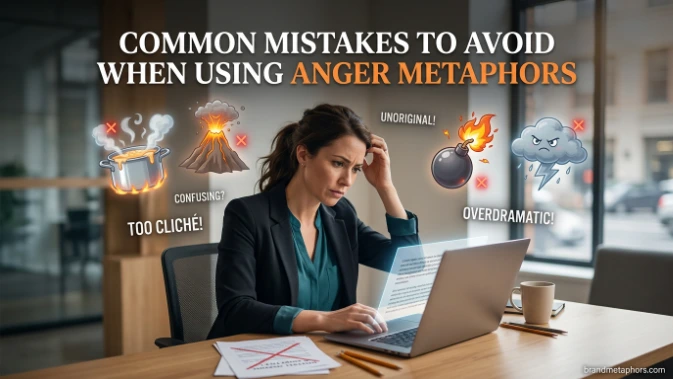
Even powerful tools can be misused.
1. Overusing Clichés
Phrases like “boiling with anger” are effective—but can feel tired if overused.
2. Mixing Metaphors
Avoid confusion like: “I was a storm ready to explode into flames.”
3. Overcomplicating
Clarity matters more than complexity. A simple, strong metaphor beats a confusing one.
Expanding Your Emotional Vocabulary Beyond Anger
Metaphors can help you explore shades of anger:
- Frustration: “like a buzzing fly you can’t swat”
- Resentment: “a slow leak draining your energy”
- Rage: “a wildfire out of control”
The more precise your language, the better you understand yourself.
FAQs About Metaphors for Anger
1. What is a metaphor for anger?
A metaphor for anger is a figurative expression that describes anger by comparing it to something else, like fire, storms, or explosions.
2. Why are metaphors useful for expressing anger?
They make emotions more vivid, relatable, and easier to understand for both the speaker and the listener.
3. Can metaphors help manage anger?
Yes. By describing anger metaphorically, you can create distance from the emotion and better understand it.
4. Are there cultural differences in anger metaphors?
Yes. Different cultures may use different imagery—some may emphasize heat, while others use pressure or movement.
5. How can I create my own metaphors?
Start with how anger feels, then connect it to something in the physical world that behaves similarly.
Conclusion
Anger is one of the most powerful human emotions—raw, immediate, and often overwhelming. But when you give it language—when you shape it into metaphors—you transform it. You make it visible, understandable, even beautiful in its own intense way.
A fire can destroy, but it can also illuminate. A storm can devastate, but it can also clear the air. And anger, when expressed thoughtfully, can lead to clarity, connection, and change.
So the next time anger rises in you, pause for a moment. Ask yourself: What does this feel like?
Then give it a shape. A sound. A story.
Because sometimes, the difference between chaos and clarity… is just a metaphor away.