

The stadium hums before the whistle—like a storm gathering breath. Cleats scrape against grass, the ball rests at midfield like a quiet secret, and thousands of hearts beat in anticipation.
Then, a sharp blow of the whistle slices the tension, and suddenly the game becomes more than movement—it becomes a story unfolding in real time.
Soccer, often called the beautiful game, is already rich with emotion, rhythm, and drama. But when we layer it with metaphors, something magical happens. The game transforms into language—alive, expressive, and deeply human.
Whether you’re a writer, a fan, or someone looking to sharpen creative expression, metaphors for soccer offer a powerful way to capture its spirit.
In this article, we’ll explore how metaphors can deepen your understanding and storytelling of soccer, provide vivid examples you can use, and offer practical exercises to help you craft your own. Along the way, we’ll weave in storytelling, cultural insights, and creative inspiration.
Why Use Metaphors for Soccer in Writing and Expression?
Soccer is fast, emotional, and layered with meaning. But describing it literally can sometimes fall flat. Metaphors help bridge the gap between action and emotion. They allow you to feel the game, not just see it.
Think about it: saying “he scored a goal” tells us what happened. But saying “he pierced the net like lightning breaking the sky” makes us experience it.
Metaphors:
- Add vivid imagery and emotional depth
- Make storytelling more engaging and memorable
- Help readers connect with abstract ideas through familiar experiences
- Elevate commentary, essays, and even casual conversations
From sports journalism to poetry, metaphors turn soccer into something bigger—a reflection of life, struggle, teamwork, and triumph.
Soccer as a Battlefield: Strategy, Conflict, and Victory
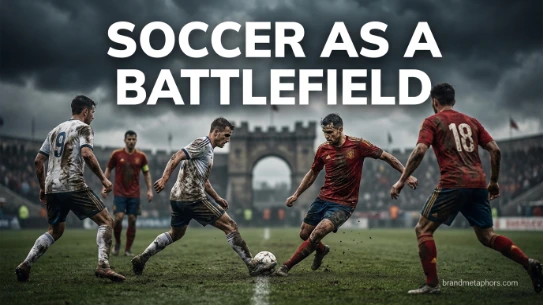
One of the most powerful and widely used metaphors is comparing soccer to a battlefield. The pitch becomes a war zone, players transform into warriors, and every pass feels like a tactical move in a larger strategy.
Meaning and Explanation
This metaphor emphasizes competition, tension, and strategy. Just like in battle, teams must plan, adapt, and respond quickly to the opponent’s moves. Every decision matters.
Example Scenario
“The midfield turned into a battlefield, with players clashing like armored knights, each fighting for control of the ball.”
Alternative Expressions
- The pitch is a chessboard of war
- Players are soldiers executing a tactical mission
- The coach is a general guiding troops into victory
Sensory and Emotional Details
Imagine the thud of bodies colliding, the sharp commands shouted across the field, the roar of the crowd echoing like distant thunder. There’s urgency, intensity, and a sense of high stakes.
Mini Storytelling Element
In a tense final match, a team down by one goal fights back relentlessly. Every tackle feels like resistance against defeat. When they finally score, it’s not just a goal—it’s a hard-won victory after a long battle.
Soccer as a Dance: Rhythm, Grace, and Fluid Movement
Not all soccer metaphors are about conflict. Some highlight beauty, flow, and harmony. Comparing soccer to a dance captures the elegance of movement and coordination between players.
Meaning and Explanation
This metaphor focuses on teamwork, timing, and grace. Just like dancers, players must move in sync, anticipate each other, and create something beautiful together.
Example Scenario
“The forwards moved like dancers in perfect rhythm, weaving through defenders with effortless grace.”
Alternative Expressions
- The game is a choreographed performance
- Passing is a flowing dance of connection
- Players glide like performers on a stage
Sensory and Emotional Details
Picture the smooth roll of the ball, the subtle shifts in direction, the almost silent understanding between teammates. It feels light, fluid, and mesmerizing.
Cultural Reference
In many cultures, dance is a form of storytelling. Similarly, soccer can tell stories without words—stories of unity, passion, and creativity.
Real-Life Touch
Think of moments when a team strings together multiple passes seamlessly. The crowd gasps—not because of aggression, but because of beauty.
Soccer as Life: Growth, Failure, and Resilience
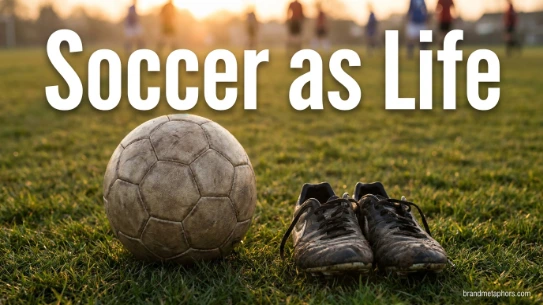
Perhaps the most meaningful metaphor is seeing soccer as a reflection of life itself. Wins and losses mirror our own journeys, and every match becomes a lesson.
Meaning and Explanation
This metaphor connects the game to personal experiences—struggle, perseverance, teamwork, and growth. It reminds us that soccer is not just a sport, but a mirror of human existence.
Example Scenario
“The match was like life—full of missed chances, unexpected turns, and one moment of brilliance that changed everything.”
Alternative Expressions
- The pitch is a journey through life
- Each half represents a chapter
- Goals are dreams realized after effort
Sensory and Emotional Details
Feel the disappointment of a missed shot, the hope of a comeback, the joy of a last-minute goal. These emotions are universal.
Mini Storytelling Element
A young player misses an easy chance and feels crushed. But later, they assist the winning goal. It becomes a lesson in resilience—just like life, where failure often leads to growth.
Interactive Exercises: Practice Creating Soccer Metaphors
Ready to try your own? Here are some creative prompts to help you build your metaphor skills:
Exercise 1: Transform a Simple Sentence
Take a basic sentence like:
- “He kicked the ball into the goal.”
Now rewrite it using a metaphor:
- “He launched the ball like an arrow finding its target.”
Try creating 3 variations with different themes (nature, music, war, etc.).
Exercise 2: Match Emotions with Metaphors
Pick an emotion and connect it to a soccer moment:
- Joy → “The goal exploded like fireworks in the night sky.”
- Frustration → “The missed shot hung in the air like a broken promise.”
Create at least 5 emotional metaphors.
Exercise 3: Build a Story Using One Central Metaphor
Choose one metaphor (e.g., soccer as a storm) and write a short paragraph:
- The game builds like dark clouds
- Passes become gusts of wind
- The final goal becomes a thunderclap
This helps maintain consistency and depth in writing.
Bonus Tips: Using Soccer Metaphors in Writing, Social Media, and Daily Life
Metaphors aren’t just for essays—they can enhance everyday communication.
Writing
- Use metaphors sparingly but effectively—too many can overwhelm
- Match the metaphor to the tone (dramatic, poetic, analytical)
- Keep imagery consistent within a piece
Social Media
- Short, punchy metaphors work best
- Example: “That goal hit like lightning ⚡”
- Use visuals (photos/videos) to reinforce imagery
Daily Conversations
- Add flair to sports discussions
- Instead of “great pass,” say “that pass sliced through the defense like a blade”
The Emotional Power of Soccer Metaphors
At its core, soccer is more than a game—it’s a shared human experience. Metaphors help us translate that experience into words that resonate.
They allow us to:
- Capture fleeting moments
- Express deep emotions
- Connect with others across cultures
Whether you’re describing a last-minute goal or reflecting on a tough loss, the right metaphor can turn a simple moment into something unforgettable.
FAQs
What are metaphors for soccer?
Metaphors for soccer are creative comparisons that describe the game using imagery from other areas like war, dance, or life to add depth and emotion.
Why are metaphors important in sports writing?
They make descriptions more vivid, engaging, and memorable, helping readers feel the action rather than just understand it.
Can beginners use soccer metaphors effectively?
Yes, starting with simple comparisons and practicing regularly can quickly improve your ability to create strong metaphors.
How do I avoid overusing metaphors?
Use them selectively and ensure they fit the context. Too many metaphors can confuse readers instead of enhancing clarity.
Are soccer metaphors useful outside writing?
Absolutely. They can enrich conversations, social media posts, speeches, and even teaching moments.
Conclusion
Soccer is already a language of movement, emotion, and connection—but metaphors give it a voice. They transform passes into poetry, goals into lightning, and matches into stories that linger long after the final whistle.
By learning to craft and use metaphors for soccer, you’re not just improving your writing—you’re learning to see the game differently. More vividly deeply humanly.
So next time you watch a match, don’t just follow the ball. Listen for the story. Feel the rhythm. And maybe, just maybe, you’ll find a metaphor waiting to be born.