

A smile is a small thing on the surface—just a curve of lips, a brief lift of expression—but in reality, it often carries entire worlds inside it.
Think of the last time someone smiled at you unexpectedly: maybe a stranger on a crowded street, a friend after a long silence, or a child laughing at something only they understood. That moment probably lingered longer than it should have, like a warm echo in memory.
Because a smile is never just a smile.
Writers, poets, and storytellers across cultures have always struggled with one simple challenge: how do you describe something so universal, yet so emotionally layered? The answer often comes through metaphors for smiles—creative comparisons that transform a simple expression into something vivid, symbolic, and alive.
In this article, we’ll explore powerful metaphors for smiles, why they matter in writing and communication, and how you can use them to enrich storytelling, social media captions, and even everyday conversation. You’ll also find practical exercises, sensory details, and creative prompts to help you make these metaphors your own.
Why Metaphors for Smiles Matter in Writing and Communication
A smile is easy to recognize but hard to describe well. Saying “she smiled” tells us what happened, but not how it felt. Was it shy? Radiant? Hesitant? Hidden? A metaphor fills that gap.
Metaphors for smiles help us:
- Add emotional depth to writing
- Create vivid mental imagery
- Strengthen storytelling and character development
- Make everyday language more expressive
- Connect readers emotionally to moments and characters
In literature, a smile often becomes a symbol—of hope, secrecy, love, or even sorrow. That’s the power of metaphor: it turns observation into emotion.
Now, let’s explore three rich and expressive metaphors for smiles that you can use and adapt.
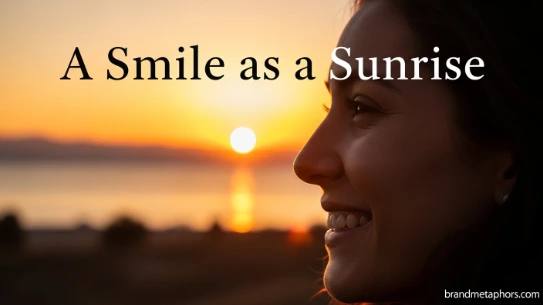
1. A Smile as a Sunrise: The Beginning of Warmth
Meaning and Explanation
A smile compared to a sunrise suggests something gentle, hopeful, and life-giving. Just as the sun slowly breaks through darkness, a smile can bring light into emotional shadows—whether it’s sadness, tension, or silence.
This metaphor works especially well when describing smiles that feel comforting, healing, or quietly powerful.
Example Sentence or Scenario
“Her smile rose like a sunrise, slowly dissolving the cold silence between them.”
Or: “When he smiled, it was like morning spilling into a dark room.”
Alternative Ways to Express It
- A smile like dawn breaking
- A smile like first light on a quiet sea
- A smile that warms like morning sun
Sensory and Emotional Details
Imagine soft golden light touching your face after a long night. That’s what this smile feels like—warm, gradual, and deeply reassuring. It doesn’t overwhelm; it gently transforms the atmosphere.
Mini Storytelling Moment
In many classic coming-of-age stories, a mentor’s smile often functions like a sunrise. Think of a teacher encouraging a struggling student, or a parent offering silent reassurance. The smile doesn’t solve everything—but it changes the emotional temperature of the room.
Creative Prompt
Write a short scene where a character enters a stressful situation, and someone’s “sunrise smile” changes their decision or mood. Focus on how the environment shifts emotionally.
2. A Smile as a Bridge: Connecting Hearts Across Distance
Meaning and Explanation
A bridge connects two separate places. Similarly, a smile often connects two people—emotionally, socially, or even culturally. This metaphor works well for describing reconciliation, empathy, or unexpected connection.
A bridge-smile suggests that distance (emotional or physical) is being crossed.
Example Sentence or Scenario
“His smile was a bridge thrown across years of silence.”
Or: “Between strangers on a train, a small smile became a bridge of understanding.”
Alternative Ways to Express It
- A smile like a handshake of the soul
- A smile that shortens distance
- A smile like a rope stretched across loneliness
Sensory and Emotional Details
A bridge carries tension, balance, and trust. Likewise, this smile feels like a moment of emotional risk—an offering. It might be tentative at first, but once received, it creates connection.
Mini Storytelling Moment
In many travel stories, especially those involving strangers, a simple smile can dissolve language barriers. A tourist lost in a foreign city smiles nervously at a local, and suddenly help arrives. No words needed—the bridge is built in seconds.
Creative Prompt
Think of a situation where two characters are in conflict or emotional distance. Write how a single smile becomes the “bridge” that changes their interaction.
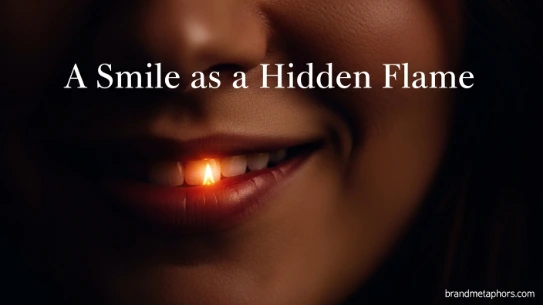
3. A Smile as a Hidden Flame: Quiet but Powerful Emotion
Meaning and Explanation
A hidden flame metaphor suggests intensity beneath restraint. This type of smile is not loud or obvious—it is subtle, perhaps even secretive. It may suggest love, mystery, confidence, or emotional depth.
It is especially powerful in romantic or psychological writing.
Example Sentence or Scenario
“A faint smile flickered on her lips like a hidden flame refusing to go out.”
Or: “His smile wasn’t open—it was a flame tucked carefully behind his eyes.”
Alternative Ways to Express It
- A smile like embers under ash
- A smile that burns quietly
- A smile like candlelight behind a curtain
Sensory and Emotional Details
Imagine warmth that you can’t see directly but can feel nearby. This smile creates curiosity. It invites interpretation rather than giving answers. It can feel intimate, private, or even dangerous depending on context.
Mini Storytelling Moment
In mystery novels or emotional dramas, characters often wear “hidden flame” smiles when they know more than they reveal. It creates suspense: what are they thinking? What are they hiding?
Creative Prompt
Write a dialogue where one character misinterprets a “hidden flame smile.” Show how that misunderstanding changes the scene.
Interactive Exercises: Practice Writing Metaphors for Smiles
To make these metaphors part of your creative toolkit, try the following exercises:
Exercise 1: Everyday Observation
Look at people around you (in real life or memory). Describe three different smiles using metaphors:
- One comforting smile
- One mysterious smile
- One joyful smile
Exercise 2: Object Comparison Game
Choose random objects and turn them into smile metaphors:
- A cup of tea
- A broken mirror
- A flying kite Then connect each object to a type of smile.
Exercise 3: Emotional Rewrite
Take this simple sentence: “She smiled at him.”
Rewrite it using metaphors:
- Sunrise smile version
- Bridge smile version
- Hidden flame smile version
Compare how each version changes emotional meaning.
Bonus Tips: Using Smile Metaphors in Writing, Social Media, and Daily Life

1. In Creative Writing
Use metaphors sparingly but intentionally. A single well-placed smile metaphor can define a character’s emotional presence in a scene.
2. In Social Media Captions
Instead of writing “beautiful smile,” try:
- “A sunrise caught in human form.”
- “A bridge between silence and laughter.” These stand out more and feel poetic.
3. In Personal Journaling
Describe your own emotional experiences through smile metaphors. It helps you process feelings more creatively.
4. In Conversations (Subtly)
While speaking, metaphors can enrich storytelling:
- “She had this sunrise kind of smile—it just changed the room.”
Cultural and Literary Reflections on Smiles
Across literature, smiles have carried deep symbolic weight. In classic poetry, smiles often represent innocence or hidden sorrow. In modern films, a smile can signal transformation, forgiveness, or even deception.
For example:
- In romantic literature, a smile often becomes the first “language” between lovers.
- In psychological thrillers, a smile can hide truth or intention.
- In children’s stories, smiles are often magical symbols of safety and trust.
This shows that a smile is never just physical—it is narrative energy.
Conclusion
A smile may last only a second in real life, but through metaphor, it can last forever in writing. Whether it is a sunrise that warms a silent room, a bridge that connects distant hearts, or a hidden flame flickering beneath calm expression, each metaphor gives us a different lens to understand human emotion.
When you learn to describe smiles creatively, you are not just improving your vocabulary—you are learning to see people more deeply. You begin to notice not just that someone smiled, but how they did, why they did, and what it meant beneath the surface.
And that is where writing becomes powerful: not in describing what is visible, but in revealing what is felt.
FAQs About Metaphors for Smiles
What is a metaphor for a smile?
A metaphor for a smile is a creative comparison that describes a smile as something else, like a sunrise, bridge, or flame, to express emotion more vividly.
Why are metaphors for smiles important in writing?
They help writers add emotional depth, create imagery, and make characters and scenes more engaging and relatable.
Can I use smile metaphors in everyday speech?
Yes, but sparingly. They work best in storytelling, casual poetic expressions, or when you want to emphasize emotion.
What are some common smile metaphors?
Common ones include “sunrise,” “light,” “bridge,” “flower blooming,” and “hidden flame.”
How do I create my own metaphor for a smile?
Think about how the smile feels emotionally, then compare it to something with a similar feeling—light, movement, warmth, or connection.
Are smile metaphors used in literature?
Yes, many poets and authors use them to symbolize emotions like love, hope, secrecy, or transformation.