
A smile can arrive quietly, like sunlight slipping through a curtain, or burst into a room like a sudden spark of joy. I once saw an elderly man sitting alone at a bus stop, his face lined with years of stories. A little child walked by, tripped, and then laughed at herself.
The man smiled—not loudly, not dramatically—but in a way that softened everything around him. In that moment, his smile felt like a warm blanket wrapped around a cold morning.
That’s the magic of a smile: it’s more than just a facial expression. It’s a symbol, a signal, a story. And metaphors help us capture that magic in words.
In this article, we’ll explore metaphors for smile—what they mean, how to use them effectively, and why they matter in writing, storytelling, and everyday communication. You’ll also find creative exercises, storytelling elements, and practical tips to help you bring your words to life.
What Are Metaphors for Smile and Why Do They Matter?
A metaphor compares one thing to another to create deeper meaning or imagery. When you describe a smile metaphorically, you’re not just saying someone smiled—you’re showing how it felt, what it meant, and how it changed the moment.
Instead of writing:
- “She smiled.”
You might write:
- “Her smile was a sunrise breaking through a long night.”
Now the reader feels something. That’s the power of metaphor.
Why Use Smile Metaphors?
- They make writing more vivid and memorable
- They evoke emotions and sensory experiences
- They help readers connect with characters or situations
- They add creativity and originality to your voice
From poetry to social media captions, metaphors for smiles can transform ordinary language into something unforgettable.
3 Powerful Metaphors for Smile (With Meaning & Examples)
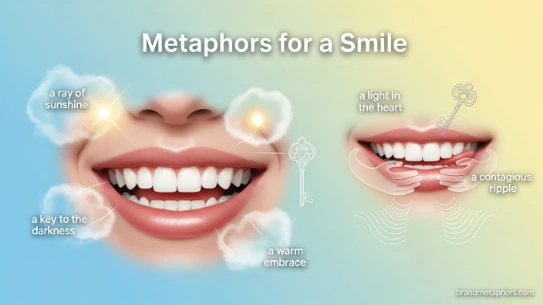
1. Smile as Sunshine
Meaning/Explanation: This metaphor suggests warmth, brightness, and positivity. A smile like sunshine can uplift others and change the emotional atmosphere.
Example Scenario: After a stressful meeting, your colleague walks in and smiles warmly—it instantly lightens the mood.
Example Sentence: “Her smile was sunshine, melting away the frost of my worries.”
Alternative Ways to Express It:
- “His grin lit the room like morning light.”
- “Her smile glowed like a summer day.”
Sensory/Emotional Details: Think warmth on your skin, golden light, the feeling of relief after darkness.
Mini Storytelling Touch: In many cultures, sunlight symbolizes hope and renewal. Just like dawn after a storm, a smile can signal emotional healing.
2. Smile as a Key
Meaning/Explanation: A smile can unlock emotions, relationships, and opportunities. It represents access and connection.
Example Scenario: You’re meeting someone new, feeling nervous—but their gentle smile instantly puts you at ease.
Example Sentence: “His smile was a key, unlocking doors I didn’t know existed.”
Alternative Ways to Express It:
- “Her grin opened hearts like a master key.”
- “His smile broke down walls without a word.”
Sensory/Emotional Details: A soft click of a lock opening, tension dissolving, a sense of invitation.
Real-Life Insight: Studies in psychology suggest that smiling can trigger trust and empathy—almost like opening a door between people.
3. Smile as a Spark
Meaning/Explanation: This metaphor emphasizes energy, excitement, and the beginning of something new—like love, inspiration, or joy.
Example Scenario: You meet someone unexpectedly, and their smile ignites a connection.
Example Sentence: “Her smile was a spark, setting my heart quietly on fire.”
Alternative Ways to Express It:
- “His grin flickered like the start of a flame.”
- “Her smile ignited the room with energy.”
Sensory/Emotional Details: A flicker of light, warmth spreading, anticipation building.
Cultural/Literary Reference: In literature, sparks often symbolize beginnings—of revolutions, romances, or ideas. A smile can carry that same potential.
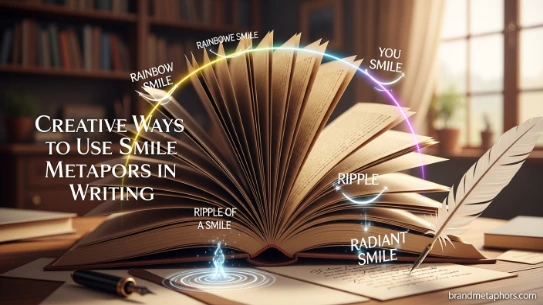
Creative Ways to Use Smile Metaphors in Writing
Use Context to Deepen Meaning
A smile in a joyful setting feels different from a smile in sadness. Match your metaphor to the mood.
- Sad context: “Her smile was a fragile candle in the wind.”
- Happy context: “His smile danced like sunlight on water.”
Mix Metaphors with Emotion
Don’t just describe the smile—describe its impact.
- “Her smile wrapped around me like a familiar song.”
Avoid Overused Comparisons
Instead of always using “sunshine,” experiment with unique imagery:
- Nature: “a blooming flower”
- Objects: “a hidden treasure”
- Abstract ideas: “a quiet promise”
Interactive Exercises: Practice Metaphors for Smile
Exercise 1: Complete the Metaphor
Fill in the blanks creatively:
- “Her smile was like ______ on a rainy day.”
- “His grin felt like ______ in a silent room.”
Exercise 2: Emotion-Based Metaphors
Write one metaphor for each emotion:
- A sad smile:
- A mischievous smile:
- A romantic smile:
Exercise 3: Sensory Writing Prompt
Describe a smile using at least two senses (sight, sound, touch, etc.).
Example: “Her smile shimmered like silver bells, soft and bright against the quiet evening.”
Bonus Tips: Using Smile Metaphors in Daily Life
Writing
- Use metaphors to reveal character personality
- Keep them fresh and relevant to your theme
- Avoid clichés unless you add a twist
Social Media
- Make captions stand out:
- “Smiling like sunshine after the storm 🌤️”
- Pair metaphors with visuals for stronger impact
Conversations
- Metaphors can make compliments more meaningful:
- “Your smile is like a calm place in a busy world.”
Expanding Your Metaphor Toolbox
Here are a few more metaphor ideas for smiles:
- A smile as music: “Her smile played like a soft melody.”
- A smile as a bridge: “His grin connected strangers instantly.”
- A smile as a secret: “Her smile hinted at untold stories.”
- A smile as a mirror: “His smile reflected the joy around him.”
Try combining ideas:
- “Her smile was a spark of sunshine, bright and contagious.”
Common Mistakes to Avoid
Overloading with Metaphors
Too many metaphors can overwhelm readers. Use them selectively.
Mixing Incompatible Images
Avoid confusing combinations:
- ❌ “Her smile was sunshine and thunder and ice”
- ✅ Keep imagery consistent
Ignoring Tone
Match your metaphor to the mood of your writing.
FAQs About Metaphors for Smile
What is a metaphor for a smile?
A metaphor for a smile is a creative comparison that describes a smile using imagery, such as “a smile is sunshine” or “a smile is a spark.”
Why are smile metaphors important in writing?
They add emotional depth, vivid imagery, and help readers connect with the message or character.
Can I use smile metaphors in everyday speech?
Yes, simple metaphors can make compliments and conversations more engaging and memorable.
How do I create unique smile metaphors?
Think about emotions, senses, and situations. Combine them creatively instead of relying on common phrases.
Are smile metaphors useful for social media content?
Absolutely. They make captions more expressive, relatable, and visually appealing.
Conclusion
A smile may last only a second, but its impact can linger far longer. Through metaphors, we capture that fleeting magic and give it shape, color, and meaning. Whether it’s sunshine breaking through clouds, a key unlocking hearts, or a spark igniting connection, each metaphor reveals a different side of something beautifully human.
The next time you notice a smile—your own or someone else’s—pause and ask yourself: What does it feel like? What does it remind me of? Then turn that answer into words.
Because sometimes, the right metaphor doesn’t just describe a smile—it becomes one.