
Introduction
A wedding ring may look like a simple circle of metal, but for many people, it holds a lifetime of stories, struggles, laughter, and quiet understanding. Imagine a couple sitting together after a long day, not speaking much, but still feeling connected in a way words cannot fully explain.
Marriage often lives in these small, ordinary moments rather than grand events. It is both beautiful and challenging, steady yet always changing.
This is why people use metaphors for marriage. A metaphor helps us understand something complex by comparing it to something familiar. Marriage can feel like a journey, a garden, a bridge, or even a dance.
Each image reveals a different truth about love, trust, patience, and growth. These comparisons matter because they help couples reflect on their relationship in deeper ways and understand what it truly takes to stay connected over time. Wedding is not just a legal or social bond—it is a living experience that grows and shifts with every shared day.
Marriage as a Shared Meaning of Life
Marriage is often described through metaphors because it is not one simple experience. It is a blend of emotions, choices, and shared responsibility. When people try to define it, they often turn to images that feel familiar. At its core, marriage is about two lives becoming deeply connected while still remaining individual.
One way to understand marriage is to see it as a mirror. It reflects both the best and most difficult parts of each person. In this reflection, partners see not only love but also patience, frustration, growth, and change. Another way is to think of it as a long conversation that never fully ends. Even in silence, something is being communicated—care, understanding, or sometimes distance that needs attention.
Marriage metaphors are important because they help people express feelings that are hard to explain directly. Instead of saying “marriage is hard,” a person might say, “it is like learning a new language.” This gives shape to emotion. It makes experience easier to understand and share. Through metaphors, marriage becomes less abstract and more human, grounded in everyday life and relatable meaning.
Marriage as a Bridge Between Two Lives

Marriage is often seen as a bridge that connects two separate worlds. Before marriage, each person has their own habits, dreams, and ways of thinking. After marriage, these two paths begin to meet in the middle. The bridge does not erase individuality; instead, it allows safe movement between two lives.
Strength and Maintenance of the Bridge
A bridge must be strong enough to hold weight, just like a marriage must support emotional pressure. Trust, communication, and respect act like the steel cables that keep it stable. If one side weakens, the whole structure can feel unsafe. Couples who maintain their “bridge” regularly—through honest conversations and shared effort—tend to stay connected even during difficult times.
Crossing Daily Challenges
Every disagreement or misunderstanding is like weather passing over the bridge. Some days are calm, while others bring strong winds. What matters is not avoiding storms but learning how to stand firm together while they pass. Over time, couples learn where the weak points are and strengthen them.
A marriage-bridge metaphor reminds us that connection is not automatic. It is built step by step, supported by care and intention from both sides.
Marriage as a Garden That Needs Care
Marriage is often compared to a garden because it grows slowly and requires constant attention. At the beginning, everything feels fresh and full of potential. But just like plants, relationships need watering, sunlight, and care to stay healthy.
Planting Seeds of Trust
In the early stages, couples plant seeds of trust, respect, and shared dreams. These seeds do not grow overnight. They need time, patience, and consistent effort. Small actions like listening or helping each other become the water that feeds the garden.
Weeds and Challenges
Every garden also grows weeds. In marriage, these can be misunderstandings, stress, or outside pressure. If ignored, they can take over. But if handled early, they do not harm the deeper roots of the relationship.
Seasonal Growth
Marriage also has seasons. There are times of bloom when everything feels easy and joyful. There are also dry seasons when effort feels harder. A healthy marriage does not avoid these changes; it adapts to them. Couples who understand this metaphor are more likely to stay patient during difficult times, knowing that growth is still happening even when it is not visible.
Marriage as a Long Journey
Marriage is often described as a journey because it unfolds over time. It is not a fixed destination but a shared path with many turns, stops, and unexpected moments. Two people walk side by side, learning as they go.
At the start of the journey, everything feels exciting. There is curiosity about the road ahead. But as time passes, the journey includes both smooth roads and rough terrain. Couples may face decisions about direction, speed, or even rest stops. What matters is not how fast they move, but whether they stay together along the way.
This metaphor also highlights the importance of companionship. A journey becomes meaningful not just because of the places visited, but because of who is walking beside you. In marriage, support during difficult stretches can matter more than perfect harmony.
Sometimes, the path is unclear. Couples must decide together whether to turn left, right, or continue forward. These choices shape the relationship deeply. The journey metaphor reminds us that marriage is about movement, growth, and shared discovery rather than perfection or certainty.
Marriage as a House Built Over Time
Marriage is often compared to building a house because it requires a strong foundation and careful construction. A house does not appear overnight; it is created step by step with planning and effort.
The foundation represents trust and respect. Without a strong base, even beautiful walls cannot stand for long. Every conversation, decision, and shared experience adds another layer to the structure. Over time, rooms are built for comfort, safety, and emotional connection.
Walls of Communication
Communication acts like the walls that define space. It creates boundaries that protect the relationship from misunderstanding. Without clear communication, the structure can feel unstable.
Roof of Protection
The roof symbolizes protection from outside pressures such as stress, financial worries, or social expectations. It shields the relationship so that the inside remains safe.
A marriage-house metaphor shows that love alone is not enough. A strong relationship requires ongoing effort, repair, and care. Just like a home, it becomes more meaningful the longer it is lived in and maintained.
Marriage as a Dance of Two Partners
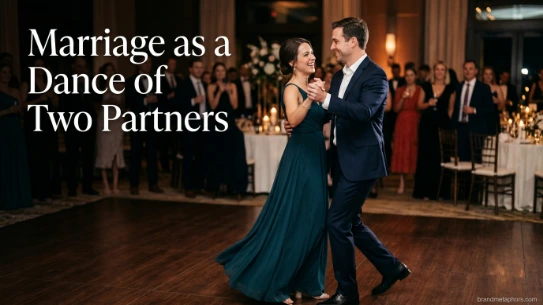
Marriage can also be seen as a dance where two people move together in rhythm. Sometimes one leads, sometimes the other follows. The beauty of the dance lies in coordination, not control.
In the beginning, couples may step on each other’s toes as they learn the rhythm. Over time, they begin to understand each other’s timing and movement. This creates harmony, even without words.
Learning Rhythm Together
Every couple has their own rhythm. Some move quickly through decisions, while others prefer slow and careful steps. The key is not to match perfectly but to adapt to each other’s flow.
Balance and Flexibility
A good dance requires balance. If one person pulls too strongly, the movement becomes uneven. Flexibility helps both partners adjust without losing connection.
The dance metaphor shows that marriage is not about domination or perfection. It is about flow, timing, and mutual awareness. When both partners stay attentive, the dance becomes smooth and meaningful, even during complex moments.
Marriage as a Team Effort
Marriage is often compared to a team because both partners work toward shared goals. Like teammates, they support each other, divide responsibilities, and celebrate successes together.
In a strong team, each person has strengths. One may be better at planning, while the other handles emotional support. When these strengths combine, the relationship becomes more balanced and effective.
Communication in a Team
Teams succeed when communication is clear. Misunderstandings can weaken performance. In marriage, open dialogue helps prevent confusion and builds trust.
Handling Wins and Losses
Every team faces victories and failures. In marriage, success should be shared, and challenges should be faced together. Blaming each other only weakens the bond, while support strengthens it.
The team metaphor reminds us that marriage is not about competing against each other. It is about working together toward a shared life, where both partners contribute equally in their own way.
Marriage as Changing Weather and Seasons
Marriage can also be understood through the metaphor of weather and seasons. Just like nature, relationships change over time. There are sunny days filled with joy, rainy days filled with emotion, and cold seasons that feel distant.
Sunny Periods
Sunny times represent happiness, laughter, and emotional closeness. These moments feel warm and comforting, strengthening the bond between partners.
Rainy and Stormy Phases
Rainy days symbolize conflict or stress. While uncomfortable, they are necessary for emotional cleansing and growth. Storms may shake the relationship, but they also reveal its strength.
Winter and Reflection
Cold seasons represent emotional distance or silence. These periods can feel difficult, but they also allow reflection and healing.
The weather metaphor teaches that change is natural. No relationship stays in one condition forever. Understanding this helps couples accept ups and downs without fear, knowing that every season has its purpose.
Marriage as Cooking a Shared Recipe
Marriage can be compared to cooking a recipe that requires time, ingredients, and patience. Two people bring different “flavors” into the relationship, creating something unique together.
The ingredients represent qualities like love, respect, humor, and patience. When combined in the right way, they create emotional nourishment. But if one ingredient is missing or overused, the balance can change.
Cooking also requires timing. Some moments need slow simmering, while others require quick action. Similarly, marriage requires knowing when to act and when to wait.
Mistakes in cooking are common, just like misunderstandings in marriage. However, with adjustment and learning, the recipe improves over time. This metaphor shows that relationships are not static—they are always being adjusted, tasted, and refined.
Marriage as Fire That Needs Balance
Fire is a powerful metaphor for marriage. It represents warmth, passion, and energy. At the start of a relationship, the fire burns brightly with excitement and strong emotion.
However, fire must be balanced. If it burns too strongly, it can become overwhelming. If it is not cared for, it may fade. Marriage requires attention to keep the emotional “fire” steady and healthy.
Small actions like kindness, attention, and appreciation act like fuel. Neglect or misunderstanding can reduce the flame. The fire metaphor teaches that passion in marriage is not permanent unless it is nurtured regularly.
Marriage as an Ocean of Depth and Change

Marriage can also be seen as an ocean—deep, wide, and constantly moving. On the surface, it may seem calm, but beneath lies depth filled with emotion, memory, and experience.
Sometimes the ocean is peaceful, allowing couples to enjoy quiet connection. Other times, waves represent emotional challenges. Strong relationships learn how to move with these waves instead of resisting them.
The ocean metaphor also shows that marriage is vast. There is always more to understand about a partner, even after many years. This depth makes the relationship continuously meaningful.
Marriage as a Living Story
Marriage can be seen as a book that is written day by day. Each experience becomes a new page. Some chapters are joyful, while others are difficult, but all contribute to the overall story.
Writing Together
Both partners are authors of this story. Their choices shape the direction of the narrative. Every action, word, and decision becomes part of the ongoing plot.
Revisiting Old Chapters
Couples often look back at shared memories. These moments help them understand how far they have come and what they have overcome together.
The story metaphor shows that marriage is not fixed. It is always evolving, with new chapters waiting to be written.
Conclusion
Marriage is too complex to fit into a single definition, which is why metaphors help us understand it more clearly. Whether seen as a bridge, garden, journey, house, dance, or ocean, each image reveals something important about connection, effort, and emotional growth. These metaphors remind us that marriage is not static; it changes, develops, and deepens over time.
No single metaphor is complete on its own, but together they show the many layers of shared life. Marriage requires care like a garden, strength like a bridge, and patience like a long journey. It also needs rhythm, teamwork, and understanding of natural changes. When we view marriage through these lenses, we see it not as perfection, but as continuous growth. In the end, marriage is less about reaching a final destination and more about learning, adapting, and building a meaningful life together every day.