
Introduction
Imagine a summer evening where laughter floats through the air like warm light settling over a quiet street. Children chase each other across a glowing park, their footsteps kicking up dust that sparkles in the sunset. Somewhere nearby, friends gather around a table, their voices rising and falling like music that never quite follows a strict rhythm but still feels perfectly in tune. In moments like these, fun is not just something we feel—it becomes something we see, hear, and even taste through the way we describe it.
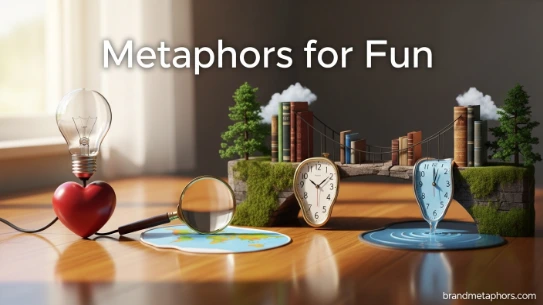
This is where metaphors for fun come alive. We often use creative comparisons like “burst of laughter,” “wave of joy,” or “spark of excitement” to explain experiences that are otherwise difficult to define. Fun is not a single emotion; it is a mixture of energy, connection, relief, and presence. Metaphors help us translate this invisible feeling into something understandable and shareable.
Exploring metaphors for fun matters because it reveals how deeply humans rely on imagination to process happiness. It also helps us recognize joy in everyday life, not just in extraordinary moments. By understanding these metaphors, we begin to see fun not as random entertainment, but as a meaningful part of how we experience being alive.
The Meaning of Metaphors for Fun
Metaphors for fun are symbolic expressions that describe enjoyment through comparisons with familiar experiences. Instead of saying “I had fun,” we say “I was on a rollercoaster of laughter” or “it was a sea of excitement.” These expressions help us communicate emotions that are otherwise too complex or layered for simple language.
Fun is abstract—it cannot be touched or measured directly. So the human mind borrows images from nature, movement, and sensory experience to explain it. A “burst of laughter” suggests suddenness and intensity, while a “flow of joy” suggests smooth, continuous pleasure. Each metaphor adds texture to how we understand enjoyment.
Why metaphors matter in describing fun
Metaphors are not just decorative language. They shape how we interpret experiences. If fun is described as “fireworks,” we expect excitement and intensity. If it is described as “a warm blanket,” we expect comfort and calmness. In this way, metaphors influence our expectations of joy.
They also help us share experiences with others. Saying “it felt like flying” immediately creates a shared emotional image, even if the listener has never experienced the exact situation.
Ultimately, metaphors for fun are bridges between feeling and understanding, helping us translate internal joy into shared human expression.
Why Humans Describe Fun Through Metaphors
Human beings naturally think in comparisons. Our brains understand new or complex emotions by linking them to familiar experiences. This is why we say “heart racing” instead of simply “excited,” or “bursting with joy” instead of just “happy.”
Fun, being highly emotional and subjective, especially relies on this process. It is not one fixed feeling but a combination of stimulation, pleasure, and social connection. Because of this complexity, metaphors become essential tools.
We might describe a lively party as “a storm of laughter” or a peaceful picnic as “a pocket of sunshine.” These images allow us to organize emotional chaos into something meaningful.
Metaphors also help us exaggerate or soften experiences. Saying “it was a carnival in my mind” amplifies the excitement, while “a gentle breeze of fun” softens it into calm enjoyment.
In daily life, this way of speaking helps us connect with others emotionally. When someone says, “That trip was pure magic,” we don’t just understand the facts—we feel the emotion behind the experience. Metaphors turn fun into shared imagination, making communication richer and more human.
Fun as Energy: Metaphors of Movement and Power
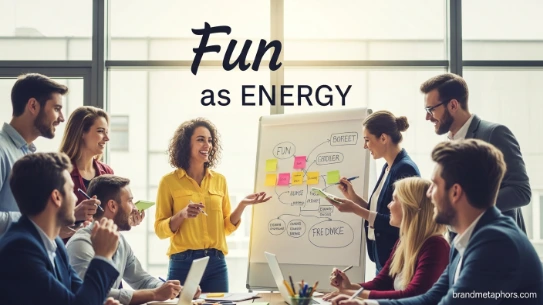
One of the most common ways to describe fun is through energy-based metaphors. Fun often feels active, dynamic, and full of motion, so we compare it to forces like electricity, waves, or explosions.
We say things like “a burst of laughter,” “a surge of excitement,” or “a wave of joy.” These metaphors highlight how fun can suddenly rise within us and spread quickly through a group.
Examples of energy-based metaphors
- “Spark of fun” – suggests a small moment that ignites larger excitement
- “Explosion of laughter” – indicates uncontrollable, shared joy
- “Wave of excitement” – shows how fun moves through people in waves
These expressions show that fun is not passive. It moves, grows, and spreads like natural forces.
In real life, think about a game night with friends. One joke leads to another, and soon the room feels charged with energy. That shared feeling can be described as “electric fun” because it feels almost physically powerful.
Energy metaphors help us understand that fun is not just emotional—it is also physical in how it affects our bodies, from smiling to laughing to moving around with excitement.
Fun as a Journey: Life as an Adventure of Joy
Another powerful way to understand fun is through journey-based metaphors. Here, fun is seen as movement through space, time, or experience.
We often say, “That party was a wild ride,” or “We went through a rollercoaster of emotions.” These phrases suggest that fun is not a single moment but a path we travel.
H3: The adventure of shared experiences
When people go on trips, attend festivals, or even play games, they often describe the experience as a journey. The idea of “traveling through fun” emphasizes change, discovery, and unpredictability.
H3: Emotional roads and detours
Fun can also include surprises and unexpected turns. Saying “it was a winding road of laughter” reflects how enjoyment is often unpredictable but still rewarding.
Journey metaphors help us see fun as something evolving rather than static. It reminds us that joy often comes from progression, not just arrival.
Fun as Fire and Light: Brightness of Joy
Fire and light metaphors are deeply connected to how humans describe fun. Words like “sparkling,” “glowing,” or “radiant” suggest that fun has brightness and warmth.
We often say “her eyes lit up with joy” or “the atmosphere was glowing with excitement.” These expressions show how fun is not only felt internally but also visible externally.
Fire metaphors also represent intensity. A “flame of excitement” suggests something strong but temporary, while “warm glow of happiness” suggests a gentle, lasting feeling.
In social settings, these metaphors become even more powerful. A birthday celebration might be described as “a room lit with laughter,” showing both emotional and physical brightness.
Light-based metaphors help us understand that fun can illuminate our mood, making ordinary moments feel special and alive.
Fun as Music: Rhythm, Harmony, and Flow
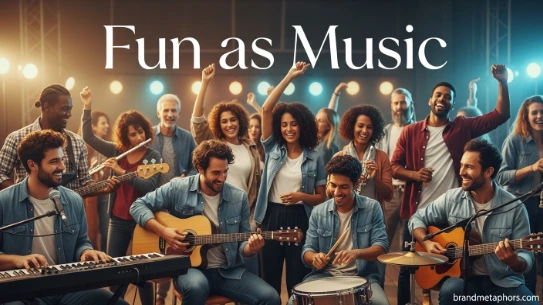
Music metaphors are frequently used to describe fun because both involve rhythm, emotion, and timing. We say “the party had a great vibe,” or “everything just clicked perfectly.”
Fun can feel like a song where everything falls into place. Laughter becomes rhythm, conversations become melody, and movement becomes dance.
H3: Rhythm of shared laughter
When people are having fun together, their interactions often become synchronized. Jokes flow naturally, and silence feels comfortable rather than awkward.
H3: Harmony in group enjoyment
A fun experience is often described as “in tune” when everyone feels connected. This metaphor shows emotional alignment among people.
Music metaphors emphasize that fun is not random—it has structure, timing, and flow that make it satisfying and memorable.
Fun as Play: The Spirit of Freedom
Play-based metaphors are among the most natural ways to describe fun. We often say “just play along,” “let loose,” or “it felt like being a kid again.”
Fun as play suggests freedom from rules, pressure, and seriousness. It is about experimentation and spontaneity.
In childhood, play is the main form of fun, but even adults return to it through sports, games, or creative hobbies.
Play metaphors remind us that fun often comes from not taking life too seriously. It is about flexibility, imagination, and openness to surprise.
Fun as Escape: A Break from Reality
Sometimes, fun is described as an escape. We say “it was a break from reality” or “a mental getaway.” These metaphors show how fun allows us to step outside daily stress.
Escape does not always mean avoidance. It can also mean renewal. Fun gives the mind space to rest and recharge.
Watching a movie, traveling, or even laughing with friends can feel like stepping into another world temporarily.
This metaphor highlights the healing aspect of fun. It is not just entertainment—it is relief.
Fun Across Ages: Childhood vs Adulthood
Metaphors for fun often change depending on age. In childhood, fun is described as “running wild,” “endless play,” or “bright imagination.” It is physical and spontaneous.
In adulthood, metaphors shift toward “moments of escape,” “small bursts of joy,” or “carefully carved-out time.” Fun becomes more intentional and less constant.
However, both stages share one thing: the need for emotional release. Whether it is a child laughing in a playground or an adult enjoying a weekend trip, the essence remains the same.
These differences show how life shapes our experience of joy but does not eliminate it.
Social Fun: Shared Joy Between People
Fun becomes more powerful when shared. Social metaphors often describe it as “bonding glue,” “shared spark,” or “collective energy.”
H3: Laughter as connection
Laughter is often described as something that “spreads” or “infects,” showing how quickly fun moves between people.
H3: Group energy dynamics
In groups, fun can feel like a “shared current” where everyone contributes to the emotional atmosphere.
Social metaphors show that fun is not isolated—it is deeply connected to human relationships.
Fun in the Digital Age
Modern metaphors for fun often come from technology. We say “scrolling through laughter,” “gaming marathon,” or “streaming joy.”
Digital fun feels fast, constant, and interactive. It is less physical but still emotionally engaging.
Online games, social media, and virtual communication create new ways of experiencing joy. These metaphors reflect how fun has adapted to modern life.
Practical Lessons from Metaphors for Fun
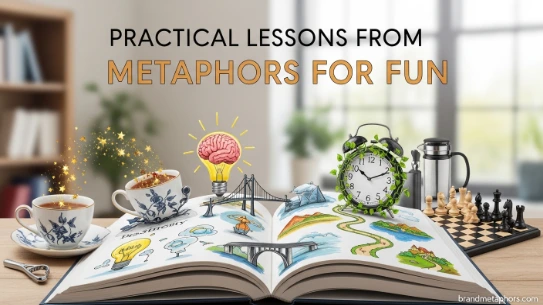
Metaphors are not just linguistic tools—they also teach us how to recognize and create joy.
- Pay attention to “sparks” of fun in daily life
- Recognize when joy feels like “flow” rather than effort
- Value shared laughter as emotional connection
- Allow yourself moments of “escape” without guilt
By understanding these metaphors, we become more aware of how fun appears in ordinary situations.
Common Misunderstandings About Fun Metaphors
People sometimes assume metaphors exaggerate reality. However, they actually clarify emotional truth.
Another misunderstanding is that fun must always be loud or intense. In reality, metaphors like “gentle glow” or “quiet joy” show that fun can also be calm.
Metaphors are flexible—they reflect the diversity of human experience, not just extremes.
Conclusion
Metaphors for fun help us translate one of life’s most important experiences into meaningful language. Whether described as fire, music, energy, or escape, fun takes many forms that reflect how deeply humans feel and interpret joy. These comparisons are not just poetic—they shape how we understand happiness itself.
By paying attention to these metaphors, we begin to notice that fun is not limited to special occasions. It appears in small sparks, shared laughter, and quiet moments of relief. Understanding this language of joy helps us become more aware of happiness in everyday life. Ultimately, metaphors remind us that fun is not just something we experience—it is something we continuously create and share.
FAQs
What are metaphors for fun?
Metaphors for fun are creative expressions that describe enjoyment using comparisons like energy, fire, music, or journeys.
Why do we use metaphors to describe fun?
We use metaphors because fun is abstract and emotional, making it easier to express through familiar images.
Can metaphors change how we perceive fun?
Yes, metaphors shape expectations and influence how we interpret joyful experiences.
What is a common metaphor for fun?
Common examples include “burst of laughter,” “wave of excitement,” and “spark of joy.”
Are metaphors for fun different in childhood and adulthood?
Yes, childhood metaphors focus on play and freedom, while adult metaphors often focus on escape and moments of relief.
How do social interactions influence fun metaphors?
Social fun is often described as shared energy, showing how joy spreads between people.
Can fun be calm according to metaphors?
Yes, metaphors like “warm glow” or “gentle breeze of happiness” show that fun can also be peaceful and subtle.