
Introduction
Have you ever laughed at a sentence like, “He was a walking disaster with shoes on,” or “Her joke landed like a banana peel in a quiet hallway”? Funny metaphors are everywhere in daily speech, movies, books, and even casual chats with friends. They take simple ideas and twist them into playful comparisons that make us smile before we even fully understand them.
Funny metaphors are not just about humor—they are about seeing life in a creative and light-hearted way. Instead of saying something directly, we compare it to something unexpected, silly, or exaggerated. This makes language more colorful, more engaging, and often more memorable.
In real life, these metaphors help us break tension, explain emotions in a lighter tone, and connect with others more easily. Whether you are telling a joke, writing a story, or just talking with friends, funny metaphors add personality to your words. In this article, we will explore how they work, why they matter, and how you can use them to make everyday communication more fun and meaningful.
What Are Metaphors for Funny?
Funny metaphors are comparisons that describe something in a humorous or exaggerated way. Instead of saying “He is clumsy,” you might say, “He moves like a chair on roller skates.” The meaning stays the same, but the expression becomes entertaining.
These metaphors often mix unrelated ideas. For example, comparing a busy mind to “a browser with 100 tabs open” creates a clear image that is both funny and relatable. The humor comes from the unexpected connection between two things that do not naturally belong together.
Funny metaphors are not just jokes. They are tools of imagination. They help us express frustration, joy, confusion, or excitement in a softer and more creative way. When people use them in conversation, they often sound more engaging and easier to understand.
In daily life, we use them without even thinking. Saying someone is “as slow as a sleepy turtle in traffic” is a funny metaphor that paints a clear picture. It makes communication more lively and less boring, especially in storytelling or casual speech.
Why Humor Uses Metaphors
Humor and metaphors work well together because both rely on surprise. A joke often becomes funny when the ending is unexpected. Similarly, a metaphor becomes funny when two very different ideas are connected in a surprising way.
For example, describing a messy room as “a tornado’s vacation home” makes people laugh because it exaggerates reality in a playful way. The brain enjoys this twist because it has to quickly understand the comparison and then smile at the creativity.
Humor also helps people relax. When serious ideas are expressed through funny metaphors, they become less stressful. A teacher saying “your brain is like a sponge that forgot how to squeeze out information” may make students laugh while still reminding them to revise.
Funny metaphors also make language more memorable. We often forget plain explanations, but we remember funny images. This is why comedians, writers, and speakers use them so often—they stick in the mind like glue.
In short, humor and metaphors work together to make communication richer, lighter, and more human.
Everyday Funny Metaphor Examples
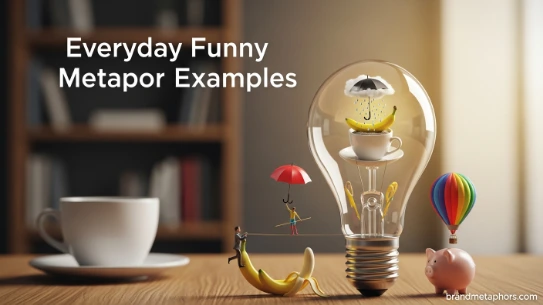
Funny metaphors are all around us, even in simple daily conversations. They help us describe ordinary things in extraordinary ways.
A Busy Mind
“His brain is like a supermarket on Sunday morning.” This shows chaos, overload, and confusion in a funny, relatable way.
A Lazy Person
“She is like a phone stuck at 1% battery in power-saving mode.” It humorously describes someone avoiding effort.
A Bad Day
“Today felt like walking through glue while wearing wet socks.” This creates a strong image of discomfort and frustration.
These expressions work because they turn normal feelings into vivid pictures. Instead of explaining emotions directly, they paint scenes in the listener’s mind. The humor comes from exaggeration and surprise.
People enjoy using these metaphors because they make conversations more interesting. They also help reduce tension in serious situations by adding a playful tone.
Funny Metaphors in Daily Life Situations
Funny metaphors often appear naturally in everyday life. People use them when talking about school, work, family, or even traffic.
For example, a student might say, “Math class feels like trying to read ancient alien language with missing pages.” This shows confusion in a humorous way. A worker might say, “My inbox is a jungle where emails are hunting me.” This describes overload with a playful twist.
Even simple activities become fun with metaphors. Waiting in line can feel like “standing in a slow-motion movie where time forgot the script.” Traffic can be described as “metal turtles racing in honey.”
These expressions help people share frustration without sounding too negative. Instead of complaining directly, they turn problems into funny images. This makes conversations lighter and easier to handle.
In social settings, funny metaphors also help people bond. When someone uses a clever comparison, others often laugh or relate to it. It creates a shared moment of understanding, which strengthens communication and friendship.
Emotional Impact of Funny Metaphors
Funny metaphors do more than entertain—they also affect emotions. When people hear a humorous comparison, their mood often improves instantly.
For example, saying “I feel like a forgotten sandwich in the back of the fridge” may sound silly, but it clearly shows sadness in a light way. The humor softens the emotion, making it easier to express.
This is important in difficult situations. Instead of sounding too serious or heavy, funny metaphors allow people to talk about problems without feeling overwhelmed. They act like emotional cushions.
They also create comfort between speakers. When someone uses humor in a metaphor, it signals friendliness and openness. It shows that even serious topics can be discussed without tension.
In relationships, this helps build trust. People feel more relaxed and connected when conversations include light humor. Even difficult messages become easier to accept when delivered with a creative twist.
How Funny Metaphors Improve Communication
Communication becomes stronger when it includes humor. Funny metaphors help explain ideas quickly and clearly.
Instead of giving long explanations, a simple metaphor can do the job. Saying “My schedule is like a puzzle with missing pieces” instantly shows confusion and busyness without extra detail.
They also improve attention. People are more likely to listen when something is funny. A boring explanation may be ignored, but a creative metaphor captures interest.
Better Understanding
Funny metaphors turn abstract ideas into visual images. This makes it easier for listeners to understand complex feelings or situations.
Stronger Memory
People remember funny comparisons longer than plain sentences. The brain stores images more easily than abstract information.
Better Connection
Using humor builds emotional connection. It shows personality and creativity, making communication feel more human.
In workplaces, classrooms, and social life, funny metaphors make communication smoother and more enjoyable.
Cultural Differences in Funny Metaphors
Not all funny metaphors mean the same thing in every culture. Humor often depends on language, traditions, and shared experiences.
For example, one culture might compare laziness to a “sleeping cat in the sun,” while another might use a “broken bicycle on a hill.” Both are funny, but they depend on familiar images.
Sometimes, a metaphor that is funny in one place may not make sense in another. This is because humor is closely tied to local life and environment.
However, some ideas are universal. Everyone understands feelings like tiredness, confusion, or excitement. So metaphors based on these emotions often work across cultures.
Learning different cultural metaphors can also be fun. It shows how people around the world use creativity to express humor in unique ways. It also helps improve communication when talking with people from different backgrounds.
Funny Metaphors in Storytelling and Jokes

Writers and comedians use funny metaphors to make stories more entertaining. These comparisons help build vivid scenes in the reader’s or listener’s mind.
A character might be described as “as nervous as a cat in a room full of rocking chairs.” This instantly creates humor and tension at the same time.
In jokes, metaphors often act as punchlines. The unexpected comparison creates laughter. For example, “His cooking skills are like a science experiment gone wrong” adds humor while describing failure.
Storytelling becomes more engaging when metaphors are used creatively. They help readers imagine scenes more clearly and enjoy the narrative more deeply.
Even simple jokes become stronger when they include metaphorical humor. It adds layers of meaning and makes the joke more memorable.
Common Misunderstandings About Funny Metaphors
Some people think funny metaphors are just random jokes, but that is not true. They have structure and purpose. They are not meaningless—they are creative ways to explain ideas.
Another misunderstanding is that they are only for entertainment. In reality, they also help with communication, learning, and emotional expression.
Some also believe they are difficult to understand. But most funny metaphors are based on simple ideas like food, animals, or daily life objects. Once you understand the comparison, the meaning becomes clear.
It is also important not to overuse them. Too many metaphors can confuse listeners. Balance is key for effective communication.
How to Create Your Own Funny Metaphors
Creating funny metaphors is easier than it seems. You just need imagination and observation.
Start by thinking about a feeling or situation. Then compare it to something unexpected but familiar.
For example:
- Feeling tired → “I feel like a phone at 2% with no charger in sight.”
- Being confused → “My thoughts are like socks after laundry—missing pairs everywhere.”
Tips for Creating Metaphors
- Use everyday objects
- Add exaggeration for humor
- Keep it simple and clear
- Think of surprising comparisons
With practice, you can turn ordinary thoughts into funny and creative expressions.
Psychology of Humor and Comparison
The brain loves patterns, but it also enjoys surprises. Funny metaphors combine both. They start with something familiar and then twist it in an unexpected way.
This surprise triggers laughter. The brain quickly connects the idea, realizes the exaggeration, and reacts with amusement.
Humor also reduces stress. When people laugh at a metaphor, their mind relaxes. This is why funny comparisons are often used in stressful conversations.
They also improve creativity. Thinking in metaphors trains the brain to see connections between unrelated things, which strengthens imagination.
Real-Life Scenarios Where Funny Metaphors Shine
In school, teachers sometimes use funny metaphors to explain lessons. In workplaces, managers use them to lighten stressful situations. In friendships, people use them to share feelings in a playful way.
For example:
- A project deadline → “a train coming fast with no brakes”
- A messy desk → “a paper storm aftermath”
- A busy day → “a marathon without water breaks”
These comparisons make situations easier to understand and more enjoyable to talk about.
Lessons from Funny Metaphors
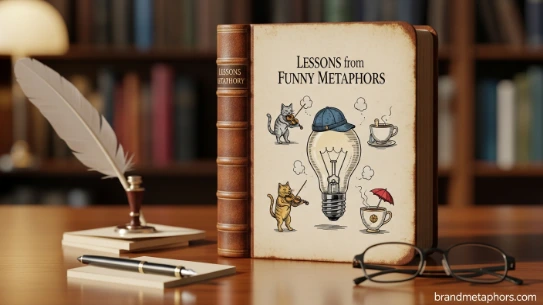
Funny metaphors teach us that language is flexible and creative. They show that even serious ideas can be expressed in light and playful ways.
They also teach empathy. When we describe feelings creatively, others understand us better. Humor builds connection and reduces distance between people.
Most importantly, they remind us not to take everything too seriously. Life becomes easier when we can laugh at it through creative expressions.
Conclusion
Funny metaphors are more than playful words—they are powerful tools of expression. They turn ordinary thoughts into vivid images, making communication more engaging and memorable. From describing emotions to explaining daily struggles, they help us see life with a lighter and more creative perspective.
They also build stronger connections between people by adding humor to conversations. Whether in school, work, storytelling, or casual chats, funny metaphors bring clarity and joy at the same time.
By understanding and using them, we not only improve our language skills but also develop a more imaginative way of thinking. In a world full of seriousness, funny metaphors remind us that laughter and creativity can make even simple words come alive.
FAQs
What is a funny metaphor?
A funny metaphor is a creative comparison that describes something in a humorous way. It connects two different ideas to create laughter and imagination while still expressing meaning clearly.
Why do people use funny metaphors?
People use them to make communication more interesting, easier to understand, and more enjoyable. They also help express emotions in a lighter way.
Are funny metaphors the same as jokes?
Not exactly. Jokes are meant only for laughter, while funny metaphors also explain ideas or emotions while being humorous.
Can funny metaphors improve writing?
Yes, they make writing more engaging, creative, and memorable. They help readers visualize ideas better.
Where are funny metaphors commonly used?
They are used in daily conversations, storytelling, comedy, teaching, and even workplace communication.
Are funny metaphors hard to understand?
No, most are based on simple ideas and everyday objects, making them easy to understand once you see the comparison.
How can I create my own funny metaphors?
Think of a feeling or situation, then compare it to something unexpected but familiar, adding humor or exaggeration.
Do funny metaphors work in all cultures?
Not always. Some depend on cultural context, but many emotions like tiredness or confusion are universal and easily understood.