

Introduction
Imagine a man standing in a room filled with gold coins. The more he collects, the heavier his bag becomes, yet he refuses to stop. Outside the room, sunlight fades, but he doesn’t notice—his eyes are locked on the next coin, the next pile, the next promise of “more.” Somewhere in the distance, a voice calls his name, but it is drowned by the sound of clinking greed.
This image is not just a story; it is a reflection of a human condition that has existed for centuries. Greed is not only about money or possessions. It is about the endless desire for more than what is needed, often at the cost of peace, relationships, and balance in life.
To explain something as complex as greed, language turns to metaphors—powerful comparisons that help us see the invisible. Metaphors for greed allow us to understand how it grows, spreads, and consumes. They turn abstract emotions into vivid pictures: fire, hunger, storms, pits, and prisons.
In this article, we will explore these metaphors deeply. Each one reveals a different layer of greed—how it feels, how it behaves, and how it affects human life. By the end, you will not only understand greed better but also recognize its quiet presence in everyday situations.
Greed as a Burning Fire That Never Sleeps
One of the most common metaphors for greed is fire. Fire begins small, like a spark, but when fed, it grows uncontrollably. Greed works the same way. A small desire for more money, attention, or success can quickly turn into an unstoppable flame.
When someone is driven by greedy fire, satisfaction disappears. No achievement feels enough. Just like fire consumes wood, greed consumes contentment. The more it is fed, the stronger it becomes.
The Danger of Feeding the Flame
A worker who keeps chasing higher income even after financial stability may begin sacrificing health or family time. The “fire” of greed keeps asking for more fuel. Instead of warmth, it brings destruction.
Emotional Burnout
Greed as fire also represents emotional exhaustion. People chasing endless success often feel burned out, even when they appear successful on the outside. The fire does not warm—it drains.
This metaphor teaches a simple truth: unchecked desire spreads like flames, and without control, it can destroy everything in its path.
Greed as a Bottomless Pit of Desire
Another powerful metaphor is greed as a bottomless pit. Imagine throwing gold, time, or achievements into a deep hole that never fills. No matter how much you give, it disappears without satisfaction.
Greed creates a psychological void. The more a person gets, the more they feel they lack. It is a space that cannot be filled with material things.
Endless Wanting
A business owner may earn millions but still feel poor compared to someone richer. The pit does not measure success—it only demands more.
Emotional Emptiness
This metaphor also reflects emotional emptiness. People may think acquiring more will bring happiness, but instead, the “pit” grows deeper. It shows that greed is not about lack of resources but lack of inner fulfillment.
In real life, recognizing this pit helps people pause and question their desires before falling deeper into endless wanting.
Greed as Rust Slowly Destroying Character
Greed is often compared to rust that slowly eats away at metal. Rust does not appear suddenly; it grows quietly, weakening strength over time. Similarly, greed does not always show immediate harm, but it slowly damages values and character.
Silent Corruption
A person may start with small compromises—stretching truth, ignoring fairness, or prioritizing profit over ethics. Over time, these small actions build up like rust spreading through metal.
Loss of Integrity
Just as rust weakens a structure, greed weakens integrity. A once-trusted person may lose respect and credibility because of gradual moral decay.
This metaphor reminds us that greed does not always explode dramatically. Sometimes, it quietly destroys from within.
Greed as Endless Hunger That Cannot Be Satisfied
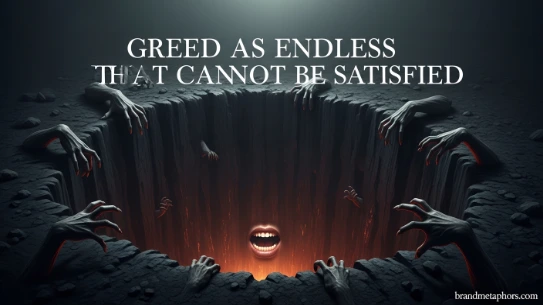
Greed is often described as hunger that never ends. Unlike physical hunger, which can be satisfied with food, greedy hunger grows stronger after every “meal.”
The Appetite for More
A person may achieve one goal—buying a house, getting a promotion, or gaining fame—but instead of satisfaction, a new desire immediately replaces it.
Emotional Starvation
This hunger also reflects emotional starvation. Even when surrounded by wealth, a greedy mind feels empty because it constantly compares and desires more.
Greed as hunger teaches us that satisfaction is not about how much we have but about knowing when enough is enough.
Greed as a Storm That Disrupts Everything
A storm is unpredictable, powerful, and destructive. Greed works in a similar way, creating chaos in relationships, communities, and even entire societies.
Emotional Turbulence
Greed can turn calm decisions into emotional reactions. People may act impulsively, chasing opportunities without thinking of consequences.
Social Disruption
In workplaces, greed can lead to unfair competition, jealousy, and conflict. Like a storm, it disturbs harmony and leaves damage behind.
This metaphor shows that greed is not just personal—it can affect everyone around it.
Greed as a Prison Built by the Self
Greed can also be seen as a prison where the walls are made of desire. The strange part is that people often build this prison themselves, believing it will bring freedom.
Locked by Expectations
A person chasing constant success may feel trapped in their own ambitions. Even when they achieve something, they feel pressured to achieve more.
Loss of Freedom
Instead of freedom, greed creates dependency. The mind becomes locked inside expectations, unable to rest or enjoy the present moment.
This metaphor reveals a paradox: greed promises freedom but delivers confinement.
Greed in Modern Society and Consumer Culture
In today’s world, greed often appears in subtle forms. Advertising, social media, and consumer culture constantly suggest that more is better.
The Culture of “More”
People are encouraged to upgrade, buy, and compare. A phone that works perfectly may suddenly feel “outdated” because of new models.
Social Comparison Trap
Seeing others succeed online can trigger feelings of lack, even when life is already stable. Greed grows through comparison, not necessity.
Modern greed is not always obvious—it is often disguised as ambition or lifestyle.
Psychological Roots of Greed
Greed is not just external behavior; it often has internal roots. Fear, insecurity, and lack of self-worth can all fuel excessive desire.
Fear of Losing Control
Some people accumulate wealth or success because they fear losing stability. Greed becomes a defense mechanism.
Need for Validation
Others seek constant approval through achievements. No amount feels enough because validation is external rather than internal.
Understanding these roots helps explain why greed is often more emotional than logical.
Greed in Relationships and Human Connections
Greed is not limited to money. It can also appear in relationships, where people demand more attention, love, or control than is healthy.
Emotional Possession
Some individuals may want complete control over loved ones, mistaking possession for love.
Imbalance in Giving and Receiving
Healthy relationships require balance. Greed disrupts this balance by creating constant demands without appreciation.
This form of greed can silently weaken trust and emotional bonds.
Cultural Symbols and Stories of Greed

Many cultures use stories and symbols to explain greed. These narratives often show the consequences of excessive desire.
The Golden Curse Theme
Stories often depict characters who receive too much wealth and lose happiness or humanity as a result.
Moral Lessons
These cultural metaphors remind us that greed often leads to downfall, not fulfillment. They act as warnings passed through generations.
Lessons Greed Teaches About Balance
Greed, when understood, can also teach important life lessons. It shows the importance of balance, awareness, and gratitude.
Recognizing “Enough”
One of the most powerful lessons is learning when to stop. Understanding limits prevents emotional and mental exhaustion.
Practicing Gratitude
Gratitude shifts focus from what is missing to what is already present. This reduces the space where greed grows.
Greed becomes less dangerous when it is recognized and understood.
How to Overcome Greed in Daily Life
Overcoming greed does not mean rejecting ambition. It means controlling excess desire and maintaining balance.
Mindful Decision-Making
Before making choices, asking “Do I need this or just want it?” helps reduce impulsive greed-driven actions.
Building Inner Satisfaction
True satisfaction comes from internal peace, not external accumulation. Practices like reflection, mindfulness, and simplicity can help.
Greed weakens when awareness grows stronger.
Conclusion
Greed is a complex human emotion, but metaphors help us understand it in simple and powerful ways. Whether it is a burning fire, a bottomless pit, rust, hunger, or a storm, each image reveals how greed grows and affects life. These metaphors show that greed is not just about wealth—it is about desire without limits.
By recognizing these patterns, we can better understand our own thoughts and choices. Greed loses its power when it is seen clearly. The real strength lies in balance, gratitude, and knowing when enough is truly enough. In a world that constantly pushes for more, learning to pause and reflect may be the most valuable lesson of all.
FAQs
What is the simplest definition of greed?
Greed is the strong and often endless desire for more than what is needed or fair, especially in terms of wealth, power, or possessions.
Why are metaphors used to explain greed?
Metaphors make abstract ideas easier to understand by turning them into clear images like fire, hunger, or storms.
Is greed always negative?
Most of the time, greed is seen as harmful because it leads to imbalance. However, ambition and motivation can be positive when controlled.
How does greed affect mental health?
Greed can cause stress, anxiety, and dissatisfaction because it creates constant pressure to achieve more without feeling content.
Can greed exist in relationships?
Yes, greed can appear as emotional possession, jealousy, or excessive demands for attention and control in relationships.
What causes greed in people?
Greed is often caused by fear, insecurity, comparison with others, or the belief that happiness comes from external things.
How can a person reduce greed?
Practicing gratitude, setting limits, and focusing on inner satisfaction can help reduce greedy behavior.
What is the main lesson of understanding greed metaphors?
The main lesson is awareness—recognizing how greed grows helps people maintain balance and make healthier life choices.