
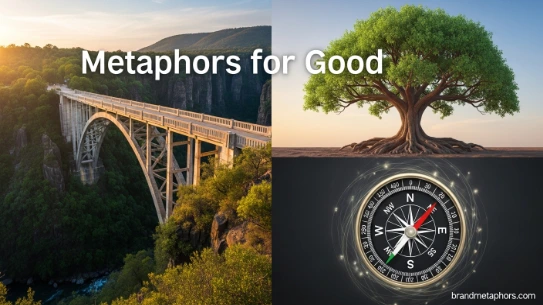
Introduction
Have you ever noticed how people struggle to describe “goodness” directly? Instead of defining it plainly, we often reach for images—light breaking through clouds, a steady compass pointing north, or a warm hand in a cold room. These expressions are not random; they are metaphors that help us feel what “good” truly means when words alone fall short.
“Good” is a simple word, but its meaning stretches far beyond simplicity. It touches kindness, morality, generosity, honesty, and even emotional safety. Because it is so broad and deeply human, language leans on metaphors to make it visible and relatable. We don’t just say something is good—we say it is pure as sunlight, a guiding star, or a breath of fresh air.
Understanding metaphors for good is more than a language exercise. It shapes how we think about people, decisions, relationships, and values in daily life. These metaphors quietly influence how we judge right from wrong and how we recognize goodness in the world around us. In this article, we will explore powerful metaphors for good, their deeper meanings, and how they reflect human experience in practical, emotional, and cultural ways.
1. Goodness as Light: Illumination in Darkness
One of the most universal metaphors for good is light. Across cultures, light represents clarity, truth, and moral purity. When someone says a person is “a light in the darkness,” they are expressing that this individual brings hope, guidance, or kindness into difficult situations.
Why Light Works as a Metaphor
Light allows us to see. Without it, we are lost. Similarly, goodness helps people navigate confusion, moral dilemmas, and emotional struggles. A kind action can feel like a sudden brightening of a dark room.
Real-Life Example
Imagine a coworker who calmly helps others during a stressful project deadline. Their patience and clarity reduce chaos. People naturally describe them as “bringing light into the situation,” because their behavior makes everything easier to understand and manage.
Light as a metaphor for good emphasizes visibility, honesty, and hope. It suggests that goodness doesn’t hide—it reveals.
2. Goodness as a Warm Flame: Comfort and Humanity
Another powerful metaphor is warmth. Good people or actions are often described as “warm-hearted” or “a warm presence.”
Emotional Meaning of Warmth
Warmth represents comfort, safety, and emotional connection. Just as fire protects us from cold, good behavior protects emotional well-being.
Example Scenario
Think of a grandparent telling stories to children on a winter evening. The room feels safe, soft, and full of belonging. That emotional atmosphere becomes the metaphor itself: goodness as warmth.
Warmth also implies closeness. It suggests that good actions bring people together instead of pushing them apart. Unlike light, which reveals, warmth embraces.
3. Goodness as a Compass: Direction in Moral Decisions
A compass is often used as a metaphor for moral goodness because it represents direction and guidance.
How the Compass Symbol Works
A compass doesn’t tell you everything—it simply points you toward north. Similarly, goodness often doesn’t provide full answers but helps guide choices.
Practical Interpretation
When someone says, “My values are my compass,” they mean their sense of right and wrong helps them navigate difficult decisions. Even in confusing situations, they rely on inner principles.
This metaphor highlights that goodness is not just emotional—it is also structural. It helps people stay oriented in life, especially when choices become complicated.
4. Goodness as Clean Water: Purity and Refreshment
Water, especially clean and flowing water, is a strong metaphor for goodness. It symbolizes purity, renewal, and life.
Why Water Represents Goodness
Clean water sustains life. It refreshes, heals, and restores balance. Similarly, good actions or intentions often restore emotional or moral clarity.
Example Situation
After a long conflict between friends, one apology can feel like “clean water after drought.” It refreshes the relationship and removes emotional dryness.
Water also adapts—it flows around obstacles. This reflects how goodness often involves flexibility, forgiveness, and understanding.
5. Goodness as a Garden: Growth and Care

A garden represents goodness as something that must be nurtured over time.
H3: Cultivation of Character
Just like plants need water, sunlight, and care, good character develops through consistent effort.
H3: Real-Life Reflection
A teacher who patiently helps students grow is often seen as “cultivating minds like a gardener.” The metaphor emphasizes that goodness is not instant—it is grown.
A garden metaphor also suggests responsibility. Neglect leads to weeds; care leads to beauty. Goodness, in this sense, requires attention and commitment.
6. Goodness as a Bridge: Connection Between People
A bridge is a powerful symbol of connection and unity.
What the Bridge Represents
Bridges connect places that were once separate. Similarly, good actions connect people emotionally, socially, and morally.
Example in Daily Life
When someone mediates a conflict between two friends, they act as a bridge. They reduce distance and create understanding.
This metaphor shows that goodness is not passive—it actively connects, repairs, and unites divided spaces.
7. Goodness as a Seed: Small Beginnings with Big Outcomes
A seed symbolizes potential and future growth.
H3: Hidden Strength in Small Acts
Small acts of kindness often seem insignificant at first, but they grow over time into larger impacts.
H3: Example Scenario
A simple compliment given to a struggling student may inspire long-term confidence. That moment becomes a “seed of encouragement” that grows over years.
The seed metaphor reminds us that goodness often starts quietly but can transform lives deeply.
8. Goodness as Music: Harmony in Human Interaction
Music is often used as a metaphor for good because it represents harmony, rhythm, and emotional alignment.
Why Music Fits
Good interactions feel “in sync,” like instruments playing together without conflict.
Everyday Example
A peaceful family dinner where everyone listens and respects each other can feel like a “well-composed melody.”
Music also suggests that goodness is not uniform—it is a balance of different voices working together.
9. Goodness as Shelter: Protection and Safety
A shelter represents safety, care, and protection from harm.
Emotional Meaning
Goodness often manifests as protection—physically, emotionally, or socially.
Real-Life Situation
A friend who listens without judgment during a crisis becomes a “safe shelter” for emotional release.
This metaphor emphasizes that goodness provides stability during instability. It does not eliminate storms but offers protection within them.
10. Goodness as Gold: Value and Rarity
Gold symbolizes something precious, rare, and highly valued.
Why Gold Represents Goodness
Good character, honesty, and integrity are often considered rare qualities, especially in difficult environments.
Example Insight
When someone consistently chooses honesty over personal gain, they are described as having a “heart of gold.”
This metaphor highlights that goodness is not only valuable—it is also enduring. Like gold, it does not easily lose its worth.
11. Goodness as Rain: Renewal and Emotional Healing
Rain is a natural metaphor for cleansing and renewal.
H3: Emotional Refreshment
After emotional hardship, kindness can feel like rain washing away stress or sadness.
H3: Practical Example
A supportive conversation after a difficult day can feel like “gentle rain after heat.” It restores emotional balance.
Rain also suggests timing. Goodness often arrives when it is most needed, not always when expected.
12. Goodness as a Beacon: Guidance from Afar
A beacon is a distant light used for navigation, especially in darkness or storms.
What It Symbolizes
Goodness can serve as inspiration, even if it is not physically close.
Example Interpretation
Public figures or mentors who consistently act with integrity become “beacons” for others. Their behavior guides people who may never meet them personally.
This metaphor shows that goodness has influence beyond immediate interaction—it can guide lives from a distance.
Conclusion
Metaphors for good reveal how deeply human language depends on imagery to express values that cannot be fully defined in simple words. Whether it is light, warmth, water, or a compass, each metaphor reflects a different dimension of goodness—clarity, comfort, direction, purity, and connection.
These images are not just poetic expressions; they shape how we recognize kindness, judge actions, and understand moral behavior in everyday life. Goodness is not a single idea but a collection of experiences that touch emotion, thought, and action.
By understanding these metaphors, we begin to see goodness more clearly in the world around us—not as an abstract concept, but as something living, visible, and deeply woven into human interaction.
FAQs
What are metaphors for good?
Metaphors for good are symbolic expressions like light, warmth, or water used to describe positive qualities, kindness, and moral values in a relatable way.
Why do we use metaphors to describe goodness?
Because goodness is abstract, metaphors help people understand and feel it through familiar images and experiences.
What is the most common metaphor for good?
Light is the most common metaphor, representing clarity, hope, truth, and moral guidance.
How do metaphors for good help in communication?
They make abstract moral ideas easier to understand and emotionally connect with in daily conversation.
Can metaphors for good vary across cultures?
Yes, different cultures may use different images, but many—like light, water, and warmth—are universal.
What does “heart of gold” mean?
It means a person is extremely kind, generous, and morally good.
How do metaphors influence our thinking?
They shape how we interpret behavior, make decisions, and understand abstract values like kindness and honesty.