
Introduction (The Living Image of Fire in Human Thought)
Imagine sitting on a quiet night where everything feels still, except for a small fire crackling in front of you. The flames rise and fall like they are breathing, glowing orange, gold, and sometimes deep blue at the base. You feel warmth on your face, but you also notice how quickly the fire can shift—calm one moment, wild the next. Fire is one of the oldest elements humans have ever known, yet it still feels alive, unpredictable, and deeply symbolic.
This is why fire appears so often in language as a metaphor. We use it to describe emotions, ambition, danger, anger, passion, and even transformation. When someone says “she has a fire inside her,” they are not talking about flames, but about energy and drive. Metaphors for fire help us explain complex human feelings in simple, powerful ways. They connect physical experience with emotional meaning. In this article, we will explore how fire metaphors shape the way we think, speak, and understand life itself.
Fire as a Symbol of Passion and Desire
Fire is often used to represent strong emotions, especially passion and desire. When people are deeply in love or strongly motivated, we say they are “burning with passion.” This metaphor works because fire feels intense, warm, and consuming—just like strong emotions.
In relationships, fire metaphors often appear in expressions like “the spark is gone” or “their love is still burning.” These phrases show how emotions can grow or fade over time. A “spark” suggests the beginning of attraction, while a “burning flame” suggests something deep and lasting.
Emotional Depth in Daily Life
In everyday life, this metaphor helps explain why some people feel things more deeply than others. A student working toward a dream might be described as having a “fire for success.” It shows energy that cannot be ignored. Just like fire needs fuel, passion needs effort, attention, and purpose to keep growing.
Fire as Anger and Intense Emotion
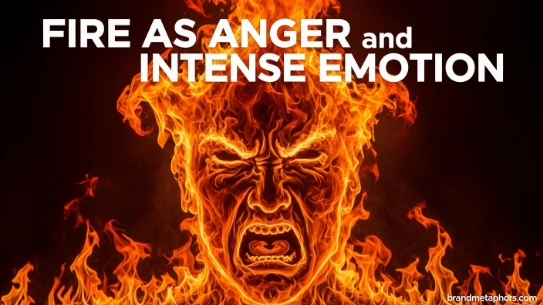
Fire is also used to describe anger. We say someone is “burning with rage” or “seeing red like fire.” This connection makes sense because anger, like fire, can rise quickly and feel hard to control.
Anger can start small, like a spark, but grow if it is not managed. A simple disagreement can turn into a heated argument, just like a small flame can turn into a wildfire. This metaphor helps people understand the importance of controlling emotions before they spread.
Real-Life Understanding
Think of a moment when someone says something hurtful. You might feel heat in your chest or face. That physical feeling is often described as “fire inside.” The metaphor helps people recognize emotional warning signs, reminding them to pause before reacting.
Fire as Transformation and Change
Fire is one of the strongest symbols of transformation. It destroys, but it also clears the way for new growth. In nature, forests often regrow stronger after a fire. This idea is used in language to describe personal change.
When people go through difficult experiences, they may say they were “forged in fire.” This suggests that hardship shaped them into a stronger version of themselves. Fire becomes a teacher, not just a destroyer.
Life Lessons from Fire
This metaphor helps us understand that pain and struggle are sometimes part of growth. Just like metal is shaped by heat, people can be shaped by challenges.Flame teaches resilience—the ability to stand again after being tested.
Fire as Energy and Motivation
Fire is also a symbol of energy, drive, and ambition. When someone is highly motivated, we say they have a “fire in their belly.” This means they are full of determination and purpose.
Everyday Examples
- An athlete training hard before a competition
- A student preparing for exams with full focus
- An entrepreneur building a new business
In all these cases, fire represents inner energy pushing a person forward. Without this fire, motivation fades. With it, people feel unstoppable.
Fire metaphors remind us that energy is not just physical—it is mental and emotional too. Keeping the fire alive means staying focused on goals even when things become difficult.
Fire as Danger and Warning
Fire is not always positive. It can also represent danger, destruction, and loss of control. Expressions like “playing with fire” suggest risky behavior that could lead to harm.
When Fire Becomes a Warning
This metaphor is often used in situations where people ignore consequences. For example:
- Taking unnecessary risks in life
- Making emotional decisions without thinking
- Entering unsafe situations
Fire here represents something powerful but dangerous. It reminds us that some actions can grow beyond control if we are not careful. Just like real fire, certain choices require respect and caution.
Fire as Creativity and Inspiration
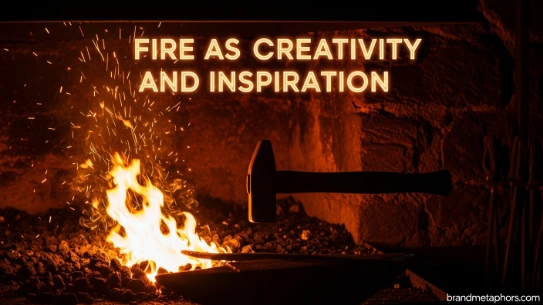
Fire also represents creativity. Artists often describe inspiration as a “spark” that ignites ideas. Without that spark, creativity can feel empty or blocked.
How Inspiration Works Like Fire
- A small idea acts like a spark
- The idea grows through imagination
- Creative work becomes a “burning project”
Writers, musicians, and designers often talk about “lighting a fire” under their work when they feel inspired. This metaphor shows how creativity is not always steady—it comes in bursts of energy, just like flames that flicker and dance.
Fire as Spiritual Energy and Inner Light
In many cultures, fire represents spiritual energy, purity, or inner truth. It is seen as something sacred that connects humans to higher meaning.
Inner Fire and Self-Awareness
People sometimes describe meditation or self-discovery as “finding their inner fire.” This means reconnecting with purpose and identity. Fire becomes a symbol of the soul—something that guides and illuminates.
In this sense, fire is not destructive or emotional. It is calm, steady, and meaningful. It represents clarity in moments of confusion.
Fire as Speed and Urgency
Fire is also used to describe speed and urgency. When something happens quickly, people say it moves “like wildfire.” This metaphor highlights how fast fire spreads.
Real-Life Situations
- News spreading quickly on social media
- A trend becoming popular overnight
- A decision that must be made immediately
Fire here shows how information or events can spread beyond control. It helps us understand the importance of acting quickly or staying alert.
Fire as Power and Strength
Fire represents strength and power in many stories and expressions. It is unstoppable when it grows large, which makes it a symbol of dominance and influence.
H3: Fire in Leadership
A strong leader is sometimes described as having a “fiery presence.” This suggests confidence, authority, and influence over others.
H3: Fire in Challenges
When facing difficulties, having “fire within” means refusing to give up. It reflects courage and endurance even in tough situations.
Fire becomes a reminder that strength is not always physical—it is also mental determination.
Fire as Renewal and New Beginnings
Flame does not only destroy; it also makes space for new beginnings. After a fire clears land, new plants can grow. This cycle is often used as a metaphor for life changes.
Emotional Renewal
People use fire metaphors when starting fresh after failure:
- “Burning the past”
- “Starting from ashes”
- “Rising again”
These expressions show hope and renewal. Flame becomes a symbol of second chances and fresh starts.
Fire in Conflict and Struggle
Fire is also connected to conflict, battles, and struggles. Words like “crossfire” or “under fire” describe difficult situations where pressure is high.
H3: Emotional Pressure
Being “under fire” can mean facing criticism or stress. It shows how intense situations can feel overwhelming.
H3: Growth Through Struggle
Even in conflict, fire metaphors suggest growth. Challenges test strength and shape character. Like fire refining metal, struggles refine people.
Fire as Human Emotion Itself
Sometimes fire is not just a symbol of one emotion—it represents emotion itself. Humans are described as “fiery beings” because we feel deeply and react strongly.
Fire captures the full range of emotion:
- Love (warm fire)
- Anger (wild fire)
- Joy (bright flame)
- Sadness (dying ember)
This metaphor shows that human emotions are dynamic, constantly changing, just like flames that never stay still.
Fire in Everyday Language and Culture
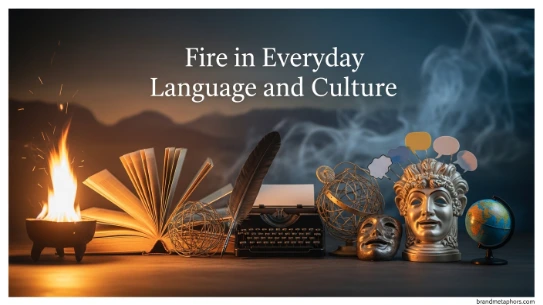
Fire metaphors are everywhere in daily speech. We often use them without noticing.
Common Expressions
- “Light a fire under someone”
- “Fire up the engine”
- “Burning question”
- “Trial by fire”
These phrases show how deeply fire is connected to communication. It helps people explain complex feelings and actions in simple terms.
Fire also appears in stories, myths, and traditions around the world, showing its universal importance in human culture.
Conclusion
Fire is more than just heat and light—it is a powerful symbol that helps us understand life. Through metaphors, fire becomes passion, anger, creativity, danger, transformation, and strength. It reflects both the beauty and unpredictability of human experience. Like real flames, our emotions and actions can rise gently or burn fiercely depending on the situation.
What makes fire metaphors so powerful is their ability to connect physical reality with emotional truth. They remind us that life is always changing, sometimes calm, sometimes intense, but always moving forward. Understanding these metaphors helps us better understand ourselves and others. In the end, fire teaches us that even in destruction, there is potential for renewal, and even in intensity, there is meaning.
FAQs
What are metaphors for fire?
Metaphors for fire are expressions that use fire to describe emotions, actions, or ideas like passion, anger, or transformation.
Why is fire often used as a metaphor?
Fire is powerful, visible, and unpredictable, making it a strong symbol for intense human emotions and experiences.
What does “fire in the belly” mean?
It means strong motivation, ambition, or determination to achieve something important.
How is fire used to describe anger?
Anger is often compared to fire because it grows quickly and can be hard to control.
What does fire represent in creativity?
Fire represents inspiration or the “spark” that starts creative ideas and artistic expression.
Can fire metaphors be positive and negative?
Yes, fire can represent both positive ideas like passion and negative ideas like destruction or danger.
What does “rising from the ashes” mean?
It means recovering or starting over after failure or hardship, like new growth after a fire.