
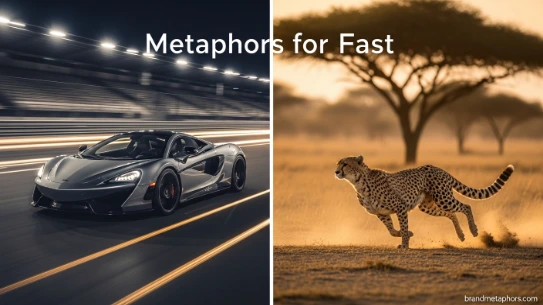
Introduction
Have you ever watched a busy street at rush hour, where cars blur past like flashes of color, people rush with purpose, and even time seems to stretch and compress at once? In those moments, the idea of “fast” stops being just a word—it becomes something you can almost feel. Speed surrounds us in daily life, from how quickly messages arrive on our phones to how fast thoughts jump in our minds when we are excited or anxious. But “fast” is not only about movement or time. It is also a powerful idea we explain through metaphors—simple comparisons that help us understand something complex.
Metaphors for fast turn speed into images we can see and feel, like lightning in the sky or a cheetah chasing its target. These expressions help us communicate intensity, urgency, and energy in a vivid way. In this article, we will explore how different metaphors shape our understanding of speed in nature, emotions, technology, life, and thought. You will also see how these expressions influence the way we talk, think, and experience the world around us.
1. Understanding the Meaning of Fast Through Metaphors
“Fast” is a simple word, but its meaning expands when we use metaphors. Instead of just describing speed, metaphors give it texture and feeling. For example, saying “he is fast” is plain, but saying “he moves like a bullet” paints a strong image.
Metaphors help the brain understand abstract ideas through familiar pictures. Speed is invisible—you cannot touch it—but you can compare it to things that are visible and powerful. A shooting star, a racing river, or a flashing camera all become symbols of quickness.
These comparisons are not random. They are rooted in human experience. We observe nature, machines, and emotions, then connect them to speed. This is how language becomes richer and more expressive.
Why metaphors matter
- They make communication clearer
- They create emotional impact
- They help us remember ideas easily
Without metaphors, “fast” would remain flat. With them, it becomes alive.
2. Speed as Wind and Racing Motion
One of the most common ways to describe fast movement is through wind. Wind cannot be seen, but its effects are powerful. When something is “fast as the wind,” we imagine smooth, unstoppable motion.
A runner sprinting on a track may be described as “flying like the wind.” A car speeding down a highway feels like it is cutting through air itself. These metaphors give speed a natural flow.
H3: Racing imagery
Another strong metaphor comes from racing. Words like “rocket speed” or “racehorse quick” create images of controlled power and direction. A racehorse, trained for bursts of energy, represents focused speed rather than chaos.
In daily life, we use these expressions when we see someone completing tasks quickly or moving through challenges without delay. The idea of wind and racing teaches us that fast movement can be both graceful and powerful at the same time.
3. Time-Based Metaphors: When Moments Fly
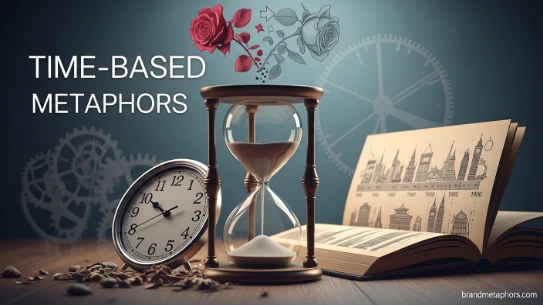
Time is one of the most common areas where we use fast metaphors. We often say, “time flies” or “the day went by in a blink.” Of course, time does not move physically, but our experience of it feels fast.
When we are happy or busy, time seems to disappear. A weekend with friends feels short. A joyful event passes in what feels like seconds.
H3: Emotional perception of time
- Happiness makes time feel faster
- Stress can also make time feel rushed
- Focused activity creates “lost time” moments
These metaphors show that speed is not only physical. It is also psychological. Our mind changes how we feel time passing, and language reflects that experience.
4. Emotional Speed: The Racing Heart
Emotions often move faster than thoughts. When we are scared, excited, or in love, our bodies react instantly. That is why we say “my heart was racing” or “my pulse shot up.”
These metaphors connect speed with physical response. The body becomes a clock of emotion.
H3: Common emotional fast metaphors
- “Heart racing” = excitement or fear
- “Blood rushing” = intense emotion
- “Breath quickened” = surprise or stress
Such expressions show that fast is not always external. Sometimes it happens inside us. Emotional speed is powerful because it feels uncontrollable, like a wave that arrives suddenly and takes over.
5. Technology and Lightning-Speed Metaphors
Modern life has introduced new metaphors for speed. We often hear “lightning fast internet,” “instant download,” or “real-time updates.” Technology has made speed measurable and visible in new ways.
Lightning is one of the strongest natural symbols of speed. It appears instantly and disappears just as quickly. That is why it is often used to describe modern communication systems.
H3: Digital-age speed
- Messages sent in seconds
- Videos loading instantly
- Information available in real time
These metaphors reflect how technology has changed our expectations. What once felt fast now feels normal. We expect everything to happen instantly, and language has adapted to this shift.
6. Nature’s Fast Creatures and Forces
Nature offers some of the most powerful metaphors for speed. The cheetah is often used to describe extreme quickness. It is the fastest land animal, built for short bursts of energy.
Rivers also represent fast movement. A “rushing river” suggests unstoppable flow, moving forward without hesitation.
H3: Natural speed examples
- Cheetah = short, explosive speed
- River current = continuous movement
- Falcon dive = precise acceleration
These images help us understand different types of speed: sudden bursts, steady flow, and controlled precision. Nature teaches us that fast is not one single idea but many forms of movement.
7. Fast Thinking and Mental Speed
The mind is one of the fastest systems we experience. Thoughts appear instantly, often before we even speak. That is why we use metaphors like “lightbulb moment” or “a spark of thought.”
These expressions show how ideas form quickly and suddenly.
H3: Mental speed metaphors
- “Quick mind” = fast understanding
- “Brainstorming storm” = rapid idea flow
- “Spark of genius” = instant insight
Mental speed is not just about intelligence. It also includes creativity and reaction time. Some people think in steps, while others think in bursts. Metaphors help describe this invisible process.
8. Fast Life in Cities and Modern Living
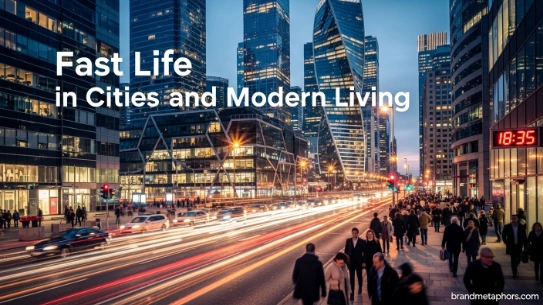
Cities are often described as fast-paced environments. People walk quickly, schedules are tight, and everything feels urgent.
We say “life in the fast lane” to describe this lifestyle. It suggests constant movement and little rest.
H3: Urban speed experience
- Crowded streets moving quickly
- Busy work routines
- Constant noise and activity
In this context, fast does not always feel positive. It can mean pressure or stress. These metaphors show that speed can be exciting but also overwhelming.
9. Fast Work and Productivity Metaphors
In work environments, speed is often seen as success. We say “fast delivery,” “quick results,” or “efficient workflow.” These metaphors link speed with performance.
A worker who completes tasks quickly is often praised for being “sharp” or “on the ball.”
H3: Workplace speed ideas
- Fast turnaround = quick completion
- Smooth workflow = uninterrupted progress
- Rapid growth = quick improvement
However, speed in work must balance with quality. Too fast can lead to mistakes. These metaphors remind us that efficiency is valuable, but control is also important.
10. Fast Communication and Instant Connection
Communication today is faster than ever. Messages travel instantly across the world. We often say “sent in a flash” or “instant reply.”
These metaphors reflect how technology has removed distance barriers.
H3: Communication speed examples
- “In a blink” = immediate response
- “One tap away” = easy access
- “Live connection” = real-time interaction
Fast communication changes relationships. People expect quick answers, and silence can feel longer than it really is. These metaphors shape how we interact daily.
11. Misunderstandings About Fast Metaphors
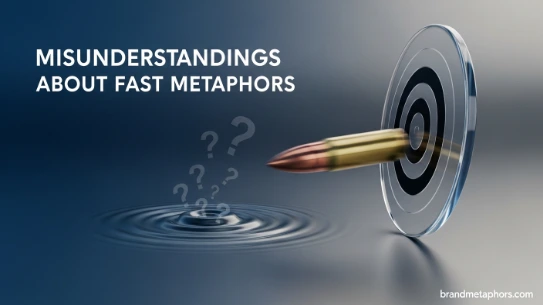
While metaphors for fast are powerful, they can also create confusion. Not all speed is positive. Sometimes fast means rushed, careless, or unstable.
For example, “fast decisions” may sound good, but they can also mean lack of thought.
H3: Common misunderstandings
- Fast = always good (not true)
- Fast = always efficient (not always)
- Fast = always accurate (often false)
Metaphors must be understood in context. A “fast life” can mean excitement or stress depending on how it is used. Balance is key when interpreting speed-related language.
Conclusion
Fast is more than a measure of time or movement—it is a feeling shaped by experience, emotion, and imagination. Through metaphors, we turn invisible speed into visible images like wind, lightning, racing hearts, and flowing rivers. These expressions help us understand not only how quickly things move, but also how we experience that movement in daily life.
From technology and nature to emotions and thoughts, speed surrounds us in many forms. Some are exciting, some overwhelming, and some inspiring. By understanding metaphors for fast, we gain a clearer view of how language reflects reality and shapes perception. In the end, speed is not just about going quickly—it is about how life feels when everything seems to move at once.
FAQs
H3: What are metaphors for fast?
They are expressions that compare speed to something else, like “lightning fast” or “as quick as the wind.”
H3: Why do we use metaphors for speed?
They help us understand and describe speed in a more vivid and emotional way.
H3: Is “time flies” a metaphor for fast?
Yes, it means time seems to pass very quickly, even though it does not literally fly.
H3: What is a common fast metaphor in daily life?
“Lightning fast” is commonly used to describe very quick actions or responses.
H3: Can fast metaphors describe emotions?
Yes, like “heart racing” to show excitement or fear.
H3: Are fast metaphors always positive?
No, they can also suggest stress, pressure, or lack of control.
H3: How do fast metaphors help communication?
They make ideas clearer, more emotional, and easier to imagine.