
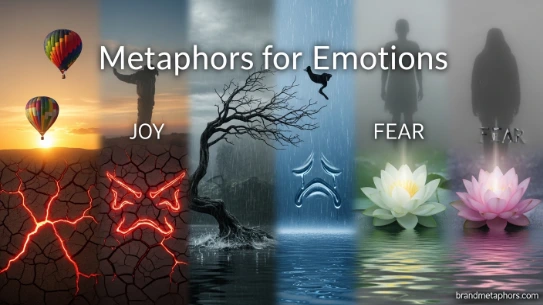
Picture this: you’re standing by a window during a storm. Rain lashes the glass, thunder rolls across the sky, and inside your chest, something feels just as restless. You pause and think, “My mind feels like a storm today.” In that moment, you’ve done something profoundly human—you’ve turned a feeling into a metaphor.
Emotions are often too complex, too layered, and too fleeting to describe directly. That’s where metaphors step in. They give shape to the invisible, turning abstract feelings into vivid, relatable images. Whether we describe love as a flame, anxiety as a buzzing hive, or sadness as a heavy cloud, metaphors help us understand ourselves and communicate with others more clearly.
In everyday life, metaphors for emotions are more than poetic devices—they are tools for reflection, healing, and connection. They allow us to process what we feel, express what we struggle to say, and even reshape our emotional experiences. This article explores the depth and richness of emotional metaphors, uncovering how they work, what they reveal, and how you can use them to better understand your inner world.
Why We Use Metaphors for Emotions
Emotions don’t come with clear labels. They swirl, overlap, and change quickly, making them hard to pin down. Metaphors act as bridges between the abstract and the concrete, helping us translate feelings into something we can grasp.
When someone says, “I feel like I’m drowning,” they may not literally be underwater, but the metaphor captures a sense of overwhelm more vividly than a clinical explanation ever could. It paints a picture, invites empathy, and communicates urgency.
Metaphors also simplify complexity. Instead of listing multiple emotional states, we bundle them into a single image—like calling stress a “pressure cooker.” That phrase instantly conveys intensity, buildup, and the risk of explosion.
On a deeper level, metaphors reflect how we experience emotions physically. Anger feels hot, fear feels cold, sadness feels heavy. These sensory connections make metaphors intuitive and universal.
In everyday conversations, we rely on them more than we realize. They slip into our language naturally, shaping how we think about our feelings. And the way we describe our emotions often influences how we cope with them.
Emotions as Weather: Storms, Sunshine, and Fog
One of the most common ways we describe emotions is through weather. It’s easy to see why—both are unpredictable, shifting, and beyond our full control.
Storms of Anger
Anger is often described as a storm: sudden, loud, and intense. It builds up, crashes down, and eventually passes. This metaphor reminds us that anger, like a storm, is temporary—even if it feels overwhelming in the moment.
Sunshine of Joy
Happiness often appears as sunshine—warm, bright, and energizing. When someone says they’re “basking in happiness,” it suggests a gentle, nourishing feeling that spreads through their life.
Fog of Confusion
Confusion or uncertainty is like fog. It blurs clarity, makes it hard to see the path ahead, and slows movement. But just like fog, it eventually lifts.
Using weather metaphors can help people accept emotions as natural and temporary. You don’t try to control the weather—you adapt to it. The same mindset can reduce resistance and increase emotional resilience.
The Weight of Emotions: Heavy Hearts and Light Spirits
Some emotions feel like physical burdens. We often describe sadness, guilt, or stress as something we carry.
A “heavy heart” suggests deep sorrow, as if something is pressing down from within. Similarly, saying “I feel weighed down” communicates exhaustion and emotional fatigue.
On the other hand, positive emotions are often described as light. A “light heart” or “feeling uplifted” suggests freedom, ease, and relief.
These metaphors reveal how closely emotions are tied to bodily sensations. Stress can feel like tension in the shoulders; sadness can feel like a sinking chest.
Recognizing these metaphors can also lead to practical coping strategies. If stress feels like weight, you might ask yourself: What can I set down? What can I release? This shift in thinking can make emotional burdens feel more manageable.
Fire and Ice: Temperature-Based Emotional Metaphors
Temperature is another powerful way we describe emotions. It’s immediate, sensory, and easy to understand.
Anger is almost always hot—burning, boiling, or simmering. These variations even suggest intensity. A simmering anger is controlled but present, while boiling anger is explosive.
Fear and rejection, on the other hand, are often cold. We speak of “cold shoulders,” “chilling realizations,” or “frozen with fear.” These metaphors suggest distance, isolation, and paralysis.
Love can go both ways. It can be a “warm embrace” or a “burning passion.” Each version reflects a different experience—comfort versus intensity.
Understanding these metaphors can help you regulate emotions. If anger feels like heat, you might cool down—literally or figuratively. If fear feels cold, you might seek warmth—connection, reassurance, or safety.
Emotional Waves: Rising, Crashing, and Flowing
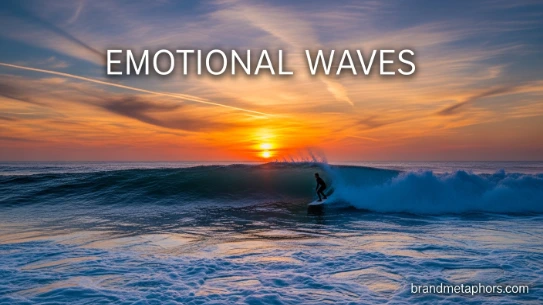
Emotions often move like water—fluid, dynamic, and impossible to hold still.
We talk about “waves of sadness” or being “overwhelmed by emotions.” These phrases suggest that feelings come in surges, not steady streams.
Riding the Wave
When people learn to “ride the wave” of emotions, they accept the rise and fall instead of resisting it. This approach is often used in emotional regulation techniques.
Drowning vs. Floating
Feeling like you’re drowning implies loss of control. Floating, however, suggests surrender and trust. The same emotional intensity can feel different depending on how you respond.
Water metaphors are powerful because they emphasize movement. No wave lasts forever, and no emotional state is permanent. This perspective can bring comfort during difficult times.
Emotional Metaphors in Relationships
Relationships are filled with metaphorical language. They help us describe the invisible dynamics between people.
Love is often a journey—“We’ve come a long way” or “We’re at a crossroads.” These metaphors suggest growth, direction, and shared paths.
Conflict can be described as a battle, which can sometimes escalate tension. Saying “We’re fighting” frames the situation as win-or-lose, while “We’re working through something” feels more collaborative.
Trust is often seen as a foundation. When it’s broken, the relationship feels unstable. Rebuilding it becomes like repairing a structure—slow, careful, and intentional.
These metaphors shape how we behave. If you see your relationship as a team effort rather than a battlefield, your approach to conflict naturally changes.
The Language of Darkness and Light
Light and darkness are deeply symbolic in emotional expression.
Sadness, depression, or confusion are often described as darkness—“a dark place,” “lost in the shadows,” or “no light at the end of the tunnel.” These phrases convey isolation and hopelessness.
Hope, clarity, and happiness are linked to light—“a ray of hope,” “seeing the light,” or “bright days ahead.”
These metaphors are powerful because they reflect human instincts. Light represents safety and understanding, while darkness suggests uncertainty and fear.
But it’s important to remember that darkness isn’t always negative. It can also represent rest, introspection, and quiet growth. Not every “dark phase” is harmful—some are necessary for transformation.
Emotional Metaphors in Personal Growth
Growth is often described through natural metaphors—plants, seasons, and journeys.
Healing might be seen as “mending wounds” or “growing new roots.” These images suggest time, care, and gradual progress.
Failure is often described as falling, while success is rising. These vertical metaphors reflect our sense of progress and achievement.
Seeds of Change
Change often starts small, like a seed. You nurture it, give it time, and eventually, it grows into something visible.
Climbing Mountains
Challenges are mountains. They require effort, patience, and persistence. Reaching the top brings perspective and accomplishment.
These metaphors help people reframe struggles as part of a larger process rather than isolated setbacks.
When Metaphors Mislead Us
While metaphors are helpful, they can also limit understanding if taken too literally.
For example, seeing emotions as enemies—“I need to fight my anxiety”—can create resistance and internal conflict. This mindset may make emotions feel more overwhelming.
Similarly, describing yourself as “broken” can reinforce negative self-perception, even if it’s meant figuratively.
Metaphors shape beliefs. If you constantly use harsh or limiting imagery, it can affect how you experience emotions.
A more helpful approach is to choose metaphors that empower rather than restrict. Instead of “fighting” emotions, you might “listen” to them or “navigate” them.
Creating Your Own Emotional Metaphors
Personal metaphors can be even more powerful than common ones because they reflect your unique experiences.
Think about a feeling you’ve had recently. What does it remind you of?
Maybe anxiety feels like a ticking clock, always counting down. Or maybe happiness feels like standing on a hill with a wide, open view.
The key is to choose imagery that resonates with you. There’s no right or wrong metaphor—only what feels accurate and meaningful.
Creating your own metaphors can also help with journaling, self-reflection, and communication. It allows you to express emotions in a way that feels authentic and clear.
Using Metaphors for Emotional Healing
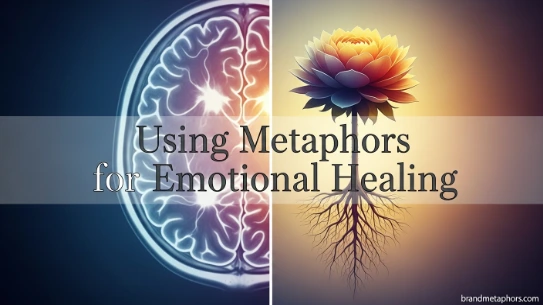
Metaphors aren’t just descriptive—they can be transformative.
If sadness feels like a storm, you can imagine yourself finding shelter. If anxiety feels like noise, you can picture turning down the volume.
These mental images can shift your emotional experience. They create a sense of control and possibility.
Therapists often use metaphor-based techniques to help clients reframe thoughts and feelings. By changing the metaphor, you can change your relationship with the emotion.
For example, instead of seeing grief as something that “traps” you, you might see it as a river you’re learning to cross.
Cultural Differences in Emotional Metaphors
Different cultures use different metaphors to describe emotions, reflecting unique perspectives.
In some cultures, emotions are tied to the heart, while others associate them with the mind or body. Some describe anger as heat, while others focus on pressure or imbalance.
These variations show that metaphors are shaped by environment, language, and shared experiences.
Understanding different metaphorical frameworks can broaden your perspective and improve communication with others. It reminds us that there’s no single “correct” way to describe emotions.
Everyday Situations Where Metaphors Matter
Metaphors show up in daily life more often than we notice.
At work, someone might say they’re “burned out,” suggesting exhaustion and depletion. In school, a student might feel “lost,” indicating confusion and lack of direction.
In friendships, we might talk about “drifting apart” or “building stronger bonds.” Each phrase carries emotional meaning beyond the literal words.
Recognizing these metaphors can improve empathy. When someone says they’re “carrying a lot,” you understand that they need support, not just solutions.
It also helps you communicate more clearly. Choosing the right metaphor can make your feelings easier for others to understand.
Reflecting on Your Emotional Language
Take a moment to think about how you usually describe your emotions.
Do you use harsh, heavy metaphors? Or do you lean toward gentle, fluid ones?
Your language matters. It shapes how you interpret your experiences and how others respond to you.
If your metaphors feel limiting, you can change them. Instead of saying, “I’m stuck,” you might say, “I’m figuring things out.” The situation may be the same, but the emotional tone shifts.
This doesn’t mean ignoring difficult emotions—it means approaching them with language that supports growth and understanding.
Conclusion
Metaphors for emotions are more than poetic expressions—they are tools for clarity, connection, and transformation. They help us make sense of feelings that are otherwise difficult to define, turning abstract experiences into vivid, relatable images. From storms and waves to light and weight, these metaphors shape how we perceive and respond to our inner world.
By becoming more aware of the metaphors we use, we gain the power to shift our perspective. We can choose language that reflects resilience instead of struggle, movement instead of stagnation, and possibility instead of limitation. Whether you’re navigating a difficult moment or savoring joy, the right metaphor can bring insight and comfort. Ultimately, understanding emotional metaphors is a step toward understanding yourself—and that awareness can make all the difference.
FAQs
What are metaphors for emotions?
Metaphors for emotions are figurative expressions that describe feelings using vivid, relatable imagery, such as comparing anger to fire or sadness to a heavy weight.
Why are emotional metaphors important?
They help simplify complex feelings, improve communication, and allow people to better understand and process their emotions.
Can metaphors change how we feel?
Yes, the way you describe emotions can influence your perception and response, making some feelings easier to manage.
What are common examples of emotional metaphors?
Examples include “a storm of anger,” “a heavy heart,” “waves of sadness,” and “a light at the end of the tunnel.”
How can I create my own emotional metaphors?
Think about how a feeling looks, sounds, or feels physically, then compare it to something familiar, like nature or everyday experiences.
Are emotional metaphors universal?
Some are widely shared, but many vary across cultures and personal experiences.
Can metaphors ever be harmful?
Yes, negative or limiting metaphors can reinforce unhelpful beliefs, so it’s important to choose ones that support understanding and growth.