
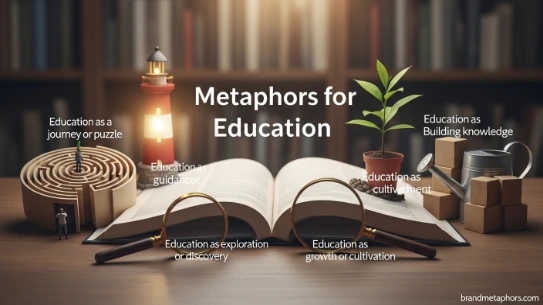
Imagine a child standing at the edge of a vast ocean, hesitant but curious. Each wave that reaches their feet brings both excitement and uncertainty. Education often feels just like that—an endless body of knowledge waiting to be explored, sometimes overwhelming, yet filled with possibility. We don’t always understand learning simply through definitions or systems; instead, we grasp it through images, stories, and comparisons that give it shape and meaning.
This is where metaphors for education become powerful. They turn abstract ideas into something tangible. They help us see learning not just as schoolwork, but as growth, transformation, and discovery. Whether education is seen as a journey, a garden, or a bridge, each metaphor reveals a new layer of understanding about how we learn and why it matters.
In this article, we will explore a wide range of metaphors for education—each offering insight into the emotional, intellectual, and practical dimensions of learning. By the end, you may not only understand education differently, but also experience it in a more meaningful way.
Education as a Journey
Education is often described as a journey, and for good reason. Like any journey, it has a starting point, a path, obstacles, and a destination—though the destination is rarely fixed.
When a student begins school, they are like a traveler stepping onto an unfamiliar road. Along the way, they encounter challenges—difficult subjects, exams, and moments of doubt. But they also experience discovery, growth, and achievement. Each lesson becomes a milestone, each teacher a guide.
The Twists and Turns
Not every path in education is straight. Students may change interests, struggle in certain areas, or take unexpected directions. These twists are not failures—they are part of the journey.
The Companions Along the Way
Friends, mentors, and teachers shape the journey. They influence how students experience learning, just as travel companions shape a trip.
Seeing education as a journey reminds us that progress matters more than perfection. It encourages patience and resilience, helping learners embrace both success and struggle.
Education as a Garden
Another powerful metaphor is education as a garden. In this view, knowledge is not forced—it is cultivated.
Students are like plants. They need time, care, and the right conditions to grow. Teachers act as gardeners, providing guidance, nourishment, and support.
Seeds of Knowledge
Every lesson is a seed. Some sprout quickly, while others take time. Not all seeds grow at the same pace, and that’s okay.
The Role of Environment
A garden thrives when the environment is supportive. Similarly, students grow best in encouraging and safe learning spaces.
This metaphor highlights patience. Learning cannot be rushed. Just like a garden, education requires consistent care and belief in growth over time.
Education as a Building
Education can also be seen as constructing a building. Each piece of knowledge is like a brick, carefully placed to form a strong structure.
A solid foundation is essential. Basic skills—reading, writing, and critical thinking—form the base upon which all future learning stands.
Building Layer by Layer
Students cannot skip steps. Just as a building collapses without proper support, learning weakens when foundational concepts are ignored.
Strength Through Structure
As knowledge grows, connections form. Subjects begin to relate to one another, strengthening understanding.
This metaphor teaches the importance of consistency. Learning is not about quick results—it is about building something that lasts.
Education as Light
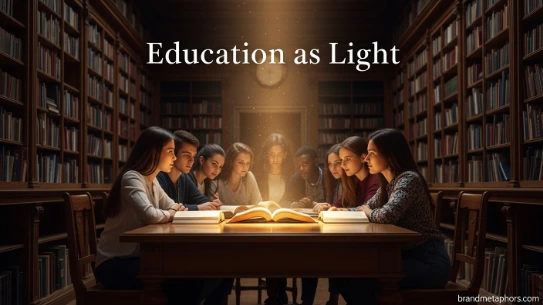
Education is often compared to light, illuminating darkness and revealing what was once hidden.
When someone learns something new, it’s like turning on a light in a dark room. Suddenly, things make sense. Confusion fades.
Dispelling Ignorance
Ignorance is often seen as darkness. Education brings clarity, helping individuals make informed decisions.
Guiding the Way
Light doesn’t just reveal—it guides. Education helps people navigate life with awareness and confidence.
This metaphor emphasizes the transformative power of knowledge. It shows how learning can change perspectives and open new possibilities.
Education as a Key
Education is frequently described as a key—something that unlocks doors to opportunities.
Without education, many paths remain closed. With it, individuals gain access to careers, ideas, and experiences they might never have imagined.
Unlocking Potential
Each person has potential, but education helps reveal it. It opens doors to talents and abilities that may otherwise remain hidden.
Multiple Doors, Multiple Paths
Not all keys open the same door. Different types of education lead to different opportunities.
This metaphor encourages learners to value education as a tool for empowerment and freedom.
Education as a Bridge
Education can also be seen as a bridge—connecting where we are to where we want to be.
It links ignorance to knowledge, dreams to reality, and limitations to possibilities.
Crossing the Gap
Students often start with uncertainty. Education helps them cross into understanding and confidence.
Connecting Worlds
Education connects cultures, ideas, and perspectives. It allows people to understand others more deeply.
This metaphor reminds us that learning is not just personal—it is also a way to connect with the world.
Education as a Toolbox
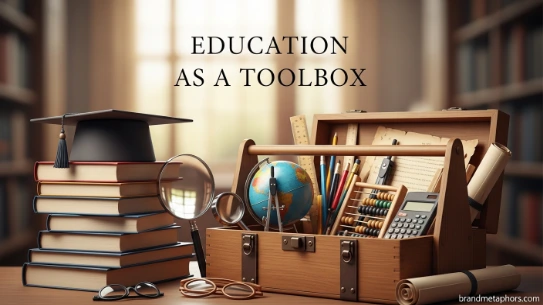
In this metaphor, education is not just knowledge—it’s a collection of tools.
Each skill learned—problem-solving, communication, creativity—is a tool that can be used in different situations.
Choosing the Right Tool
Not every situation requires the same approach. Education helps individuals decide which tool to use and when.
Practical Application
Learning becomes meaningful when applied. Tools are only useful when used.
This perspective emphasizes practical learning, encouraging students to apply what they know in real life.
Education as a Story
Education can be viewed as a story—one that each person writes throughout their life.
Every lesson is a chapter. Every challenge adds depth to the narrative.
Personal Narratives
No two educational journeys are the same. Each student creates their own unique story.
Growth Through Plot Twists
Failures and setbacks are not endings—they are plot twists that lead to growth.
This metaphor makes learning feel personal and meaningful, reminding students that they are active participants in their own development.
Education as a Mirror
Education also acts as a mirror, reflecting who we are and who we can become.
Through learning, individuals discover their strengths, weaknesses, and interests.
Self-Discovery
Subjects often reveal hidden passions. A student may discover a love for science, art, or literature.
Reflection and Growth
Education encourages reflection. It helps individuals understand their thoughts and beliefs.
This metaphor highlights the introspective side of learning, showing that education is as much about self-awareness as it is about knowledge.
Education as a Ladder
A common metaphor is education as a ladder, representing upward movement and progress.
Each step represents a level of achievement, bringing individuals closer to their goals.
Step-by-Step Progress
Climbing takes effort. Skipping steps can lead to instability.
Reaching New Heights
Education helps individuals rise above limitations, achieving things they once thought impossible.
This metaphor reinforces perseverance and gradual improvement.
Education as Exploration
Education is also like exploration—an adventure into the unknown.
Students are explorers, discovering new ideas, perspectives, and possibilities.
Curiosity as a Compass
Curiosity drives exploration. It motivates learners to ask questions and seek answers.
Discovering New Worlds
Subjects open doors to different worlds—science, history, art, and beyond.
This metaphor encourages a sense of wonder, making learning exciting rather than burdensome.
Education as a Conversation
Education can be seen as an ongoing conversation—between students, teachers, and ideas.
Learning is not just about receiving information; it is about engaging with it.
Dialogue and Understanding
Discussion deepens understanding. Different perspectives enrich learning.
Listening and Responding
Education teaches both speaking and listening—essential skills for life.
This metaphor highlights the interactive nature of learning, emphasizing communication and collaboration.
Education as Transformation

Education is ultimately a process of transformation.
It changes how individuals think, feel, and act. A person who learns is not the same as before.
From Uncertainty to Confidence
Knowledge builds confidence. It empowers individuals to face challenges.
Evolving Identity
Education shapes identity. It influences values, beliefs, and goals.
This metaphor captures the profound impact of learning on personal development.
Education as a Compass
Finally, education can be seen as a compass—guiding decisions and direction in life.
It doesn’t dictate a single path, but it helps individuals choose wisely.
Direction, Not Destination
Education provides guidance, not fixed answers. It helps individuals navigate uncertainty.
Making Informed Choices
With knowledge, people make better decisions about careers, relationships, and life goals.
This metaphor emphasizes the guiding role of education in shaping a meaningful life.
Conclusion
Education is far more than classrooms, textbooks, or exams. Through metaphors, we begin to see it as a living, evolving experience—a journey, a garden, a bridge, and so much more. Each metaphor reveals a different truth: that learning requires patience, builds strength, opens opportunities, and transforms identity.
When we view education through these lenses, it becomes less about pressure and more about possibility. It reminds us that growth takes time, mistakes are part of the process, and every step forward matters. Ultimately, education is not just about what we know—it’s about who we become. And like any powerful force, its meaning deepens the more we explore it.
FAQs
What are metaphors for education?
Metaphors for education are comparisons that describe learning in creative ways, such as a journey, garden, or bridge, to make it easier to understand.
Why are metaphors important in understanding education?
They simplify complex ideas, making education more relatable and emotionally meaningful.
Which metaphor best describes education?
There is no single best metaphor. It depends on perspective—some see it as a journey, others as growth or transformation.
How can metaphors improve learning?
They help students visualize concepts, making information easier to remember and apply.
Are metaphors used in teaching?
Yes, teachers often use metaphors to explain difficult ideas in a simple and engaging way.
Can metaphors change how students feel about education?
Absolutely. Positive metaphors can make learning feel exciting, meaningful, and less stressful.
How can I create my own metaphor for education?
Think about your personal experience with learning and compare it to something familiar, like travel, growth, or discovery.