
When Anxiety Feels Like a Storm Inside Your Chest
It begins quietly sometimes. A tiny flutter in your stomach. A racing thought that refuses to sit still. The room looks the same, the people sound the same, yet inside, something shifts. Your heartbeat becomes a drumline. Your thoughts scatter like startled birds. Anxiety arrives not always as panic, but as pressure, noise, fog, or fire.
That is why metaphors for anxiety matter.
Anxiety is difficult to explain in plain language because it is deeply emotional and physical at the same time. One person describes it as drowning in invisible water. Another calls it a buzzing beehive trapped inside the mind. Metaphors help transform those invisible feelings into images we can understand, share, and even heal through.
Writers, therapists, teachers, and everyday people use anxiety metaphors to express emotions that otherwise feel impossible to name. They create connection. They reduce shame. Others give texture to experiences that often feel lonely or misunderstood.
In this article, you will explore powerful metaphors for anxiety, learn how to use them creatively, discover practical writing prompts, and find vivid comparisons that can strengthen storytelling, social media captions, poetry, journaling, and emotional conversations. Whether you are a writer searching for emotional depth or someone trying to understand your own feelings, these metaphors can become lanterns in dark emotional spaces.
What Are Metaphors for Anxiety?
A metaphor compares one thing to another without using “like” or “as.” Instead of saying, “I felt nervous,” a metaphor paints a picture.
For example:
- “Anxiety was a smoke alarm screaming in my chest.”
- “My thoughts became tangled wires.”
- “Fear sat on my shoulders like wet cement.”
These images create emotional clarity. They allow readers and listeners to feel the emotion instead of merely hearing about it.
Anxiety metaphors are especially powerful because anxiety itself is often invisible. Someone may appear calm while internally fighting a hurricane of thoughts.
Writers from classic literature to modern psychology use metaphorical language to capture emotional struggles. In poetry, anxiety may become shadows, storms, cages, or labyrinths. In films, it is often shown through ticking clocks, crowded noise, or collapsing spaces.
The beauty of metaphor is that it turns emotion into imagery. And imagery stays with us.
Metaphors for Anxiety as Storms and Weather
Weather metaphors are among the most common ways to describe anxiety because emotions can feel unpredictable and uncontrollable.
Anxiety as a Thunderstorm
Meaning: Anxiety can arrive suddenly, loudly, and overwhelmingly.
Example: “Before the interview, anxiety rolled through me like a thunderstorm cracking open the sky.”
Alternative expressions:
- Emotional hurricane
- Mental lightning
- Storm clouds in the mind
- Tornado of fear
Sensory details: Imagine heavy air before rain. The tension. The electricity. The feeling that something bad is coming.
Mini storytelling: A student sits outside an exam hall twisting a pencil between trembling fingers. The hallway is silent, but inside her chest thunder crashes endlessly.
Anxiety as Fog
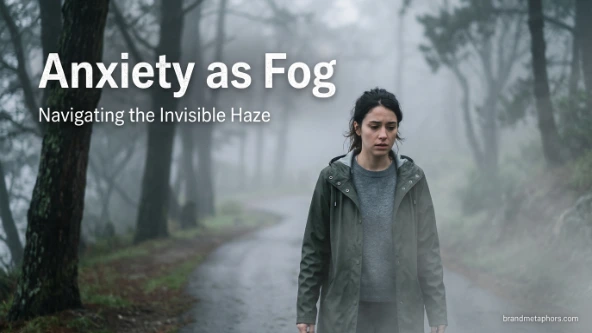
Meaning: Anxiety clouds judgment and makes thinking difficult.
Example: “My mind disappeared into a thick gray fog.”
Alternative expressions:
- Mental haze
- Clouded thoughts
- Mist-covered thinking
Fog metaphors work beautifully in poetry and reflective writing because they capture uncertainty without dramatic intensity.
Interactive Exercise
Write about a stressful moment using weather imagery only. Avoid words like “anxiety” or “fear.” Instead, describe emotional tension through rain, wind, fog, or lightning.
Anxiety as a Monster Under the Bed
Many people describe anxiety as a creature lurking nearby. This metaphor reflects fear that feels alive and unpredictable.
The Invisible Monster
Meaning: Anxiety feels threatening even when no visible danger exists.
Example: “Anxiety followed me through the day like a hungry creature waiting for weakness.”
Alternative ways to express it:
- Inner demon
- Shadow beast
- Whispering monster
- Emotional predator
This metaphor appears frequently in fantasy novels and psychological films because it externalizes emotional struggle.
Why This Metaphor Works
Humans naturally understand danger through stories and creatures. Turning anxiety into a monster allows people to separate themselves from the emotion.
Instead of saying: “I am broken.”
The metaphor becomes: “I am fighting something difficult.”
That shift changes everything.
Real-Life Reflection
Children often explain anxiety more honestly than adults: “It feels like a monster in my stomach.”
Simple. Accurate. Powerful.
Metaphors for Anxiety as Drowning
One of the most emotionally intense anxiety metaphors involves water.
Anxiety as Drowning
Meaning: Anxiety can create helplessness and emotional suffocation.
Example: “I was drowning in thoughts I could not silence.”
Alternative expressions:
- Sinking beneath pressure
- Pulled under by fear
- Lost at sea emotionally
- Waves of panic
Emotional Impact
Water metaphors feel universal because nearly everyone understands the terror of losing air or control.
Writers often use:
- Oceans
- Floods
- Rip currents
- Tsunamis
These images emphasize emotional overwhelm.
Literary Reference
In many novels, oceans symbolize the subconscious mind. Anxiety becomes the deep water beneath a seemingly calm surface.
A person smiles politely at dinner while internally struggling to keep their head above emotional waves.
Creative Prompt
Write about anxiety as an ocean journey. Are you drifting, drowning, floating, or searching for shore?
Anxiety as a Prison or Cage
Some anxiety metaphors focus on restriction and limitation.
Feeling Trapped
Meaning: Anxiety prevents freedom, confidence, or action.
Example: “My anxiety locked every exit door in my mind.”
Alternative expressions:
- Emotional cage
- Prison of thoughts
- Chains of worry
- Locked inside fear
This metaphor strongly resonates with people who experience social anxiety or overthinking.
Sensory Experience
Think of tight walls, shallow breathing, or locked windows. Claustrophobic imagery mirrors emotional restriction.
Mini Storytelling
A man wants to speak during a meeting. His ideas are brilliant, but anxiety builds invisible walls around his voice. By the time courage arrives, the conversation has already moved on.
Bonus Tip for Writers
Use prison metaphors sparingly but vividly. Specific imagery is more powerful than generic sadness.
Weak: “Anxiety trapped me.”
Stronger: “Anxiety bolted shut every doorway between my thoughts and my voice.”
Metaphors for Anxiety as Noise
Sometimes anxiety is not silence or heaviness. Sometimes it is unbearable noise.
Anxiety as Static
Meaning: Anxiety interrupts clear thinking.
Example: “My brain buzzed with static all night.”
Alternative expressions:
- Mental radio interference
- Buzzing hive
- Loud inner alarms
- Endless background noise
Anxiety as a Screaming Smoke Alarm
Meaning: The body reacts to danger even when danger is absent.
Example: “My nervous system became a smoke alarm that never switched off.”
This metaphor is common in therapy because anxiety often involves overactive survival instincts.
Everyday Connection
Have you ever tried sleeping while hearing dripping water or constant buzzing? Anxiety can feel similar. Small thoughts become impossible to ignore.
Interactive Prompt
Describe anxiety using sound only:
- buzzing
- sirens
- whispers
- explosions
- echoes
- ticking clocks
Avoid visual descriptions entirely.
Animal Metaphors for Anxiety
Animals create vivid emotional imagery because they carry symbolic meaning.
Anxiety as a Rabbit
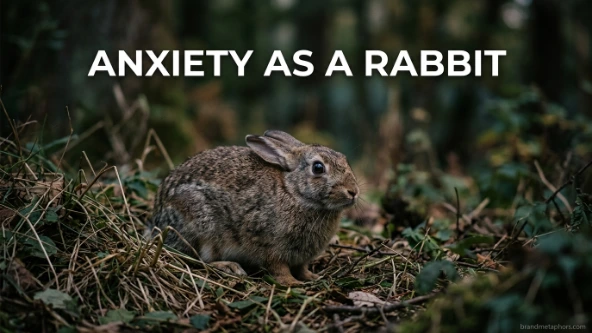
Meaning: Constant alertness and fear.
Example: “My thoughts darted around like frightened rabbits.”
Anxiety as Bees
Meaning: Racing thoughts that sting repeatedly.
Example: “Anxiety swarmed through my head like angry bees.”
Alternative expressions:
- Hive mind
- Buzzing panic
- Swarm of worry
Anxiety as a Deer in Headlights
Meaning: Frozen fear and inability to act.
Example: “When they called my name, I froze like a deer in headlights.”
Why Animal Metaphors Work
Animals trigger instinctive emotional reactions. A trapped bird or cornered animal instantly communicates fear and vulnerability.
Fire Metaphors for Anxiety
Fire imagery captures intensity, destruction, and uncontrollable emotion.
Anxiety as Wildfire
Meaning: Small worries spread rapidly.
Example: “One anxious thought became a wildfire consuming my entire day.”
Alternative expressions:
- Burning nerves
- Flames of panic
- Smoldering dread
Anxiety as Sparks
Meaning: Anxiety begins small but grows quickly.
Example: “A tiny spark of doubt ignited hours of overthinking.”
Emotional Layer
Fire metaphors often suggest exhaustion afterward. Once anxiety burns through energy, emotional emptiness follows.
Cultural Connection
Many myths and stories use fire to symbolize danger, transformation, or punishment. Anxiety metaphors borrow that emotional intensity naturally.
Technology and Machine Metaphors for Anxiety
Modern life inspires modern metaphors.
Anxiety as a Glitching Computer
Meaning: Thoughts malfunction or overload.
Example: “My brain kept buffering during the conversation.”
Alternative expressions:
- Mental crash
- Overheated processor
- Endless loading screen
- Emotional short-circuit
Anxiety as Too Many Browser Tabs
This popular social media metaphor feels relatable to modern audiences.
Example: “My mind had fifty tabs open and one was playing panic music.”
Why it works: It combines humor with truth.
Bonus Social Media Tip
Technology metaphors perform especially well in short-form content because they are modern, visual, and instantly understandable.
Example caption: “Today my brain is just a spinning loading wheel.”
Creative Ways to Use Anxiety Metaphors in Writing
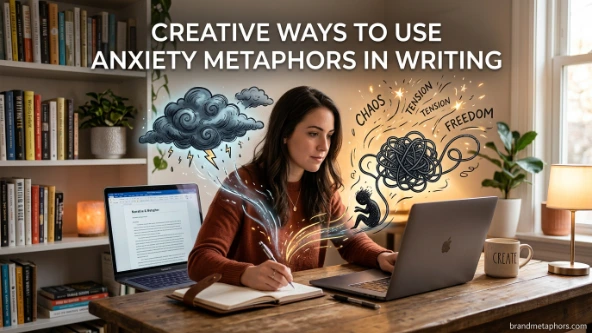
Metaphors become more powerful when used intentionally.
Show Emotion Instead of Naming It
Instead of: “She felt anxious.”
Try: “Her thoughts fluttered like trapped moths against a lightbulb.”
Readers feel the emotion more deeply.
Combine Physical and Emotional Sensations
Strong anxiety metaphors involve the body:
- tight chest
- cold hands
- shaking knees
- shallow breathing
Example: “Anxiety wrapped icy fingers around my ribs.”
Use Contrast
Pair calm surroundings with emotional chaos.
Example: “The café smelled of cinnamon and coffee, but inside my chest, sirens screamed.”
Contrast creates dramatic tension.
Avoid Overused Metaphors
Some comparisons become predictable:
- butterflies in stomach
- nervous wreck
- bundle of nerves
Try fresh imagery instead:
- cracked ice beneath your feet
- tangled headphone wires in the brain
- flickering hallway lights
Interactive Exercises to Create Your Own Anxiety Metaphors
Exercise 1: The Object Method
Choose an ordinary object:
- umbrella
- clock
- mirror
- candle
- backpack
Now connect it to anxiety.
Example: “Anxiety was a backpack filled with invisible bricks.”
Exercise 2: Five-Sense Writing
Describe anxiety through:
- sight
- sound
- smell
- taste
- touch
Example: “Anxiety tasted like pennies and burnt coffee.”
Exercise 3: Character Creation
Imagine anxiety as a fictional character.
Ask:
- What does it wear?
- How does it speak?
- Does it whisper or shout?
- Does it move quickly or slowly?
This exercise works wonderfully for poetry and journaling.
Using Anxiety Metaphors in Daily Life and Healing
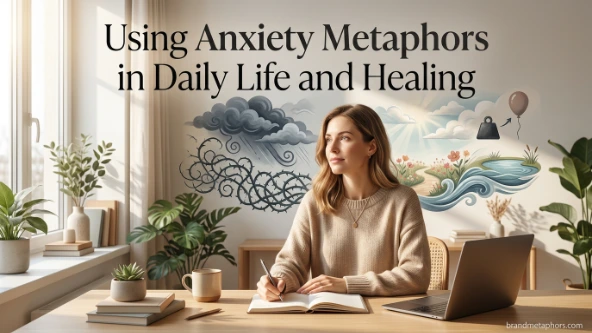
Metaphors are not just literary tools. They can also support emotional understanding.
Journaling
Writing: “I feel anxious” is useful.
But writing: “My mind feels like a crowded train station at midnight” creates emotional depth and clarity.
Conversations
Metaphors help others understand experiences they may never personally feel.
Saying: “It feels like I am carrying an alarm bell in my chest” often communicates more effectively than clinical language.
Social Media Content
Short metaphorical lines connect emotionally online.
Examples:
- “My thoughts are sprinting while my body begs for rest.”
- “Anxiety is a shadow that grows louder at night.”
- “My mind keeps rehearsing disasters that never happen.”
In Healing
Therapists sometimes ask patients to describe anxiety metaphorically because imagery can uncover hidden emotions safely.
A metaphor creates distance between identity and emotion. You are not the storm. You are the person surviving it.
Conclusion
Anxiety is deeply human, yet often difficult to explain. That is why metaphors matter so much. They transform invisible emotions into tangible images. A storm. A cage. A wildfire. A swarm of bees. These comparisons give shape to feelings that otherwise remain trapped inside silence.
The best metaphors for anxiety do more than sound beautiful. Others create understanding. They help writers express emotional truth. They help readers feel less alone. Others turn confusion into connection.
Whether you are crafting poetry, writing fiction, posting thoughtful captions online, journaling after a difficult day, or simply searching for words to explain your emotions, anxiety metaphors can become bridges between inner experience and outer expression.
Sometimes healing begins not with answers, but with language finally finding the feeling.
FAQs About Metaphors for Anxiety
What is the best metaphor for anxiety?
There is no single best metaphor because anxiety feels different for everyone. Common powerful metaphors include storms, drowning, cages, wildfires, and buzzing bees.
Why are metaphors useful for describing anxiety?
Metaphors make invisible emotions easier to understand. They create vivid imagery that helps others emotionally connect with the experience.
Can anxiety metaphors help in therapy or journaling?
Yes. Therapists and writers often use metaphors to explore emotions safely and creatively. They help people describe feelings that are hard to explain directly.
What are some short anxiety metaphors for social media?
Popular examples include:
- “My mind is a browser with too many tabs.”
- “Anxiety is thunder without rain.”
- “My chest feels like a locked room.”
How can writers create original metaphors for anxiety?
Start with sensory details, objects, weather, animals, or sounds. Think about how anxiety feels physically and emotionally, then compare that experience to something vivid and specific.