

Introduction: When the World Turns to Gold
The first cool breeze of autumn often arrives quietly. One morning, the trees still glow green beneath the fading summer sun, and by evening, a few amber leaves dance across the sidewalk like tiny burning letters from nature. The air smells of wood smoke and rain-soaked earth. Sweaters return from closets. Windows fog gently with warmth from kitchens where cinnamon and apples simmer together. Autumn does not simply arrive—it transforms everything it touches.
That transformation is exactly why autumn inspires so many metaphors. Writers, poets, teachers, songwriters, and everyday storytellers use autumn as a symbol for change, maturity, endings, comfort, wisdom, and renewal. A single falling leaf can represent letting go. A harvest field may symbolize abundance after hard work. The season itself becomes a mirror for human emotions.
Metaphors about autumn help us express feelings that are difficult to explain directly. They add texture to writing, depth to conversations, and emotional color to storytelling. Whether you are crafting poetry, improving creative writing, posting thoughtful captions on social media, or simply searching for beautiful ways to describe fall, these metaphors can make your words unforgettable.
In this guide, you’ll explore vivid autumn metaphors, practical examples, creative exercises, literary inspiration, and ways to use seasonal imagery in daily life. So grab a warm drink, imagine leaves crunching beneath your feet, and step into the golden world of autumn language.
Autumn as a Golden Goodbye
One of the most common metaphors for autumn is the idea of a graceful farewell. The season often represents endings that are beautiful rather than tragic.
Autumn becomes “a golden goodbye” because it marks the slow departure of warmth, long days, and blooming life. Yet unlike harsh endings, this farewell glows with beauty and wisdom.
Meaning and Symbolism
This metaphor highlights:
- Change and transition
- Acceptance of endings
- The beauty found in letting go
- Emotional maturity
Example Sentence
“Autumn was the earth’s golden goodbye before winter silence arrived.”
Alternative Expressions
- Autumn is nature’s farewell letter.
- Fall is the sunset of the year.
- Autumn is a soft closing chapter.
Sensory Details
Imagine copper-colored leaves drifting through cool air while the sky fades into pale orange twilight. The beauty makes the ending feel peaceful instead of painful.
Mini Storytelling Example
A retired teacher walks home after her final day at school. Leaves tumble around her shoes as she smiles quietly. The season reflects her life stage perfectly—an ending filled with warmth, memory, and dignity.
Bonus Tip for Writers
Use this metaphor when writing about:
- Graduations
- Retirement
- Relationship transitions
- Growing older gracefully
It creates emotional resonance without sounding overly dramatic.
Autumn as a Painter’s Masterpiece
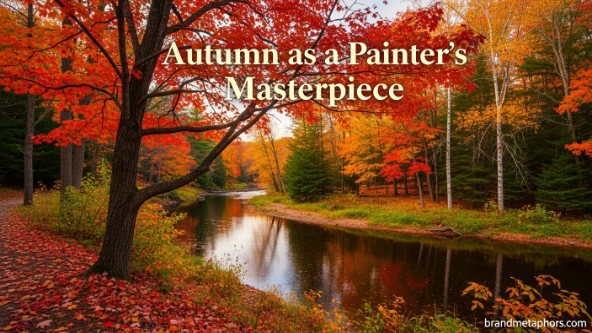
Autumn is often compared to a great artist painting the world in fiery colors. Forests suddenly burst into shades of crimson, amber, bronze, and gold like brushstrokes across a giant canvas.
Meaning and Explanation
This metaphor emphasizes:
- Creativity
- Natural beauty
- Transformation
- Artistic expression
Example Sentence
“Autumn swept across the hills like a painter splashing gold onto a fading canvas.”
Alternative Ways to Express It
- Fall is nature’s art gallery.
- The trees wear painted fire.
- Autumn colors are the earth’s watercolor dreams.
Cultural and Literary Reference
Many famous poets and painters celebrated autumn’s artistic beauty. Romantic writers often described forests as living paintings filled with emotional energy. Artists like Claude Monet captured seasonal light to show how nature changes mood and meaning.
Interactive Writing Prompt
Look outside or imagine an autumn landscape. Write five color-based metaphors inspired by painting.
Examples:
- “The trees dripped with melted copper.”
- “The hills wore watercolor shadows.”
Social Media Caption Idea
“Autumn paints the world in colors summer was too shy to try.”
Emotional Texture
This metaphor feels warm, imaginative, and visually rich. It works especially well in poetry and descriptive prose.
Autumn as a Wise Old Storyteller
There is something deeply reflective about autumn. The slower pace, longer evenings, and fading light encourage thoughtfulness. That is why autumn is often compared to an elderly storyteller filled with wisdom.
Meaning
This metaphor suggests:
- Experience and maturity
- Reflection
- Quiet understanding
- Lessons learned over time
Example Sentence
“Autumn spoke like a wise old storyteller, rustling secrets through the trees.”
Alternative Expressions
- Fall whispers ancient truths.
- Autumn carries the voice of memory.
- The season turns pages filled with wisdom.
Real-Life Connection
Many people feel nostalgic during autumn. Old memories surface more easily when the weather cools and routines change. Childhood afternoons, school days, family gatherings, and old friendships often return to mind during this season.
Sensory Layer
Picture a crackling fireplace, dry leaves brushing across pavement, and soft rain tapping windows while stories unfold indoors.
Creative Exercise
Write about an autumn evening as if the season were an elderly person giving life advice. What would autumn say about:
- Love?
- Time?
- Failure?
- Growth?
Bonus Writing Tip
This metaphor works beautifully in memoirs and emotional storytelling because it naturally creates intimacy and reflection.
Autumn as a Second Spring
Although autumn is associated with endings, it also contains surprising beauty and renewal. Some writers describe autumn as “a second spring” because the leaves bloom with color before falling.
Meaning and Symbolism
This metaphor highlights:
- Unexpected beauty
- Reinvention
- Late transformation
- Hope during change
Example Sentence
“Autumn became a second spring where every leaf bloomed like a flower.”
Alternative Ways to Say It
- Fall is the final bloom of the year.
- Autumn flowers through leaves instead of petals.
- The season burns brightly before sleep.
Literary Reference
The phrase “Autumn is a second spring when every leaf is a flower” is famously associated with Albert Camus. The idea reminds us that beauty can emerge even during endings.
Emotional Effect
This metaphor feels hopeful rather than sad. It reminds readers that change can still contain wonder.
Interactive Prompt
Think of a difficult period in your life that unexpectedly led to growth. Compare it to autumn using a metaphor.
Example: “My heartbreak became an autumn tree, losing old leaves to make room for new skies.”
Everyday Use
This metaphor works wonderfully in:
- Inspirational writing
- Graduation speeches
- Journal reflections
- Motivational captions
Autumn as a Slow Burning Fire
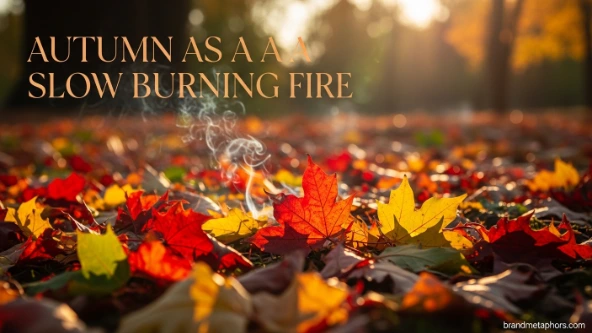
Autumn colors often resemble flames. Orange trees glow at sunset while red leaves flicker in windy streets. Because of this, autumn is frequently compared to fire.
Meaning
This metaphor symbolizes:
- Passion fading slowly
- Warmth mixed with danger
- Emotional intensity
- Transformation through change
Example Sentence
“The forest burned quietly with autumn fire.”
Alternative Expressions
- The trees smoldered with color.
- Autumn lit the hills in amber flames.
- Fall crackled through the woods like firelight.
Sensory Description
Dry leaves crunch like sparks beneath shoes. Chilly winds sharpen the scent of smoke. Sunset glows deeper and richer.
Mini Storytelling Example
Two old friends meet beside a bonfire in October after years apart. Around them, trees blaze with red leaves. The fire mirrors their lingering emotions and shared memories.
Bonus Tip for Poets
Combine fire imagery with emotional themes:
- Love
- Nostalgia
- Anger
- Transformation
It creates vivid emotional depth.
Autumn as Nature’s Letting Go
Perhaps the most powerful autumn metaphor is the idea of release. Trees shed leaves without resistance. Nature teaches surrender.
Meaning and Explanation
This metaphor reflects:
- Acceptance
- Emotional release
- Personal growth
- Moving forward
Example Sentence
“The trees taught me autumn’s lesson: sometimes growth begins with letting go.”
Alternative Expressions
- Fall is nature unclenching its hands.
- Autumn releases what summer held tightly.
- Leaves fall like old worries drifting away.
Emotional Connection
People often relate this metaphor to:
- Healing after heartbreak
- Leaving toxic habits
- Personal reinvention
- Emotional freedom
Interactive Reflection Exercise
Write down three things you need to release from your life. Then compare each one to a falling leaf.
Example: “My fear fell like a brittle leaf carried away by October wind.”
Practical Daily-Life Use
This metaphor works beautifully in:
- Journaling
- Therapy reflections
- Motivational writing
- Mindfulness exercises
Autumn as a Cozy Blanket
Not all autumn metaphors are dramatic. Some focus on comfort. Cool weather, warm drinks, layered clothing, and candlelight make autumn feel safe and comforting.
Meaning
This metaphor symbolizes:
- Security
- Warmth
- Rest
- Emotional comfort
Example Sentence
“Autumn wrapped the town in a quilt of fog and cinnamon air.”
Alternative Ways to Express It
- Fall is a warm sweater for the soul.
- Autumn tucks the world into softness.
- The season cradles the earth gently.
Sensory Imagery
Think of:
- Wool scarves
- Pumpkin spice
- Rain on rooftops
- Soft golden lighting
- Thick blankets
Real-Life Example
Many people become more reflective and home-centered during autumn. Cafés fill with warm conversations while families gather indoors more often.
Social Media Caption
“Autumn feels like being hugged by the weather.”
Bonus Creative Tip
Use cozy metaphors to create emotional warmth in lifestyle blogs, romance writing, and seasonal marketing content.
Autumn as a Clock Ticking Toward Winter
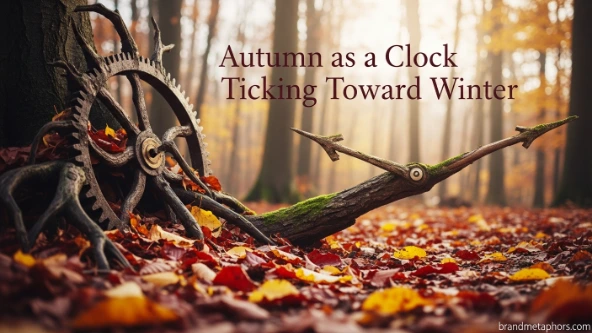
Autumn can also symbolize time running forward. Falling leaves remind us that nothing lasts forever.
Meaning
This metaphor represents:
- Mortality
- Passing time
- Change
- Awareness of life’s cycles
Example Sentence
“Every falling leaf sounded like a tiny clock ticking toward winter.”
Alternative Expressions
- Autumn counts the final golden days.
- Fall measures time in drifting leaves.
- The season whispers that time moves on.
Literary Connection
Many classic poems use autumn to reflect on aging and temporary beauty. The season naturally invites philosophical thinking.
Emotional Depth
This metaphor can feel bittersweet, but it also encourages appreciation for the present moment.
Interactive Exercise
Write about one beautiful thing in your life that feels temporary. Compare it to autumn.
Writing Strategy
Use this metaphor carefully. Too much melancholy can overwhelm readers. Balance it with warmth or gratitude.
Autumn as a Harvest of Life
Autumn is historically linked to harvest season. Farmers gather crops after months of labor. Because of this, autumn often symbolizes reward and fulfillment.
Meaning
This metaphor highlights:
- Achievement
- Gratitude
- Abundance
- The results of hard work
Example Sentence
“Her success was an autumn harvest years in the making.”
Alternative Expressions
- Fall gathers the fruits of patience.
- Autumn is the reward after long seasons of effort.
- The fields overflow with earned abundance.
Real-Life Application
People often experience “harvest moments” in life:
- Completing a degree
- Building a career
- Raising children
- Finishing creative projects
Sensory Layer
Imagine golden wheat fields, baskets overflowing with apples, and crisp air filled with earthy sweetness.
Bonus Tip for Motivation Writing
Harvest metaphors are excellent for encouraging perseverance. They remind readers that growth takes time.
Autumn as a Bridge Between Life Stages
Autumn sits between summer’s energy and winter’s stillness. That in-between quality makes it a powerful metaphor for transition.
Meaning and Symbolism
This metaphor represents:
- Identity shifts
- Personal transformation
- Emotional evolution
- New beginnings hidden within endings
Example Sentence
“Autumn stood like a bridge between who she had been and who she was becoming.”
Alternative Expressions
- Fall is the hallway between seasons.
- Autumn opens doors quietly.
- The season teaches graceful transition.
Mini Storytelling Example
A college student leaves home for the first time in September. Leaves scatter across campus pathways as she realizes she is stepping into adulthood. Autumn mirrors her inner transition perfectly.
Creative Exercise
Describe a major life transition using autumn imagery:
- Starting a new job
- Becoming a parent
- Moving cities
- Ending a friendship
Emotional Impact
This metaphor feels deeply human because everyone experiences change.
How to Create Your Own Autumn Metaphors
The best metaphors often come from personal observation. You do not need to be a professional poet to create meaningful comparisons.
Step 1: Observe the Season Carefully
Notice:
- Colors
- Smells
- Sounds
- Weather
- Emotions
Step 2: Connect Nature to Human Feelings
Ask yourself:
- What does falling leaves remind me of?
- What emotion matches cold air?
- What life experience feels similar to autumn?
Step 3: Use Strong Imagery
Instead of: “Autumn was pretty.”
Try: “Autumn scattered gold coins across the sidewalks.”
Practice Exercise
Finish these prompts:
- “Autumn is like…”
- “The leaves fell as if…”
- “October felt like…”
Bonus Creative Challenge
Write an entire paragraph without directly using the word “autumn.” Describe the season only through metaphor and imagery.
Bonus Tips for Using Autumn Metaphors in Writing and Daily Life
In Poetry
Use sensory details and emotional contrasts:
- Warm colors versus cold air
- Beauty versus endings
- Silence versus wind
In Social Media Captions
Keep metaphors short and vivid:
- “October is proof that change can be beautiful.”
- “Leaves are summer’s last love letters.”
In Fiction Writing
Use autumn imagery to reflect a character’s emotional state.
For example:
- Falling leaves during grief
- Harvest imagery during success
- Foggy mornings during uncertainty
In Journaling
Autumn metaphors help process emotions gently and creatively.
In Speeches or Presentations
Seasonal metaphors create memorable emotional connections with audiences.
FAQs About Metaphors About Autumn
1. Why is autumn used so often in metaphors?
Autumn naturally symbolizes change, transition, beauty, and endings. These themes connect deeply with human emotions and experiences.
2. What emotions are commonly linked to autumn metaphors?
Common emotions include nostalgia, peace, reflection, comfort, melancholy, gratitude, and hope.
3. Can autumn metaphors be positive?
Absolutely. While autumn sometimes represents endings, it also symbolizes growth, transformation, beauty, wisdom, and abundance.
4. How can I make my autumn metaphors more original?
Focus on personal experiences and sensory details. Instead of copying common phrases, describe specific sights, smells, or emotions unique to you.
5. Are autumn metaphors useful outside poetry?
Yes. They work beautifully in fiction, speeches, journaling, marketing, social media captions, essays, and everyday storytelling.
Conclusion
Autumn is more than a season. It is a language of transformation written across the natural world in gold, crimson, and fading light. Through metaphors, autumn becomes a storyteller, a painter, a fire, a farewell, a harvest, and a lesson in letting go. These comparisons allow us to express emotions that ordinary words often struggle to hold.
Perhaps that is why autumn continues to inspire writers generation after generation. The season reminds us that change can be beautiful, endings can carry warmth, and release can create room for renewal. A single falling leaf may look small, yet it can hold an entire human feeling inside it.
The next time cool wind brushes your face or leaves gather along the roadside, pause for a moment. Listen carefully. Autumn may already be offering you a metaphor of your own.