
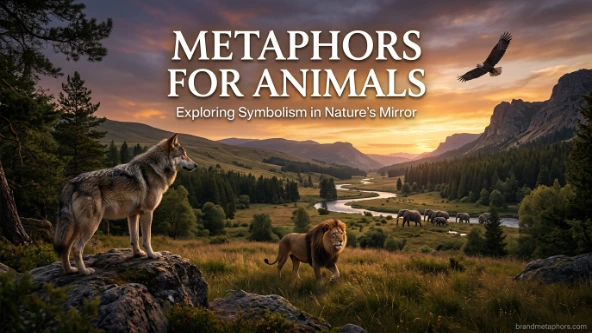
1. Metaphors for Animals: Understanding the Hidden Language of Nature
On a quiet morning, you might hear someone described as a “lion in the boardroom” or a “quiet owl in the corner of the library.” No actual animals are present, yet the room suddenly fills with invisible presence—roaring courage, silent wisdom, sharp instincts. This is the magic of animal metaphors. They transform ordinary human traits into living, breathing images drawn from nature.
Animal metaphors are figures of speech where animal characteristics are used to represent human behavior, emotions, or personalities. Instead of saying someone is brave, we say they are a lion. Instead of calling someone clever, we might call them a fox. These comparisons are not literal; they are symbolic bridges between human life and the animal kingdom.
Such metaphors are deeply rooted in storytelling traditions across cultures. From ancient fables to modern films, animals have always carried meaning beyond their physical form. Understanding them not only improves your writing but also sharpens your ability to observe human behavior in imaginative ways.
2. Why Animal Metaphors Matter in Writing, Speech, and Creativity
Animal metaphors matter because they make language more alive, emotional, and memorable. Instead of flat descriptions, they create instant mental images. If someone says “he is brave,” you understand it. But if they say “he is a lion facing the storm,” you feel it.
Writers, poets, marketers, and speakers use animal metaphors to connect with audiences on a deeper level. These expressions tap into shared cultural understanding. Most people know lions are strong, owls are wise, and foxes are clever. This shared symbolism allows communication to become faster and more powerful.
In everyday speech, animal metaphors also help us express complex emotions. Saying someone is “a wounded bird” can express vulnerability more deeply than a long explanation. This is why animal metaphors are not just literary tools—they are emotional shortcuts.
3. Animals as Symbols in Human Imagination and Culture
Across civilizations, animals have carried symbolic weight. In ancient Egypt, cats were sacred and associated with protection, Native American traditions, the eagle often symbolizes freedom and spiritual vision. In Chinese culture, the dragon represents power and prosperity.
These symbolic meanings naturally evolved into metaphorical language. Humans observed animals in nature and connected their behavior to human qualities. A predator’s patience became a symbol of strategy. A bird’s flight became a symbol of freedom. A wolf’s pack behavior became a symbol of loyalty and social structure.
Even today, movies, sports teams, and brands use animal imagery to communicate identity. Think of a team named “Tigers” or “Eagles.” The animal instantly tells you what to expect: strength, speed, dominance, or agility.
Animal metaphors survive because they are instinctively understood. They are part of our shared psychological vocabulary.
4. The Lion Metaphor: Courage, Leadership, and Inner Strength
The lion is one of the most powerful animal metaphors in language. Often called the “king of the jungle,” the lion represents courage, authority, and leadership.
Meaning and Explanation
When someone is described as a lion, it suggests bravery in the face of danger, confidence in decision-making, and natural leadership. It is not just physical strength—it is psychological dominance and calm power.
Example Sentences and Scenarios
- “She entered the debate like a lion, fearless and commanding every argument.”
- “Even in crisis, he stayed a lion, guiding his team without hesitation.”
Alternative Expressions
- A fearless leader
- A bold warrior
- A commanding presence
Sensory and Emotional Detail
Imagine the deep roar echoing across a silent valley. The ground seems to tremble, not just from sound, but from presence. That is the emotional weight this metaphor carries.
Mini Cultural Reference
In many African folktales, the lion is not just a predator but a ruler who maintains order in the animal kingdom. Similarly, Shakespeare often used lion imagery to represent nobility and courage in battle.
5. The Owl Metaphor: Wisdom, Silence, and Deep Observation
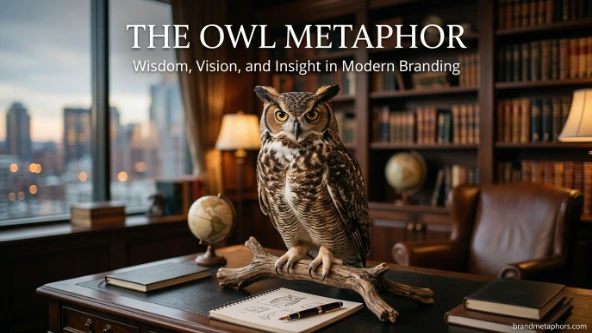
The owl is widely used as a symbol of wisdom, observation, and thoughtful silence. Unlike loud or aggressive animals, the owl represents intelligence that watches before acting.
Meaning and Explanation
Calling someone an owl suggests they are wise, reflective, and observant. They think deeply before making decisions and often notice what others miss.
Example Sentences and Scenarios
- “The old professor sat like an owl, observing every question before answering.”
- “In meetings, she is the owl—silent but always insightful.”
Alternative Expressions
- A wise thinker
- A silent observer
- A deep analyst
Sensory and Emotional Detail
Picture a still night forest. A branch barely moves as an owl turns its head slowly, eyes glowing with quiet awareness. There is no rush—only understanding.
Mini Storytelling Moment
In many European folktales, the owl appears as a guide in darkness, helping lost travelers find clarity. It does not shout instructions; it simply appears when wisdom is needed most.
6. The Fox Metaphor: Cleverness, Strategy, and Adaptability
The fox is a classic symbol of intelligence, trickery, and adaptability. Unlike the lion’s strength or the owl’s wisdom, the fox represents strategic thinking and quick wit.
Meaning and Explanation
Calling someone a fox suggests they are clever, resourceful, and sometimes mischievous. They find solutions where others see obstacles.
Example Sentences and Scenarios
- “He is a fox in negotiations—always finding the best deal.”
- “She solved the problem like a fox, slipping through every difficulty with ease.”
Alternative Expressions
- A clever strategist
- A smart problem-solver
- A quick thinker
Sensory and Emotional Detail
Imagine a fox moving silently through snow, leaving barely visible footprints. It pauses, listens, then suddenly changes direction. That unpredictability is its strength.
Literary Reference
In Aesop’s fables, the fox often outsmarts larger, stronger animals, reminding readers that intelligence can triumph over brute force.
7. How to Create Your Own Animal Metaphors: Creative Writing Tips
Creating animal metaphors is like building bridges between imagination and reality. The key is to match behavior with natural traits.
Start by observing animals closely. Think about how a deer reacts to danger, how a bee works in a hive, or how a dolphin communicates. Then connect those traits to human emotions or situations.
For example:
- A busy worker → “like a bee in a hive”
- A nervous person → “like a deer in headlights”
- A loyal friend → “like a dog waiting at the door”
The best metaphors feel natural, not forced. They should instantly make sense while still sparking imagination.
8. Mini Storytelling with Animal Metaphors in Action
In a small village near the river, there was a young girl named Sara who never spoke much. People thought she was shy, almost invisible like a shadow. But her grandmother knew better.
“She is not a shadow,” the grandmother would say, “she is an owl watching the world.”
One day, when the village faced a sudden flood, Sara became the lion no one expected. She organized neighbors, guided children, and found safe paths through rising waters. Her quiet observation had always been preparing her for this moment.
And there was Amir, the fox of the village, who figured out how to redirect water using simple channels. While others panicked, he moved like strategy itself.
Together, they showed that every animal metaphor lives within us at different moments—waiting for the right time to emerge.
9. Interactive Exercises: Practice Animal Metaphors Creatively
Try these simple exercises to strengthen your metaphor skills:
Exercise 1: Match Traits
Write five human traits (e.g., patience, anger, curiosity, loyalty, fear). Match each with an animal and explain why.
Exercise 2: Rewrite Sentences
Take a normal sentence and transform it:
- “He is very smart.” → “He is a fox in disguise.”
Exercise 3: Observation Game
Watch animals in videos or real life. Write down three behaviors and convert each into a metaphor for human life.
Exercise 4: Emotion Mapping
Pick an emotion like sadness or joy. Which animal best represents it? Write a short paragraph explaining your choice.
These exercises help you think beyond literal language and develop creative fluency.
10. Using Animal Metaphors in Writing, Social Media, and Daily Life
Animal metaphors are powerful tools not just for literature but also for modern communication. In storytelling, they make characters memorable. In speeches, they make ideas more persuasive. On social media, they make captions more engaging and shareable.
For example:
- “Monday feels like a sleepy bear waking up from hibernation.”
- “Today I worked like a busy bee and still feel like a tired turtle.”
In daily life, they help you express feelings quickly and vividly. Instead of long explanations, a simple metaphor can say everything.
Bonus Tips
- Don’t overuse them—keep them fresh and meaningful.
- Choose animals that fit the emotion naturally.
- Mix familiar and unexpected animals for creativity.
When used well, animal metaphors turn ordinary language into living imagery that sticks in the mind.
FAQs About Metaphors for Animals
1. What are animal metaphors in simple words?
Animal metaphors are expressions that compare human traits or behaviors to animals to create vivid meaning.
2. Why do writers use animal metaphors?
They make writing more visual, emotional, and easier to understand.
3. What is the most common animal metaphor?
The lion for courage, the owl for wisdom, and the fox for cleverness are among the most common.
4. Can animal metaphors be used in daily conversation?
Yes, they are widely used in everyday speech, storytelling, and even social media captions.
5. How can I create better animal metaphors?
Observe animal behavior, connect it with human emotions, and practice rewriting sentences creatively.
Conclusion
Animal metaphors remind us that language is not just about words—it is about imagination, emotion, and shared understanding. When we say someone is a lion, an owl, or a fox, we are not just describing them; we are painting them with the colors of nature itself.
These metaphors connect human experience with the instinctive world of animals, making communication richer and more expressive. Whether in writing, storytelling, or everyday speech, they help us see people—and ourselves—more vividly.
In the end, animal metaphors are not just literary tools. They are reflections of how deeply humans are connected to nature, even in the way we speak.