
Introduction: Why Figurative Language Makes Writing More Powerful
Words are the building blocks of communication. The better you understand them, the clearer and more engaging your writing becomes. Whether you are a student, writer, blogger, or English learner, choosing the correct word can make a big difference.
Figurative language helps writers create vivid pictures, express emotions, and connect with readers. Literary devices such as metaphors, similes, idioms, and descriptive language make ordinary sentences more memorable. However, figurative writing is only effective when the vocabulary is accurate.
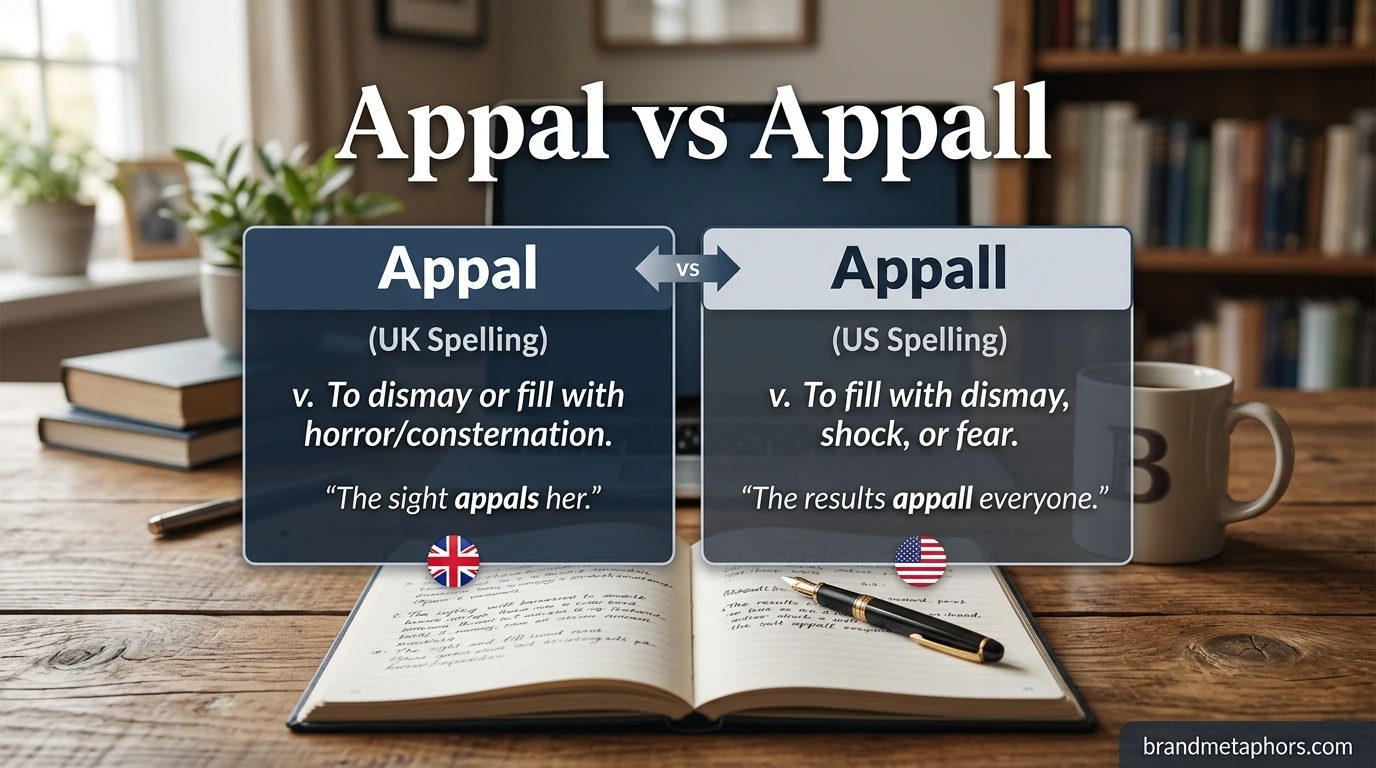
Many learners become confused by similar-looking words. One common example is appal vs appall. These words appear almost identical, yet only one is accepted in modern standard English. Understanding the distinction improves grammar, vocabulary, creative writing, and overall communication skills.
In this guide, you’ll learn the meanings, history, correct usage, examples, common mistakes, comparisons, exercises, and practical writing tips so you can confidently choose the right word every time.
What Do These Words Mean?
Although they look similar, these two spellings do not have equal status in modern English.
WordMeaningModern UsageAppallTo shock, horrify, or deeply disgust someoneCorrect and standardAppalAlternative historical spelling of “appall”Rare and mostly outdated
Today, dictionaries recognize appall as the preferred spelling. While appal still appears in some dictionaries as a variant, it is uncommon and generally avoided in modern writing.
Simple Definition
Appall means:
- To shock greatly
- To horrify
- To disgust deeply
- To fill someone with fear or disbelief
Example:
The news appalled everyone in the classroom.
Here, the news caused intense shock and sadness.
The Origin of Appall and Appal
Understanding the history helps explain the confusion.
The word comes from the Old French word apalir, meaning “to become pale.”
Centuries ago, both spellings were used in English. Over time, language became more standardized. Writers, publishers, and dictionaries gradually settled on appall as the accepted spelling.
Today:
- Appall is standard English.
- Appal survives only as an uncommon alternative spelling in a few dictionaries or older literature.
If you are writing essays, business emails, academic papers, blog posts, or exams, always choose appall.
Why Writers Confuse These Words
Several factors make these words confusing.
Similar Appearance
Only one letter separates them.
- appal
- appall
Many people accidentally drop one “l.”
Similar Pronunciation
Both are pronounced almost the same.
Spellcheck Issues
Some spellcheck tools recognize both spellings, making learners think they are equally acceptable.
Fast Typing
Many typing mistakes involve missing repeated letters.
Because of these reasons, proofreading is important.
When to Use Appall
Use appall whenever something causes strong negative emotions.
Common situations include:
- shocking news
- terrible accidents
- cruel behavior
- unfair treatment
- disasters
- disturbing actions
Examples:
- The teacher was appalled by the student’s cheating.
- Animal cruelty appalls many people.
- The condition of the abandoned house appalled visitors.
- Everyone was appalled by the corruption.
- The audience was appalled by the violence shown in the film.
Notice that each sentence describes something deeply shocking.
When Should You Avoid Appal?

In modern English writing, avoid using appal unless:
- you are quoting historical documents
- you are discussing language history
- you are reproducing an old text exactly
Otherwise, readers may think it is a spelling mistake.
Instead of writing:
The story appaled everyone.
Write:
The story appalled everyone.
The second sentence follows modern English standards.
Quick Comparison Table
FeatureAppallAppalCorrect modern spellingYesRareAcademic writingYesNoBusiness writingYesNoNewspapersYesAlmost neverSchool essaysYesNoEveryday conversationYesRareHistorical textsSometimesYes
This simple comparison helps you remember which spelling belongs in everyday writing.
Sentence Examples in Different Contexts
Learning through examples is one of the fastest ways to improve vocabulary.
School
- The teacher was appalled by the vandalism.
- Everyone was appalled by the exam cheating.
Workplace
- The manager was appalled by the unsafe conditions.
- Customers were appalled by poor service.
News
- Citizens were appalled by the disaster.
- The report appalled the entire nation.
Family
- His parents were appalled by his rude behavior.
- Everyone was appalled after hearing the argument.
Environment
- Scientists were appalled by pollution levels.
- Conservationists were appalled by illegal hunting.
Healthcare
- Doctors were appalled by the lack of medical supplies.
- The community was appalled by the outbreak.
Repeated exposure to examples helps learners remember correct usage naturally.
Tone and Emotional Strength
The word appall carries a very strong emotional tone.
Formal Tone
- The findings appalled researchers.
Professional Tone
- Inspectors were appalled by safety violations.
Literary Tone
- The dark castle appalled every traveler who entered.
Conversational Tone
- I was completely appalled by what happened.
Because the word expresses strong emotions, avoid using it for minor disappointments.
Weak example:
I was appalled because my coffee was cold.
Better:
I was disappointed because my coffee was cold.
Reserve appalled for truly shocking situations.
Figurative Language and Creative Writing
Strong vocabulary improves figurative language.
Instead of simply saying:
The accident was bad.
A writer could say:
The accident appalled the entire town.
Now combine it with literary devices.
Metaphor Examples
- The news was a dagger through everyone’s heart.
- The scandal became a dark cloud over the community.
- Fear became an icy prison after the shocking discovery.
Simile Examples
- She stood as still as a statue after the appalling news.
- He became as pale as snow.
- The crowd scattered like frightened birds.
Personification
- Silence filled the room.
- Fear gripped every heart.
- Darkness swallowed the village.
Hyperbole
- The entire world seemed appalled.
- Everyone in the city stopped talking.
These creative techniques make writing more expressive without changing the meaning of appall.
Comparison Examples with Similar Words
Choosing the right synonym depends on the intensity of emotion.
WordMeaningStrengthSurpriseUnexpected feelingLowUpsetMild emotional painMediumDisturbMake uncomfortableMediumShockSudden surpriseHighHorrifyCause horrorVery HighAppallCause deep shock and disgustVery High
Examples:
Surprise:
The announcement surprised everyone.
Shock:
The explosion shocked the neighborhood.
Appall:
The cruelty appalled the nation.
Each word expresses increasing emotional intensity.
Common Mistakes Students Make
Mistake 1
Incorrect:
The news appaled everyone.
Correct:
The news appalled everyone.
Mistake 2
Using “appalled” for small problems.
Incorrect:
I was appalled because my sandwich was cold.
Better:
I was disappointed because my sandwich was cold.
Mistake 3
Confusing it with “appeal.”
Incorrect:
The movie appealed me.
Correct:
The movie appealed to me.
These words have completely different meanings.
Mistake 4
Dropping the second “l.”
Incorrect:
appaled
Correct:
appalled
Proofreading helps eliminate these errors.
Idioms, Descriptive Language, and Related Expressions
Although appall is not an idiom itself, it often appears alongside common English expressions.
Examples include:
- left speechless
- filled with horror
- beyond belief
- shocked to the core
- couldn’t believe my eyes
- heart sank
- jaw dropped
Example sentence:
I was shocked to the core because the accident appalled everyone nearby.
These expressions enrich descriptive writing.
Vocabulary Enhancement Tips
Expanding your vocabulary improves every type of writing.
Related words include:
- horrify
- shock
- disgust
- alarm
- disturb
- outrage
- dismay
- stun
- devastate
- terrify
Practice replacing repeated words.
Instead of writing:
The news shocked everyone.
Try:
The news appalled everyone.
Or:
The news horrified everyone.
Variety makes writing more engaging.
Practice Exercises
Exercise 1
Choose the correct word.
- The discovery ______ everyone.
A. appal
B. appall
Answer:
Appall
Exercise 2
Correct the sentence.
The audience was appaled by the performance.
Correct:
The audience was appalled by the performance.
Exercise 3
Fill in the blank.
The condition of the river __________ environmental experts.
Answer:
appalled
Exercise 4
Rewrite using stronger vocabulary.
Original:
Everyone was very shocked.
Possible answer:
Everyone was appalled.
Exercise 5
Choose the best sentence.
A. The missing homework appalled me.
B. The violent attack appalled the community.
Correct answer:
B
The second sentence matches the strong emotional meaning.
Tips for Better Writing
Keep these simple rules in mind.
- Use appall for extreme shock.
- Avoid appal in modern writing.
- Combine strong vocabulary with descriptive language.
- Read your writing aloud.
- Check spelling carefully.
- Learn synonyms to avoid repetition.
- Practice writing one new sentence every day.
- Use figurative language naturally rather than forcing it.
Following these habits improves grammar, vocabulary, and writing confidence.
Frequently Asked Questions
1. Is appal a real word?
Yes. It is an older alternative spelling of appall, but it is rarely used in modern English.
2. Which spelling should students use?
Students should always use appall unless quoting historical material.
3. Does appall always describe something negative?
Yes. It expresses intense shock, horror, or disgust.
4. Can appall be used in creative writing?
Absolutely. It works well in stories, novels, essays, speeches, and descriptive writing when strong emotions are needed.
5. What words are similar to appall?
Common synonyms include:
- horrify
- shock
- disgust
- outrage
- alarm
- disturb
- stun
- dismay
Each carries a slightly different level of emotional intensity.
Conclusion
Understanding the difference between appall and appal helps you write with greater accuracy and confidence
Beyond learning the correct spelling, mastering words like appall strengthens your vocabulary and improves your ability to express powerful emotions By practicing sentence construction, avoiding common mistakes, completing vocabulary exercises, and proofreading carefully, you will become a more confident communicator and a more effective writer in every context.