

Introduction: Why Understanding Word Differences Improves Writing
English is filled with words that sound alike but have completely different meanings. Learning these differences helps students, writers, and English learners communicate more accurately while avoiding embarrassing mistakes. It also strengthens vocabulary, improves grammar, and makes both creative and academic writing more polished.
A strong vocabulary goes beyond memorizing definitions. It includes understanding context, tone, pronunciation, figurative language, and how words contribute to descriptive language and effective communication. Whether you’re writing essays, stories, poems, emails, or social media posts, choosing the correct word enhances clarity and credibility.
Among commonly confused word pairs is loot vs lute. Although they sound similar, they belong to entirely different categories. One relates to stealing or valuable goods, while the other refers to a beautiful musical instrument with centuries of history.
This guide explains their meanings, pronunciation, usage, examples, comparisons, common mistakes, writing tips, figurative uses, literary connections, and practical exercises to help you master these words.
What Does “Loot” Mean?
Loot is a noun and a verb associated with stealing, robbery, or valuable items taken unlawfully.
Definition
As a noun, loot means:
- Stolen goods
- Valuable items taken during war, riots, or theft
- Informally, money or rewards
As a verb, it means:
- To steal
- To rob
- To carry away valuables unlawfully
Pronunciation
Loot is pronounced:
/luːt/
It rhymes with:
- Boot
- Root
- Suit
Examples
- The thieves escaped with valuable loot.
- During the riot, several stores were looted.
- Pirates divided the loot equally.
- Police recovered most of the stolen loot.
- The robbers looted expensive jewelry.
What Does “Lute” Mean?
A lute is a stringed musical instrument popular in Europe, the Middle East, and parts of Asia for hundreds of years.
Definition
A lute features:
- A rounded back
- A short neck
- Strings plucked with fingers
- Soft, melodic sounds
It played an important role in Renaissance and medieval music.
Pronunciation
Lute is also pronounced:
/luːt/
It sounds exactly like loot, making these words perfect examples of homophones.
Examples
- The musician played the lute beautifully.
- Ancient songs were often accompanied by a lute.
- She studies Renaissance lute music.
- The museum displayed an antique lute.
- The composer wrote a melody for the lute.
Quick Comparison Table
FeatureLootLutePart of SpeechNoun, VerbNounMeaningStolen goods or stealingMusical instrumentCategoryCrime, valuablesMusicPronunciation/luːt//luːt/HomophoneYesYesCommon ContextTheft, robbery, warMusic, history, cultureFigurative UseCommonLess common
Why People Confuse Loot and Lute
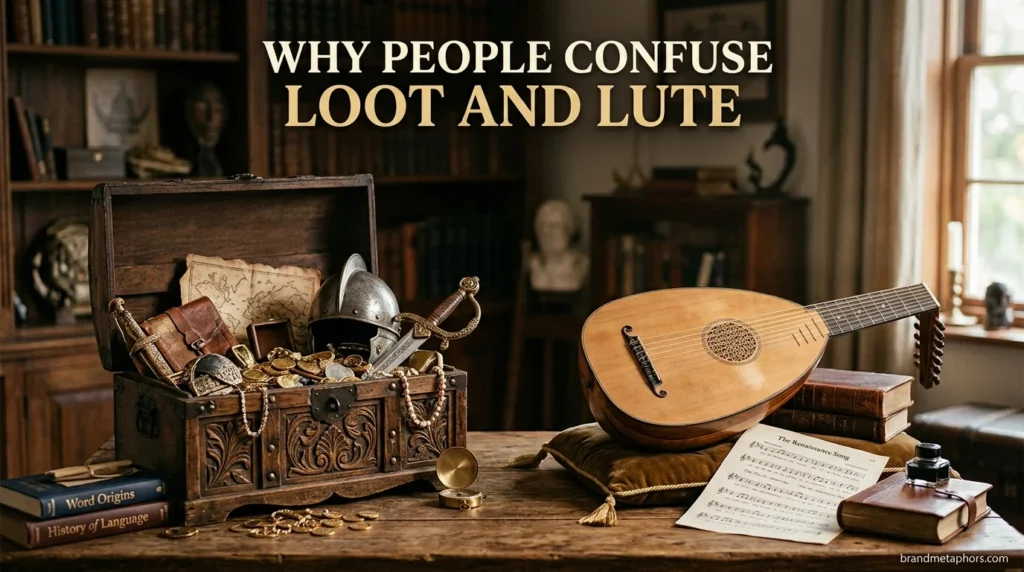
Several factors contribute to confusion.
They Sound Identical
Both are pronounced exactly the same.
Different Spellings
Only one letter changes.
- Loot
- Lute
Different Meanings
Their meanings have no connection.
Similar Appearance
Quick reading can make them easy to mistake.
Spell Check Doesn’t Always Help
Since both are real English words, spell-check software may not detect incorrect usage.
Example:
❌ The musician played beautiful loot.
✔ The musician played beautiful lute music.
Loot vs Lute in Sentences
Correct Sentences Using Loot
- The robbers hid their loot.
- Soldiers protected the captured loot.
- Pirates celebrated after finding treasure and loot.
- Criminals looted several buildings.
- Authorities recovered the stolen loot.
Correct Sentences Using Lute
- The performer played a wooden lute.
- Renaissance musicians loved the lute.
- The old lute produced warm, gentle sounds.
- She practices the lute every evening.
- The museum owns a rare medieval lute.
Incorrect Examples
❌ He played the loot.
✔ He played the lute.
❌ The police recovered the lute from the thieves.
✔ The police recovered the loot from the thieves.
Figurative Language and Creative Writing
Although these words are literal, they can appear in figurative language to create stronger imagery and emotional depth.
Loot in Figurative Language
Writers often use loot metaphorically.
Examples:
- Experience became the loot of countless adventures.
- Knowledge is the greatest loot from education.
- Memories were the treasure and loot of childhood.
- Every lesson became valuable loot for her future.
These examples create vivid imagery rather than describing actual theft.
Lute in Figurative Language
A lute often symbolizes:
- Harmony
- Peace
- Beauty
- Romance
- Artistic expression
Examples:
- His voice became a gentle lute calming every listener.
- Hope sang like an ancient lute in her heart.
- The evening breeze played the trees like a lute.
Such poetic expression adds elegance to descriptive language.
Literary Devices Featuring Loot and Lute
These words may appear in several literary devices.
Metaphor Examples
- Wisdom is life’s greatest loot.
- Her heart was a delicate lute waiting to be played.
Simile Examples
- The pirate guarded his treasure like precious loot.
- Her music flowed like a beautifully tuned lute.
Symbolism
Loot often symbolizes:
- Greed
- Wealth
- Victory
- Corruption
Lute often symbolizes:
- Art
- Peace
- Love
- Culture
- Creativity
Imagery
“The moonlight reflected off the pirate’s loot.”
“The soft notes of the lute floated through the ancient hall.”
These images help readers visualize scenes clearly.
When to Use Loot
Choose loot when discussing:
- Theft
- Robbery
- Crime
- Treasure
- Pirates
- War
- Valuable goods
- Rewards (informal)
Examples:
- The pirates buried their loot.
- Police found hidden loot.
- Criminals looted abandoned stores.
- The gang divided the loot.
Informal example:
- We earned plenty of gaming loot.
Many video games also use loot to describe rewards or collectible items.
When to Use Lute
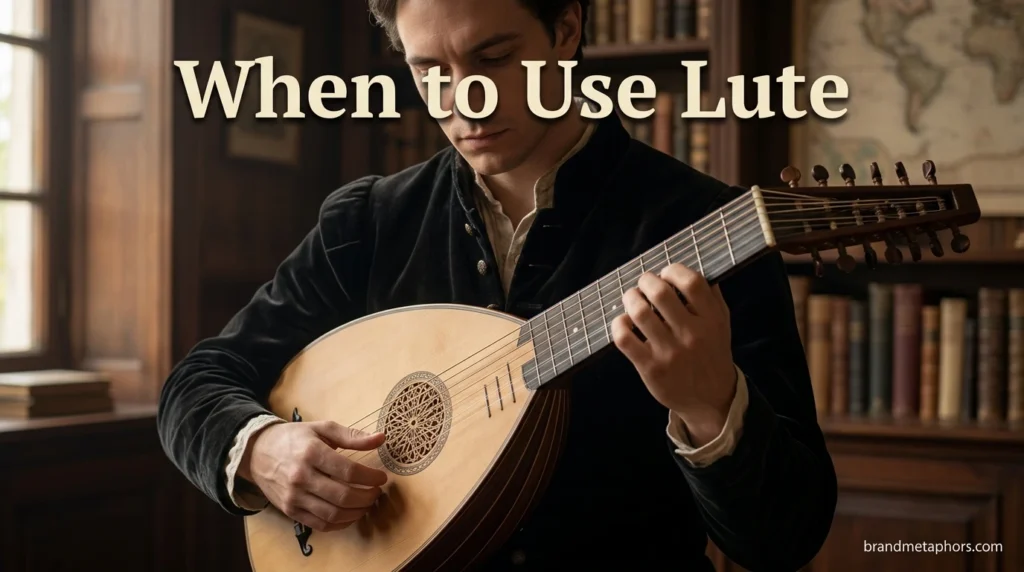
Use lute when discussing:
- Music
- Musical instruments
- Classical performances
- Renaissance history
- Medieval culture
- Traditional compositions
Examples:
- The lute accompanied the singer.
- She collects antique lutes.
- Students studied Renaissance lute music.
- The performer restored an old lute.
Common Mistakes and How to Avoid Them
Mistake 1: Confusing the Spellings
❌ Ancient loot music
✔ Ancient lute music
Mistake 2: Using Loot for Musical Instruments
❌ He bought a new loot.
✔ He bought a new lute.
Mistake 3: Using Lute for Stolen Property
❌ Police recovered the lute.
✔ Police recovered the loot.
Memory Trick
Think:
Loot = Lost property
Both begin with L.
Lute = Tunes
Both relate to music.
This simple association makes remembering easier.
Tone, Context, and Appropriate Usage
Understanding tone improves writing skills.
Loot
Common tones:
- Serious
- Historical
- Criminal
- Adventure
- Informal gaming
Example:
“The pirates celebrated their loot.”
Lute
Common tones:
- Artistic
- Historical
- Elegant
- Musical
- Romantic
Example:
“The gentle lute echoed through the castle.”
Choosing the appropriate word helps maintain consistency in your writing.
Vocabulary Enhancement Through Similar Words
Expanding vocabulary improves communication.
Synonyms for Loot
- Plunder
- Booty
- Spoils
- Treasure
- Stolen goods
- Riches
- Prize
- Haul
Related Words
- Robbery
- Theft
- Burglary
- Pillage
- Raid
Related Words for Lute
While there are few true synonyms, similar instruments include:
- Harp
- Lyre
- Mandolin
- Guitar
- Oud
- Banjo (modern comparison)
Learning related vocabulary builds stronger language skills.
Comparison Examples for Better Understanding
Example 1
Incorrect:
The artist played beautiful loot.
Correct:
The artist played beautiful lute music.
Example 2
Incorrect:
Pirates hid their lute.
Correct:
Pirates hid their loot.
Example 3
Incorrect:
The museum displayed ancient loot instruments.
Correct:
The museum displayed ancient lute instruments.
Example 4
Incorrect:
Police searched for the missing lute after the robbery.
Correct:
Police searched for the missing loot after the robbery.
Loot and Lute in Creative Writing
Creative writing benefits from precise word choice.
Story Example Using Loot
The pirates celebrated beneath the stars after discovering a hidden cave filled with glittering loot. Every jewel reflected the moonlight, promising wealth beyond imagination.
Story Example Using Lute
The old musician gently lifted his lute before playing a melody so peaceful that even the birds stopped singing to listen.
Notice how each word creates an entirely different atmosphere.
When to Avoid These Words
Avoid Loot
Don’t use loot when referring to:
- Musical instruments
- Concerts
- Classical performances
- Renaissance music
Avoid Lute
Don’t use lute when discussing:
- Theft
- Crime
- Pirates’ treasure
- Robbery
- Stolen goods
Context always determines the correct choice.
Practice Exercises
Exercise 1: Fill in the Blank
- Pirates buried their ______.
- The musician polished her ______.
- Police recovered the stolen ______.
- Renaissance artists often played the ______.
- The thieves escaped with valuable ______.
Answers
- loot
- lute
- loot
- lute
- loot
Exercise 2: Choose the Correct Word
- The castle echoed with beautiful (loot/lute) music.
- Criminals stole expensive (loot/lute).
- The museum restored an old (loot/lute).
- Pirates divided the (loot/lute).
- The performer practiced the (loot/lute).
Answers:
- lute
- loot
- lute
- loot
- lute
Tips for Remembering the Difference

- Loot relates to stolen goods and treasure.
- Lute relates to music.
- Loot appears in crime stories.
- Lute appears in music and history.
- Read the entire sentence before choosing.
- Practice using each word in original sentences.
- Associate loot with treasure chests.
- Associate lute with musicians.
Regular reading and writing naturally reinforce correct usage.
Frequently Asked Questions
1. Are loot and lute pronounced the same?
Yes. They are perfect homophones and are both pronounced /luːt/.
2. Is loot ever positive?
Generally, it refers to stolen property. However, in gaming and informal conversation, loot often means rewards or collectible items without negative implications.
3. Is a lute still used today?
Yes. Although uncommon compared with modern guitars, musicians specializing in historical and classical music continue to perform on the lute.
4. Can loot be used as both a noun and a verb?
Yes.
Examples:
- The loot was recovered. (noun)
- The thieves looted the store. (verb)
5. Why are loot and lute often confused?
They sound identical, differ by only one letter, and spell-check programs may not recognize when the wrong word is used in context.
Conclusion
Mastering the difference between loot and lute strengthens vocabulary, improves writing skills, and helps avoid common English mistakes. While these homophones share the same pronunciation, their meanings belong to completely different worlds. Loot refers to stolen goods, treasure, or the act of stealing, whereas lute is a historic stringed musical instrument celebrated for its rich, melodic sound.
Understanding such distinctions enhances academic writing, creative writing, descriptive language, and everyday communication. It also supports better use of figurative language, literary devices, metaphor examples, simile examples, comparison examples, and poetic expression. As your vocabulary grows, you’ll write with greater precision, confidence, and style.
Whenever you encounter these words, pause to consider the context. If the sentence involves crime, treasure, rewards, or robbery, choose loot. If it relates to music, history, culture, or performance, choose lute. With regular reading, thoughtful practice, and careful attention to context, selecting the correct word will soon become second nature.