
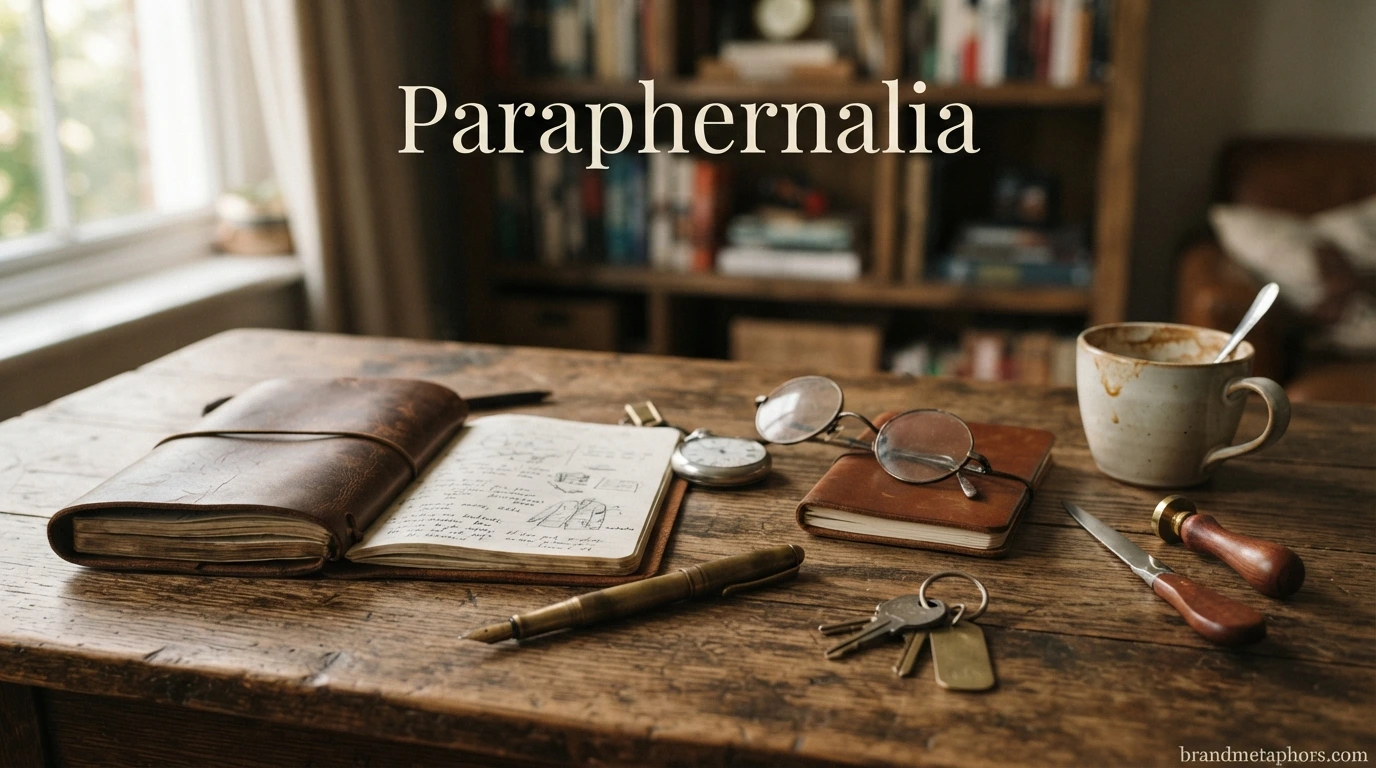
Have you ever heard someone say, “Bring all the equipment and supplies you need,” but then use a single word instead? That word is paraphernalia. Although it may sound difficult at first, its meaning is actually simple once you understand how it is used.
Many English learners come across this word in books, newspapers, legal documents, movies, or everyday conversations. Sometimes it refers to tools used for a hobby, profession, or activity. Other times, it appears in news stories where it has a different meaning based on the situation. Because of this, understanding the context is very important.
This guide explains everything you need to know in clear and simple language. You will learn the definition, history, common types, examples, differences from similar words, and practical tips for using it correctly. Whether you are a student, writer, or English learner, this article will help you build your vocabulary and improve your confidence.
What Does This Word Mean?
This term refers to the collection of items, tools, equipment, or objects needed for a particular activity, job, hobby, or purpose.
Instead of listing every single item, people often use this word to describe everything together.
Simple definition
It means:
A group of tools, equipment, supplies, or objects connected with a specific activity.
Easy examples
- The artist packed all the painting supplies before leaving.
- The photographer carried cameras, lenses, and other equipment.
- The chef organized cooking tools before preparing dinner.
- Campers packed tents, ropes, flashlights, and outdoor gear.
In every example, the word represents all the necessary items together.
Where Did the Word Come From?
The word has an interesting history.
Originally, it came from ancient Greek and later Latin before becoming part of English. Hundreds of years ago, it referred to a bride’s personal belongings after marriage.
Over time, its meaning changed.
Today, English speakers mostly use it to describe:
- Equipment
- Accessories
- Supplies
- Gear
- Materials
- Tools
The modern meaning is much broader than the original one.
Common Types of Equipment and Supplies
Many activities require their own special collection of items.
Here are some common categories.
ActivityTypical ItemsPhotographyCamera, tripod, memory cards, lensesCookingPots, pans, knives, spoons, cutting boardCampingTent, sleeping bag, flashlight, stoveSportsBall, helmet, gloves, shoesArtBrushes, paints, canvas, pencilsScienceTest tubes, microscope, lab coatMusicInstruments, microphones, cablesGardeningShovel, rake, gloves, watering can
Each group contains objects connected with one purpose.
Everyday Situations Where It Is Used
People use this word in many different situations.
At school
Teachers may talk about classroom materials for science experiments or art projects.
Example:
- Students should bring all laboratory equipment before class.
At work
Many jobs require specialized tools.
Examples include:
- Construction equipment
- Medical instruments
- Office supplies
- Safety gear
During hobbies
People often collect items for hobbies such as:
- Painting
- Fishing
- Sewing
- Baking
- Model building
During travel
Travelers carry many useful things, including:
- Maps
- Chargers
- Bags
- Water bottles
- Travel documents
Instead of naming every object, one word can describe everything.
Why Context Matters

This is one of those English words whose meaning changes depending on the sentence.
Sometimes it has a completely normal meaning.
Example:
“The hiking equipment was packed neatly.”
Other times, especially in news reports or legal discussions, it can describe objects connected with illegal activities.
For example:
Police reports sometimes mention items associated with drug use.
This does not mean the word itself is negative.
It simply describes objects connected to a particular activity.
Always pay attention to the surrounding sentence before deciding its meaning.
Examples in Daily Life
Here are several examples from everyday situations.
Home
- Kitchen utensils
- Cleaning supplies
- Sewing kit
- Repair tools
Office
- Computer
- Printer
- Notebooks
- Pens
- Filing folders
School
- Backpack
- Calculator
- Ruler
- Markers
- Textbooks
Sports
- Uniform
- Shoes
- Protective pads
- Water bottle
Music
- Guitar
- Amplifier
- Picks
- Microphone
Each example shows a complete collection of related items.
Similar Words and Their Differences
Many English words have similar meanings, but they are not exactly the same.
Equipment
Usually refers to machines or tools used for work.
Example:
- Construction equipment
Gear
More informal.
Often used for sports or outdoor activities.
Example:
- Camping gear
Supplies
Items that are used up.
Examples:
- Paper
- Ink
- Food
Accessories
Extra items that improve something.
Examples:
- Phone case
- Camera bag
- Watch strap
Tools
Objects used to perform a task.
Examples:
- Hammer
- Screwdriver
- Wrench
Each word fits different situations, so choosing the right one improves your writing.
Benefits of Learning This Vocabulary
Expanding your vocabulary helps you communicate more clearly.
Learning this word offers many advantages.
Better reading skills
You’ll understand:
- News articles
- Books
- Legal documents
- Academic writing
Better writing
Instead of repeating long lists, you can summarize related items with one useful word.
Stronger speaking skills
Your conversations become more natural.
Improved exam performance
Many English tests include advanced vocabulary.
Better professional communication
It appears in business reports, manuals, and workplace documents.
Common Mistakes to Avoid
Many learners misuse this word.
Here are the most common mistakes.
Mistake 1: Thinking it always means illegal items
Incorrect idea:
“It only refers to drugs.”
Correct understanding:
It usually means equipment or supplies connected with any activity.
Mistake 2: Using it for one object
Incorrect:
“The hammer is paraphernalia.”
Correct:
“A toolbox contains many related items.”
The word usually refers to a collection.
Mistake 3: Using it without context
Because the meaning depends on the activity, always provide enough information.
Instead of saying:
“I packed the paraphernalia.”
Say:
“I packed the camping equipment before leaving.”
The listener immediately understands the purpose.
Practical Sentences for Better Understanding

Reading examples is one of the fastest ways to remember vocabulary.
Here are several useful sentences.
- The scientist arranged the laboratory equipment carefully.
- The chef cleaned every cooking utensil after dinner.
- The photographer carried all camera accessories to the event.
- The mechanic organized repair tools before starting work.
- Students gathered classroom materials for the project.
- The gardener stored all gardening equipment in the shed.
- The musician packed instruments before the concert.
- Travelers checked their travel supplies before boarding.
Practice reading these aloud to improve fluency.
Tips for Remembering the Meaning
Learning new vocabulary becomes easier with simple memory tricks.
Connect it with activities
Instead of memorizing the definition alone, imagine an activity.
Examples:
- Camping
- Cooking
- Photography
- Sports
Then picture all the items needed.
Learn related vocabulary
Study words together.
Examples include:
- Equipment
- Gear
- Supplies
- Tools
- Accessories
- Materials
- Instruments
Your brain remembers connected words more easily.
Read authentic examples
Notice how newspapers, books, and magazines use the word.
Context makes learning easier than memorization.
Create your own sentences
Write about your hobbies.
Example:
“My painting supplies include brushes, paints, easels, and sketchbooks.”
Personal examples are easier to remember.
How Writers and Speakers Use It Effectively
Good writers often avoid repeating long lists.
Instead of writing:
“The camper packed a tent, stove, rope, sleeping bag, flashlight, water bottle, cooking pot, and hiking boots.”
They may simply write:
“The camper packed all the necessary outdoor equipment.”
This makes writing smoother and easier to read.
Public speakers also use this approach because it saves time and avoids repetition.
Frequently Asked Questions
1. What does this word mean in simple English?
It means a collection of tools, equipment, or supplies used for a specific activity.
2. Is it always connected with illegal activities?
No. Most of the time it simply refers to equipment, materials, or accessories. News reports may use it differently depending on the context.
3. Is it singular or plural?
It is treated as a singular noun, even though it refers to many items.
Example:
“The equipment is ready.”
4. Can it refer to sports equipment?
Yes. Helmets, shoes, balls, uniforms, and protective gear are examples.
5. Is it a formal word?
Yes. It is more common in formal writing, news articles, books, and professional communication.
6. What are some synonyms?
Common alternatives include:
- Equipment
- Gear
- Supplies
- Tools
- Accessories
- Materials
- Instruments
7. Can I use it in everyday conversation?
Yes, although many people simply say “equipment,” “gear,” or “supplies” because they are easier and more common.
8. Why do newspapers often use this word?
News organizations use it because it efficiently describes groups of related objects without listing every individual item.
Conclusion
Understanding paraphernalia helps you recognize a useful vocabulary word that appears in books, classrooms, workplaces, and everyday conversations. Rather than describing one single object, it refers to a collection of equipment, tools, accessories, or supplies connected with a particular activity or purpose. Although news reports sometimes use it in legal or crime-related contexts, its meaning is much broader and is usually neutral.
By learning its definition, history, common uses, related words, and real-life examples, you can read with greater confidence and write more naturally. The next time you see this word, remember that it simply represents all the important items needed for a specific task. With regular practice and exposure, it will become a natural part of your English vocabulary.