
Language can be powerful. It helps us share ideas, emotions, and stories. Good writing often uses figurative language, descriptive language, literary devices, and creative expressions to make communication more engaging. However, clear grammar is just as important. Even a small phrase can change the meaning of a sentence.
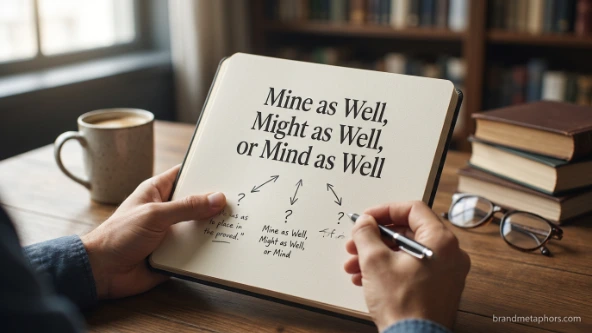
Many English learners become confused when they hear phrases that sound similar. One common example is the confusion between mine as well, might as well, and mind as well. These expressions may sound alike in conversation, but only one is correct in standard English.
Understanding the difference can improve your writing skills, vocabulary enhancement, and speaking confidence. This guide explains the meanings, uses, examples, common mistakes, and practical exercises to help you master these phrases.
Understanding the Three Phrases
Let’s look at each phrase separately.
PhraseCorrect?MeaningMight as well✅ YesA reasonable choice when there is no better optionMine as well❌ NoUsually a spelling mistakeMind as well❌ NoUsually a misunderstanding of the correct phrase
In standard English, might as well is the correct expression.
The other two forms usually appear because people hear the phrase and write it incorrectly.
What Does “Might as Well” Mean?
“Might as well” is an idiomatic expression. It means that one option is as good as any other option.
People use it when:
- There is nothing better to do.
- A choice seems practical.
- The outcome will likely be the same.
- A person accepts a situation.
Simple Formula
Might as well + base verb
Examples
- We might as well leave now.
- You might as well ask for help.
- I might as well finish the project tonight.
- They might as well stay home because the weather is terrible.
- She might as well try again.
In each sentence, the speaker sees no better alternative.
Why Do People Write “Mine as Well”?
Many native speakers pronounce “might as well” quickly.
When spoken fast, it can sound like:
“mighta’s well”
Some listeners mistakenly hear it as “mine as well.”
Incorrect Examples
- ❌ We should mine as well go.
- ❌ I mine as well stay home.
- ❌ They mine as well try.
Correct Versions
- ✅ We should might as well go.
- ✅ I might as well stay home.
- ✅ They might as well try.
The phrase “mine as well” has no recognized meaning in standard English grammar.
Why Do People Write “Mind as Well”?
Another common mistake is writing “mind as well.”
This error happens because the sounds are similar in casual speech.
Incorrect Examples
- ❌ We mind as well leave.
- ❌ You mind as well call him.
- ❌ They mind as well wait.
Correct Versions
- ✅ We might as well leave.
- ✅ You might as well call him.
- ✅ They might as well wait.
Unless you are literally talking about someone’s mind, the phrase “mind as well” is incorrect.
The Grammar Behind “Might as Well”
The word might is a modal verb.
Modal verbs include:
- can
- could
- may
- might
- should
- would
- must
In this expression, “might” does not show possibility alone. Instead, it suggests a practical decision.
Structure
Subject + might as well + verb
Examples
SubjectPhraseVerbImight as wellgoWemight as wellstartShemight as wellaskTheymight as wellwait
Sentences
- I might as well study tonight.
- We might as well begin now.
- She might as well explain the issue.
- They might as well take the bus.
When to Use “Might as Well”
This expression works in several situations.
1. No Better Choice Exists
- The movie starts in an hour, so we might as well walk around.
- The store is closed, so we might as well go home.
2. Acceptance of Reality
- It’s raining all day. We might as well stay inside.
- The flight is delayed. We might as well relax.
3. Practical Decision
- Since you’re here, you might as well join us.
- Since the report is almost done, I might as well finish it.
4. Friendly Suggestions
- You might as well try the new restaurant.
- You might as well read the book first.
Tone and Style Usage
The phrase can create different tones depending on context.
ToneExampleCasualWe might as well order pizza.PracticalWe might as well complete the task today.ResignedI might as well accept the result.FriendlyYou might as well give it a chance.
Writers often use it in dialogue because it sounds natural.
Creative Writing Example
The rain tapped against the window. Emma sighed. They were stranded for the evening. They might as well enjoy the quiet and tell stories by candlelight.
This sentence adds realism to the narrative.
Using the Phrase in Creative Writing
Creative writing benefits from natural dialogue.
Characters often use everyday expressions to sound realistic.
Example 1
“Nobody else is coming,” Jake said. “We might as well start.”
Example 2
“The storm isn’t stopping,” Maria whispered. “We might as well wait here.”
Example 3
“The train already left,” Ben laughed. “We might as well grab some coffee.”
These examples improve storytelling and character voice.
Figurative Language and Related Expressions
Although “might as well” is an idiomatic expression, it can appear beside figurative language and literary devices.
Simile Examples
A simile compares two things using “like” or “as.”
- The clouds moved like ships across the sky.
- Her smile was as bright as the sun.
Metaphor Examples
A metaphor makes a direct comparison.
- Time is a thief.
- The classroom was a zoo.
Example with the Phrase
The road ahead was a maze of choices. We might as well follow the path that felt right.
Here, “maze” acts as a metaphor.
Poetic Expression
- The night wrapped the town in velvet shadows.
- We might as well watch the stars and forget the noise of the day.
Such descriptive language creates vivid imagery.
Common Mistakes and How to Avoid Them
Mistake 1: Writing “Mine as Well”
❌ Mine as well go now.
✅ Might as well go now.
Mistake 2: Writing “Mind as Well”
❌ We mind as well leave.
✅ We might as well leave.
Mistake 3: Using Extra Modal Verbs
❌ We should might as well leave.
✅ We might as well leave.
Mistake 4: Using the Wrong Verb Form
❌ We might as well leaving.
✅ We might as well leave.
Quick Tip
After “might as well,” always use the base form of the verb.
Comparison Examples
The following table shows correct and incorrect usage.
IncorrectCorrectMine as well goMight as well goMind as well stayMight as well stayMine as well tryMight as well tryMind as well callMight as well callMine as well startMight as well start
More Sentence Examples
Correct
- I might as well read another chapter.
- We might as well leave early.
- They might as well accept the offer.
- She might as well call her friend.
- You might as well try again.
Incorrect
- I mine as well read another chapter.
- We mind as well leave early.
- They mine as well accept the offer.
- She mind as well call her friend.
- You mine as well try again.
Memory Tricks to Remember the Correct Form

Learning memory tricks can help English learners.
Trick 1: Think About Possibility
The word “might” already exists in English grammar.
Ask yourself:
Does “mine” fit here?
Usually, the answer is no.
Trick 2: Remember the Idiom
Treat “might as well” as one complete expression.
Do not separate the words mentally.
Trick 3: Read It Aloud
Say:
- Might as well
- Mine as well
- Mind as well
Only the first phrase sounds natural in standard English.
Trick 4: Practice Daily
Use the expression in conversations.
- I might as well study now.
- We might as well leave.
- They might as well join us.
Repeated use builds confidence.
Practice Exercises
Exercise 1: Choose the Correct Phrase
- We _____ leave now.
- I _____ finish the report.
- They _____ stay home.
- You _____ ask the teacher.
- She _____ try again.
Answers
- might as well
- might as well
- might as well
- might as well
- might as well
Exercise 2: Correct the Mistakes
- We mine as well start.
- I mind as well go.
- They mine as well wait.
- You mind as well ask.
- She mine as well stay.
Correct Answers
- We might as well start.
- I might as well go.
- They might as well wait.
- You might as well ask.
- She might as well stay.
Exercise 3: Create Your Own Sentences
Write five sentences using “might as well.”
Examples:
- I might as well clean my room.
- We might as well take a break.
- They might as well join the game.
- You might as well finish the lesson.
- She might as well try the new method.
Why This Phrase Matters for Writing Skills
Correct word choice improves communication.
Using the right expression helps readers understand your meaning quickly.
Benefits include:
- Better grammar accuracy
- Stronger vocabulary
- Improved sentence structure
- More professional writing
- Greater confidence in speaking
Writers who understand idioms create more natural content.
Students who learn common expressions often perform better in reading and writing tasks.
English learners also gain fluency because native speakers use these expressions regularly.
Frequently Asked Questions
1. Is “mine as well” ever correct?
No. In standard English, it is considered a spelling mistake or misunderstanding of “might as well.”
2. Is “mind as well” grammatically correct?
No. The correct idiomatic expression is “might as well.”
3. What does “might as well” mean?
It means that one option is as good as any other option or that there is no better alternative.
4. Can I use “might as well” in formal writing?
Yes. It is acceptable in many forms of writing, though very formal documents may use more direct wording.
5. Is “might as well” an idiom?
Yes. It is a common English idiom whose meaning goes beyond the individual words.
Final Comparison Table
FeatureMight as WellMine as WellMind as WellStandard English✅ Yes❌ No❌ NoCommon Idiom✅ Yes❌ No❌ NoUsed by Native Speakers✅ Yes❌ Error❌ ErrorAppropriate in Writing✅ Yes❌ No❌ NoAppropriate in Speech✅ Yes❌ No❌ No
Conclusion
The confusion between mine as well, might as well, and mind as well is very common because the phrases sound similar in fast speech. However, only might as well is correct in standard English. It is a useful idiomatic expression that suggests a practical choice when no better option exists.
Understanding this difference strengthens grammar, vocabulary enhancement, writing skills, and communication. Whether you are a student, writer, or English learner, using the correct phrase will make your speech and writing clearer and more professional. Practice it often, notice it in books and conversations, and soon it will become a natural part of your English usage.