

The room was quiet except for the soft ticking of a clock. A single beam of morning light slipped through the curtains, landing gently on a dusty mirror. As you wiped it clean, your reflection sharpened—clear, undeniable, impossible to ignore.
Truth often arrives like that: not loudly, not forcefully, but with a quiet clarity that reveals what has always been there.
Truth is a complex, sometimes uncomfortable, yet deeply necessary part of human experience. It shapes relationships, builds trust, and anchors us in reality.
But because truth can be abstract, emotional, or even elusive, we often rely on metaphors to grasp its essence. Metaphors for truth don’t just decorate language—they help us feel it, understand it, and communicate it more powerfully.
In this article, we’ll explore vivid metaphors for truth, unpack their meanings, and show how you can use them in writing, storytelling, and everyday life. Along the way, you’ll find examples, creative prompts, and practical tips to bring these metaphors to life.
Why Use Metaphors for Truth in Writing and Life?
Truth can be blunt. Sometimes, it cuts. Other times, it slips away when we try to define it. Metaphors soften the edges, making truth more relatable and emotionally resonant.
When you say, “The truth is a mirror,” you’re not just stating a fact—you’re evoking an image, a feeling, and an experience. This is why metaphors are powerful tools in:
- Storytelling and creative writing
- Public speaking and communication
- Social media captions and content
- Personal reflection and journaling
They transform abstract ideas into something tangible—something we can see, touch, and understand.
1. Truth as a Mirror: Reflecting Reality
Meaning & Explanation: One of the most common and powerful metaphors, truth as a mirror suggests clarity, reflection, and honesty. A mirror doesn’t alter what it shows—it reveals things exactly as they are, whether we like it or not.
Example Sentence: “Her words were a mirror, forcing him to confront the person he had become.”
Mini Storytelling: Imagine standing in front of a mirror after years of avoiding it. At first, it feels uncomfortable. You notice flaws, imperfections, things you’d rather ignore. But slowly, acceptance grows. That’s what truth does—it invites awareness before it offers peace.
Alternative Ways to Express It:
- Truth is a reflection
- Truth is a clear glass window
- Truth is a polished surface
Sensory/Emotional Layer: Cool glass under your fingertips. A stillness. A quiet confrontation.
2. Truth as Light: Revealing What’s Hidden
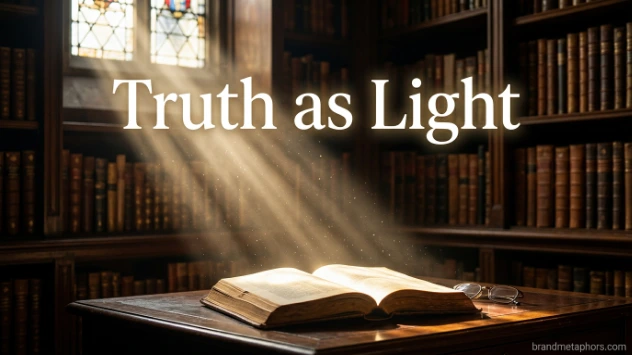
Meaning & Explanation: Truth as light symbolizes illumination, discovery, and understanding. Just as light dispels darkness, truth uncovers secrets, lies, and hidden realities.
Example Sentence: “When the truth came to light, everything changed.”
Cultural Reference: Across cultures, light is often associated with truth and wisdom. From ancient philosophies to modern storytelling, light represents knowledge, clarity, and revelation.
Alternative Ways to Express It:
- Truth is a flame
- Truth is a sunrise
- Truth is a guiding lantern
Sensory/Emotional Layer: Warmth on your skin. Shadows retreating. A sense of awakening.
3. Truth as Water: Fluid Yet Persistent
Meaning & Explanation: Water adapts, flows, and finds its way through even the smallest cracks. This metaphor suggests that truth, no matter how suppressed, eventually surfaces.
Example Sentence: “Like water, the truth seeped through their carefully constructed lies.”
Real-Life Reflection: Think of secrets that slowly unravel over time. No matter how tightly they’re hidden, truth often emerges—quietly but inevitably.
Alternative Ways to Express It:
- Truth is a river
- Truth is a rising tide
- Truth is an unstoppable current
Sensory/Emotional Layer: The sound of trickling water. A slow, steady persistence. Calm yet unstoppable.
Creative Exercises: Practice Using Metaphors for Truth
Want to sharpen your skills? Try these interactive exercises:
✍️ Exercise 1: Personal Reflection
Write a short paragraph about a moment when you discovered a truth about yourself or someone else. Use at least one metaphor (mirror, light, or water) to describe the experience.
Prompt: “The truth came to me like…”
✍️ Exercise 2: Metaphor Expansion
Take one metaphor and expand it into a mini story.
Example Prompt: If truth is a river, where does it flow? What obstacles does it face? Who stands beside it?
✍️ Exercise 3: Social Media Challenge
Create a short, impactful caption using a metaphor for truth.
Example: “Truth is a sunrise—you can delay it, but you can’t stop it.”
Bonus Tips: Using Metaphors for Truth Effectively

✨ 1. Match the Mood
Choose a metaphor that aligns with your tone.
- Gentle truth → light, water
- Harsh truth → sharp glass, storm
✨ 2. Avoid Overuse
One strong metaphor is more powerful than five weak ones. Let it breathe.
✨ 3. Be Original
Try creating your own metaphors:
- Truth is a stubborn seed breaking through concrete
- Truth is a whisper that grows louder in silence
✨ 4. Use in Daily Life
Metaphors aren’t just for writing. Use them in conversations, journaling, or even self-talk to better understand your emotions.
More Metaphor Ideas for Truth (Quick Inspiration List)
- Truth is a compass guiding your direction
- Truth is a key unlocking hidden doors
- Truth is a storm clearing the air
- Truth is a thread weaving reality together
- Truth is a fire that burns away illusions
The Power of Metaphors in Revealing Truth
Metaphors don’t just describe truth—they deepen it. They allow us to approach difficult realities with curiosity instead of fear. When we frame truth as something visual, sensory, and alive, we become more open to understanding it.
Whether you’re writing a story, crafting a speech, or simply trying to express yourself more clearly, metaphors can transform the way you communicate truth.
Frequently Asked Questions (FAQs)
### What are metaphors for truth?
Metaphors for truth are figurative expressions that describe truth using imagery or comparison, such as “truth is light” or “truth is a mirror,” to make the concept more relatable and vivid.
### Why are metaphors important when talking about truth?
Metaphors make abstract ideas like truth easier to understand and more emotionally engaging. They help people connect with deeper meanings and perspectives.
### Can I create my own metaphors for truth?
Absolutely! In fact, original metaphors often have the strongest impact. Think about how truth feels or behaves, then turn that into an image or comparison.
### How can I use metaphors for truth in writing?
You can use them in storytelling, essays, poetry, or even social media captions to add depth, emotion, and creativity to your message.
### Are metaphors for truth used in everyday conversation?
Yes! People often use them without realizing it—phrases like “the truth came to light” or “face the truth” are metaphorical expressions used daily.
Conclusion
Truth doesn’t always arrive in plain words. Sometimes, it glimmers like light, flows like water, or stares back at us like a mirror. By using metaphors, we give truth a voice that is not only heard but felt.
The next time you try to express something real—something honest—pause for a moment. Ask yourself: What does this truth look like? What does it feel like?
Then let your words paint the answer.
Because when truth is wrapped in imagery, it doesn’t just inform—it transforms.