
The first crack came quietly.
A thin line traced its way across the surface of what I thought was solid—routine, identity, certainty. At first, I ignored it. But cracks have a way of widening. Soon, light slipped through. Then air. Then possibility.
Transformation rarely arrives like a thunderclap. More often, it begins as a whisper—a subtle shift, a restlessness, a sense that who you are is not yet who you’re meant to become.
This is where metaphors step in.
Metaphors for transformation give shape to the invisible. They allow us to understand change not as chaos, but as a process—natural, meaningful, and even beautiful.
Whether you’re a writer seeking vivid imagery, a thinker searching for clarity, or simply someone navigating life’s changes, transformation metaphors offer a powerful way to frame your journey.
In this article, we’ll explore three deeply resonant metaphors for transformation, along with meanings, examples, alternatives, and creative exercises to help you apply them in your own life and writing.
Why Metaphors for Transformation Matter
Transformation is often complex, emotional, and hard to articulate. We don’t just “change”—we evolve, unravel, rebuild, and rediscover.
Metaphors help us:
- Make sense of personal growth
- Communicate emotions more vividly
- Add depth and creativity to writing
- Reframe challenges as meaningful transitions
Think of metaphors as bridges—connecting what we feel with what we can express.
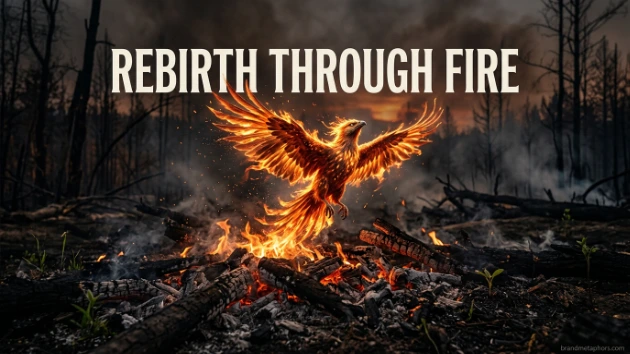
1. The Phoenix Rising: Rebirth Through Fire
Meaning and Explanation
The phoenix is a mythical bird that burns to ashes and rises again, renewed. As a metaphor, it represents complete transformation through destruction and renewal. It suggests that sometimes, in order to grow, we must let parts of ourselves fall away.
Example Scenario
After losing her job, Ayesha felt like everything had collapsed. But months later, she said, “I didn’t just recover—I rose like a phoenix, stronger than before.”
Alternative Expressions
- Rising from the ashes
- Reborn through fire
- Burned away the old self
- Emerging anew
Sensory & Emotional Layer
This metaphor carries heat, intensity, and brilliance. You can almost feel the flames licking at old identities, hear the crackle of endings, and see the glowing emergence of something powerful.
Mini Storytelling Moment
Consider how many real-life transformations mirror this metaphor—people who rebuild after failure, heartbreak, or loss. Their “fire” becomes the very force that reshapes them.
Creative Exercise
Prompt: Write about a time when something in your life “burned away.” What did you lose? What did you gain? Challenge: Describe the transformation without using the word “change.”
Bonus Tip
Use this metaphor in motivational content or social media captions—it’s emotionally charged and universally relatable.
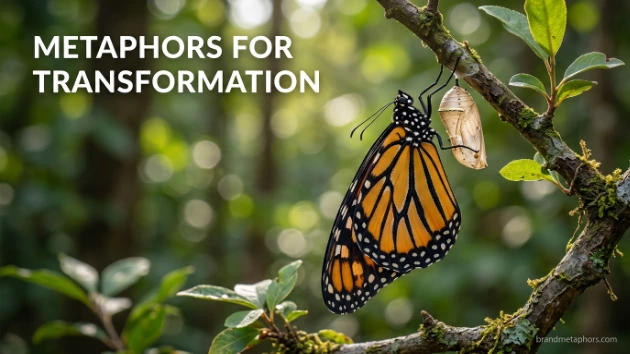
2. The Caterpillar to Butterfly: Gradual Becoming
Meaning and Explanation
Perhaps the most classic metaphor for transformation, this one highlights growth through stages. It emphasizes patience, internal change, and the beauty of becoming something entirely new.
Example Sentence
“He wasn’t lost—he was just in his cocoon, quietly becoming who he was meant to be.”
Alternative Ways to Express It
- Growing wings
- Emerging from a cocoon
- Shedding an old skin
- Becoming something new
Sensory & Emotional Details
This metaphor is softer, quieter. It evokes stillness, waiting, and the hidden magic of unseen growth. There’s a tenderness to it—the idea that transformation doesn’t always look dramatic from the outside.
Cultural & Literary Touchpoint
This metaphor appears in countless stories, from children’s books to spiritual teachings. It resonates because it reflects a universal truth: growth often happens in silence before it becomes visible.
Real-Life Reflection
Think of students becoming professionals, or shy individuals gaining confidence over time. Their transformation isn’t instant—it unfolds gradually, like wings forming in the dark.
Interactive Exercise
Prompt: Imagine you are inside a cocoon. What thoughts, fears, or hopes are you holding? Creative Twist: Write a short monologue from the perspective of the caterpillar.
Bonus Tip
Perfect for reflective writing, journaling, or personal development posts where the focus is on slow progress.
3. The River Changing Course: Transformation Through Flow

Meaning and Explanation
A river doesn’t resist obstacles—it adapts. Over time, it carves new paths, reshapes landscapes, and continues forward. This metaphor symbolizes flexible, ongoing transformation rather than sudden change.
Example Scenario
After years of following one career path, Ali shifted directions. He said, “I didn’t break—I just changed course, like a river finding a new way.”
Alternative Expressions
- Flowing into something new
- Carving a new path
- Shifting direction
- Moving with the current
Sensory & Emotional Layer
This metaphor is fluid and calming. You can hear the gentle rush of water, feel its persistence, and see how it shapes everything in its path—slowly but surely.
Mini Storytelling
Unlike the phoenix or butterfly, the river never stops being a river. It evolves while remaining itself—a powerful reminder that transformation doesn’t mean losing your identity.
Creative Exercise
Prompt: Describe a moment when you had to “go with the flow.” What changed? What stayed the same? Challenge: Use water-related imagery throughout your description.
Bonus Tip
Use this metaphor when discussing adaptability, resilience, or long-term growth in writing or everyday conversations.
How to Use Transformation Metaphors in Writing and Daily Life
1. Match the Metaphor to the Mood
- Use phoenix for dramatic change
- Use butterfly for gentle growth
- Use river for ongoing evolution
2. Layer Your Language
Don’t stop at one metaphor—expand it. Add sensory details, emotions, and imagery to make it come alive.
3. Keep It Personal
The best metaphors feel authentic. Choose ones that resonate with your own experiences.
4. Use in Social Media
Short, powerful metaphor-based lines can boost engagement:
- “Still in my cocoon—don’t rush my wings.”
- “I didn’t fall apart—I transformed.”
5. Practice Regularly
Like any skill, metaphor-building improves with use. Try turning everyday experiences into metaphors.
Interactive Practice Section: Create Your Own Metaphors for Transformation

Exercise 1: Fill in the Blank
Transformation is like __________ because __________.
Exercise 2: Opposite Thinking
Think of something that seems unrelated to change (e.g., a clock, a storm, a seed). Now turn it into a metaphor for transformation.
Exercise 3: Personal Reflection
Write a paragraph describing your current life phase using at least one transformation metaphor.
Bonus Creative Prompts
- If your life were a season, which one would represent your transformation?
- Write a letter from your “past self” to your “transformed self.”
- Describe transformation without mentioning people—use only nature imagery.
FAQs About Metaphors for Transformation
What is a metaphor for transformation?
A metaphor for transformation is a figurative way to describe change by comparing it to something else, like a phoenix rising or a butterfly emerging.
Why are metaphors useful for describing change?
They make abstract or emotional experiences easier to understand, visualize, and communicate.
Can I create my own transformation metaphors?
Absolutely. In fact, personal metaphors are often the most powerful because they reflect your unique experiences.
What are some simple metaphors for transformation?
Examples include growing wings, turning a new leaf, or crossing a bridge into a new phase of life.
How can I use these metaphors in daily life?
You can use them in journaling, conversations, social media posts, or creative writing to express growth and change more vividly.
Conclusion
Transformation is not a single moment—it’s a story. A layered, evolving narrative filled with endings, beginnings, and everything in between.
Metaphors help us tell that story.
They give us the language to say, “I am not the same person I used to be,” without needing to explain every detail. They allow us to honor the fire, the cocoon, the current—and recognize that each phase has its own beauty.
So the next time you feel yourself changing, don’t just experience it—describe it.
Are you burning, blooming, or flowing?
Whatever your answer, remember this: transformation isn’t just something you go through.
It’s something you become.