
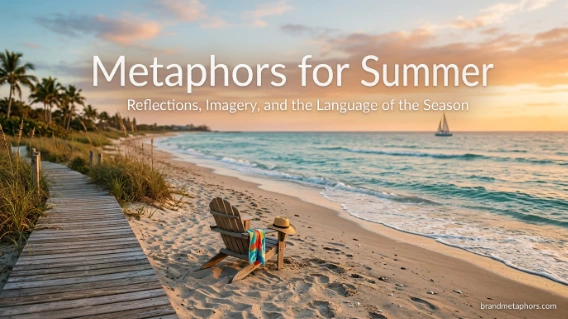
The air hums. Somewhere, a fan turns lazily, pushing around warmth that smells faintly of mangoes and dust. Children laugh in the distance, their voices rising like sparks in the late afternoon glow.
A glass of lemonade sweats on the table, and time itself seems to stretch, yawn, and slow down. This is summer—not just a season, but a feeling, a rhythm, a story waiting to be told.
But how do we capture something so vivid, so sensory, so alive?
That’s where metaphors for summer come in. Metaphors allow us to transform ordinary descriptions into imagery that feels tangible, emotional, and unforgettable. Instead of saying “it’s hot,” we say “the sun is a relentless drummer beating on the earth.” Suddenly, the heat isn’t just temperature—it’s intensity, sound, pressure.
Whether you’re a writer, student, content creator, or simply someone who loves expressive language, mastering summer metaphors can elevate your storytelling, poetry, and everyday communication. Let’s dive into how to craft them—and make your words shimmer like sunlight on water.
Why Use Metaphors for Summer in Writing?
Summer is one of the richest seasons for imagery. It offers:
- Bright colors (golden sun, blue skies, green fields)
- Strong sensations (heat, sweat, light, stillness)
- Emotional tones (freedom, nostalgia, restlessness)
Metaphors help you:
- Make descriptions vivid and memorable
- Express emotion indirectly but powerfully
- Create sensory experiences for readers
Think of metaphors as bridges—they connect what we see with what we feel.
1. Summer as a Furnace: Capturing Intensity and Heat

Meaning & Explanation
This metaphor compares summer to a furnace, emphasizing intense heat, pressure, and sometimes discomfort. It’s perfect for describing scorching afternoons or overwhelming weather.
Example Sentence
“The afternoon was a furnace, baking the streets until even shadows seemed to melt.”
Alternative Ways to Express It
- Summer is a blazing oven
- The sun is a relentless blacksmith
- The day burns like a forge
Mini Storytelling Moment
Imagine walking barefoot across a courtyard at noon. The ground stings your feet, the air feels thick, and even your breath seems warmer. In that moment, summer doesn’t feel gentle—it feels industrial, like something being forged and tested.
Sensory & Emotional Details
- Smell: Heated dust, asphalt
- Sound: Cicadas buzzing like machinery
- Emotion: Fatigue, intensity, endurance
2. Summer as a Golden Dream: Capturing Nostalgia and Beauty
Meaning & Explanation
This metaphor highlights the romantic, nostalgic, and almost magical side of summer. It works well for memories, vacations, and childhood experiences.
Example Sentence
“That summer lived in my mind like a golden dream, soft-edged and glowing with laughter.”
Alternative Ways to Express It
- Summer is a sunlit memory
- A season dipped in honey
- A slow-burning sunset of time
Mini Storytelling Moment
Think of long evenings with cousins, sticky fingers from ice cream, and laughter echoing into twilight. Years later, you don’t remember every detail—but the feeling remains, glowing like something precious and untouchable.
Cultural & Literary Note
Many novels and films use summer as a symbol of fleeting beauty—moments that feel eternal but vanish quickly. This metaphor taps into that universal experience.
Sensory & Emotional Details
- Sight: Golden light, fireflies
- Taste: Sweet fruits, cold drinks
- Emotion: Nostalgia, warmth, longing
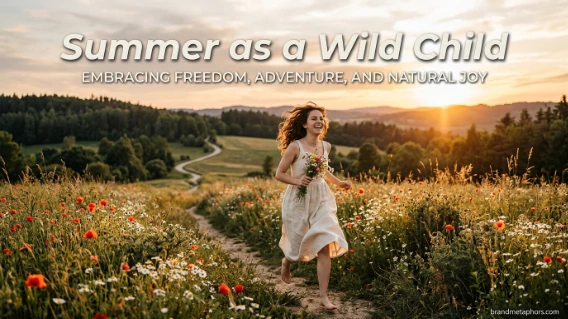
3. Summer as a Wild Child: Capturing Freedom and Energy
Meaning & Explanation
This metaphor portrays summer as playful, unpredictable, and full of life. It’s great for capturing the spirit of adventure and spontaneity.
Example Sentence
“Summer ran through the days like a wild child, barefoot and laughing, refusing to be tamed.”
Alternative Ways to Express It
- Summer is a carefree wanderer
- A dancing flame
- A restless heartbeat
Mini Storytelling Moment
Picture a group of friends deciding, on a whim, to take a late-night walk or a sudden road trip. No plans, no schedules—just movement, laughter, and freedom. That’s summer as a wild child.
Sensory & Emotional Details
- Sound: Laughter, music, distant fireworks
- Movement: Running, splashing, dancing
- Emotion: Joy, rebellion, freedom
Interactive Exercises: Practice Your Own Summer Metaphors
Want to sharpen your creative skills? Try these simple exercises:
Exercise 1: Complete the Metaphor
Fill in the blank:
- “Summer is a __________ because it makes me feel __________.”
Example: “Summer is a glowing lantern because it lights up forgotten memories.”
Exercise 2: Use the Five Senses
Write one metaphor for summer using each sense:
- Sight: “Summer is a…”
- Sound: “Summer sounds like…”
- Touch: “Summer feels like…”
Exercise 3: Personal Memory Prompt
Think of your favorite summer memory and describe it using a metaphor:
- Was it calm like a lake?
- Wild like a storm?
- Sweet like ripe fruit?
Write 3–5 sentences building around that metaphor.
Bonus Tips: Using Summer Metaphors in Writing and Daily Life
1. For Creative Writing
- Mix metaphors with imagery: Don’t just say “summer is a furnace”—show what’s burning.
- Keep it consistent: Avoid mixing too many conflicting metaphors in one paragraph.
2. For Social Media
- Use short, punchy metaphors:
- “Summer is a mood you can’t bottle.”
- “Chasing sunsets like they owe me something.”
- Pair metaphors with visuals for stronger impact.
3. For Everyday Conversation
- Add flair to simple statements:
- Instead of “It’s very hot,” say “The sun feels like it’s sitting on my shoulders.”
More Creative Metaphor Ideas for Summer
Here are a few extra sparks of inspiration:
- Summer is a painter, splashing gold across the sky
- Summer is a slow song, stretching time into melody
- Summer is a mirror, reflecting our brightest selves
- Summer is a fleeting guest, leaving before we’re ready
Try combining these with your own experiences to create something unique.
How Metaphors for Summer Enhance Emotional Storytelling

Metaphors don’t just describe—they translate emotion into imagery.
For example:
- “It was a hot day” → factual
- “The day pressed down like a heavy blanket” → emotional
In storytelling, especially:
- Summer can symbolize freedom, youth, love, or change
- It often acts as a backdrop for transformation or memory
By using metaphors, you give your readers a way to feel the story, not just read it.
Common Mistakes to Avoid When Using Metaphors
- Overcomplicating: Keep it clear and relatable
- Clichés: Try fresh combinations instead of overused phrases
- Mixed metaphors: Avoid combining unrelated images (e.g., “summer is a furnace sailing across the sky”)
Clarity and creativity should go hand in hand.
FAQs About Metaphors for Summer
What is a metaphor for summer?
A metaphor for summer is a figurative expression that compares summer to something else—like a furnace, dream, or wild child—to highlight its qualities.
Why are summer metaphors so popular in writing?
Because summer is rich in sensory details and emotions, making it perfect for vivid and relatable imagery.
Can I use summer metaphors in academic writing?
Yes, but use them sparingly. They’re more common in creative, descriptive, or narrative writing.
How can I create my own summer metaphors?
Think about how summer feels to you—hot, joyful, nostalgic—and compare it to something that shares those qualities.
What are some simple metaphors for summer?
- Summer is a blazing sun
- Summer is a golden memory
- Summer is a carefree song
Conclusion
Summer isn’t just a season—it’s a sensation, a memory, a fleeting story written in sunlight and heat. Through metaphors, we capture its essence in ways that linger long after the season fades.
Whether you see summer as a furnace, a dream, or a wild child, the beauty lies in how you express it. Your metaphors don’t have to be perfect—they just need to be honest, vivid, and alive.
So the next time the sun stretches across the sky and time slows to a golden hush, pause for a moment. Feel it. Notice it. Then turn it into words that glow.
Because the best metaphors don’t just describe summer—they make us feel it all over again.