
The Unspoken World: When Silence Speaks Louder Than Words
Silence is never truly empty.
Walk into an old library at closing time, when the last reader has left and the air settles between the shelves. The dust hangs still, the pages of forgotten books rest like sleeping birds, and even your footsteps seem too loud for such a sacred quiet. That is silence—not absence, but presence without noise.
We often think of silence as nothingness, a gap where speech or sound should be. But in literature, psychology, spirituality, and everyday life, silence is something far more complex. It is a language without words, a canvas of meaning waiting to be interpreted.
Understanding metaphors for silence helps us describe emotions that cannot be easily spoken—grief, peace, tension, awe, love, or even fear. Writers use silence not just as absence of sound but as a powerful symbol of what is left unsaid.
And in real life? Silence can be just as expressive as conversation. It can comfort, warn, heal, or even wound.
Let’s step into the world where silence becomes visible through metaphor.
Why Metaphors for Silence Matter in Writing and Life
Silence is difficult to describe directly because it has no sound, shape, or movement. That is where metaphor becomes essential—it translates the invisible into something we can feel.
Metaphors for silence are used in:
- Poetry and storytelling to create emotional depth
- Everyday communication to express feelings indirectly
- Meditation and mindfulness to describe inner calm
- Film and music to suggest tension or peace without dialogue
When we say silence is “heavy,” “warm,” or “sharp,” we are not describing sound—we are describing experience.
Now let’s explore three powerful metaphors for silence that can transform how you write, speak, and feel.
1. Silence as a Heavy Blanket: Comforting Yet Crushing
Meaning and Explanation
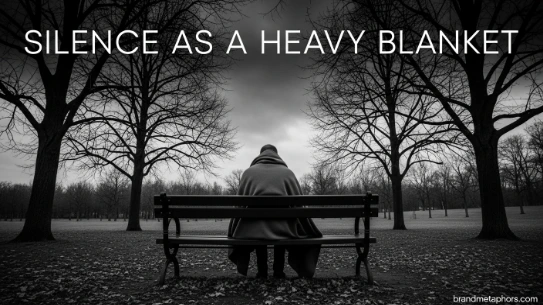
Silence as a heavy blanket represents a kind of stillness that surrounds everything completely. It can feel protective and warm, but also suffocating depending on the situation.
This metaphor captures emotional silence—especially after conflict, loss, or emotional exhaustion.
Example Sentence or Scenario
After the argument ended, silence fell over the room like a heavy blanket, pressing against every unspoken apology.
Emotional and Sensory Detail
You can almost feel it physically—thick, weighty, covering shoulders and thoughts alike. It muffles not just sound but emotional expression. It’s the kind of silence that makes you aware of your heartbeat.
Alternative Expressions
- Silence like a weighted quilt
- Silence like a thick fog
- Silence like a closed curtain falling too fast
Mini Storytelling Moment
Imagine two friends sitting in a car after a heated disagreement. The engine is off, the windows fog slightly, and neither speaks. The silence doesn’t feel empty—it feels dense. Every word they refuse to say presses against the air like fabric soaked in rain. That is the “heavy blanket” silence.
Interactive Exercise
Think of a moment when silence felt intense for you. Was it comforting or uncomfortable?
Now write one sentence describing it using the “heavy blanket” metaphor. Try changing the emotion—make it peaceful first, then tense.
2. Silence as a Frozen Lake: Stillness with Hidden Depths
Meaning and Explanation
Silence as a frozen lake represents emotional stillness on the surface while something deep remains underneath. It suggests control, restraint, or unspoken intensity.
This metaphor is often used in literature to describe people who are calm outwardly but emotionally complex inside.
Example Sentence or Scenario
Her silence was a frozen lake—calm enough to reflect the world, but hiding currents no one dared disturb.
Emotional and Sensory Detail
A frozen lake looks safe. Smooth. Silent. But beneath the ice, water moves slowly, life exists unseen. This metaphor adds mystery to silence—it is not empty, but paused.
Alternative Expressions
- Silence like glass over deep water
- Silence like a still winter pond
- Silence like ice covering a storm
Cultural / Literary Reference
Many Scandinavian and Russian literary works use winter imagery to symbolize emotional restraint. Silence in these traditions is not emptiness—it is survival, endurance, and inner discipline.
Mini Storytelling Moment
A teacher asks a student why he never answers in class. He simply smiles. Years later, that same student becomes a writer known for deeply emotional stories. People realize his silence was never absence—it was a frozen lake storing entire worlds beneath.
Interactive Exercise
Write a character description using the “frozen lake” metaphor. Describe what lies beneath their silence.
Try answering:
- What emotions are under the surface?
- What might break the ice?
3. Silence as a Broken Radio Signal: Interrupted Meaning
Meaning and Explanation
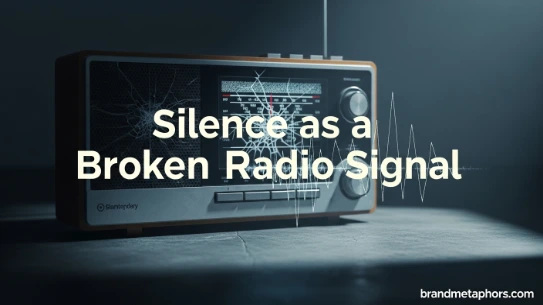
Silence as a broken radio signal represents fragmented communication—moments where connection fails, messages are lost, or understanding is incomplete.
This metaphor is especially useful in digital communication, relationships, and emotional disconnect.
Example Sentence or Scenario
Between them, silence crackled like a broken radio signal—words almost forming, then disappearing into static.
Emotional and Sensory Detail
This silence is not smooth. It is jagged, unstable, filled with invisible noise. You feel like something is trying to be said, but the message never fully arrives.
Alternative Expressions
- Silence like static in an empty broadcast
- Silence like a disconnected call
- Silence like fading echoes in a tunnel
Real-Life Example
Think of texting someone and seeing them type… then stop. The silence that follows is not peaceful—it is uncertain. Your mind fills in the missing signal.
Mini Storytelling Moment
A couple sits across a table in a café. They both check their phones more than each other. Words appear and vanish between them. What remains is silence—but not calm silence. It is a broken frequency, a conversation that never fully connects.
Interactive Exercise
Write a short dialogue where silence replaces speech. Use the “broken radio signal” metaphor to describe the emotional tension between characters.
How to Use Silence Metaphors in Writing and Daily Expression
Silence metaphors are powerful tools, but they work best when used intentionally.
Tips for Writers and Creators
- Use “heavy” silence for emotional weight or grief scenes
- Use “frozen” silence for mystery, control, or emotional distance
- Use “broken signal” silence for conflict or miscommunication
Social Media Usage
Instead of writing “I have nothing to say,” try:
- “Today feels like a frozen lake inside my thoughts.”
- “The silence between us feels like static on a lost frequency.”
These expressions create emotional engagement and depth.
Everyday Life Application
You can also use these metaphors in conversations:
- “That moment felt like a heavy silence in the room.”
- “It was like everything froze for a second.”
It helps others understand emotions that are hard to explain directly.
Bonus Creative Challenge: Build Your Own Silence Metaphor
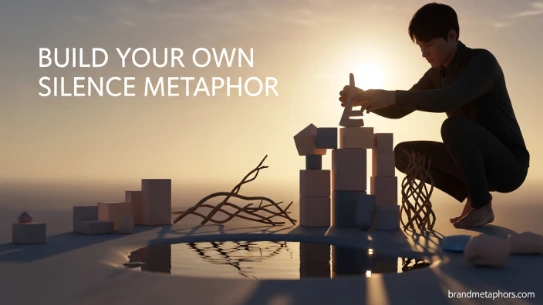
Try combining two sensory ideas:
- Silence + weather (storm, snow, fog)
- Silence + objects (glass, fabric, machines)
- Silence + nature (forest, ocean, desert)
Example: “Silence fell like desert sand—soft, endless, and swallowing every sound.”
Now try creating your own.
FAQs About Metaphors for Silence
What is a metaphor for silence in simple terms?
A metaphor for silence is a way of describing quietness using something familiar, like a blanket, ice, or fog, to express emotion or meaning.
Why do writers use metaphors for silence?
Writers use them to make invisible emotions visible, helping readers feel deeper meaning beyond spoken words.
Can silence have positive metaphors too?
Yes. Silence can be peaceful, like a calm lake or soft snowfall, representing rest, clarity, or mindfulness.
How can I improve my use of silence metaphors?
Practice by observing real silent moments and asking yourself what they feel like physically, emotionally, or visually.
Are silence metaphors used in poetry?
Very often. Poetry relies heavily on silence metaphors to express emotion, tension, and meaning between words.
Conclusion
Silence is never empty. It is layered, textured, and alive with meaning.At times it comforts like a blanket. Sometimes it hides like a frozen lake. Sometimes it fractures like a broken signal trying to reconnect.
When we learn to understand metaphors for silence, we begin to hear what is not being said. We become more aware of emotional nuance, more sensitive to human experience, and more expressive in language.
In writing, silence is not the absence of sound—it is the presence of meaning waiting to be discovered.
And in life, perhaps the most important conversations are the ones that happen without words.