
There are moments in life when pain has no clear shape. It doesn’t always arrive as a sharp sensation or a visible wound. Sometimes it shows up quietly—like a heavy silence in a room after a difficult conversation, or like waking up with a feeling you can’t quite name but deeply understand. In those moments, language struggles to keep up with experience. So we reach for something else: metaphors.
Metaphors for pain help us translate what feels invisible into something we can hold, imagine, and share. We say pain is a burning fire, a crushing weight, a storm inside the chest, or a locked door we cannot open. These comparisons are more than poetic expressions—they are survival tools for the mind.
This article explores the many metaphors used to describe pain and what they reveal about human emotion, psychology, and healing. By understanding these images, we begin to better understand ourselves and others. Pain becomes less isolating when it is named, shaped, and shared through language that reflects its depth.
1. Understanding Metaphors for Pain
Pain is difficult to define because it exists both in the body and the mind. Literal descriptions often fall short, which is why humans rely on metaphors to express what cannot be directly explained. A metaphor transforms pain into something familiar, helping us interpret abstract suffering through concrete imagery.
When someone says, “my heart feels broken,” they are not describing physical fracture but emotional devastation. Similarly, “I feel crushed” expresses overwhelming pressure, not literal force. These expressions bridge internal experience and external communication.
Metaphors also shape how we perceive pain. If pain is described as “a storm,” it feels temporary but intense. If it is “a prison,” it feels long-lasting and confining. The metaphor chosen influences emotional response and coping behavior.
Why metaphors matter
Metaphors are not just language tools; they are psychological frameworks. They help:
- Communicate emotional intensity
- Validate personal experience
- Create shared understanding between individuals
- Offer cognitive relief by organizing chaos into structure
Understanding these metaphors helps us better interpret not only our own suffering but also the pain of others.
2. Pain as Fire and Burning Sensation
One of the most common metaphors for pain is fire. People describe emotional heartbreak as “burning inside” or “feeling scorched by memory.” Fire represents intensity, destruction, and transformation.
Burning pain suggests something uncontrollable. It spreads quickly and consumes attention. Just as fire demands immediate reaction, emotional pain described this way feels urgent and overwhelming.
Emotional interpretations
Fire metaphors often appear in situations of betrayal, loss, or anger. For example, after a deep emotional wound, someone might say, “I feel like I’m on fire from the inside.” This conveys both suffering and energy—pain that refuses to stay silent.
Transformation aspect
Interestingly, fire also symbolizes change. Just as fire can destroy, it can also purify. This dual meaning reflects how pain sometimes leads to growth, forcing individuals to rebuild themselves from ashes.
Fire metaphors capture both destruction and rebirth, making them powerful tools for expressing emotional intensity.
3. Pain as Weight and Burden
Another powerful metaphor for pain is weight. People often say they are “carrying a heavy heart” or “burdened by grief.” This imagery reflects the physical sensation of emotional strain.
Weight metaphors suggest endurance. Unlike fire, which burns quickly, weight is constant and persistent. It presses down slowly, making movement harder over time.
The psychology of heaviness
When pain is described as weight, it often relates to responsibility, guilt, or unresolved emotions. A person grieving a loss may feel like they are “carrying the world on their shoulders.”
H3: Everyday examples
- “A heavy heart” after loss or disappointment
- “Burden of memories” after trauma
- “Weight of expectations” in stressful relationships
These expressions show how emotional pain accumulates, making even simple actions feel exhausting.
Weight metaphors highlight endurance rather than intensity. They reflect how pain can become part of daily life, shaping how we move, think, and interact.
4. Pain as Storms and Weather
Weather metaphors are frequently used to describe emotional turbulence. Pain becomes a storm, thunderclouds, or heavy rain that passes over the mind.
Storm imagery reflects unpredictability. Just as weather changes suddenly, emotional pain can arrive without warning. It also suggests that pain is natural, part of life’s cycles.
H3: Types of weather metaphors
- Storms – intense emotional chaos
- Rain – quiet sadness or grief
- Fog – confusion and emotional numbness
These variations help express different emotional states with precision.
Emotional meaning
A storm metaphor often implies that pain, though strong, will eventually pass. This provides hope. Saying “this is just a storm” reassures the mind that clarity will return.
Weather metaphors are powerful because they connect internal emotions to universal experiences that everyone understands.
5. Pain as Physical Wounds and Injuries
Pain is often described as a wound—something broken, cut, or damaged. Phrases like “a broken heart” or “deep scars” illustrate emotional injury using physical imagery.
This metaphor is especially powerful because it makes emotional suffering visible. A wound suggests something that happened to the body, even when the damage is internal.
Healing implications
Wounds imply healing is possible but requires time and care. Just as physical injuries close slowly, emotional pain also fades gradually.
H3: Common expressions
- “Scarred by the past”
- “A deep emotional cut”
- “Open wounds of memory”
These phrases highlight how pain can remain long after the original event.
The wound metaphor emphasizes vulnerability but also recovery, reminding us that healing is a process, not an instant change.
6. Pain as Imprisonment and Confinement
Pain is sometimes described as being trapped or imprisoned. People say they feel “stuck in their emotions” or “locked inside themselves.”
This metaphor reflects the inability to escape emotional states. Unlike physical pain that may come and go, emotional imprisonment feels ongoing and inescapable.
Psychological dimension
Imprisonment metaphors often arise in depression or grief, where individuals feel disconnected from the outside world. It reflects isolation and lack of control.
H3: Expressions of confinement
- “Trapped in my own mind”
- “Locked in sadness”
- “Emotional cage”
These images emphasize restriction and helplessness.
However, they also imply the possibility of release—every prison has an exit, even if it takes time to find it.
7. Pain as Noise, Silence, and Sound
Pain is not always visible; sometimes it is auditory in metaphorical form. It is described as ringing silence, screaming thoughts, or unbearable noise inside the mind.
Sound metaphors reflect internal mental chaos. Noise suggests overwhelming thoughts that cannot be controlled, while silence may indicate emotional numbness.
H3: Types of sound metaphors
- Screaming pain – intense emotional distress
- Silent pain – suppressed suffering
- Echoes – lingering memories
These variations show how pain can either be loud or disturbingly quiet.
Sound metaphors highlight the internal nature of suffering, where no one else may hear what is happening inside.
8. Emotional vs Physical Pain Metaphors
Emotional pain often borrows language from physical pain. We say “heartache,” “broken spirit,” or “aching memories.” This blending shows how closely mind and body are connected.
Physical metaphors help express emotional complexity. Without them, feelings would be harder to communicate.
Why this overlap exists
The brain processes emotional and physical pain in similar regions, which explains why emotional suffering often feels physically real.
H3: Examples of overlap
- Heart pain = emotional grief
- Headache = mental stress
- Tight chest = anxiety
These metaphors make invisible suffering easier to understand and validate.
9. Cultural Interpretations of Pain Metaphors
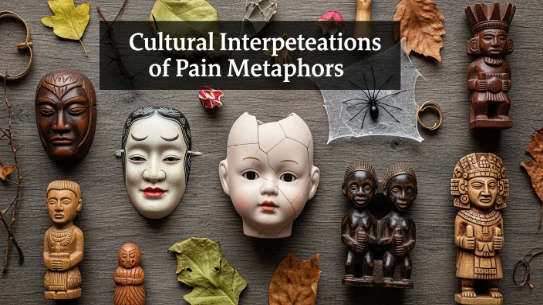
Different cultures use different metaphors for pain based on environment, beliefs, and history. In some cultures, pain is seen as a test; in others, as a cleansing process.
For example, in agrarian societies, pain may be compared to seasons—harsh winters followed by renewal. In spiritual traditions, pain may be viewed as purification.
Cultural significance
These metaphors shape how people respond to suffering. If pain is seen as meaningful, it may be endured with more acceptance.
Cultural metaphors show that pain is not only personal but also collective, shaped by shared understanding.
10. Pain in Relationships: Emotional Distance and Fracture
In relationships, pain is often described as distance, cracks, or breaking apart. Phrases like “growing apart” or “fractured bond” illustrate emotional separation.
H3: Relationship metaphors
- “Drifting away” – emotional disconnection
- “Broken trust” – betrayal
- “Cold distance” – lack of affection
These metaphors show how relationships can slowly weaken rather than collapse suddenly.
Relationship pain is often subtle, built over time, making metaphors essential for expressing gradual emotional change.
11. Healing Metaphors: Light, Repair, and Growth
If pain is darkness, then healing is often light. People speak of “finding light after darkness” or “healing broken parts.”
Healing metaphors focus on restoration and renewal. They suggest that pain is not permanent.
H3: Common healing images
- Light after darkness
- Mending broken pieces
- Growth from soil after storm
These metaphors emphasize transformation rather than elimination of pain.
Healing metaphors provide hope and direction, showing that recovery is possible even after deep suffering.
12. Using Metaphors to Cope with Pain
Metaphors are not just descriptive—they are therapeutic. They help people process emotions by giving structure to chaos.
When someone says, “my pain is a storm, but it will pass,” they are reframing suffering in a way that reduces fear.
Practical applications
- Journaling with metaphors to express emotions
- Therapy discussions using symbolic language
- Creative writing as emotional release
Metaphors allow distance between the self and pain, making it easier to understand and manage.
They transform overwhelming feelings into something interpretable, giving the mind a sense of control.
Conclusion
Pain is one of the most universal human experiences, yet it remains deeply personal and difficult to express. Metaphors bridge that gap between silence and understanding. Whether pain is seen as fire, weight, storm, wound, or imprisonment, each image reveals something essential about how humans process suffering.
These metaphors do more than describe pain—they shape how we experience it, respond to it, and eventually heal from it. They remind us that pain, while deeply uncomfortable, is also meaningful in its own way. It can transform, teach, and even connect us to others who have felt similar struggles.
By learning the language of metaphors, we learn to better understand ourselves. And in that understanding, pain becomes less isolating—not because it disappears, but because it finally has a voice.