
Introduction
There comes a moment in life when you look at an old photograph and feel something shift inside you. The faces are familiar, yet softer around the edges, as if time itself has gently blurred them.
A childhood home may no longer stand, a favorite chair might be worn down to its bones, and an elder’s hands tell stories words never could. In these quiet observations, we begin to realize that “old” is not just a measure of time—it is a feeling, a memory, a transformation.
This is where metaphors for old become deeply meaningful. They help us understand aging not as decline alone, but as evolution, richness, and layered experience. Through imagery like weathered wood, ancient rivers, or fading sunlight, we give shape to something otherwise abstract.
These metaphors matter in real life because they influence how we see ourselves, our elders, and even our future. They soften fear, build empathy, and remind us that aging is not an ending—but a different kind of becoming.
The Meaning Behind Metaphors for Old Age
Metaphors for old age are not just poetic expressions; they are mental bridges that help us understand the passage of time. When we say someone is “like an old tree,” we are not speaking literally—we are recognizing depth, endurance, and survival through storms. Aging becomes less about numbers and more about narrative.
These metaphors allow us to reframe aging from loss to accumulation. Wrinkles become “maps of experience,” gray hair becomes “silver threads of wisdom,” and slow movement becomes “deliberate living.” Each image shifts perception, turning what society often views as decline into something meaningful.
Why the Mind Uses Imagery
Human beings naturally think in pictures. Abstract ideas like aging feel distant unless grounded in something familiar. That is why metaphors are powerful—they translate the invisible passage of time into visible, relatable forms. Without them, old age would feel like a void. With them, it becomes a landscape.
Time as an Old River
One of the most common metaphors for old age is time as a river. A river begins young—fast, restless, and noisy—but as it grows older, it widens, slows, and deepens. It carries sediment of all it has passed, just as a person carries memories.
An old river does not rush; it understands direction. It has curves shaped by resistance, calm pools formed by patience. Similarly, old age is not about speed but flow. It reflects a life shaped by countless experiences that have smoothed its edges.
Emotional Depth of the River Metaphor
When people reflect on their elders, they often notice calmness replacing urgency. Like a river nearing the sea, there is acceptance in movement. This metaphor helps us see aging not as stagnation, but as integration—where everything once scattered finally settles into meaning.
Seasons of Life and the Autumn Mindset
Nature offers one of the richest metaphorical frameworks for aging, especially through seasons. Old age is often compared to autumn—a time when leaves change color before falling, signaling both beauty and transition.
Autumn does not fight its ending; it participates in it gracefully. In the same way, aging can reflect a stage where energy shifts inward. The urgency of spring and summer gives way to reflection and harvest.
The Beauty of Slow Transformation
Unlike sudden change, autumn teaches gradual letting go. Trees do not lose leaves in a moment—they release them slowly, one by one. This mirrors how life experiences are processed in old age: gently, thoughtfully, and with acceptance.
Old Books: Pages Filled with Time

An old person is often compared to an old book—worn at the edges, pages softened by touch, sometimes marked with handwritten notes of experience. These books are not less valuable; they are more meaningful because they have been read, re-read, and lived with.
Each crease in the page represents a moment survived. Each faded line holds a memory that may not be fully visible but still exists beneath the surface.
Stories Within the Wear
Old books often smell different, feel different, and demand slower reading. Similarly, elders often speak with layered meaning. Their words carry subtext shaped by years of experience, requiring patience to fully understand.
Antique Objects and the Value of Patina
Antique objects are treasured not despite their age, but because of it. A cracked vase, a faded painting, or a rusted clock gains value through its history. This idea forms a powerful metaphor for old age.
The “patina” of life—those marks left by time—becomes evidence of authenticity. Nothing about it is fake or polished; everything is real.
Beauty in Imperfection
Modern culture often prioritizes perfection, but antique metaphors remind us that imperfection tells a deeper story. A scratched surface may indicate use, love, or survival. In human terms, this translates to lived experience rather than flaw.
Mountains That Have Endured Time
Mountains are often described as old giants of the earth. They stand still while everything around them changes. Wind, rain, and erosion slowly shape them, but they remain strong.
This metaphor reflects the resilience of old age. While the body may change, inner strength often remains grounded.
Erosion as Life Experience
Erosion does not destroy mountains; it defines them. Similarly, life’s challenges shape character. Each difficulty leaves a mark, but also adds dimension and depth.
Ancient Trees and Deep Roots
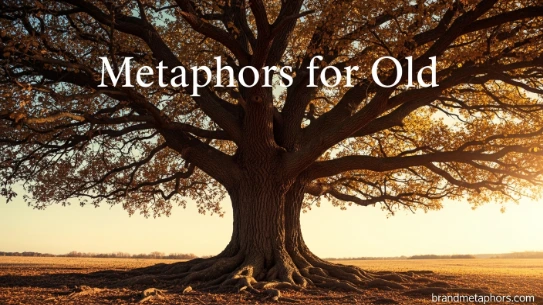
Old trees are among the most powerful metaphors for aging. Their roots stretch deep into the earth, anchoring them through storms and seasons. Their branches may be gnarled, but they provide shelter and shade.
These trees do not grow fast anymore, but they grow wide and wise.
The Strength of Stillness
An old tree teaches that strength is not always visible in movement. Sometimes, it is in endurance. Standing firm through decades of change is its own kind of power.
Old Cities and Forgotten Streets
Old cities are layered with history—narrow streets, worn stones, and buildings that have witnessed generations. They carry echoes of past lives, much like aging individuals carry memories.
Walking through such a city feels like walking through time itself.
Memory in Architecture
Every crack in a wall or uneven cobblestone tells a story. Similarly, in old age, every experience contributes to a larger personal architecture shaped by time.
Wine Aging and the Refinement of Time
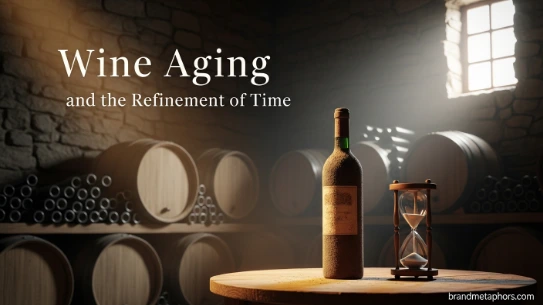
Wine is one of the most elegant metaphors for old age. It begins as something raw and sharp but becomes richer, smoother, and more complex over time.
Aging, like wine, is about transformation through patience.
Depth Through Time
Young wine may be vibrant, but aged wine carries layers of flavor developed slowly. This reflects how human wisdom deepens with lived experience.
The Slowing Clock of Time Perception
In youth, time feels fast and endless. In old age, it often feels slower, more deliberate. This is frequently compared to a clock whose ticking becomes more noticeable.
Time does not necessarily change—it is perception that shifts.
Awareness of Moments
Older individuals often notice small details more deeply: the warmth of sunlight, the sound of wind, or the rhythm of daily life. Time becomes less about rushing and more about noticing.
Memory as a Softening Fog
Memory in old age is often described as fog—some parts clear, others gently blurred. This metaphor captures both loss and softness.
Fog does not erase the landscape; it simply changes how it is seen.
Selective Clarity
Certain memories remain vivid, while others fade. This selective clarity can shape identity in unique ways, highlighting what matters most emotionally.
Lessons Hidden in Metaphors for Old Age
Metaphors for old age are not just descriptive—they are instructive. They teach acceptance, patience, and respect for time’s influence on all living things.
By viewing aging through imagery rather than fear, we begin to see it as a natural evolution.
Shifting Perspective
When old age is seen as river, tree, or wine, it becomes less about decline and more about completion. These metaphors invite empathy toward both others and our future selves.
Conclusion
Metaphors for old age help transform an often misunderstood stage of life into something meaningful and deeply human. Through images like rivers, trees, books, and wine, aging becomes less about fading and more about forming—less about loss and more about layered existence. These metaphors remind us that time does not simply take away; it also builds, shapes, and refines. In recognizing this, we learn to approach aging with greater respect and emotional clarity. Ultimately, old age is not an ending chapter but a richly written section of a larger story—one that deserves to be read slowly and understood deeply.