
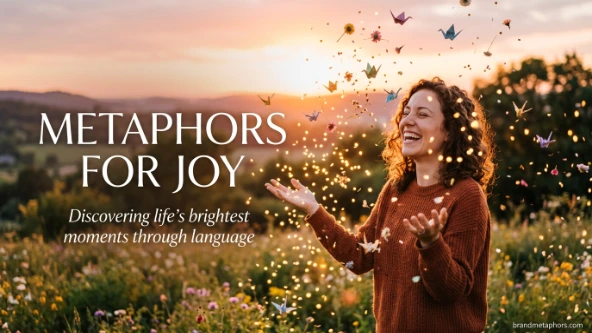
Introduction: A Flicker That Becomes a Flame
Have you ever noticed how joy rarely arrives with a grand announcement? It slips in quietly—like sunlight filtering through a curtain, like laughter echoing unexpectedly in a quiet room. Maybe it was a simple moment: a shared glance, a small success, or a memory that warmed you from within. And yet, somehow, it felt larger than life.
Joy is one of the most powerful yet elusive human emotions. It’s not always loud or obvious. Sometimes it’s subtle, almost hidden, waiting to be recognized. That’s where metaphors become essential. They give shape to something we feel deeply but often struggle to describe. Through metaphors, joy transforms into light, movement, warmth, and connection—things we can see, touch, and understand.
This article explores metaphors for joy in depth, revealing how they help us interpret our emotional lives. More importantly, it shows how these metaphors can guide us toward noticing, appreciating, and cultivating joy in everyday moments.
Joy as Light: Illuminating the Inner World
Joy is often described as light—and for good reason. Light reveals, warms, and energizes. When joy enters our lives, it does something similar: it brightens our perspective and helps us see possibilities we might otherwise miss.
The Dawn After Darkness
Imagine waking up after a difficult period in your life. Slowly, things begin to improve. That feeling resembles sunrise—soft, gradual, but undeniable. Joy here isn’t overwhelming; it’s hopeful.
A Spark in the Dark
Sometimes joy appears unexpectedly—a joke, a memory, a kind gesture. It’s like a spark in darkness, small but powerful enough to change your entire mood.
Light metaphors remind us that joy doesn’t need to be constant to be meaningful. Even a flicker can guide us forward. When you begin to look for these “sparks,” you start to notice joy more often.
Joy as a River: Flowing and Ever-Changing
Joy isn’t static. It moves, shifts, and evolves, much like a river.
Calm Streams vs. Rushing Currents
There are moments when joy feels gentle—a quiet sense of contentment. Other times, it rushes through you, like excitement before a celebration or achievement.
Letting Joy Flow
Trying to hold onto joy too tightly can make it feel like it’s slipping away. Rivers teach us an important lesson: joy is meant to flow, not be trapped.
This metaphor helps us accept that joy may come and go. Instead of fearing its absence, we learn to trust that it will return, just as rivers continue their journey.
Joy as Music: A Rhythm of Emotion

Joy often feels like music—rhythmic, expressive, and deeply personal.
The Melody of Everyday Life
Think about a day when everything seems to fall into place. Conversations flow, tasks feel easier, and your mood is light. It’s like life is playing your favorite song.
Harmonies and Contrasts
Music isn’t just about happy notes. It includes highs and lows. Similarly, joy often feels richer when contrasted with challenges.
Viewing joy as music reminds us to embrace its rhythm. Not every moment needs to be joyful—but together, they create a meaningful composition.
Joy as a Garden: Something You Cultivate
Joy doesn’t always grow on its own. Sometimes, it requires care—like a garden.
Planting Seeds of Joy
Simple habits—gratitude, connection, kindness—act as seeds. Over time, they grow into a deeper sense of happiness.
Removing Weeds
Negative thoughts and stress can crowd out joy. Just as a gardener removes weeds, we must address what blocks our happiness.
This metaphor emphasizes responsibility. Joy isn’t just something that happens—it’s something we nurture.
Joy as a Child: Pure and Unfiltered
Children experience joy in its most natural form—uncomplicated and immediate.
Finding Wonder Again
A child can find joy in the smallest things: a puddle, a game, a story. As adults, we often lose this ability.
Letting Go of Control
Joy as a child suggests spontaneity. It reminds us to loosen our grip on perfection and simply enjoy the moment.
Reconnecting with this metaphor can help us rediscover simple pleasures we’ve overlooked.
Joy as a Fire: Warmth and Energy
Joy can feel like a fire—warming, energizing, and sometimes intense.
A Gentle Flame
Quiet joy resembles a steady fire—comforting and stable.
A Roaring Blaze
Excitement and celebration feel like flames rising high—bright and powerful.
But fire also needs balance. Too little, and it fades. Too much, and it overwhelms. This metaphor teaches us to sustain joy without burning out.
Joy as a Journey: Something You Travel Toward
Joy isn’t always a destination—it’s often part of the journey itself.
Small Milestones
Reaching a goal brings joy, but so does the progress along the way.
Unexpected Detours
Sometimes, joy appears where we least expect it—during challenges or changes.
Seeing joy as a journey helps us appreciate the process, not just the outcome.
Joy as a Gift: Something to Receive and Share

Joy often feels like a gift—unexpected, meaningful, and valuable.
Receiving Joy
Moments of kindness or beauty can feel like gifts we didn’t ask for but deeply appreciate.
Giving Joy
Sharing joy—through laughter, support, or generosity—multiplies it.
This metaphor encourages openness. When we accept joy as a gift, we also become more willing to pass it on.
Joy as a Breath: Essential and Subtle
Joy can be as simple and necessary as breathing.
Inhaling Happiness
Sometimes joy is found in quiet moments—taking a deep breath, noticing your surroundings.
Exhaling Stress
Letting go of tension often creates space for joy.
This metaphor reminds us that joy doesn’t have to be dramatic. It can exist in calm, ordinary moments.
Joy as a Mirror: Reflecting Inner State
Joy often reflects what’s happening inside us.
Seeing Yourself Clearly
When you feel joyful, it often means you’re aligned with your values and desires.
Distorted Reflections
If joy feels absent, it might signal imbalance or unmet needs.
This metaphor encourages self-awareness. Joy becomes a guide rather than just an emotion.
Joy as Color: Painting Life with Emotion
Glory adds color to life, making experiences more vivid.
Bright Hues
Moments of excitement feel like bold, vibrant colors.
Soft Shades
Peaceful joy resembles gentle pastels—subtle but beautiful.
This metaphor helps us appreciate the variety of joy. It’s not always loud—it can be soft and still meaningful.
Joy as Connection: A Bridge Between People
Joy often emerges through relationships.
Shared Laughter
Laughing with someone creates a bond that strengthens connection.
Emotional Resonance
When someone understands you, joy naturally follows.
This metaphor highlights that joy isn’t always individual. It grows when shared.
Joy as Freedom: Letting Yourself Be

Joy often feels like freedom—the absence of pressure and limitation.
Breaking Constraints
Moments when you stop worrying about expectations can feel liberating.
Being Authentic
True joy comes when you’re fully yourself.
This metaphor teaches that joy is closely tied to authenticity and self-acceptance.
Joy as Discovery: Finding Something New
Joy often comes from discovery—learning, exploring, experiencing.
Small Discoveries
Even finding a new perspective or idea can bring joy.
Big Revelations
Life-changing moments also carry deep joy.
This metaphor encourages curiosity. The more you explore, the more joy you uncover.
Common Misunderstandings About Joy
Despite its importance, joy is often misunderstood.
Joy vs. Happiness
Happiness is often external and temporary. Joy is deeper and more enduring.
Joy Isn’t Constant
Expecting to feel joyful all the time leads to disappointment.
Joy Requires Awareness
Many joyful moments go unnoticed because we’re distracted.
Understanding these misconceptions helps us approach joy more realistically and appreciate it more fully.
Practical Ways to Use Metaphors for Joy in Daily Life

Metaphors aren’t just descriptive—they’re practical tools.
Reframing Your Perspective
If you feel stuck, think of joy as a river. Let it flow instead of forcing it.
Building Habits
Use the garden metaphor to cultivate small daily practices.
Enhancing Awareness
Notice moments of “light” or “music” in your day.
By actively using these metaphors, you can deepen your emotional awareness and create more space for joy.
Conclusion
Joy is not a single, fixed experience. It’s light, music, fire, water, and more. It’s quiet and loud, fleeting and lasting, simple and profound. Through metaphors, we begin to understand its many forms—and more importantly, we begin to notice it.
When you start seeing joy as something that flows, grows, and connects, it becomes less elusive. It’s no longer something you chase, but something you recognize. And in that recognition, joy becomes more present in your life.
The next time you feel even a small spark of joy, pause. Notice it. Let it expand. Because sometimes, the smallest metaphorical spark can light up your entire world.
FAQs
What are metaphors for joy?
Metaphors for joy are symbolic ways of describing happiness using familiar concepts like light, music, or nature to make the emotion easier to understand.
Why are metaphors important for understanding joy?
They help translate abstract emotions into relatable experiences, making joy easier to recognize and reflect on.
Can metaphors actually increase happiness?
Yes, they can shift perspective, helping you notice and appreciate joyful moments more consciously.
What is the most common metaphor for joy?
Joy is most commonly compared to light, as it represents brightness, warmth, and clarity.
How can I use metaphors in daily life?
You can use them to reframe emotions, reflect on experiences, and better understand your feelings.
Is joy different from happiness?
Yes, joy is often deeper and more internal, while happiness is usually tied to external events.
Can joy exist during difficult times?
Absolutely. Joy can coexist with hardship, often appearing in small, meaningful moments even during challenges.