

Introduction
You wake before sunrise, step outside, and feel the quiet hum of possibility. The road ahead is empty, stretching farther than your eyes can see. You don’t know exactly where it leads, only that each step will shape who you become. Isn’t that what life often feels like—a path unfolding beneath your feet, uncertain yet full of meaning?
The idea of a “journey” is one of the most powerful metaphors we use to understand life. Whether we’re talking about personal growth, relationships, career paths, or emotional healing, we often describe these experiences as roads, paths, climbs, or voyages. These metaphors help us make sense of change, struggle, progress, and purpose in a way that feels tangible.
In this article, we’ll explore metaphors for journey from multiple angles—what they mean, how they shape our thinking, and how you can use them to better understand your own experiences. Through stories, reflections, and practical insights, you’ll see how the simple idea of a journey can illuminate even the most complex parts of life.
The Journey as a Road: Direction and Choice
One of the most common metaphors for a journey is the road. We talk about being “on the right path,” reaching a “crossroads,” or feeling “lost.” This metaphor reflects the choices we make and the directions we take.
A road suggests movement, but also decision-making. Every turn, detour, or fork represents a moment where we must choose. Imagine someone deciding whether to stay in a stable job or pursue a risky dream. That moment feels like standing at a crossroads, unsure which direction leads to fulfillment.
How the Road Shapes Thinking
When you see life as a road, you begin to understand that:
- Not all paths are straight
- Wrong turns are part of the process
- You can always change direction
This perspective reduces the pressure of perfection. Instead of fearing mistakes, you start to see them as detours—sometimes inconvenient, but often meaningful.
The Journey as a Climb: Effort and Growth
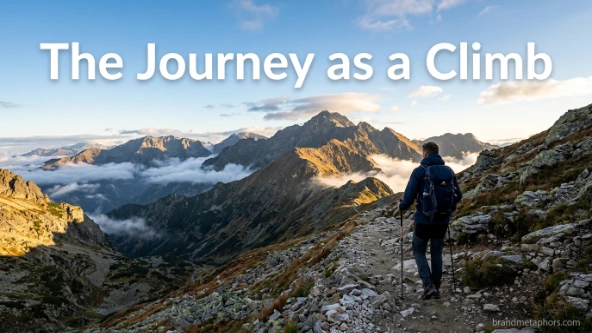
Another powerful metaphor is the climb. Life is often described as “an uphill battle” or “climbing toward success.” This metaphor emphasizes effort, resilience, and gradual progress.
Climbing is rarely easy. It demands persistence and strength. But with each step upward, the view becomes clearer, and the sense of achievement grows.
The Emotional Truth Behind the Climb
Think of someone learning a new skill. At first, progress feels slow and frustrating. But over time, small improvements build into noticeable growth. The climb teaches patience and discipline.
Lessons from the Climb
- Progress is often slow but meaningful
- Struggle is a sign of movement, not failure
- The higher you go, the broader your perspective
The Journey as a River: Flow and Adaptation
A journey can also be seen as a river—constantly moving, sometimes calm, sometimes turbulent. This metaphor highlights the importance of adaptability.
A river doesn’t fight obstacles; it flows around them. It changes shape, direction, and speed depending on the terrain.
What the River Teaches Us
When life feels unpredictable, the river metaphor reminds us to:
- Adapt instead of resist
- Trust the process
- Keep moving, even when the path is unclear
Imagine going through a sudden life change, like relocating or losing a job. Fighting the change can create stress, but flowing with it can open unexpected opportunities.
The Journey as a Story: Meaning and Narrative
We often describe our lives as stories—“my journey began when…” or “that was a turning point.” This metaphor frames life as a narrative with chapters, conflicts, and resolutions.
Why Stories Matter
Seeing your journey as a story helps you:
- Find meaning in difficult experiences
- Recognize growth over time
- Understand that challenges are part of the plot
Mini Story Example
A person who fails an important exam might initially see it as an ending. But in the larger story, it could become the moment that redirects them toward a more fulfilling path.
The Journey as a Map: Planning and Vision
A map represents guidance and preparation. While a journey unfolds in real time, a map gives you a sense of direction before you begin.
Balancing Planning and Flexibility
Maps are helpful, but they’re not perfect. Roads change, unexpected obstacles appear, and sometimes the most meaningful experiences aren’t on the map at all.
Practical Insight
- Use goals as your “map”
- Stay open to new paths
- Adjust your direction when needed
The key is to plan without becoming rigid.
The Journey as a Voyage: Exploration and Discovery
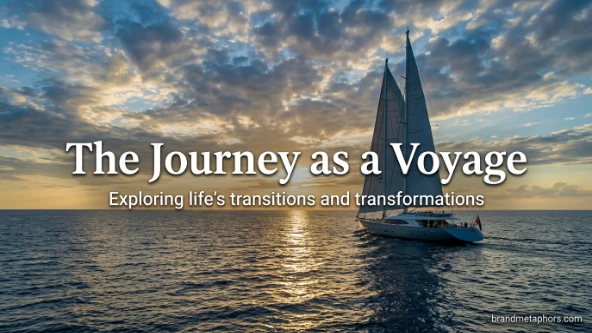
A voyage suggests adventure, curiosity, and discovery. It often involves stepping into the unknown.
Emotional Depth of Exploration
This metaphor captures the excitement and fear of trying something new—starting a business, traveling alone, or entering a new phase of life.
What Voyages Reveal
- You discover strengths you didn’t know you had
- Uncertainty becomes a source of growth
- The destination matters less than the experience
The Journey as a Marathon: Endurance and Consistency
Life is often compared to a marathon, not a sprint. This metaphor emphasizes endurance over speed.
Why Consistency Matters
In a marathon, pacing is everything. Starting too fast can lead to burnout, while steady effort leads to long-term success.
Real-Life Connection
Consider someone building a career. Quick success is rare, but consistent effort over years leads to mastery and stability.
The Journey as a Maze: Confusion and Discovery
Sometimes life feels like a maze—full of dead ends, wrong turns, and confusion.
Understanding the Maze
This metaphor reflects moments when direction is unclear. You may try different paths, only to realize they don’t lead where you hoped.
Hidden Value
- Mistakes teach valuable lessons
- Exploration leads to self-discovery
- Persistence eventually leads to clarity
The Journey as a Bridge: Transition and Change
A bridge represents movement from one phase to another. It symbolizes transition, whether emotional, personal, or professional.
Crossing the Bridge
Standing on a bridge often feels uncertain—you’re leaving something behind but haven’t fully arrived at what’s next.
Lesson in Transition
- Change is uncomfortable but necessary
- Growth often happens in the in-between
- Letting go is part of moving forward
The Journey as a Garden Path: Patience and Nurturing

A garden path suggests growth that requires care and time. Unlike fast-paced metaphors, this one emphasizes nurturing.
Growth Takes Time
Just like plants, personal growth needs:
- Attention
- Consistency
- Patience
Practical Reflection
Think of relationships or self-improvement. They don’t flourish overnight—they grow gradually with effort and care.
The Journey as a Storm: Challenge and Resilience
Some journeys feel like storms—chaotic, overwhelming, and unpredictable.
Facing the Storm
Storms represent difficult periods like loss, failure, or uncertainty.
What Storms Teach
- Strength often emerges through hardship
- Difficult times are temporary
- You can endure more than you think
The Journey as a Compass: Inner Guidance
A compass symbolizes internal direction—your values, instincts, and beliefs.
Trusting Yourself
While maps and advice are helpful, your compass helps you decide what truly aligns with you.
Application in Life
When facing tough decisions, ask:
- Does this align with who I am?
- Does it feel right, even if it’s difficult?
The Journey as a Spiral: Growth That Repeats
Growth isn’t always linear. The spiral metaphor suggests that we revisit similar challenges but at deeper levels.
Understanding the Spiral
You may face the same fear or situation multiple times, but each time you handle it differently.
Insight
- Growth is layered, not straight
- Repetition is part of learning
- Progress can feel subtle but meaningful
The Journey as a Sunrise: Hope and Renewal
A sunrise symbolizes new beginnings. No matter how long the night, the journey continues with fresh light.
Emotional Meaning
This metaphor reminds us that:
- Every day is a new chance
- Change is always possible
- Hope can return, even after darkness
The Journey as a Mirror: Self-Discovery
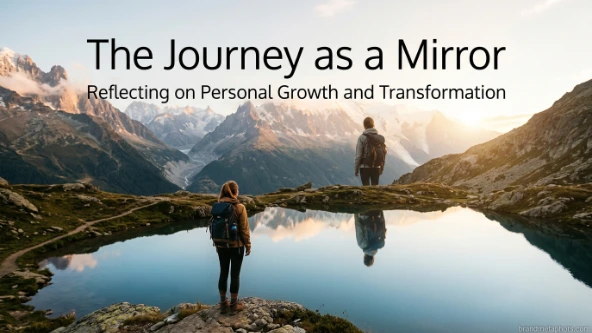
Ultimately, every journey reflects who you are becoming.
Looking Within
Experiences act as mirrors, revealing:
- Strengths and weaknesses
- Values and desires
- Patterns and habits
Deeper Reflection
The journey isn’t just about where you go—it’s about who you become along the way.
Conclusion
A journey is more than movement from one place to another—it’s a powerful way to understand life itself. Whether you see your path as a road, a climb, a river, or a storm, each metaphor offers a different lens through which to view your experiences. Together, they remind us that life is not linear, predictable, or always easy—but it is meaningful.
By embracing these metaphors, you can approach challenges with greater clarity, patience, and resilience. You begin to see setbacks as detours, struggles as growth, and uncertainty as part of the adventure. Most importantly, you realize that the journey is not just about reaching a destination—it’s about evolving, learning, and becoming.
So wherever you are right now, keep moving forward. Your journey is still unfolding.
FAQs
What is a metaphor for a journey?
A metaphor for a journey is a symbolic way of describing life experiences, growth, or change using imagery like roads, paths, or voyages.
Why are journey metaphors important?
They help simplify complex emotions and experiences, making it easier to understand personal growth, challenges, and decisions.
What does “life is a journey” really mean?
It means life is an ongoing process of growth, change, and discovery rather than a fixed destination.
How can journey metaphors help in real life?
They provide perspective, helping you see challenges as part of progress and encouraging resilience and adaptability.
What is the most common journey metaphor?
The road or path is the most common, representing direction, choices, and progress.
Can journey metaphors apply to emotional growth?
Yes, they are often used to describe healing, self-discovery, and personal development.
Are journey metaphors universal?
Yes, most cultures use journey-related metaphors because movement and change are universal human experiences.
How do I create my own journey metaphor?
Think about your current experience and compare it to something relatable—like climbing a mountain, crossing a river, or navigating a maze.