
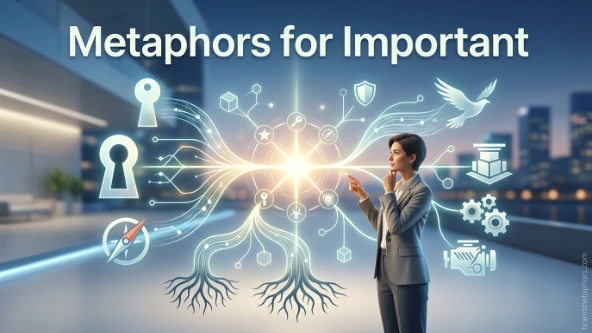
Introduction
Imagine standing at a crossroads with countless paths stretching before you—some glittering with excitement, others quiet and uncertain. You pause, wondering: Which path truly matters? In moments like these, the word “important” feels too small to carry the weight of our decisions, emotions, and priorities. That’s where metaphors step in, transforming abstract significance into something vivid, tangible, and deeply human.
Metaphors for “important” help us see value not as a flat label, but as something alive—like a compass guiding us, a foundation holding us steady, or a spark igniting change. They allow us to express what matters most in ways that resonate emotionally and intellectually. Whether you’re describing relationships, goals, or life choices, these metaphors bring clarity and depth to your understanding.
In this article, we’ll explore powerful metaphors for “important,” uncover their deeper meanings, and learn how they shape the way we think, feel, and act in everyday life.
The Core Meaning of “Important” Through Metaphor
When we say something is important, we often mean it holds value, demands attention, or influences outcomes. But the word itself can feel vague. Metaphors bring precision and emotion into the picture.
Think of importance as a spotlight on a stage. In a dark theater, the spotlight tells you exactly where to look. Without it, everything blends into the background. Similarly, what we consider important becomes the focus of our energy and decisions.
Another way to see importance is a compass. It doesn’t tell you everything about your journey, but it ensures you’re heading in the right direction. This metaphor highlights how importance guides priorities rather than defining every detail.
In everyday life, these metaphors show up subtly. A student prioritizing exams treats them as a “spotlight,” while a parent raising children relies on a “compass” of values.
Understanding importance through metaphor isn’t just poetic—it’s practical. It helps you identify what truly deserves your time, attention, and care in a world full of distractions.
Importance as a Foundation

One of the most powerful metaphors for importance is a foundation—the base upon which everything else is built.
Why Foundation Matters
Imagine constructing a house. No matter how beautiful the design, a weak foundation leads to collapse. Similarly, important things in life—like trust, health, and integrity—serve as the base for everything else.
Real-Life Reflection
Consider a friendship built on honesty. That honesty is the foundation. Without it, misunderstandings grow, and the relationship weakens. But when the foundation is strong, the relationship can withstand conflict and time.
This metaphor teaches a key lesson: not everything important is visible. Foundations are often hidden, yet they carry the most weight. It reminds us to invest in the unseen aspects of life that quietly support everything else.
Importance as a Compass

Seeing importance as a compass emphasizes direction and guidance.
A compass doesn’t eliminate obstacles—it simply ensures you’re moving toward your goal. In life, what we consider important helps us navigate decisions, especially when options feel overwhelming.
Everyday Scenario
Imagine choosing between a high-paying job and one that aligns with your passion. If your “compass” points toward fulfillment, your decision becomes clearer.
This metaphor also highlights flexibility. A compass doesn’t dictate the path; it adjusts as you move. Similarly, what’s important can evolve with experience, growth, and changing circumstances.
Ultimately, the compass metaphor reminds us that importance is less about rigid rules and more about meaningful direction.
Importance as a Spotlight
A spotlight metaphor captures attention and focus.
In a crowded stage, the spotlight tells the audience what matters most in that moment. Without it, the story becomes confusing.
Application in Life
In daily life, we constantly shift our spotlight—toward work, family, health, or personal growth. Problems arise when everything feels equally important, leaving us overwhelmed.
Mini Story
A young professional tries to excel at everything—career, social life, fitness—but feels exhausted. When they consciously shift their “spotlight” to health for a few months, clarity and balance return.
This metaphor teaches prioritization. Not everything can be in the spotlight at once, and that’s okay. Choosing where to shine your light is a powerful act of self-awareness.
Importance as a Keystone
In architecture, a keystone is the central stone that holds an arch together. Without it, the entire structure collapses.
Deeper Meaning
Some things in life act as keystones—small but critical elements that hold everything together. For example, self-discipline can be a keystone habit influencing success, health, and relationships.
Insight
Unlike a foundation, which supports everything broadly, a keystone is precise. It reminds us that sometimes, one key element can determine the stability of the whole system.
Recognizing your personal “keystones” can lead to transformative change with minimal effort.
Importance as a Lifeline
A lifeline represents survival, connection, and essential support.
Emotional Perspective
In difficult times, certain people or habits become lifelines—offering strength when everything else feels uncertain.
Example
A student struggling with stress finds comfort in a daily walk or a supportive friend. That small act becomes a lifeline, carrying them through challenges.
This metaphor highlights urgency. Lifelines aren’t optional—they’re essential. It reminds us to recognize and protect what sustains us, especially during hardship.
Importance as Fuel

Viewing importance as fuel emphasizes energy and motivation.
Fuel powers movement. Without it, even the best-designed machine cannot function.
Real-Life Application
Goals, passions, and values act as fuel for our actions. When something is truly important, it energizes us rather than drains us.
Reflection
If you feel constantly exhausted, it might be a sign that your “fuel” is misaligned—that you’re investing energy in things that don’t truly matter to you.
This metaphor encourages alignment between values and actions, helping you sustain long-term motivation.
Importance as a Seed
A seed metaphor highlights potential and growth.
Important things often start small—an idea, a habit, a conversation—but grow into something meaningful over time.
Mini Story
A single decision to read daily turns into a lifelong love of learning. That small seed shapes a person’s mindset, career, and identity.
Lesson
Not all important things feel significant at first. Some require patience and nurturing.
This metaphor teaches us to pay attention to beginnings, recognizing that small actions can lead to profound outcomes.
Importance as an Anchor
An anchor represents stability in uncertain conditions.
Meaning in Life
When life feels chaotic, important values or relationships act as anchors, keeping us grounded.
Example
During a major life change, such as moving to a new city, familiar routines or supportive relationships provide a sense of stability.
This metaphor highlights the calming power of importance. It reminds us that what matters most often brings reassurance, not pressure.
Importance as a Bridge
A bridge connects two points, enabling movement and progress.
Interpretation
Important things often help us transition—from where we are to where we want to be.
Scenario
Education can be a bridge between opportunity and limitation. Similarly, communication can bridge misunderstandings in relationships.
This metaphor emphasizes connection and transformation, showing how importance facilitates growth and change.
Importance as a Mirror

A mirror reflects identity and truth.
Deeper Insight
What we consider important often reveals who we are. Our priorities act as a mirror of our values.
Reflection
If someone prioritizes kindness, their actions will reflect empathy and compassion. If success is their focus, their choices may reflect ambition and discipline.
This metaphor encourages self-awareness. By examining what we treat as important, we gain insight into our character and beliefs.
Importance as a Lighthouse
A lighthouse symbolizes guidance in darkness.
Meaning
In uncertain times, important principles or goals act as guiding lights, helping us navigate challenges.
Example
During a difficult decision, a strong personal value—like honesty—can act as a lighthouse, guiding the right choice.
This metaphor highlights clarity. Even when everything else feels unclear, what’s truly important can illuminate the way forward.
Importance as a Thread
A thread weaves different parts into a cohesive whole.
Interpretation
Important elements often connect various aspects of life, creating unity and meaning.
Scenario
Family traditions, personal values, or long-term goals can act as threads that tie together different experiences.
This metaphor emphasizes continuity, showing how importance creates a sense of coherence in life’s complexity.
Importance as a Pulse
A pulse represents life, rhythm, and vitality.
Insight
What’s important keeps life moving. It provides rhythm and meaning to daily actions.
Reflection
Without a sense of importance, life can feel mechanical. But when you identify what truly matters, your actions gain purpose and energy.
This metaphor reminds us that importance isn’t static—it’s dynamic and alive, constantly influencing how we live.
Applying These Metaphors in Everyday Life
Understanding metaphors is one thing; applying them is another.
Start by asking yourself:
- What is my foundation?
- What acts as my compass?
- Where is my spotlight right now?
Practical Steps
- Identify your keystone habits Focus on one small change that influences many areas of life.
- Protect your lifelines Prioritize relationships and routines that support you emotionally.
- Nurture your seeds Invest time in small actions with long-term potential.
- Follow your lighthouse Let your core values guide decisions, especially in uncertainty.
By consciously using these metaphors, you can make more intentional choices and align your life with what truly matters.
Common Misunderstandings About Importance
Many people assume that important things must be urgent or dramatic. This isn’t always true.
Misconception 1: Importance Equals Urgency
Urgent tasks demand attention, but important ones create lasting value.
Misconception 2: Importance Is Obvious
Often, what matters most is subtle—like a foundation or thread.
Misconception 3: Importance Is Fixed
In reality, it evolves with time, experience, and personal growth.
Understanding these misconceptions helps you avoid misplaced priorities and focus on what genuinely matters.
Conclusion
Metaphors for “important” transform a simple concept into a rich, multidimensional experience. Whether it’s a foundation supporting your life, a compass guiding your choices, or a lighthouse illuminating your path, each metaphor reveals a different layer of meaning.
By exploring these images, you gain more than just language—you gain clarity. You begin to see what truly matters, not as a vague idea, but as something tangible, actionable, and deeply personal.
In a world full of noise, understanding importance through metaphor allows you to focus, prioritize, and live with intention. And perhaps the most valuable insight of all is this: what you choose to treat as important ultimately shapes the life you create.
FAQs
What are metaphors for “important”?
Metaphors for “important” are symbolic comparisons—like a foundation, compass, or spotlight—that help explain significance in a more vivid and relatable way.
Why use metaphors to describe importance?
Metaphors make abstract ideas easier to understand and emotionally connect with, helping people better grasp what truly matters.
Can importance change over time?
Yes, importance is dynamic. As your experiences and priorities evolve, so does your understanding of what matters most.
How do I identify what is truly important in my life?
Reflect on your values, long-term goals, and what brings meaning or stability to your life. Metaphors like “compass” or “anchor” can guide this process.
Are small things ever important?
Absolutely. Like seeds, small actions or decisions can grow into something significant over time.
What is the difference between urgent and important?
Urgent tasks require immediate attention, while important ones contribute to long-term value and purpose.
How can metaphors help in decision-making?
They provide clarity and perspective, allowing you to visualize priorities and make choices aligned with your values.