
Introduction
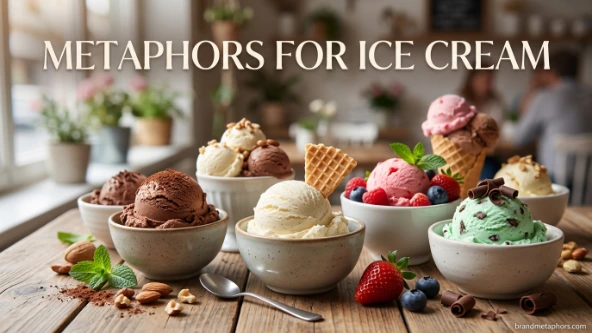
On a warm afternoon, you might remember standing in a small queue outside an ice cream shop, watching colors swirl behind the glass—strawberry pink, chocolate brown, pistachio green, vanilla white. The air is thick with anticipation, and every passing second feels like a tiny promise of joy. Then comes that first bite: cold, sweet, fleeting, and strangely emotional. Ice cream is never just dessert; it is a moment, a memory, and sometimes even a mood.
But beyond taste, ice cream has quietly become a powerful metaphor in how we describe life, emotions, relationships, and personal growth. We say things “melt away like ice cream,” or describe experiences as “a mix of flavors.” These expressions are more than poetic—they reveal how we process change, pleasure, fragility, and time itself.
This article explores metaphors for ice cream in depth, showing how something so simple can reflect complex human experiences. From emotional comfort to impermanence, from personality layers to life transitions, ice cream becomes a lens through which we better understand ourselves and the world around us.
Ice Cream as a Symbol of Joy and Simplicity
Ice cream often represents pure, uncomplicated joy. It doesn’t demand interpretation or effort; it simply delights. In metaphorical terms, ice cream reflects those rare moments in life when happiness is immediate and unfiltered.
Think of a child receiving a cone after a long day. There is no overthinking, no future worry—just presence. That simplicity is what makes ice cream such a powerful symbol. It reminds us that joy doesn’t always come from complexity or achievement. Sometimes it arrives in small, fleeting experiences that require nothing but attention.
In adulthood, we often complicate happiness. We attach conditions to it: success, money, recognition. Ice cream metaphors gently challenge that mindset. They suggest that joy can be soft, temporary, and still meaningful.
In everyday language, when someone says, “That moment was like ice cream,” they are pointing to something light, satisfying, and emotionally refreshing. It’s a reminder that simplicity is not emptiness—it is clarity.
Ice Cream as a Metaphor for Fleeting Happiness
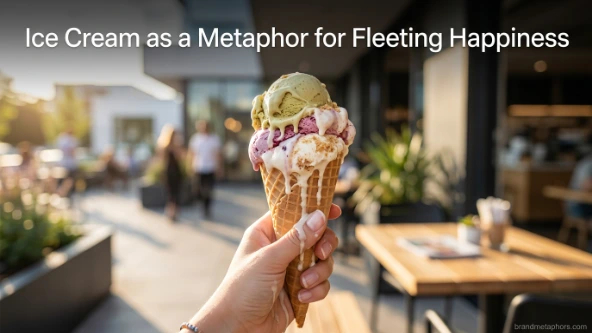
One of the strongest symbolic meanings of ice cream is its impermanence. It melts quickly, especially under heat, making it a natural metaphor for happiness that doesn’t last forever.
The Beauty of Short-Lived Moments
Life is filled with experiences that are intense but brief: a laugh shared with a stranger, a perfect sunset, a spontaneous trip. Like ice cream, these moments are meant to be experienced fully, not preserved indefinitely.
Emotional Insight
When people describe happiness as “melting away,” they often refer to how quickly good times pass. Ice cream teaches us an important emotional lesson: value the experience while it exists, because preservation is not always possible.
This metaphor also softens disappointment. Instead of viewing happiness as something lost, it becomes something that naturally changes form. Melted ice cream doesn’t disappear—it transforms. In the same way, memories remain even after moments pass.
Layers and Flavors: The Complexity of Human Personality
Ice cream comes in countless flavors, sometimes blended, sometimes layered. This makes it a perfect metaphor for human personality.
Personality as a Mixed Scoop
People are rarely one-dimensional. Someone might be calm on the surface but intense underneath, like vanilla ice cream with a rich fudge core. Another person might appear sweet but have unexpected depth, like salted caramel with a surprising edge.
Emotional Diversity
Flavors represent emotional variety. Just as ice cream can be fruity, creamy, bitter, or sweet, humans carry multiple emotional states within them. No single label fully captures who we are.
This metaphor encourages empathy. Instead of reducing people to one trait, we begin to appreciate their complexity. Like tasting different ice cream flavors, understanding someone requires time, curiosity, and openness.
Melting Ice Cream as Time and Impermanence
Few metaphors are as visually powerful as melting ice cream. It drips, softens, and eventually loses its original shape, symbolizing the passage of time.
Time doesn’t pause for anyone. Just like ice cream, moments begin structured and perfect, then gradually dissolve. This imagery helps us understand aging, change, and loss in a gentle, natural way.
In emotional terms, melting can also represent vulnerability. When things fall apart, they don’t necessarily become meaningless—they simply shift form. A melted scoop still tastes the same, even if it looks different.
This metaphor reminds us that imperfection is part of existence. Life doesn’t stay neatly scooped, and that’s not a failure—it’s a reality.
Ice Cream and Childhood Nostalgia
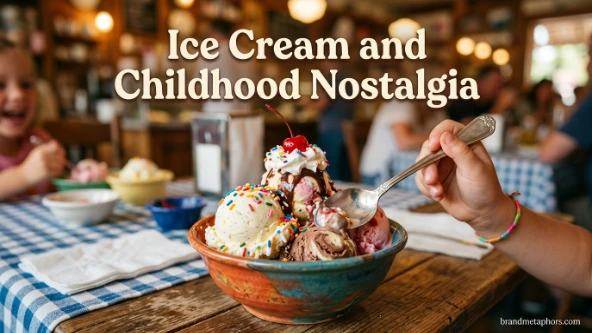
Ice cream is deeply tied to childhood memories. For many, it represents reward, celebration, or comfort. This makes it a powerful metaphor for nostalgia.
Memory Triggers
A single taste can transport someone back to a specific moment: summer holidays, family outings, or school celebrations. Ice cream becomes a sensory bridge between past and present.
Emotional Comfort
Nostalgia is not just memory—it is emotional revisiting. Ice cream symbolizes how the past often feels sweeter in recollection. Even ordinary childhood moments gain warmth when remembered through sensory experiences like taste and smell.
This metaphor shows how the mind preserves emotional highlights, turning simple experiences into lifelong anchors of comfort.
Sweetness as Emotional Comfort and Healing
Sweetness in ice cream often represents emotional relief. When people are stressed or sad, they turn to comforting foods, and ice cream frequently becomes symbolic of self-soothing.
Ice cream metaphors in this context represent care, softness, and emotional recovery. A difficult day might “end in something sweet,” meaning resolution or comfort arrives after struggle.
This symbolism is important because it acknowledges emotional needs without judgment. It suggests that healing doesn’t always come through logic—it can come through gentle, sensory experiences.
Sweetness, in metaphorical terms, is kindness toward oneself. Ice cream becomes a reminder that emotional balance sometimes begins with small comforts.
Brain Freeze: Consequences of Excess or Rush
Ice cream also brings discomfort when consumed too quickly—brain freeze. This physical sensation works as a metaphor for overexertion or rushing through life.
When we hurry through experiences, we sometimes face unintended consequences. Just as cold ice cream shocks the system when eaten too fast, life can overwhelm us when we don’t pace ourselves.
This metaphor teaches moderation. Enjoyment requires balance. Rushing through pleasure diminishes its quality, while mindful engagement enhances it.
In broader terms, brain freeze represents moments when intensity exceeds comfort. It reminds us to slow down, savor, and allow experiences to unfold naturally.
Scoops of Experience: Life Stages and Growth
Ice cream is often served in scoops, making it an ideal metaphor for stages of life. Each scoop represents a different phase, distinct yet part of a larger whole.
Childhood Scoop
Light, playful, and simple—full of discovery.
Adult Scoop
Richer, more complex, sometimes bittersweet.
Reflective Scoop
Deeper in flavor, representing wisdom and reflection.
Life, like ice cream, is layered in experiences that build upon each other. Each scoop is complete in itself but contributes to the overall taste of existence.
This metaphor helps us see growth not as replacement but accumulation.
Ice Cream Cones: Balance and Structure

The cone holds the ice cream together, preventing it from collapsing immediately. This makes it a metaphor for structure in life.
Without a cone, ice cream melts into chaos. Similarly, without routines, discipline, or support systems, life can feel unstable.
The cone is not glamorous, but it is essential. It represents boundaries, responsibilities, and frameworks that allow creativity and enjoyment to exist safely.
This metaphor teaches that structure is not restriction—it is support for freedom.
Toppings as External Influences on Identity
Sprinkles, syrups, nuts, and sauces transform ice cream, just as external influences shape identity.
Social Influence
Friends, culture, and environment act like toppings, changing how life is experienced.
Personal Choices
We choose some toppings ourselves, reflecting individuality and preference.
Toppings show that identity is both internal and external. While the base remains the same, experiences modify expression.
This metaphor highlights how change is layered onto stability rather than replacing it.
Sharing Ice Cream: Relationships and Connection
Sharing ice cream often symbolizes bonding. Whether between friends, partners, or family, it represents intimacy and generosity.
Sharing implies trust. It also creates shared memories, turning simple moments into emotional anchors.
In metaphorical terms, sharing ice cream reflects how relationships grow through small, ordinary experiences rather than grand gestures.
It also teaches emotional reciprocity—giving and receiving joy in equal measure.
Seasonal Cravings: Emotional Cycles in Life
Ice cream is often associated with summer, but cravings can occur year-round. This reflects emotional cycles in life.
Sometimes we seek warmth and sweetness during emotional winters. Other times, we lose interest when life feels full.
This metaphor shows that emotional needs change with time. Just as seasons shift, so do human desires, moods, and priorities.
Understanding this helps normalize emotional variation rather than resisting it.
Broken Cone Moments: Disappointment and Resilience
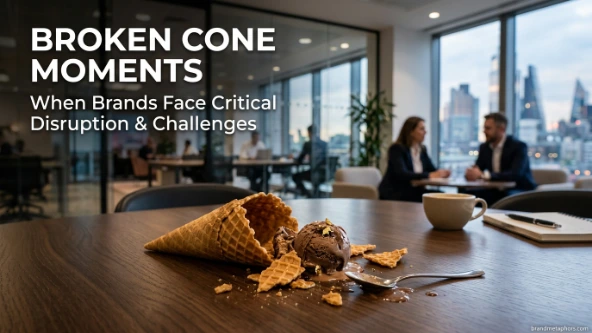
Few experiences are more disappointing than dropping an ice cream cone. Yet even this becomes a metaphor for resilience.
Broken cones represent unexpected failure or loss. The ice cream may fall, but the experience is not erased.
Emotional Lesson
Disappointment is part of life, but it doesn’t cancel joy. Even after loss, something remains—memory, lesson, or growth.
This metaphor encourages acceptance. Not everything stays perfect, but meaning can still be found in imperfection.
Conclusion
Ice cream is more than a dessert; it is a symbolic language of human experience. Through its melting nature, layered structure, sweet taste, and fleeting presence, it reflects joy, time, memory, personality, and emotional complexity. It teaches us that happiness can be simple yet temporary, that people are layered and diverse, and that imperfection is natural rather than unfortunate.
By viewing life through ice cream metaphors, we learn to appreciate moments as they are—soft, fleeting, and meaningful in their own way. Just like a scoop on a warm day, life is best experienced fully, before it melts into memory.
FAQs
What does ice cream symbolize in literature and writing?
Ice cream often symbolizes joy, fleeting happiness, comfort, nostalgia, and emotional softness in literary and creative writing.
Why is ice cream used as a metaphor for emotions?
Because it has changing states—solid, melting, shared, or layered—it reflects how emotions shift and evolve over time.
What does melting ice cream represent metaphorically?
It represents impermanence, the passage of time, and the idea that moments of happiness are temporary but meaningful.
How does ice cream reflect human personality?
Different flavors and layers symbolize the complexity and diversity of human traits and emotional depth.
What does sharing ice cream symbolize in relationships?
It symbolizes intimacy, bonding, trust, and shared emotional experiences between people.
Why is ice cream linked to childhood memories?
Because it is often associated with rewards, celebrations, and sensory experiences from early life, making it a strong nostalgia trigger.
What does brain freeze mean metaphorically?
It represents the consequences of rushing, overindulgence, or overwhelming intensity in life experiences.