

The Sound of Boots on Gravel: Why Hard Work Needs Metaphors
When Effort Feels Too Heavy for Plain Words
The sky is still dark. A baker pulls trays from a glowing oven while the rest of the city sleeps. Somewhere else, a student bends over notes under a weak lamp. A farmer wipes sweat from his forehead as the sun climbs higher. Hard work often arrives quietly. It does not always wear medals or applause. Sometimes, it simply looks like tired hands and another long day.
That is why metaphors for hard work matter.
They give shape to struggle. They turn invisible effort into something readers can see, hear, and feel. Instead of saying someone “worked hard,” we can say they “climbed a mountain one stone at a time.” Suddenly, the image becomes alive. The emotion becomes real.
Writers, speakers, students, and storytellers use metaphors to make language memorable. In daily life, they help us encourage others, explain challenges, and describe personal growth. In literature, sports, business, and even social media captions, metaphors for hard work create vivid emotional connections.
This article explores powerful metaphors for hard work, how to use them creatively, and why they continue to inspire people across cultures and generations. Along the way, you will discover examples, writing prompts, storytelling ideas, and practical tips to sharpen your own expression.
Why Metaphors for Hard Work Matter
Turning Sweat Into Story
Hard work is often difficult to describe because it happens slowly. Progress can feel invisible. Metaphors help transform effort into something visual and emotional.
For example:
- “She worked hard” feels flat.
- “She carried her dream uphill like a bucket of water” feels alive.
The second sentence paints a picture. Readers can almost feel the weight.
Metaphors also:
- Make writing more emotional
- Improve speeches and storytelling
- Help readers remember ideas
- Add beauty and rhythm to language
- Create stronger social media captions and quotes
Think of famous cultural examples:
- Athletes speak about “grinding.”
- Entrepreneurs talk about “building empires brick by brick.”
- Students describe exams as “battles.”
Each metaphor gives hard work a human face.
Hard Work as Climbing a Mountain
One of the Most Powerful Metaphors for Persistence
Among all metaphors for hard work, climbing a mountain remains one of the strongest.
The mountain represents:
- Obstacles
- Goals
- Fear
- Growth
- Endurance
The climber represents determination.
Meaning and Explanation
Mountain climbing is slow and exhausting. Every step matters. Sometimes progress feels tiny, yet each step moves the climber higher.
That mirrors real life perfectly.
Example Sentence
“He climbed toward success like a traveler scaling a frozen mountain in thin air.”
Alternative Ways to Express It
- Clawing toward the summit
- Hiking through storms
- Carrying dreams uphill
- Reaching for the peak
Sensory Detail
Imagine cold wind biting your skin. Your legs ache. Loose rocks slide under your boots. Yet the top glimmers in the distance.
That emotional image creates stronger writing.
Mini Storytelling Example
A young athlete wakes at dawn every day. While friends sleep, she runs empty streets beneath pale streetlights. Her coach tells her, “Champions are mountain climbers. They rise while others rest.”
Years later, she wins the race she once thought impossible.
Hard Work as Planting Seeds
Growth Takes Time
Another beautiful metaphor compares hard work to planting seeds.
This metaphor works especially well for:
- Education
- Parenting
- Business
- Creativity
- Personal development
Meaning and Explanation
Seeds do not bloom overnight. They need:
- Water
- Sunlight
- Patience
- Care
The same is true for goals.
Example Sentence
“Every late-night study session was a seed planted for the future.”
Alternative Expressions
- Watering dreams daily
- Harvesting success
- Growing through effort
- Sowing discipline
Emotional Layer
This metaphor carries hope. It reminds readers that invisible effort still matters.
A gardener trusts the process before flowers appear.
Cultural Reference
Many ancient cultures connected labor with farming. Proverbs about harvests and fields appear across literature, religion, and folklore because people understood the relationship between patience and reward.
Hard Work as Forging Iron in Fire
Pressure Creates Strength
This metaphor feels intense and dramatic.
Meaning and Explanation
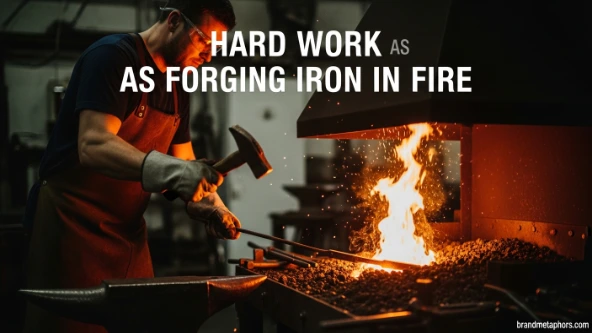
Blacksmiths heat iron in fire and hammer it repeatedly before it becomes strong and useful. Hard work often shapes people the same way.
Challenges become the fire.
Discipline becomes the hammer.
Example Sentence
“The years of struggle forged her into steel.”
Alternative Ways to Say It
- Tempered by hardship
- Hammered into greatness
- Shaped in the flames
- Built through pressure
Sensory and Emotional Detail
Picture sparks flying through a dark workshop. Metal glows orange. Sweat drips from the blacksmith’s face with every strike.
The scene mirrors human resilience.
Real-Life Connection
Many successful people describe failure as necessary heat. Athletes, artists, and entrepreneurs often say pressure strengthened them instead of destroying them.
Hard Work as Running a Marathon
Endurance Beats Speed
Some people think success belongs to the fastest person. Yet hard work often resembles a marathon instead of a sprint.
Meaning and Explanation
Marathons require:
- Consistency
- Mental toughness
- Pacing
- Long-term focus
This metaphor teaches patience.
Example Sentence
“Building a career is a marathon, not a hundred-meter dash.”
Alternative Expressions
- Keeping pace
- Staying in the race
- Running through exhaustion
- Crossing the finish line
Mini Storytelling Example
A writer submits dozens of rejected stories over five years. Friends quit. Doubt grows heavier. Yet every morning, he keeps writing.
Finally, one story succeeds.
The marathon metaphor reminds readers that persistence often matters more than talent.
Hard Work as Building a Brick Wall
Success Is Built Piece by Piece
This metaphor highlights gradual progress.
Meaning and Explanation
A wall is not built instantly. One brick may seem unimportant alone, but together they create something strong.
Hard work works the same way.
Example Sentence
“She built her future brick by brick.”
Alternative Expressions
- Laying foundations
- Building step by step
- Constructing success
- Stacking effort daily
Why This Metaphor Works
People often feel discouraged because progress looks small. The brick wall metaphor reminds them that tiny actions still matter.
One workout. One page. One practice session. One savings deposit.
Over time, those bricks become something powerful.
Hard Work as Rowing Against the Current
Effort in Difficult Conditions
This metaphor captures struggle beautifully.
Meaning and Explanation
Rowing against a river’s current requires extra strength. It symbolizes fighting obstacles, criticism, or difficult circumstances.
Example Sentence
“Starting a business during hard times felt like rowing against the current.”
Alternative Ways to Express It
- Paddling through storms
- Fighting the tide
- Steering through rough water
- Battling strong waves
Sensory Detail
Readers can hear splashing water, feel aching arms, and sense exhaustion. That sensory imagery deepens emotional impact.
Emotional Meaning
This metaphor also honors courage. Some people work hard not because life is easy, but because life pushes against them constantly.
Creative Exercises for Using Metaphors for Hard Work
Practice Makes Metaphors Stronger
Writing metaphors becomes easier with practice.
Here are a few interactive exercises.
Exercise 1: Compare Hard Work to Nature
Complete this sentence:
“Hard work is like ______ because ______.”
Examples:
- A river because it keeps moving forward
- A tree because growth takes time
- A storm because it demands strength
Exercise 2: Build a Scene
Write three sentences describing someone studying late at night without using the phrase “working hard.”
Instead, use:
- Sound
- Temperature
- Movement
- Metaphor
Exercise 3: Social Media Challenge
Create a motivational caption using one metaphor.
Example: “Dreams are mountains. Keep climbing.”
Bonus Tip
The best metaphors connect emotion with imagery. Do not just describe effort. Help readers feel it.
Using Metaphors for Hard Work in Writing
Make Your Language More Memorable
Writers use metaphors because readers remember images better than plain facts.
Tips for Better Metaphors
Keep Them Relatable
Readers understand roads, storms, fire, and gardens because they experience them in real life.
Avoid Mixed Metaphors
Do not combine unrelated images awkwardly.
Confusing: “He planted seeds while climbing a storm.”
Clear: “He planted seeds of discipline.”
Use Sensory Language
Add:
- Sound
- Texture
- Temperature
- Motion
This makes metaphors cinematic.
Example Comparison
Plain: “He practiced every day.”
Vivid: “He sharpened his skills like a sword against stone every morning.”
The second sentence feels stronger because readers can visualize it.
Metaphors for Hard Work in Everyday Life
From Schools to Sports to Social Media
Metaphors appear everywhere.
In Education
Teachers say:
- “Knowledge is a key.”
- “Success is earned step by step.”
In Sports
Coaches say:
- “Leave everything on the field.”
- “Fight until the final whistle.”
In Business
Leaders say:
- “Build your empire.”
- “Lay the groundwork.”
On Social Media
People use short metaphors because they feel emotional and memorable.
Examples:
- “Sweat is invisible gold.”
- “Dreams grow where discipline lives.”
- “Success blooms after long winters.”
These phrases spread quickly because they create imagery in only a few words.
Literary and Cultural References About Hard Work
Stories That Celebrate Effort
Hard work appears in myths, novels, and cultural stories across history.
The Blacksmith Archetype
Many cultures admire blacksmiths because they transform raw metal into something powerful. This became a symbol for human growth through labor.
The Hero’s Journey
In classic storytelling, heroes rarely succeed instantly. They climb mountains, cross deserts, survive storms, and endure trials.
Those physical journeys symbolize inner hard work.
Famous Literary Example
In many classic novels, hardworking characters rise slowly through persistence instead of luck. Readers connect with them because effort feels universal.
Why These Stories Last
People admire perseverance because everyone struggles. Metaphors make those struggles meaningful instead of ordinary.
Bonus Tips for Using Hard Work Metaphors Creatively
Make Your Words Shine
Here are extra ways to use metaphors effectively.
For Students
Use metaphors in essays to make arguments stronger.
Example: “Education is a bridge to opportunity.”
For Writers
Create fresh combinations.
Instead of: “Climbing the ladder”
Try: “Dragging hope through heavy snow.”
For Public Speaking
Metaphors help audiences remember speeches.
Example: “Our community is planting trees whose shade future generations will enjoy.”
For Social Media
Short metaphors work best.
Examples:
- “Pressure creates diamonds.”
- “Brick by brick.”
- “Storms shape strong sailors.”
For Daily Motivation
Repeat personal metaphors during difficult times.
Example: “I am still climbing.”
Simple phrases can become emotional anchors.
Finding Your Own Metaphors for Hard Work

Personal Images Create Stronger Writing
The best metaphors often come from personal experience.
Think about:
- Your hobbies
- Your hometown
- Your childhood memories
- Your favorite places
A fisherman may compare hard work to casting nets repeatedly into uncertain waters.
A musician may compare it to tuning strings before a performance.
A baker may compare it to kneading dough patiently before bread rises.
Creative Prompt
Ask yourself: “What activity feels most like effort in my own life?”
That answer may reveal your most original metaphor.
Emotional Truth Matters Most
A metaphor does not need fancy words to succeed. It only needs honesty and imagery.
Readers remember emotional truth more than complicated language.
Conclusion
Hard Work Deserves Beautiful Language
Hard work shapes lives quietly. It wakes before sunrise. This continues through failure. It keeps moving even when nobody claps.
Metaphors help us honor that effort.
They transform sweat into mountains, seeds, fire, rivers, marathons, and brick walls. They allow readers to see struggle instead of merely hearing about it. More importantly, they remind us that persistence carries meaning.
Whether you are a student, writer, athlete, entrepreneur, or dreamer, metaphors for hard work can inspire stronger communication and deeper reflection. They make ordinary effort feel heroic.
The next time you describe determination, do not settle for plain words.
Paint a picture.
Let hard work become a storm survived, a mountain climbed, or a garden finally blooming after a long season of care.
FAQs About Metaphors for Hard Work
What is a metaphor for hard work?
A metaphor for hard work compares effort to something vivid and symbolic, such as climbing a mountain, planting seeds, or forging iron in fire.
Why are metaphors important in writing?
Metaphors make writing more emotional, memorable, and engaging. They help readers visualize ideas and connect emotionally with the message.
What are common metaphors for persistence?
Popular metaphors include:
- Running a marathon
- Rowing against the current
- Building brick by brick
- Climbing uphill
How can students use metaphors effectively?
Students can use metaphors in essays, speeches, and creative writing to make descriptions stronger and more imaginative.
Can metaphors improve social media captions?
Yes. Short metaphorical phrases are emotional, memorable, and visually powerful, which makes them highly effective for social media engagement.