
Introduction
The rain tapped softly against the window while an old man sat quietly at a café table, turning a faded photograph between his fingers. His smile looked gentle, but his eyes carried storms. Across the room, a little girl laughed so loudly that everyone smiled without meaning to. Two hearts. Two worlds. One invisible force shaping every emotion, memory, fear, and dream.
The heart is more than a body part. In language, stories, music, and poetry, it becomes a symbol of love, courage, pain, hope, and humanity itself. We speak of “broken hearts,” “warm hearts,” and “hearts of gold” because emotions often feel too large for ordinary words. Metaphors help us explain what cannot easily be touched or measured.
Learning metaphors for heart can make your writing richer, your conversations deeper, and your imagination more vivid. Whether you are writing poetry, captions, stories, speeches, or personal reflections, heart metaphors add emotional color and unforgettable imagery.
In this article, you will explore powerful metaphors for heart, their meanings, examples, creative uses, and ways to practice them in daily life. Some are soft as candlelight. Others roar like thunder. Each one reveals a different side of the human experience.
The Heart as a Compass
Meaning and Symbolism
A heart can act like a compass that guides a person through life. This metaphor suggests inner wisdom, emotional truth, and personal direction. Even when logic becomes confusing, the heart points toward what feels meaningful.
People often use this metaphor when discussing choices, relationships, or dreams.
Example Scenario
“After years in a job she hated, her heart finally became a compass leading her toward art and freedom.”
This sentence shows emotional guidance rather than physical direction.
Alternative Ways to Express It
- The heart knows the way
- Follow your heart
- The soul’s compass
- Emotional north star
Emotional and Sensory Details
Imagine standing in a dark forest at night. The wind moves the trees. You feel lost. Then a tiny golden compass glows in your hand. That quiet glow feels like the heart guiding you forward.
Mini Storytelling Example
Many adventure stories use this idea. In classic fantasy tales, heroes often survive because they trust compassion over fear. Their hearts guide them when maps fail.
The Heart as a Fragile Glass Window
Meaning and Symbolism
This metaphor compares the heart to glass because emotions can shatter under pressure. Love, betrayal, grief, and disappointment can leave invisible cracks.
It is one of the most relatable metaphors for emotional pain.
Example Sentence
“After the betrayal, his heart felt like a cracked window trembling in the winter wind.”
The image creates both emotional and physical vulnerability.
Alternative Expressions
- A shattered heart
- Cracks beneath the surface
- Fragile emotions
- Delicate as glass
Emotional Texture
Glass reflects light beautifully, yet breaks easily. Hearts often behave the same way. The stronger the love, the deeper the fracture when hurt arrives.
Cultural Reference
Many songs and films use broken glass imagery to describe heartbreak because audiences instantly understand the feeling.
The Heart as a Wild Fire
Meaning and Symbolism
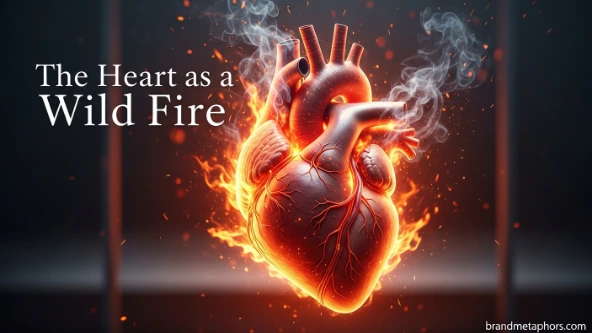
Some emotions do not whisper. They burn. A heart can symbolize passion, desire, anger, ambition, or unstoppable energy.
This metaphor works beautifully in romance and dramatic storytelling.
Example Scenario
“Her heart was a wildfire, impossible to tame once she believed in something.”
Alternative Ways to Say It
- Burning with passion
- Flames of emotion
- A blazing soul
- Fire in the chest
Sensory and Emotional Details
A wildfire crackles loudly. Heat rushes through the air. Smoke rises into the sky. Similarly, strong emotions spread quickly through the body and mind.
Real-Life Example
Athletes, activists, artists, and leaders are often described as having “fire in their hearts” because of their determination.
The Heart as a Locked Door
Meaning and Symbolism
This metaphor represents emotional protection. Some people hide feelings because of fear, trauma, or disappointment.
A locked heart suggests distance, secrecy, or caution.
Example Sentence
“Years of loneliness turned her heart into a locked door nobody could open.”
Alternative Expressions
- Guarded emotions
- Walls around the heart
- Emotionally closed off
- Hidden feelings
Emotional Depth
Picture an old wooden door with rusted hinges. Dust gathers beneath it. Nobody knows what waits inside. That mystery mirrors emotional isolation.
Literary Connection
Classic novels often feature characters whose hearts slowly “unlock” through trust and love.
The Heart as an Ocean
Meaning and Symbolism
The ocean metaphor highlights emotional depth, mystery, and unpredictability. Hearts can be calm one moment and stormy the next.
This is one of the most poetic metaphors for heart in literature.
Example Sentence
“His heart was an ocean filled with hidden currents and silent storms.”
Alternative Ways to Express It
- Deep emotions
- Waves of feeling
- Emotional tides
- Sea of love or sorrow
Sensory Description
The ocean sparkles under sunlight yet hides darkness beneath. Hearts also contain visible joy and hidden pain.
Mini Storytelling Example
A grieving widow may appear peaceful outside while carrying enormous sadness beneath the surface, much like calm water hiding dangerous currents.
The Heart as a Garden
Meaning and Symbolism
This metaphor shows emotional growth. Love, kindness, trust, and hope are like flowers that need care and patience.
Neglect can turn the garden dry and lifeless.
Example Sentence
“Her grandmother’s kindness planted flowers in every heart she touched.”
Alternative Expressions
- Planting seeds of love
- Blooming emotions
- Emotional growth
- A heart full of roses
Emotional and Sensory Imagery
Imagine soft soil after rain. Tiny green shoots rise toward sunlight. That image reflects healing, affection, and personal growth.
Real-Life Application
Healthy friendships often grow slowly like gardens. Trust takes time, attention, and consistency.
The Heart as a Drum
Meaning and Symbolism
A drum symbolizes rhythm, energy, and life itself. Since the human heart literally beats, this metaphor feels natural and powerful.
It often appears in music, poetry, and motivational writing.
Example Sentence
“His heart drummed wildly before stepping onto the stage.”
Alternative Ways to Express It
- Racing heartbeat
- Thunder in the chest
- Rhythms of emotion
- Pulse of courage
Sensory Details
Drums shake the air. They call attention. They create movement. Strong emotions can do the same inside the body.
Cultural Reference
In many cultures, drums symbolize life, spirit, and connection. Heartbeats are often compared to ancient tribal rhythms.
The Heart as a Lighthouse
Meaning and Symbolism
This metaphor represents hope, safety, and guidance during difficult times.
A lighthouse stands strong during storms. Similarly, loving hearts provide comfort during emotional darkness.
Example Sentence
“Her father’s advice remained a lighthouse through every difficult season.”
Alternative Expressions
- Beacon of hope
- Light in the darkness
- Emotional anchor
- Guiding light
Emotional Imagery
Imagine violent waves crashing against rocks while a single bright light shines across the sea. That light feels like reassurance and protection.
Real-Life Example
Teachers, parents, mentors, and close friends often become emotional lighthouses for others.
The Heart as a Treasure Chest
Meaning and Symbolism
This metaphor suggests that emotions, memories, and love are valuable treasures hidden inside a person.
It emphasizes emotional richness.
Example Sentence
“Her heart was a treasure chest filled with memories nobody could steal.”
Alternative Ways to Say It
- Hidden treasures of emotion
- Precious feelings
- Valuable memories
- Rich inner world
Emotional Texture
Treasure chests are mysterious and precious. Hearts also hold rare experiences, secret hopes, and meaningful connections.
Storytelling Angle
Characters in stories often protect emotional “treasures” because vulnerability feels risky.
The Heart as a Battlefield
Meaning and Symbolism
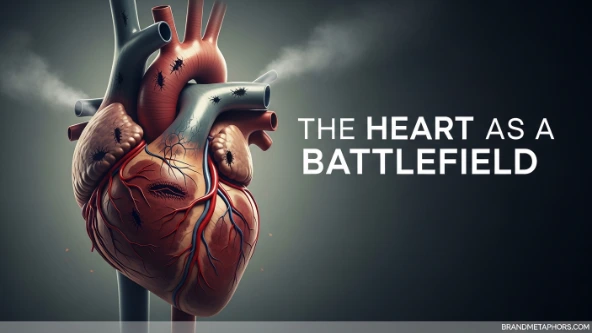
The heart is often torn between love and fear, hope and doubt, courage and pain. This metaphor captures emotional conflict.
Example Sentence
“His heart became a battlefield between forgiveness and anger.”
Alternative Expressions
- Inner war
- Emotional struggle
- Torn feelings
- Conflict within
Sensory Details
Battlefields are loud, chaotic, and exhausting. Emotional struggles can feel exactly the same.
Literary Reference
Many tragic heroes in literature face battles inside their hearts before facing battles in the world.
Creative Ways to Use Heart Metaphors in Writing
Build Emotional Imagery
Instead of writing “she was sad,” use imagery.
Example:
“Her heart hung like a wet coat in winter.”
This creates stronger emotion and visual impact.
Match the Mood
Choose metaphors carefully.
- Fire works for passion
- Oceans work for mystery
- Glass works for vulnerability
- Gardens work for healing
Combine Senses
Add touch, sound, smell, or color.
Example:
“His heart cracked softly like thin ice beneath heavy footsteps.”
Sensory writing makes metaphors unforgettable.
Interactive Exercise: Create Your Own Heart Metaphor
Exercise One: Finish the Sentence
Complete these creatively:
- My heart is a ______ because ______.
- Her heart moved like ______ in the night.
- Their love turned his heart into ______.
Exercise Two: Emotion Matching
Match emotions with objects.
- Fear → storm
- Love → candle
- Grief → empty room
- Hope → sunrise
Then build metaphors from them.
Exercise Three: Personal Reflection Prompt
Write about a memory using one heart metaphor.
Example prompt:
“Describe a moment your heart felt heavy, wild, or hopeful.”
This exercise improves creativity and emotional expression.
Bonus Tips for Using Heart Metaphors in Daily Life
Social Media Captions
Heart metaphors create memorable captions.
Examples:
- “My heart learned to bloom after the storm.”
- “Some hearts carry oceans inside them.”
- “A warm heart changes cold days.”
Poetry and Storytelling
Use metaphors during emotional scenes. They deepen atmosphere and help readers connect emotionally.
Public Speaking
Speeches become more powerful with emotional imagery.
Example:
“A community with compassionate hearts becomes stronger than stone.”
Journaling
Metaphors help people process feelings gently and creatively.
Instead of writing:
“I feel stressed.”
You could write:
“My heart feels like a crowded train station.”
That image explains emotion more vividly.
Why Heart Metaphors Matter in Human Communication
They Simplify Complex Feelings
Emotions can feel confusing. Metaphors make them easier to understand.
They Create Emotional Connection
Readers remember emotional imagery more than plain statements.
They Add Beauty to Language
Metaphors transform ordinary writing into something memorable and poetic.
They Reflect Shared Human Experience
Across cultures, people connect emotions to the heart. This shared symbolism creates universal understanding.
Common Mistakes When Using Heart Metaphors
Overusing Clichés
Some phrases become repetitive.
Examples:
- Broken heart
- Heart of stone
- Follow your heart
Try adding fresh details instead.
Mixing Too Many Metaphors
Avoid confusing imagery.
Incorrect:
“Her heart was a burning ocean trapped inside a glass forest.”
The image becomes chaotic.
Ignoring Tone
A playful metaphor may not fit a serious emotional scene.
Always match the mood carefully.
Famous Heart Metaphors in Literature and Culture
Shakespeare
William Shakespeare often connected hearts with love, betrayal, and destiny.
Music Lyrics
Songs constantly describe hearts as broken, burning, frozen, or dancing.
Films and Poetry
Romantic films rely heavily on heart imagery because audiences emotionally connect with it instantly.
Everyday Language
Even daily speech contains heart metaphors:
- Heartfelt apology
- Big-hearted person
- Cold-hearted behavior
These phrases shape communication naturally.
Building Stronger Emotional Writing with Metaphors
Observe Real Emotions
Watch how people react emotionally. Notice body language, silence, and expressions.
Use Nature for Inspiration
Storms, rivers, stars, trees, and seasons create beautiful emotional comparisons.
Keep Metaphors Simple
Simple imagery often feels strongest.
Example:
“Her heart folded inward like paper.”
Short but powerful.
Read Poetry Regularly
Poets master emotional metaphor. Reading poetry improves your creative instincts.
Conclusion
The heart has always been more than an organ. It is a symbol of humanity itself. Through metaphors, the heart becomes a compass, a wildfire, a garden, an ocean, and even a battlefield. These images help us express emotions that ordinary language struggles to hold.
Metaphors for heart are not only useful for writers and poets. They help everyone communicate feelings more honestly and creatively. They transform simple sentences into emotional experiences filled with color, rhythm, and meaning.
The next time you feel joy, grief, fear, hope, or love, pause for a moment and ask yourself:
“What does my heart feel like today?”
The answer may become your most powerful metaphor yet.
FAQs
What are metaphors for heart?
Metaphors for heart are creative comparisons that use the heart to symbolize emotions, personality, love, courage, or inner struggles.
Why are heart metaphors important in writing?
They create emotional depth, vivid imagery, and stronger reader connection. They also make language more memorable and poetic.
What is an example of a heart metaphor?
“Her heart was a lighthouse during difficult times.” This metaphor suggests guidance, comfort, and hope.
How can I create my own heart metaphors?
Think about an emotion first, then compare it to an object, place, or natural element that feels similar emotionally.
Can heart metaphors be used in daily conversation?
Yes. People use heart metaphors constantly in speeches, captions, storytelling, journaling, and everyday communication.