
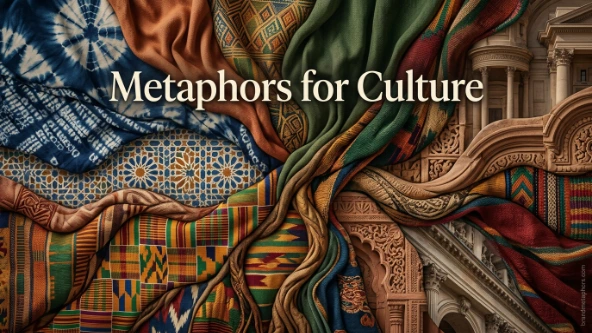
Culture is everywhere, yet it often feels invisible.
Imagine walking through a bustling market. The smell of spices hangs in the air. Music drifts from a nearby shop. People greet each other in familiar ways. Children play games passed down through generations. None of these things exist alone. Together, they create something larger—a living experience called culture.
Culture shapes how people think, speak, celebrate, and connect. It influences traditions, values, food, art, and even everyday habits. Because culture can be difficult to define directly, metaphors help us understand it more clearly. They turn an abstract idea into something vivid and memorable.
Writers, teachers, students, and storytellers often use metaphors for culture to explain how societies work and how traditions travel across time. A powerful metaphor can reveal hidden truths about identity, community, and human connection.
In this article, you’ll discover creative metaphors for culture, learn how to use them effectively, explore examples and storytelling applications, and practice creating your own cultural metaphors.
Culture as a Living Tree
Meaning and Explanation
One of the most popular metaphors for culture is a living tree. Just as a tree grows from deep roots, culture develops from history, beliefs, traditions, and shared experiences.
The roots represent ancestry and heritage. The trunk symbolizes core values. The branches show different customs, languages, and practices. New leaves represent future generations.
Example Sentence
“Our culture is a living tree whose roots reach deep into the past while its branches stretch toward the future.”
Alternative Expressions
- Culture is a growing forest.
- Culture is an ancient oak.
- Culture is a tree of memory.
Sensory and Emotional Details
Imagine rough bark beneath your fingers and leaves whispering in the wind. The image suggests strength, growth, and continuity.
Mini Story
A grandmother teaches her granddaughter an old family recipe. The child later shares it with her own children. Like a tree producing new branches, culture continues to grow.
Culture as a River
Meaning and Explanation
Culture can also be compared to a river. Rivers flow continuously, carrying stories, traditions, and ideas from one generation to another.
A river changes shape over time but remains connected to its source. Likewise, culture evolves while maintaining ties to its origins.
Example Sentence
“Culture is a river flowing through time, carrying the wisdom of those who came before us.”
Alternative Expressions
- Culture is a flowing stream.
- Culture is a winding waterway.
- Culture is an endless current.
Sensory and Emotional Details
Picture sparkling water moving over smooth stones. The steady movement reflects cultural adaptation and change.
Real-Life Example
Languages often borrow words from neighboring communities. These exchanges resemble streams joining a larger river.
Practice Prompt
Think about a tradition in your family. How has it changed over time while remaining recognizable?
Culture as a Mosaic
Meaning and Explanation
A mosaic consists of many different pieces that form a beautiful whole. This metaphor highlights diversity within a community.
Each tile represents individuals, beliefs, customs, or ethnic backgrounds. Together they create a meaningful picture.
Example Sentence
“Our nation is a mosaic of cultures, each contributing unique colors and patterns.”
Alternative Expressions
- Culture is a patchwork quilt.
- Culture is a stained-glass window.
- Culture is a colorful tapestry.
Literary Connection
Many multicultural societies are described as mosaics because they celebrate differences while maintaining unity.
Sensory Details
Imagine sunlight shining through colorful glass. Every piece matters to the final image.
Culture as a Garden
Meaning and Explanation
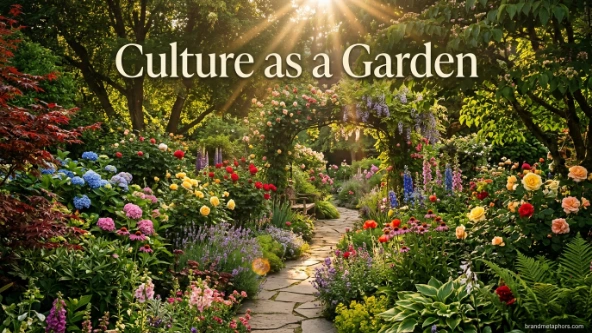
A garden requires care, patience, and attention. Culture works in much the same way.
Traditions must be nurtured. Values need reinforcement. Communities flourish when people actively preserve their cultural heritage.
Example Sentence
“Culture is a garden that blooms when people care for its traditions.”
Alternative Expressions
- Culture is a field of flowers.
- Culture is fertile soil.
- Culture is a cultivated landscape.
Mini Story
A local community organizes an annual festival. Each year, volunteers contribute their time and energy. Their efforts keep cultural traditions alive, much like gardeners tending flowers.
Sensory Details
The scent of fresh earth and blooming flowers evokes growth and renewal.
Culture as a Bridge
Meaning and Explanation
Culture often connects people across differences. A bridge metaphor emphasizes understanding, communication, and shared humanity.
Cultural exchanges help individuals learn from one another and build stronger relationships.
Example Sentence
“Culture is a bridge connecting people across borders and generations.”
Alternative Expressions
- Culture is a pathway.
- Culture is a connecting road.
- Culture is a gateway.
Real-Life Example
International festivals introduce visitors to music, food, and traditions from around the world, creating bridges between communities.
Practice Exercise
Write about a time when learning about another culture changed your perspective.
Culture as an Ocean
Meaning and Explanation
Culture is vast and deep, much like an ocean. Some aspects are visible on the surface, while others remain hidden beneath.
Food, clothing, and celebrations may be visible. Values, beliefs, and assumptions often lie below the surface.
Example Sentence
“Culture is an ocean whose deepest currents shape our daily lives.”
Alternative Expressions
- Culture is a sea of traditions.
- Culture is a deep harbor.
- Culture is an endless blue expanse.
Sensory Details
Picture waves rolling endlessly toward the shore. Beneath them lies a complex world waiting to be explored.
Writing Tip
This metaphor works well when discussing cultural complexity or hidden influences.
Culture as a Tapestry
Meaning and Explanation
A tapestry is woven from many threads. Similarly, culture emerges from countless stories, experiences, and traditions.
Each thread contributes to the overall design.
Example Sentence
“Culture is a tapestry woven from generations of shared experiences.”
Alternative Expressions
- Culture is woven cloth.
- Culture is embroidered history.
- Culture is a fabric of identity.
Cultural Reference
Many traditional societies use weaving as both an art form and a symbol of community identity.
Emotional Impact
The image conveys unity, craftsmanship, and collective memory.
Culture as a Compass
Meaning and Explanation
A compass provides direction. Culture often guides behavior, decisions, and social expectations.
It helps people understand what is valued within their communities.
Example Sentence
“Culture is a compass that helps people navigate life’s challenges.”
Alternative Expressions
- Culture is a guiding star.
- Culture is a map.
- Culture is a lighthouse.
Mini Story
A young traveler moves abroad. Though far from home, cultural values continue guiding important decisions. The internal compass remains intact.
Practice Prompt
What values from your culture guide your choices today?
Culture as a Library
Meaning and Explanation
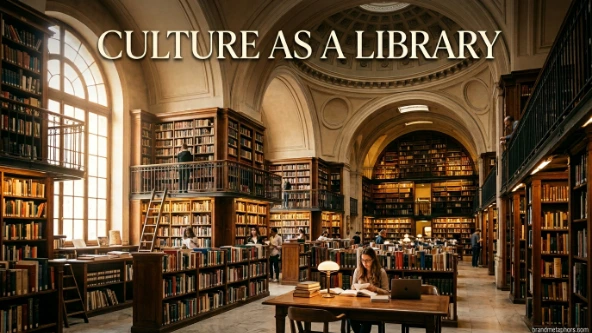
A library preserves knowledge for future generations. Culture does the same through stories, rituals, songs, and traditions.
Each generation adds new chapters while preserving older ones.
Example Sentence
“Culture is a library filled with the wisdom of countless generations.”
Alternative Expressions
- Culture is a book of memory.
- Culture is a collection of stories.
- Culture is an archive of humanity.
Sensory Details
Imagine rows of old books carrying centuries of knowledge and experience.
Writing Tip
This metaphor works especially well when discussing heritage and education.
Culture as a Shared Song
Meaning and Explanation
A song brings people together through rhythm and harmony. Culture unites communities in a similar way.
Every person contributes a unique voice while participating in something larger.
Example Sentence
“Culture is a shared song sung by generations across time.”
Alternative Expressions
- Culture is a melody.
- Culture is a chorus.
- Culture is a symphony.
Literary and Cultural Reference
Throughout history, songs have preserved stories, celebrated victories, and strengthened community bonds.
Emotional Details
Imagine voices rising together during a festival or celebration. The sense of belonging becomes almost tangible.
Three Powerful Ways to Use Metaphors for Culture
Use Nature-Based Metaphors
Trees, rivers, oceans, and gardens make cultural concepts easier to visualize.
Example: “Culture is a river carrying ancestral wisdom.”
Use Artistic Metaphors
Tapestries, mosaics, and songs emphasize creativity and diversity.
Example: “Culture is a mosaic built from countless unique experiences.”
Use Guidance Metaphors
Compasses, maps, and bridges highlight culture’s role in shaping behavior and connection.
Example: “Culture is a bridge between the past and the future.”
Interactive Exercises for Creating Your Own Culture Metaphors
Exercise 1: Complete the Sentence
Finish this statement:
“Culture is like __________ because __________.”
Exercise 2: Observe Your Community
Look around your neighborhood and identify objects that could symbolize culture.
Examples:
- A tree
- A road
- A market
- A clock
Explain why.
Exercise 3: Write a Cultural Snapshot
Describe a family tradition using at least one metaphor from this article.
Exercise 4: Compare Two Cultures
Create a metaphor that highlights similarities rather than differences.
Exercise 5: Story Challenge
Write a short paragraph beginning with:
“Culture was a river flowing through the village…”
Bonus Tips for Using Culture Metaphors in Writing and Daily Life

For Creative Writing
Use metaphors to reveal emotional and cultural depth without lengthy explanations.
For Essays
Choose metaphors that support your main argument and remain consistent throughout the piece.
For Social Media
Short cultural metaphors create memorable captions.
Example:
“Culture is the thread connecting yesterday to tomorrow.”
For Public Speaking
Metaphors help audiences understand complex ideas quickly.
For Daily Conversations
Simple metaphors make discussions about identity, diversity, and heritage more engaging.
Conclusion
Culture is one of humanity’s most powerful forces. It shapes identities, preserves memories, and connects generations. Yet because culture is complex and often invisible, metaphors help bring it to life.
Whether culture is seen as a living tree, a flowing river, a colorful mosaic, a thriving garden, a sturdy bridge, a deep ocean, a woven tapestry, a guiding compass, a vast library, or a shared song, each metaphor reveals a different aspect of its beauty and significance.
By exploring and creating metaphors for culture, we gain a richer understanding of ourselves and the communities around us. More importantly, we learn to appreciate the stories, traditions, and values that make human life so wonderfully diverse.
FAQs
What are metaphors for culture?
Metaphors for culture are figurative comparisons that help explain culture through familiar images such as trees, rivers, gardens, mosaics, and songs.
Why are metaphors useful when discussing culture?
They simplify complex ideas, create vivid imagery, and help readers better understand cultural concepts and relationships.
What is the most common metaphor for culture?
The living tree is among the most common because it effectively represents growth, roots, traditions, and future generations.
Can culture have more than one metaphor?
Yes. Different metaphors highlight different aspects of culture, such as diversity, continuity, guidance, creativity, or connection.
How can I create my own metaphor for culture?
Think about what aspect of culture you want to emphasize, then compare it to something familiar that shares similar qualities, such as a river, bridge, garden, or library.