
Introduction (150–200 words)
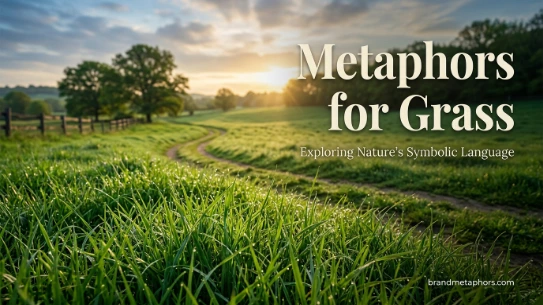
Imagine walking barefoot across a soft green field early in the morning. The grass is cool, slightly wet with dew, and it bends gently under your steps but quickly rises again. It feels simple, almost invisible in daily life, yet it is everywhere—covering lands, parks, roadsides, and mountains. Have you ever stopped to think why something so ordinary is often used in poetry, stories, and even daily speech?
Grass is more than just plants growing on the ground. It often becomes a powerful symbol in language. Writers and thinkers use metaphors for grass to explain ideas about life, growth, survival, peace, and even struggle. Because grass is both fragile and strong, it reflects human life in many ways.
In this article, we will explore deep and meaningful metaphors for grass. Each section will help you see how this simple plant represents complex human emotions and life experiences. By the end, you will notice grass not just as greenery under your feet, but as a mirror of life itself.
1. Grass as the Foundation of Life
Grass is often seen as the base layer of nature. It grows quietly on the earth, covering land like a soft green blanket. This makes it a strong metaphor for foundation and support in life.
In many ecosystems, grass supports animals, soil, and even climate balance. Without grass, life would feel empty and unstable. In the same way, humans also need a strong foundation—family, education, values, or beliefs—to grow properly.
When we say “grass is the ground of life,” it can mean the simple things that hold everything together. These are often unnoticed, just like grass itself. A child learning from parents, a student building knowledge, or a worker gaining experience—all of these are like grass forming the base of a field.
Everyday meaning
Grass reminds us that strong lives are built on simple beginnings. Nothing starts big; everything begins small, like grass seeds spreading quietly across the soil.
2. Grass as Resilience and Survival
Grass is one of the most resilient plants in nature. It bends in storms, survives heat, and grows back even after being cut. This makes it a strong symbol of survival and inner strength.
People often face difficult times in life—loss, failure, or change. Grass shows us that even when life pushes us down, we can rise again. It does not break easily; it adjusts and continues growing.
Even after being stepped on, grass does not disappear. It stands back up. This is why it is used as a metaphor for people who face hardships but still move forward.
Real-life reflection
Think of someone who keeps trying after failure. Like grass, they may be pressed down by problems, but they do not stay down forever. They recover and grow stronger with time.
3. Grass as Growth and New Beginnings
Grass grows quickly and spreads across open land. Because of this, it is often a symbol of growth, change, and new beginnings.
After rain, dry land turns green with fresh grass. This transformation represents hope and renewal. In human life, it can represent starting over after a difficult period.
Grass does not wait for perfect conditions. It grows wherever it finds space. This teaches us that growth can happen anywhere, even in small or difficult situations.
H3: Symbol of Fresh Starts
When people move to a new city, start a new job, or change their habits, it is like grass growing in a new field. It shows that life always has space for new beginnings.
4. Grass as Peace and Calm
A green field of grass often creates a peaceful feeling. Many people feel relaxed when they sit or lie down on grass. This makes it a symbol of peace, calm, and mental rest.
In a busy world full of noise, grass represents silence and simplicity. It does not demand attention, yet it brings comfort.
Nature lovers often connect grass with mental healing. Walking on grass or looking at green fields can reduce stress and bring balance to the mind.
H3: Mental Escape
When life feels heavy, grass becomes a mental escape. It reminds us that peace can be found in simple places, not only in big achievements.
5. Grass as Unity and Community
Grass grows in groups, not alone. A single blade of grass is weak, but a field of grass is strong and wide. This makes it a powerful symbol of unity and community.
In human life, teamwork and relationships work the same way. People are stronger together than alone. Grass shows how small individual efforts combine to create something powerful.
Even if one patch of grass is damaged, others continue to grow. This represents how communities support each other during hard times.
H3: Strength in Togetherness
Like grass covering a field, people in a community share space, resources, and strength. Unity helps everyone survive and grow.
6. Grass as Time and Seasons
Grass changes with seasons. It grows green in spring, becomes dry in heat, and sometimes disappears in winter. This makes it a metaphor for time and life cycles.
Life also has seasons—youth, adulthood, and old age. Just like grass, humans go through phases of growth, change, and rest.
Grass reminds us that nothing stays the same forever. Change is natural and part of life’s rhythm.
H3: Flow of Life
Seeing grass change through seasons teaches us to accept time. Every stage has its purpose, even when it feels difficult.
7. Grass as Memory and Childhood
Many people connect grass with childhood memories—playing in fields, running barefoot, or lying under the sky. Because of this, grass becomes a symbol of innocence and memory.
Grass fields often hold emotional memories. They remind people of simple times when life was less complicated.
H3: Nostalgia of Green Fields
When adults see grass, they often remember their past. It becomes a bridge between present life and childhood joy.
Grass carries these memories silently, like pages of a forgotten diary written in nature.
8. Grass as Struggle and Hidden Strength
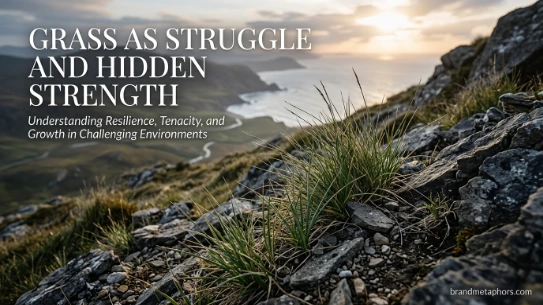
Grass looks soft and weak, but it survives harsh conditions. This makes it a metaphor for hidden strength and quiet struggle.
Many people in life appear calm on the outside but face internal battles. Grass represents this silent strength.
It grows without praise or attention. It does not need recognition to survive. This teaches us that true strength is often quiet.
H3: Strength Without Noise
Like grass, some of the strongest people are not loud. They simply keep going, no matter what happens.
9. Grass in Literature and Expression
Writers often use grass to describe emotions, nature, and human life. It appears in poetry, stories, and songs as a simple yet powerful image.
Grass can represent loneliness in an empty field or hope in a green landscape. Its meaning changes based on how it is described.
H3: Emotional Language of Grass
- In poetry, grass may show sadness in abandoned places.
- In stories, it may show freedom in open fields.
- In songs, it can represent peace or longing.
Grass helps writers express deep feelings using simple imagery.
10. Grass as Emotional States
Grass is often used to reflect human emotions. Its condition—green, dry, or growing—can represent feelings.
Green grass may show happiness or hope. Dry grass may show sadness or struggle. Fresh growth may show recovery.
This connection helps people understand emotions in a visual way.
H3: Mood of Nature
Just like weather affects grass, emotions affect humans. Calm feelings are like green fields, while stress feels like dry land.
Grass becomes a mirror of emotional life.
11. Life Lessons from Grass Metaphors
Grass teaches many important life lessons. It shows that small things matter, patience is powerful, and growth takes time.
It also teaches humility. Grass is everywhere, yet it never tries to stand above everything else. It simply exists and supports life.
Most importantly, grass teaches resilience. It shows that falling is not the end—growth can continue again and again.
H3: Simple Wisdom
- Stay strong during hard times
- Grow step by step
- Stay connected with others
- Value simple things
Grass reminds us that life does not need to be complicated to be meaningful.
Conclusion
Grass may look simple, but it carries deep meaning when seen as a metaphor for life. It represents strength, growth, peace, unity, and the natural flow of time. Through its quiet presence, grass teaches us lessons about survival and renewal. It shows that even small and unnoticed things can hold great importance.
From childhood memories to emotional reflection, grass connects deeply with human experience. It bends but does not break, grows in silence, and spreads without effort. These qualities make it a powerful symbol in language and thought.
When we look at grass again, we can see more than green blades on the ground. We can see life itself—patient, changing, and always growing.