
Introduction
Imagine standing in a quiet room where everything looks normal on the outside. The walls are clean, the air is still, and nothing seems wrong. But inside the mind of someone struggling with addiction, the room feels very different.
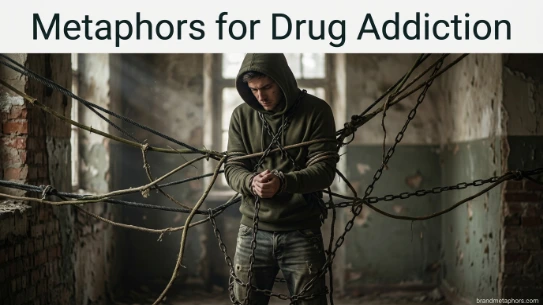
It may feel like a storm is shaking the windows, or like invisible chains are tightening slowly around the body. Drug addiction is not only a physical condition; it is also an emotional and mental battle that is often hard to explain in simple words.
This is where metaphors become powerful. Metaphors for drug addiction help us understand a deep and complex experience through images we can see in our minds. They turn pain, struggle, and recovery into stories that are easier to feel and understand. In real life, addiction affects families, friendships, health, and dreams. By using metaphors, we can talk about it with more clarity, compassion, and awareness.
In this article, we will explore different metaphors that describe drug addiction, what they mean, and what they teach us about human behavior, emotional pain, and the journey toward healing.
The Meaning of Metaphors in Understanding Addiction
Metaphors are simple comparisons that help explain complex ideas. When it comes to drug addiction, they give shape to something invisible. Addiction is not just about substances; it is about thoughts, emotions, habits, and struggles that are hard to describe directly.
For example, saying “addiction is a chain” helps people understand how it can restrict freedom. Saying “addiction is a storm” helps explain emotional chaos. These images are not literal, but they carry emotional truth.
Metaphors also help reduce misunderstanding. Many people think addiction is simply a choice, but metaphors show it is more like being trapped in a situation that becomes harder to escape over time. They allow us to see the human side of the struggle.
In therapy, storytelling, and education, metaphors are often used to help individuals express feelings they cannot easily say out loud. They create a bridge between experience and understanding. This makes it easier for others to show empathy instead of judgment.
Addiction as a Sinking Ship
One of the strongest metaphors for drug addiction is a sinking ship. At first, the ship looks stable. It moves through life normally. But slowly, water begins to enter.
The person may ignore small signs at first, just like a sailor ignoring a small leak. Over time, the water rises. It becomes harder to control the situation. Panic may set in, but escape still feels possible.
Eventually, the ship begins to sink deeper. The weight of addiction pulls the person down, making it difficult to think clearly or act freely. This metaphor shows how addiction can start small but grow into a serious problem.
Emotional Meaning
The sinking ship represents loss of control and rising fear. It also shows how denial can delay action. Many people wait too long before seeking help, thinking they can fix things later.
This metaphor reminds us that early awareness matters. A small leak is easier to fix than a sinking ship.
Addiction as a Slowly Closing Cage
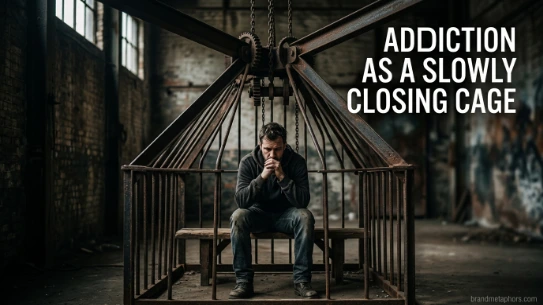
Another powerful image is a cage that slowly closes. At first, the cage door is open. The person feels free and in control. But each choice related to addiction slowly narrows that freedom.
How the Cage Closes
- Early stage: The door is wide open, and consequences are not clear
- Middle stage: The bars begin to feel closer
- Late stage: Movement becomes limited, and escape feels harder
This metaphor shows how addiction can feel like freedom in the beginning but slowly turn into restriction.
The cage is not always visible from the outside. That is what makes it dangerous. People may look fine while feeling trapped inside.
It also reflects emotional imprisonment. Shame, guilt, and dependency can act like invisible bars. Understanding this metaphor helps others see why leaving addiction is not just about “deciding to stop,” but about breaking through emotional barriers.
Addiction as a Shadow Companion
Addiction can also be seen as a shadow companion. A shadow follows a person everywhere. It is always present but changes shape depending on the light.
In the same way, addiction often stays close to a person’s thoughts and emotions. Even when they try to move forward, it can follow them quietly in the background.
What the Shadow Represents
- Constant temptation
- Hidden emotional pain
- Internal conflict
The shadow companion metaphor shows that addiction is not always loud or visible. Sometimes it whispers. Sometimes it waits. It can appear during stress, loneliness, or sadness.
This metaphor helps explain why recovery is not just about stopping use but also about learning how to live without the shadow controlling decisions.
Addiction as Quicksand
Quicksand looks like solid ground at first. A person may step on it thinking it is safe. But the more they struggle, the deeper they sink.
Drug addiction works in a similar way. At the beginning, it may feel like relief or escape. But over time, it becomes harder to break free. Trying to fight it alone can sometimes make things worse.
Key Insight
The lesson of this metaphor is important: panic can increase struggle, but calm support can help survival. In real life, this means that professional help, family support, and patience are more effective than isolation.
Quicksand also shows that judgment from others can make the situation worse. What is needed instead is steady help, not blame.
Addiction as a Broken Compass
A compass is meant to guide direction. But a broken compass points the wrong way. This metaphor reflects how addiction can distort judgment.
When someone is struggling, their sense of priorities may become unclear. What once mattered—health, relationships, goals—may feel less important than temporary relief.
Emotional Confusion
A broken compass does not mean the person is lost forever. It means their guidance system needs repair. Addiction can interrupt decision-making, but recovery helps rebuild it.
This metaphor is useful because it avoids blame. It shows that the problem is not the person, but the direction they are being led in by addiction.
Addiction as Fire That Warms and Burns
Fire is both helpful and dangerous. It gives warmth and comfort, but it can also destroy everything if uncontrolled.
Drug addiction often begins with a feeling of warmth—relief, escape, or emotional comfort. But over time, that same source begins to cause harm.
H3: The Double Nature of Fire
- Warmth: Temporary relief or pleasure
- Burning: Long-term damage and loss
This metaphor explains why addiction can feel confusing. Something that causes harm can also feel like relief at first. That contrast makes it difficult to break away.
Understanding this helps people see why addiction is not simple—it is emotionally complex.
Addiction as a Thief of Time

Time is one of the most valuable things in life. Addiction can act like a thief that slowly takes it away.
Days may feel shorter. Months may pass without clear memory. Plans and dreams may be delayed or forgotten.
What It Steals
- Energy
- Opportunities
- Relationships
- Personal growth
This metaphor highlights loss without physical violence. The theft is quiet but powerful. It shows how addiction affects not just health, but life direction.
It also reminds us that recovery is about reclaiming time and rebuilding what was lost.
Addiction as Puppet Strings
In this metaphor, addiction is like invisible strings controlling movement. The person may feel like they are making choices, but something deeper influences those choices.
Emotional Control
The puppet strings represent cravings, triggers, and habits. These forces can guide behavior without full awareness.
However, this metaphor is not about hopelessness. Strings can be cut. Awareness is the first step toward regaining control.
This image helps explain why willpower alone is sometimes not enough. Support systems, therapy, and structure are often needed to break the strings.
Addiction as a Storm Cycle
Addiction often moves in cycles, similar to storms. There are calm periods, followed by emotional turbulence.
H3: Stages of the Storm
- Gathering clouds: early triggers
- Heavy rain: relapse or struggle
- Calm skies: temporary recovery
This cycle can repeat many times. It shows that recovery is not always a straight line.
The storm metaphor helps reduce shame. A storm does not mean failure—it is a natural pattern that can be understood and managed.
Addiction as a Desert Mirage
A mirage in the desert looks like water, but it is not real. This metaphor shows false hope.
Addiction often creates the illusion of escape or happiness. But when approached, that relief disappears, leaving emptiness behind.
This metaphor teaches an important lesson: not everything that feels like relief is truly healing. Real recovery may feel harder at first, but it leads to lasting stability.
The Path to Recovery: Dawn After Night

Recovery can be seen as dawn after a long night. The darkness of addiction feels endless, but light always returns.
Dawn does not arrive suddenly. It grows slowly. In the same way, recovery is gradual. Small steps, support, and time all contribute to healing.
This metaphor brings hope. It shows that even after deep struggle, change is possible. The night does not last forever.
Conclusion
Metaphors for drug addiction help us see something complex in a clearer and more human way. Through images like sinking ships, broken compasses, storms, and shadows, we understand how addiction affects the mind, emotions, and life direction.
These metaphors also teach important lessons. They show that addiction is not simply a lack of control, but a deep struggle that changes over time. They remind us that recovery is possible, even when the situation feels overwhelming.
Most importantly, they encourage empathy. Behind every struggle is a person trying to find balance again. And like dawn after night, healing is always possible with time, support, and understanding.