
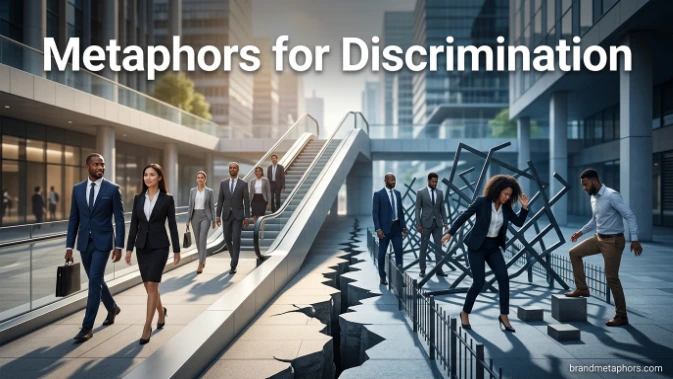
Imagine two people standing in the same doorway.
The door is wide enough for both. The path ahead looks open. Yet one person walks through easily while the other keeps finding invisible barriers in the way. No sign explains them. No lock can be seen. Still, the difference is real.
That image captures something powerful about discrimination.
Discrimination can be difficult to describe because it is not always loud or obvious. Sometimes it appears through an insult or an unfair rule. Other times, it hides inside assumptions, traditions, hiring decisions, social expectations, or everyday interactions. Metaphors give us a way to make these invisible experiences easier to see and understand.
When writers describe discrimination as a locked door, a crooked scale, a shadow, or a wall, readers can picture inequality instead of simply hearing an abstract definition. A strong metaphor turns an idea into an image that stays in the mind.
This guide explores powerful metaphors for discrimination, bias, prejudice, and inequality. Each metaphor includes its meaning, examples, alternative expressions, emotional details, and practical ways to use it in writing, conversations, social media, and creative work.
What Are Metaphors for Discrimination (and Why They Matter)
A metaphor is more than a literary device—it’s a bridge. It helps us translate complex emotional and social realities into images and experiences that others can understand. When we talk about discrimination using metaphors, we turn abstract injustice into something tangible.
Why does this matter?
Because not everyone experiences discrimination directly—but everyone understands what it feels like to be excluded, overlooked, or restrained. Metaphors tap into that shared human experience. They make the invisible visible. They give language to silence.
In writing, conversation, activism, and education, metaphors for discrimination can:
- Deepen empathy
- Clarify complex systems
- Strengthen storytelling
- Make your message unforgettable
Let’s explore some powerful examples.
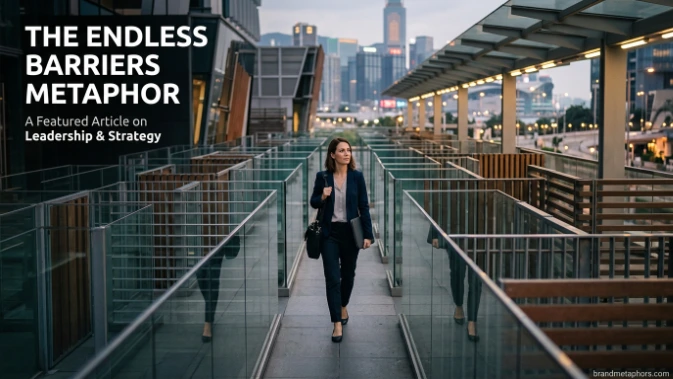
Walking Through a Maze: The Endless Barriers Metaphor
Meaning and Explanation
Discrimination can feel like being placed inside a maze where others walk freely in open fields. Every path you take seems to lead to another wall. Progress is possible—but slower, more exhausting, and often discouraging.
This metaphor captures systemic discrimination, where obstacles are built into the structure itself.
Example Scenario
Imagine two people applying for the same job. One moves smoothly through the hiring process. The other faces repeated delays, bias, and extra scrutiny.
Sentence: “While others strolled down straight paths, she navigated a maze of unseen barriers at every turn.”
Alternative Expressions
- “Running a race with hurdles no one else can see”
- “Climbing a staircase where steps disappear beneath your feet”
- “Playing a game with rules that keep changing”
Sensory & Emotional Details
Think of cold stone walls brushing your fingertips. Dead ends that echo with your own footsteps. The quiet frustration of turning back again and again.
Mini Storytelling
A student named Aisha excels academically but is repeatedly overlooked for leadership roles. Each rejection feels like another wrong turn in the maze. She begins to question not her abilities—but the structure itself.
The Glass Wall: Seeing Opportunity, Not Reaching It

Meaning and Explanation
The “glass wall” metaphor represents barriers that are invisible yet solid. You can see opportunities—jobs, promotions, acceptance—but cannot access them.
This is especially powerful when describing racial, gender, or class-based discrimination.
Example Sentence
“He stood inches away from success, staring through a glass wall that refused to break.”
Alternative Ways to Express It
- “A window that never opens”
- “A locked display case of opportunities”
- “A transparent cage”
Sensory & Emotional Layer
You can almost feel it—the cool, smooth surface beneath your palm. The frustration of knocking, knowing no one will answer.
Cultural Reference
This metaphor echoes real-world discussions like the “glass ceiling,” often used to describe barriers faced by women in professional environments.
Real-Life Reflection
Consider how many talented individuals see opportunities but are excluded due to bias. The glass wall reminds us that visibility is not the same as accessibility.
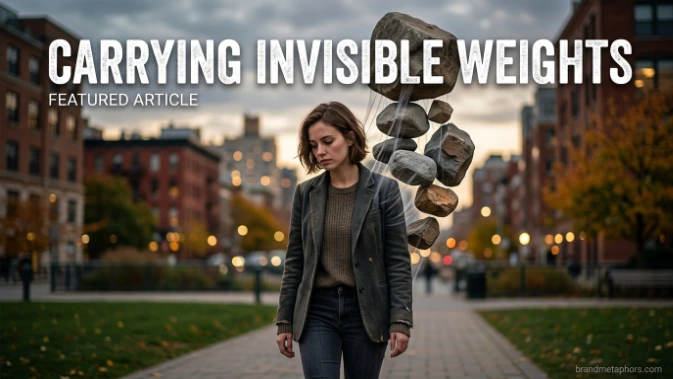
Carrying Invisible Weights: The Burden of Bias
Meaning and Explanation
Discrimination can feel like carrying heavy weights that others don’t see. These weights represent stereotypes, prejudice, and emotional strain.
Example Scenario
A student constantly has to prove their intelligence because of assumptions tied to their background.
Sentence: “She walked into every room carrying invisible weights, each one labeled with someone else’s expectations.”
Alternative Expressions
- “Dragging chains no one acknowledges”
- “Wearing armor that grows heavier each day”
- “Carrying a backpack filled with stones”
Emotional Depth
This metaphor captures exhaustion. Not dramatic, sudden exhaustion—but the slow, accumulating fatigue of being judged unfairly.
Mini Story
Jamal enters a classroom where he’s one of the few students from his community. Every question he answers feels like it must represent more than himself. The weight grows—not from failure, but from expectation.
The Echo That Isn’t Heard: Silenced Voices
Meaning and Explanation
Discrimination often silences voices—not always by force, but by dismissal or lack of recognition.
Example Sentence
“Her words echoed into the room, but no one seemed to hear them land.”
Alternative Ways
- “Speaking into a void”
- “A muted microphone in a crowded room”
- “A song no one listens to”
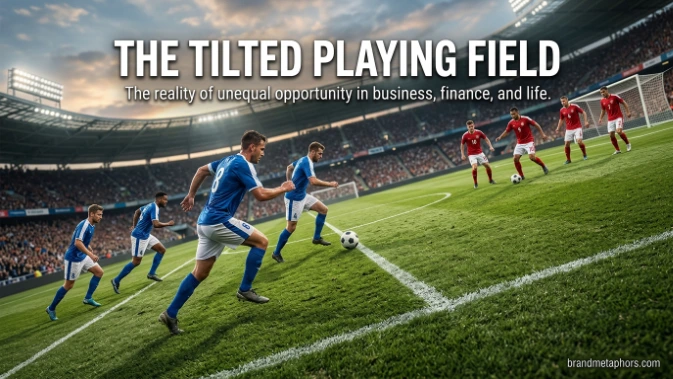
The Tilted Playing Field: Unfair Advantage
Meaning and Explanation
This metaphor shows how discrimination creates unequal conditions. Everyone may be “playing,” but the field itself is tilted.
Example Sentence
“They were told it was a fair game, but the field tilted sharply against them.”
Alternative Expressions
- “Starting a race ten steps behind”
- “Competing with one hand tied”
Seeds in Unfertile Soil: Lost Potential
Meaning and Explanation
Discrimination prevents people from growing and thriving—even when they have talent and potential.
Example Sentence
“He was a seed full of promise, planted in soil that refused to nourish him.”
The Broken Bridge: Disconnection and Exclusion
Meaning and Explanation
A broken bridge symbolizes the lack of access between people and opportunities.
Example Sentence
“Every opportunity lay across a bridge that had long been broken.”
Writing Tips: Using Metaphors for Discrimination Effectively
To use these metaphors in your writing:
- Be specific: Choose imagery that fits your context
- Avoid overuse: One strong metaphor is better than many weak ones
- Connect emotionally: Let readers feel the metaphor
- Keep it relatable: Use everyday experiences
Interactive Exercises: Practice Creating Your Own Metaphors

Exercise 1: Fill in the Blank
“Discrimination feels like __________ because __________.”
Try to use sensory details.
Exercise 2: Rewrite a Statement
Original: “She faced discrimination at work.”
Rewrite using a metaphor: “She worked in a room where…”
Exercise 3: Personal Reflection
Think of a moment when you felt excluded. What image best represents that feeling?
Bonus Ideas: Using These Metaphors in Real Life
- In essays: Make arguments more persuasive
- On social media: Create impactful posts
- In speeches: Connect with your audience
- In conversations: Explain complex issues simply
FAQs About Metaphors for Discrimination
1. Why are metaphors important when discussing discrimination?
They help people understand emotional and systemic experiences in relatable ways.
2. Can metaphors oversimplify discrimination?
Yes, if used poorly. That’s why context and explanation matter.
3. Are these metaphors universal?
Many are widely understood, but cultural context can influence interpretation.
4. How can I create my own metaphors?
Draw from personal experience and sensory imagery.
5. Where can I use these metaphors?
In writing, teaching, activism, storytelling, and everyday conversation.
What is a good metaphor for discrimination?
A good metaphor makes an invisible experience easier to understand. Strong choices include a locked door, crooked scale, invisible wall, broken bridge, or foggy lens. The best metaphor depends on what aspect of discrimination you want to emphasize.
How can I describe bias without using the word discrimination?
You can describe bias as a distorted lens, uneven scale, fog, crooked path, or unfair game. These images allow readers to understand the effect of bias without repeating the same terminology.
What metaphor represents inequality?
An uneven playing field is one of the clearest metaphors for inequality. Other options include a staircase with missing steps, a race with different starting lines, or a road filled with obstacles for some travelers but not others.
How do metaphors create empathy for people facing discrimination?
Metaphors translate abstract ideas into experiences people can imagine. A reader may not have personally experienced discrimination, but they can understand the frustration of a locked door, the exhaustion of carrying extra weight, or the confusion of walking through a maze without a map.
Can I use discrimination metaphors in essays and social media?
Yes. Metaphors can make essays, speeches, captions, and awareness posts more memorable. In formal writing, explain the metaphor clearly and support the point with evidence. On social media, use a concise image followed by a meaningful explanation.
Conclusion
Discrimination can hide in places that are difficult to see.
It can exist in assumptions, decisions, traditions, expectations, and systems. That is why language matters. When we describe discrimination only as an abstract concept, readers may understand the definition without fully grasping the human experience.
A metaphor can open that understanding.
A locked door shows exclusion.
A crooked scale shows unfair judgment.
An invisible wall shows hidden barriers.
A shadow shows lasting effects.
A broken bridge shows division.
A maze shows unequal difficulty.
A missing staircase shows how some people are denied the same path upward.
The strongest metaphor does not merely decorate a sentence. It gives an invisible problem a shape.
And once readers can see the shape, they may begin to recognize the barriers around them more clearly.
That is the real power of metaphor: it turns an idea into an image, an image into an emotion, and an emotion into understanding.