
Introduction: When “Long” Becomes a Feeling, Not Just a Length
The idea behind “long” metaphors
There are moments when time doesn’t simply pass—it stretches. A waiting room where the clock seems to forget you. A road that refuses to end. A silence that expands until it fills every corner of thought. In language, we rarely describe “long” only as a measurement. Instead, we borrow images from the world around us—roads, rivers, shadows, nights—to carry the feeling of length into something we can emotionally understand.
Metaphors for “long” are powerful because they turn abstract duration or distance into lived experience. A “long journey” becomes a winding desert path under burning sun. A “long wait” becomes a candle slowly melting in an empty room. These comparisons are not just decorative—they shape how we feel time itself.
Why readers should care
Whether you are a writer, student, storyteller, content creator, or simply someone trying to express emotions more clearly, metaphors for “long” give you tools to stretch imagination. They help you turn plain descriptions into vivid emotional landscapes. In this article, we will explore powerful metaphors for “long,” how they work, and how you can use them creatively in writing, speech, and everyday expression.
The Concept of “Long” in Metaphorical Language
Why we don’t experience “long” literally
“Long” is not just distance or time—it is perception. Ten minutes can feel long in silence, but short in laughter. A journey can feel endless when you are tired, but brief when you are excited. Metaphors step in to translate that inner experience into imagery.
How metaphors transform length into emotion
Instead of saying “a long day,” we say:
- “A day that dragged its feet like a tired traveler.”
- “A sun that refused to set.”
These images create emotional texture. They let readers feel the length rather than calculate it.
Mini insight
Great writers don’t just measure time—they expand it in the reader’s mind.
Metaphor 1: The Endless Road of Time
Meaning and explanation
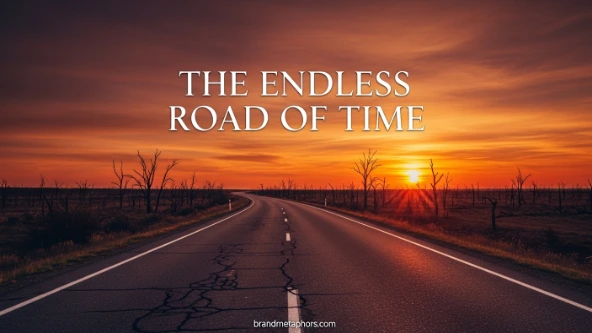
One of the most common metaphors for “long” is the endless road. It represents journeys, waiting periods, or life phases that feel unbroken and never-ending.
Example sentence or scenario
- “The recovery felt like an endless road stretching beyond the horizon, with no sign of arrival.”
Sensory and emotional detail
Imagine walking on a dusty highway. Heat rises from the ground. The horizon shimmers but never gets closer. Every step feels repeated, almost identical to the last. That is the emotional core of this metaphor—movement without perceived progress.
Alternative expressions
- A road without an end
- A path that forgets its destination
- A journey that loops into the horizon
Mini storytelling
A traveler once said that deserts don’t steal your strength—they steal your sense of time. Every dune looks like the last one, every step feels borrowed from yesterday. That is why “long” often becomes a road in human imagination: because we fear movement without arrival.
Creative use tip
Use this metaphor when describing:
- Long recoveries
- Life transitions
- Emotional struggles
Metaphor 2: The River That Refuses to End
Meaning and explanation
A river symbolizes continuity. When used for “long,” it becomes a flowing force that stretches endlessly through landscapes and time.
Example sentence or scenario
- “Their conversation flowed like a river that had forgotten where the sea was.”
Sensory and emotional detail
You hear water moving constantly—never stopping, never pausing. It bends, twists, disappears behind trees, then reappears again. This creates the sense of duration without closure.
Alternative expressions
- An unending stream
- A current without shore
- A flow that stretches into distance
Mini cultural reference
In many cultures, rivers symbolize life itself—especially in poetry where they represent time moving forward without reversal. The “long river” becomes a metaphor for experiences that cannot be paused or reversed.
Interactive prompt
Think of a conversation, memory, or experience that felt continuous. Rewrite it using the river metaphor. How does it change the emotion?
Creative use tip
Best for:
- Long conversations
- Emotional storytelling
- Memory descriptions
Metaphor 3: The Stretching Shadow of Time
Meaning and explanation
A shadow grows longer as the sun lowers. This natural phenomenon becomes a powerful metaphor for “long,” especially in describing slow endings or extended moments.
Example sentence or scenario
- “The afternoon stretched like a shadow that refused to leave the ground.”
Sensory and emotional detail
There is a quietness in shadows. They don’t rush. They slowly lengthen across walls, floors, and streets, making time feel heavier.
Alternative expressions
- A lengthening shade
- A fading light that drags time with it
- A dusk that refuses to end
Mini storytelling
A child waiting for school to end watches their shadow grow across the classroom floor. Every inch feels like a minute. That is how “long” becomes visual—it creeps across space like time made visible.
Creative use tip
Use this metaphor for:
- Late afternoons
- Emotional waiting
- Nostalgic or reflective writing
Why Metaphors for “Long” Shape Human Emotion
Time becomes personal through imagery
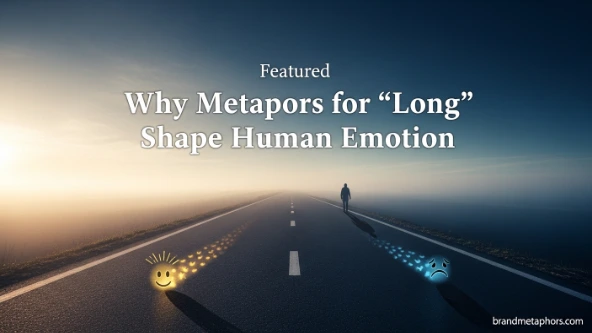
Without metaphors, time is neutral. With metaphors, it becomes emotional—heavy, slow, endless, or flowing.
Psychological effect
When we say something “feels long,” we are actually describing mental resistance. Metaphors help externalize that resistance into images we can understand.
Example transformation
- Plain: “The meeting was long.”
- Metaphorical: “The meeting stretched like a wire pulled too tight, humming with exhaustion.”
Creative Writing Techniques Using “Long” Metaphors
Blend physical and emotional space
Combine distance with feeling:
- “A long silence like a hallway with no doors.”
Use sensory layering
Add sound, texture, or movement:
- “A long night whispering through cracked windows.”
Avoid over-explaining
Let the image speak. Don’t say “it was long and boring”—show it through metaphor instead.
Exercise
Rewrite these sentences using metaphors:
- The wait was long.
- The journey felt long.
- The silence was long.
Real-Life Usage of Long Metaphors in Communication
Storytelling
Writers use long metaphors to slow down narrative time and build emotion.
Speech and everyday language
People naturally say:
- “It was a long road to success.”
- “This phase feels like forever.”
Social media expression
Short captions gain power when metaphorical:
- “Walking an endless road, but still moving.”
Cultural presence
From songs to films, “long” is often expressed through journeys, oceans, deserts, or fading light.
Interactive Exercises: Practice Building Your Own Metaphors
Exercise 1: Object transformation
Take the word “long” and turn it into:
- A place (road, tunnel, bridge)
- A natural force (river, wind, desert)
- A light pattern (shadow, sunset)
Exercise 2: Emotion mapping
Match emotions to “long” metaphors:
- Waiting → ?
- Hope → ?
- Exhaustion → ?
Exercise 3: Story seed
Write a 3-sentence story using:
- One metaphor for long
- One emotional situation
- One sensory detail
Bonus Tips for Using “Long” Metaphors Effectively
1. Keep imagery consistent
Don’t mix too many metaphors in one sentence. A road shouldn’t suddenly become a storm unless intentionally poetic.
2. Match metaphor to emotion
- Slow sadness → shadows, deserts
- Hopeful endurance → rivers, roads
- Confusion → foggy paths
3. Use sparingly for impact
A single strong metaphor often works better than many weak ones.
4. Test clarity
If your reader cannot picture it, simplify the image.
Common Mistakes to Avoid
Overloading imagery
Too many comparisons can confuse the reader instead of enriching meaning.
Using clichés without intention
Phrases like “long road ahead” are fine, but stronger writing reshapes them creatively.
Ignoring emotional tone
A metaphor should match the mood of your writing, not fight it.
FAQs
What are metaphors for “long”?
They are figurative expressions that describe length or duration using images like roads, rivers, shadows, or journeys.
Why are metaphors for “long” important in writing?
They help transform abstract time or distance into emotional and visual experiences for readers.
Can metaphors for “long” be used in daily speech?
Yes, people naturally use them when describing experiences, such as “a long road ahead” or “a long wait.”
What is the best metaphor for a long journey?
Common ones include an endless road, a winding path, or a river without end.
How can I create my own metaphors for “long”?
Start with an emotion, then match it with a physical image like nature, travel, or light, and connect them creatively.
Conclusion
“Long” is not just a measurement—it is a feeling stretched across time, memory, and imagination. Through metaphors like endless roads, flowing rivers, and stretching shadows, language gives shape to something otherwise invisible. These images allow us to express patience, endurance, waiting, and transformation in ways that resonate deeply with readers.
When you begin to see “long” as something you can paint rather than measure, your writing changes. It becomes less about describing time and more about letting readers experience it.