
Introduction (The Hidden Language Behind Tears)
There are moments in life when words fall silent, yet something deeper speaks. Picture a quiet room after an argument has ended, where nothing is being said—but tears are doing all the talking. Or imagine standing in the rain, unsure whether the water on your face is from the sky or from within you. Crying is one of the most universal human experiences, yet it is also one of the most difficult to fully explain. That is where metaphors for crying become powerful—they turn invisible emotions into visible images.
When people say “tears are falling like rain” or “my heart is leaking,” they are not just being poetic; they are trying to give shape to something overwhelming. Metaphors help us understand emotional pain, release, relief, and vulnerability in ways that plain language cannot. In real life, these expressions shape how we talk about grief, healing, heartbreak, and even joy.
This article explores the most meaningful metaphors for crying, what they represent, and how they help us process human emotion. From cultural interpretations to personal storytelling, we will uncover how tears become language when words are not enough.
1. Tears as Rain: Nature Reflecting Human Emotion
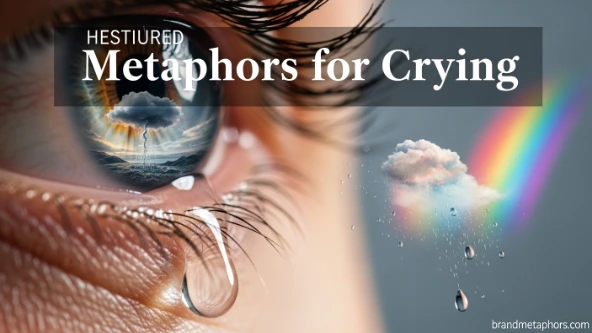
One of the most common metaphors for crying is “tears as rain.” This comparison suggests that emotional release is as natural and uncontrollable as a storm. Just like rain falls when clouds are too heavy, tears fall when emotions become too much to hold.
In real life, people often say, “I was crying like it was raining inside me.” This metaphor captures both intensity and relief. Rain cleans the earth, and similarly, crying can feel like emotional cleansing. After a good cry, people often describe feeling lighter, as if something has been washed away.
Emotional Meaning
- Release of built-up sadness
- Natural emotional cleansing
- Temporary but necessary emotional storm
Rain also carries a sense of universality. Everyone experiences it, just like everyone experiences emotional pain. This makes the metaphor relatable across cultures and languages, turning private grief into a shared human experience.
2. Crying as a Broken Dam: When Emotions Overflow
Another powerful metaphor is the idea of a “broken dam.” In this image, emotions are like water held back by a strong barrier. When the pressure becomes too intense, the dam breaks, and everything floods out at once.
This metaphor often describes moments when people try to stay strong for too long. A person might hold back tears during stress, loss, or trauma, until suddenly everything collapses emotionally.
Real-Life Interpretation
A student holding in anxiety before exams might suddenly break down after finishing the test. A worker managing pressure all day may cry once they reach home. The dam represents emotional control, while the breaking represents release.
This metaphor helps explain why crying can feel sudden but is often the result of long emotional buildup. It shows that tears are not weakness but overflow.
3. Tears as Rivers: Continuous Emotional Flow
When crying is described as a river, it suggests ongoing emotional movement. Unlike sudden bursts, rivers flow steadily, representing deep sadness or long-term emotional processing.
A “river of tears” often appears in literature when describing grief that does not end quickly. It implies continuity, depth, and emotional endurance.
What This Metaphor Suggests
- Long-lasting sadness
- Healing through emotional flow
- Movement rather than stagnation
Like rivers carving through land over time, tears in this metaphor slowly reshape emotional landscapes. The person crying is not stuck—they are slowly moving through pain.
4. Crying as a Storm Inside the Body
Sometimes crying is described as a storm raging inside. This metaphor captures chaos, intensity, and emotional turbulence.
Unlike rain, which feels natural and calming, a storm suggests conflict. Thunder represents inner shouting, lightning represents sudden emotional shocks, and wind represents instability.
This metaphor is often used when someone feels overwhelmed by mixed emotions—sadness, anger, confusion, and fear all at once.
Example Scenario
A person receiving unexpected bad news might feel as if their entire inner world is shaking. They are not just sad—they are emotionally disrupted.
This metaphor helps express that crying is not always peaceful; sometimes it is chaotic but necessary for emotional reset.
5. Tears as Broken Glass: Emotional Fragility
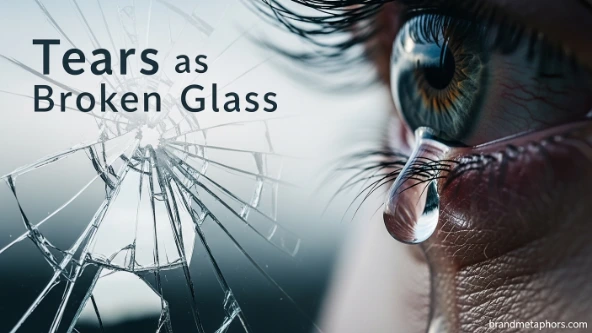
When tears are compared to broken glass, the focus is on fragility and pain. Glass breaks sharply and suddenly, just like emotional breaking points.
This metaphor often appears in heartbreak or emotional trauma contexts. It suggests that something once whole has fractured.
Emotional Layers
- Sharp emotional pain
- Irreversible emotional moments
- Vulnerability and sensitivity
However, broken glass can also reflect beauty in its fragments. Similarly, emotional pain can lead to personal growth and deeper understanding of oneself.
6. Crying as a Release Valve: Pressure Finding an Exit
In this metaphor, the human mind is like a sealed system under pressure. Crying acts as a release valve that prevents emotional explosion.
H3: Why This Metaphor Works
When emotions are not expressed, they build pressure. Crying provides a safe outlet, just like steam escaping from a machine.
H3: Everyday Example
Someone dealing with stress at work may hold emotions all day. Once alone, they cry, and afterward feel calmer. The emotional system resets.
This metaphor is especially useful in psychology because it normalizes crying as a healthy mechanism rather than a breakdown.
7. Tears as Unwritten Words
Sometimes crying is described as “words that could not be spoken.” In this metaphor, tears become language itself.
People cry when they cannot express emotions verbally—grief, love, regret, or overwhelming joy. Each tear represents something unspoken.
Meaning Behind This Metaphor
- Emotional communication beyond language
- Silent expression of deep feelings
- Unfinished conversations inside the mind
This metaphor is especially powerful in relationships, where misunderstandings or emotional distance often lead to silent crying instead of spoken explanations.
8. Crying as a Night Sky: Darkness with Glimmers of Light
The night sky metaphor presents crying as a mix of darkness and beauty. Tears become like stars—small points of light in emotional darkness.
Even in sadness, there is something reflective and meaningful. Crying at night, for example, often feels more intense because silence amplifies emotions.
This metaphor suggests that sadness and beauty can exist together. It does not remove pain but adds depth to it.
9. Tears as Melted Ice: Emotional Softening
When emotions are frozen—suppressed or ignored—they can feel cold and distant. Crying is sometimes described as ice melting into water.
Interpretation
- Emotional thawing
- Return of sensitivity
- Reconnection with feelings
This metaphor is often used for people who have been emotionally numb due to stress or trauma. Crying becomes a sign of healing, not collapse.
10. Crying as a Silent Language of the Heart
Here, tears are seen as direct communication from the heart. This metaphor emphasizes honesty—crying cannot be faked easily and often reflects pure emotional truth.
The heart “speaks” through tears when verbal language fails. This idea is common in poetry and emotional storytelling.
It reminds us that crying is not just physical—it is deeply emotional communication.
11. Tears as Falling Leaves: Seasonal Emotion

In this metaphor, crying is compared to leaves falling in autumn. It represents natural cycles of emotional change.
Just as trees shed leaves to prepare for renewal, people may cry during emotional transitions—loss, change, or endings.
Insight
Crying here is not permanent sadness but part of emotional seasons. It suggests that after emotional shedding, growth is possible.
12. Crying as a Flooded Room: Overwhelming Emotion
A flooded room metaphor shows emotions rising until they fill every corner of the mind. There is no empty space left for control or logic.
This often describes moments of grief or emotional overload.
Real-Life Reflection
Someone might cry after suppressing feelings for too long, feeling as though emotions are “everywhere at once.”
The metaphor highlights intensity but also the need for emotional release before damage occurs.
Conclusion
Metaphors for crying help transform something deeply personal into something universally understandable. Whether tears are seen as rain, rivers, storms, or melted ice, each image reveals a different layer of human emotion. Crying is not just an act of sadness—it is communication, release, transformation, and sometimes even healing.
By understanding these metaphors, we begin to see crying not as weakness but as a natural emotional language. It allows people to process pain, reconnect with themselves, and move through life’s emotional landscapes. In the end, tears are not just drops of water—they are reflections of what it means to feel deeply and remain human.
FAQs
What are metaphors for crying?
Metaphors for crying are descriptive expressions that compare tears or emotional release to natural or symbolic images like rain, rivers, or storms to help explain feelings.
Why do people use metaphors for crying?
People use them to express emotions that are difficult to describe directly. Metaphors make deep feelings easier to understand and share.
Is crying always a sign of sadness?
No, crying can also express relief, joy, frustration, or emotional release. It is not limited to sadness alone.
What does “tears as rain” mean?
It means emotional release is natural and uncontrollable, similar to rain falling when the sky becomes full of moisture.
Can crying be healthy?
Yes, crying can reduce stress, release emotional pressure, and help people process difficult experiences in a healthy way.
Why do emotions feel stronger at night?
At night, silence and reduced distractions make emotions more noticeable, which is why crying often feels more intense.
What does “broken dam” metaphor for crying mean?
It means emotions were held back for too long and eventually overflowed suddenly, leading to intense crying.