
Introduction
The room fell silent after one sharp sentence. No shouting. No slammed doors. Just a quiet tension spreading across the air like smoke after a fire. Conflict often arrives this way—not always as an explosion, but sometimes as a slow crack in the foundation of relationships, ideas, or emotions. Whether it appears in families, friendships, workplaces, literature, or even within ourselves, conflict shapes human experience in unforgettable ways.
That is why metaphors for conflict are so powerful. They transform abstract tension into vivid images we can see, hear, and feel. Instead of simply saying two people argued, we describe their disagreement as a storm gathering on the horizon, a battlefield of emotions, or a tug-of-war pulling hearts apart. These metaphors deepen storytelling, sharpen communication, and help readers emotionally connect with difficult situations.
In writing, conversation, poetry, and social media, conflict metaphors add texture and intensity. They can make an ordinary sentence feel cinematic or deeply personal. This article explores creative and meaningful metaphors for conflict, explains their emotional impact, and shows you how to use them effectively in daily life and creative writing. Along the way, you’ll discover examples, storytelling ideas, exercises, and practical tips to strengthen your language and imagination.
Why Metaphors for Conflict Matter in Writing and Communication
Conflict is one of the oldest forces in storytelling. Every memorable novel, film, or speech contains some form of struggle. Yet conflict is not only dramatic—it is emotional, psychological, and deeply human.
Metaphors help translate these invisible feelings into something tangible.
When you say:
- “Their friendship was hanging by a thread,” instead of:
- “Their friendship was unstable,”
the emotional impact becomes immediate.
Conflict metaphors matter because they:
- Create vivid mental imagery
- Add emotional depth
- Make writing memorable
- Improve storytelling
- Help readers empathize
- Simplify complicated emotions
In daily communication, metaphors can soften harsh realities or emphasize intensity without sounding repetitive. A workplace disagreement becomes “walking through a minefield.” A family argument becomes “a volcano waiting to erupt.”
Great writers—from William Shakespeare to Maya Angelou—used metaphorical conflict to make emotional struggles unforgettable.
Conflict as a Storm: Chaos, Pressure, and Emotional Turbulence
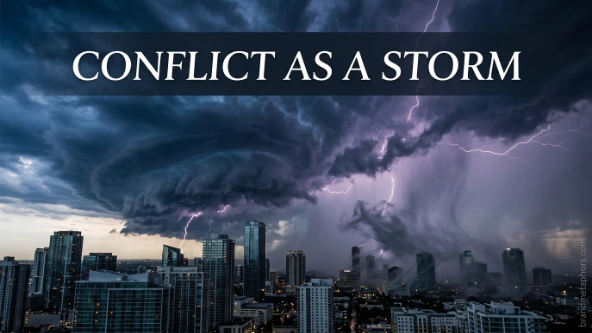
One of the most common metaphors for conflict compares tension to a storm. Storms build slowly, gather energy, and eventually break with force. This mirrors emotional confrontation perfectly.
Meaning and Emotional Effect
A storm metaphor suggests:
- Rising tension
- Unpredictability
- Emotional intensity
- Temporary chaos
- Fear of damage
Example Sentences
- “Their marriage weathered countless storms.”
- “An emotional hurricane swept through the meeting.”
- “Dark clouds gathered between the brothers.”
Alternative Ways to Express It
- Thunder of anger
- Lightning-fast arguments
- Rain of accusations
- Emotional tornado
- Gathering clouds of resentment
Mini Storytelling Example
Imagine a teenager sitting silently at the dinner table while parents exchange cold glances. No one raises their voice, yet tension thickens like humid air before rainfall. Suddenly, one comment crashes like thunder, and the entire room erupts.
That is the strength of storm imagery—it transforms emotional discomfort into a sensory experience.
Bonus Tip
Storm metaphors work beautifully in:
- Fiction writing
- Poetry
- Relationship advice content
- Emotional social media captions
Battle and War Metaphors for Conflict
Conflict is often described as war because disagreements can feel strategic, exhausting, and deeply personal.
Meaning and Symbolism
War metaphors imply:
- Opposition
- Aggression
- Defense
- Emotional casualties
- Power struggles
Example Sentences
- “The courtroom became a battlefield.”
- “She fought an invisible war within herself.”
- “Their debate turned into open combat.”
Alternative Expressions
- Emotional ammunition
- Crossfire of opinions
- Wounded pride
- Shields up
- Strategic attack
Cultural and Literary References
Epic literature frequently uses battle metaphors. In The Iliad, physical war mirrors emotional and moral conflict. Modern films and novels continue this tradition because audiences instantly recognize the emotional stakes.
Sensory Detail
Battle metaphors often carry sounds:
- Clashing swords
- Explosive shouting
- Heavy footsteps
- Sharp silence afterward
These details heighten emotional realism.
Fire Metaphors for Anger and Escalation
Fire is one of the most emotionally charged metaphors for conflict. It symbolizes destruction, passion, heat, and loss of control.
Why Fire Works So Well
Conflict spreads quickly, just like flames. Small disagreements can become massive emotional wildfires.
Example Sentences
- “Their argument ignited instantly.”
- “She added fuel to the fire.”
- “His resentment smoldered for years.”
Alternative Fire Metaphors
- Burning tension
- Scorching words
- Flames of jealousy
- Emotional wildfire
- Sparks flying
Real-Life Scenario
A small misunderstanding between coworkers slowly intensifies through gossip, frustration, and assumptions. Eventually, one heated meeting burns professional trust completely.
Writing Tip
Fire metaphors are especially effective when describing:
- Romantic conflict
- Family arguments
- Political debates
- Passionate disagreements
Use sensory language like:
- Smoke
- Heat
- Ashes
- Crackling
- Burning
These details create vivid emotional atmosphere.
Tug-of-War Metaphors for Emotional Struggle
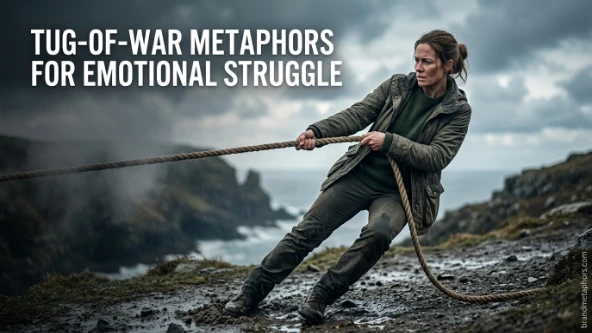
Not every conflict explodes dramatically. Some conflicts feel like constant pulling between opposing forces.
That is why tug-of-war metaphors resonate so strongly.
What This Metaphor Represents
A tug-of-war symbolizes:
- Internal struggle
- Competing desires
- Emotional exhaustion
- Balance and imbalance
- Relationship tension
Example Sentences
- “She felt trapped in a tug-of-war between loyalty and truth.”
- “Their friendship became a constant pull in opposite directions.”
- “His heart and mind wrestled endlessly.”
Alternative Expressions
- Pulled apart
- Torn between choices
- Emotional rope tension
- Competing forces
- Stretched too thin
Interactive Writing Exercise
Write about a difficult decision using a tug-of-war metaphor.
Prompt:
Imagine two invisible forces pulling at your arms. What are they saying? Which side feels stronger?
This exercise helps transform abstract emotions into powerful imagery.
Earthquake Metaphors for Sudden Conflict
Some conflicts arrive without warning and permanently change relationships or situations.
Earthquake metaphors capture this shock perfectly.
Emotional Meaning
Earthquakes symbolize:
- Sudden disruption
- Emotional shockwaves
- Instability
- Destruction
- Lasting consequences
Example Sentences
- “The accusation shook the family to its core.”
- “One betrayal cracked the foundation of trust.”
- “Their friendship collapsed like a building during an earthquake.”
Sensory Language Ideas
- Tremors
- Cracks
- Ruins
- Shattered ground
- Falling debris
Storytelling Example
A company announces unexpected layoffs. The office atmosphere shifts instantly. Conversations become cautious whispers. Trust fractures beneath everyone’s feet.
The earthquake metaphor makes emotional instability feel physical and immediate.
Ice and Cold Metaphors for Silent Conflict
Not all conflict burns hot. Some conflicts freeze relationships slowly over time.
Cold metaphors create an entirely different emotional atmosphere.
Symbolism of Coldness
Cold conflict often suggests:
- Emotional distance
- Silence
- Resentment
- Isolation
- Passive aggression
Example Sentences
- “An icy silence filled the room.”
- “Their relationship had frozen over.”
- “Her words carried a chilling edge.”
Alternative Cold Metaphors
- Frost between them
- Frozen emotions
- Glacial tension
- Snowstorm of silence
- Cold shoulders
Emotional Impact
Cold metaphors feel haunting because they describe absence rather than explosion. Instead of dramatic shouting, they focus on emotional emptiness.
This works especially well in:
- Literary fiction
- Relationship writing
- Psychological storytelling
Animal Metaphors for Conflict and Aggression
Animals symbolize instinct, survival, and raw emotion. Using animal metaphors can make conflict feel primal and intense.
Common Animal Conflict Metaphors
- “They circled each other like wolves.”
- “The office became a shark tank.”
- “She attacked like a cornered tiger.”
Meaning Behind Animal Imagery
Different animals suggest different forms of conflict:
AnimalSymbolismWolfStrategic aggressionSnakeDeceptionBullUncontrolled angerTigerFierce defenseSharkRuthlessness
Cultural References
Animal conflict metaphors appear in myths, fables, and folklore worldwide. In many stories, animals reflect human emotions and social struggles.
Creative Practice Prompt
Describe a recent disagreement using only animal imagery.
Example:
“Two exhausted lions guarded their pride with wounded growls.”
This exercise sharpens symbolic thinking and creative writing skills.
Metaphors for Internal Conflict and Emotional Battles
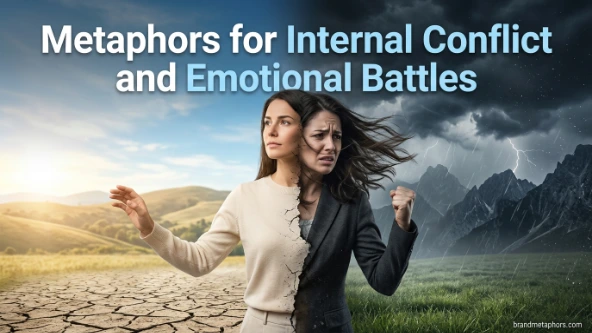
Some of the deepest conflicts happen silently inside us.
Internal conflict metaphors help describe:
- Anxiety
- Guilt
- Fear
- Doubt
- Identity struggles
Powerful Internal Conflict Metaphors
- “A storm raged inside her chest.”
- “His thoughts became a maze with no exit.”
- “She carried a war beneath her smile.”
Why These Metaphors Matter
People often struggle to describe emotional complexity directly. Metaphors provide emotional clarity.
Literary Connection
Many classic novels center around internal conflict. In Hamlet, emotional hesitation becomes a battlefield between thought and action.
Emotional Sensory Details
Internal conflict metaphors work best when they include:
- Pressure
- Noise
- Darkness
- Heat
- Weight
Example:
“The guilt sat on his chest like heavy armor.”
Creative Ways to Use Conflict Metaphors in Daily Life
Conflict metaphors are not only for novels or poetry. They also improve everyday communication.
Social Media Captions
- “Some storms teach us how strong we are.”
- “Not every battle needs a winner.”
- “Silence can be colder than winter.”
Journaling Ideas
Use metaphors to process emotions:
- What weather describes your current conflict?
- What object represents your stress?
- What animal reflects your emotional state?
Conversation and Public Speaking
Metaphors make speeches memorable.
Instead of:
- “The project faced difficulties.”
Try:
- “The project hit rough waters halfway through.”
Creative Writing Bonus Tip
Mix sensory details with metaphor:
- Sound → thunder, cracking ice
- Touch → burning anger
- Sight → smoke, shadows
- Movement → earthquakes, waves
This creates immersive emotional scenes.
Interactive Exercises to Practice Metaphors for Conflict
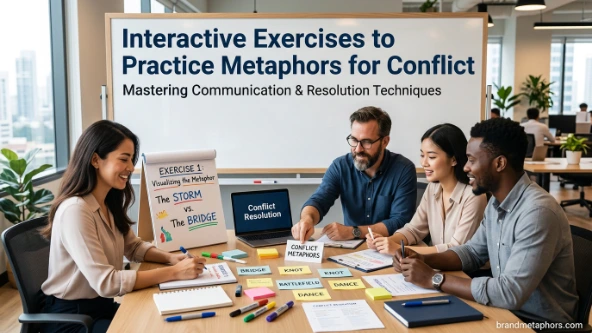
Learning metaphors becomes easier through practice.
Exercise 1: Transform Plain Sentences
Rewrite these basic sentences creatively.
Plain:
- “They argued constantly.”
Possible metaphor:
- “Their conversations became endless thunderstorms.”
Plain:
- “She felt emotionally torn.”
Possible metaphor:
- “Her heart stretched like a rope in a brutal tug-of-war.”
Exercise 2: Conflict Mood Mapping
Choose one emotion:
- Anger
- Jealousy
- Fear
- Resentment
Now connect it to:
- Weather
- Fire
- Animals
- Nature
- Objects
Example:
Jealousy = poison ivy slowly climbing a wall
Exercise 3: Write a Mini Scene
Write 5–6 sentences describing conflict without using the word “conflict.”
Use only metaphorical imagery.
Example themes:
- Storm
- Battlefield
- Frozen lake
- Earthquake
- Fire
This improves symbolic storytelling dramatically.
Tips for Writing Strong and Original Conflict Metaphors
Some metaphors feel fresh and unforgettable. Others feel overused.
Here is how to strengthen yours.
1. Avoid Clichés When Possible
Common:
- “Fight like cats and dogs.”
More vivid:
- “Their words snapped like branches during a storm.”
2. Match Tone Carefully
A poetic metaphor may not fit a serious business article. Choose imagery appropriate for the audience.
3. Use Sensory Language
Strong metaphors engage:
- Sight
- Sound
- Smell
- Touch
- Motion
4. Keep Metaphors Consistent
Do not mix too many unrelated images.
Weak:
“Their relationship exploded like a stormy battlefield of ice.”
Choose one central image instead.
5. Draw from Personal Experience
Original metaphors often come from real emotions and memories.
Think about:
- Natural disasters
- Sports
- Music
- Machines
- Travel
- Seasons
Personal associations create authenticity.
Conclusion
Conflict is part of every human story. It shapes relationships, fuels growth, reveals character, and challenges emotions. Yet conflict can be difficult to explain directly because feelings are often layered, invisible, and deeply personal. That is why metaphors matter so much.
Metaphors for conflict transform tension into storms, battles, fires, earthquakes, frozen landscapes, and emotional tug-of-wars. They help readers see and feel emotional struggles instead of merely understanding them intellectually.
Whether you are writing fiction, journaling, crafting poetry, posting on social media, or simply trying to communicate honestly, these metaphors bring emotional depth and creative energy to your words.
The best conflict metaphors are not only dramatic—they are truthful. They capture the sensation of pressure, uncertainty, anger, heartbreak, or resilience in a way ordinary language often cannot. By practicing symbolic thinking and sensory detail, you can create language that lingers in the mind long after the final sentence.
So the next time tension rises in a story or conversation, ask yourself: What does this conflict feel like?
A storm? A wildfire? A frozen ocean? A battlefield? Or perhaps a silent crack slowly spreading through stone?
The answer may become your most powerful metaphor yet.
FAQs About Metaphors for Conflict
1. What are metaphors for conflict?
Metaphors for conflict are creative comparisons that describe tension, struggle, disagreement, or emotional battles using vivid imagery such as storms, wars, fire, or natural disasters.
2. Why are conflict metaphors important in writing?
They make emotions more vivid, improve storytelling, create emotional connection, and help readers visualize abstract struggles more clearly.
3. What is the most common metaphor for conflict?
Storm and battle metaphors are among the most common because they naturally represent tension, chaos, and emotional intensity.
4. Can metaphors for conflict be used in everyday conversation?
Yes. People often use them naturally in daily life, such as saying:
- “We hit a rough patch.”
- “The meeting became a battlefield.”
- “Tension was boiling over.”
5. How can I create original metaphors for conflict?
Focus on sensory experiences, emotions, and personal memories. Compare conflict to things that genuinely feel similar to you, such as weather, machinery, sports, animals, or nature.