
The sky was bruised purple before the storm arrived. Streetlights flickered like drops of melted gold, and the sea turned the color of shattered glass. Somewhere in the middle of that evening, a child pointed at the horizon and whispered, “The clouds look angry.”
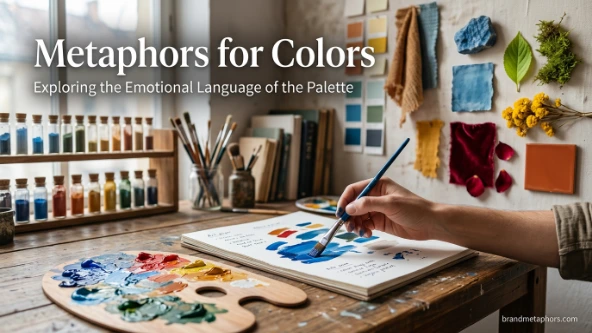
That simple sentence reveals something extraordinary about language. We rarely describe colors as merely visual. Instead, we turn them into emotions, personalities, and stories. Red becomes rage or passion. Blue becomes loneliness or calm. Green can symbolize envy, growth, or new beginnings. Colors are not just shades on a palette—they are emotional landscapes.
Metaphors for colors help writers transform ordinary descriptions into unforgettable imagery. They allow poets, novelists, bloggers, students, and storytellers to create mood and depth with only a few carefully chosen words. A sunset becomes “a burning ember.” Darkness becomes “a velvet curtain.” Hope becomes “a thin ribbon of silver.”
In this article, you’ll explore vivid metaphors for colors, discover how they shape emotion and storytelling, and learn practical ways to use them in writing, social media, and everyday expression. Along the way, you’ll find examples, mini storytelling moments, creative exercises, and literary inspiration that can help your words glow brighter than paint on a canvas.
Why Metaphors for Colors Matter in Writing
Colors already carry emotional weight. When combined with metaphors, they become even more powerful.
Instead of saying:
- “The room was red.”
You might say:
- “The room glowed like the inside of a furnace.”
Suddenly, the color is no longer passive. It feels alive. It creates temperature, emotion, and atmosphere.
Writers use color metaphors to:
- Build mood and emotion
- Create memorable imagery
- Symbolize deeper themes
- Make descriptions feel cinematic
- Help readers connect emotionally
Think about classic literature and film. In many stories, colors quietly guide the audience’s feelings. The green light in The Great Gatsby symbolizes unreachable dreams. In fantasy novels, silver often represents purity or magic. Horror stories lean heavily on sickly greens and bruised purples to create unease.
Color metaphors work because humans instinctively attach meaning to color. Our minds respond emotionally before we even analyze the words.
Red Metaphors: Fire, Passion, and Danger
Red is one of the most emotionally intense colors. It can symbolize love, violence, courage, temptation, or fury.
Common Metaphors for Red
- Red like a wildfire
- A heart painted in crimson
- Anger boiling like lava
- Lips like ripe cherries
- A scarlet warning flare
Meaning and Emotional Effect
Red often creates urgency and intensity. It feels warm, dramatic, and impossible to ignore.
Example Scenario
“She entered the ballroom in a dress red as a burning sunset, and every conversation paused for a heartbeat.”
The metaphor transforms a simple dress into a force of nature.
Alternative Ways to Express Red
- Crimson storm
- Ruby flame
- Velvet blood
- Ember glow
- Rose-colored fire
Sensory Detail
Red can feel hot, sharp, loud, or pulsing. It often pairs beautifully with sensory writing:
“The neon sign bled red across the rain-soaked pavement.”
That image creates mood instantly.
Mini Storytelling Moment
In many cultures, red symbolizes celebration. Brides in parts of Asia wear red for luck and prosperity. Meanwhile, in thrillers and horror films, red lighting often signals danger. The same color can carry completely different emotional meanings depending on context.
Blue Metaphors: Oceans, Sadness, and Serenity
Blue is calm and melancholy at the same time. It carries the softness of rain and the endless depth of the sea.
Popular Metaphors for Blue
- Blue as a sleeping ocean
- Eyes like frozen lakes
- Sadness drifting like blue smoke
- A sky stitched with sapphire
- Calm spreading like cool water
Meaning and Emotional Effect
Blue often symbolizes peace, loneliness, wisdom, or reflection.
Example Sentence
“Her silence filled the room like blue fog before dawn.”
This metaphor gives sadness shape and atmosphere.
Alternative Expressions
- Midnight tide
- Sapphire whisper
- Icy velvet
- Rain-soaked denim sky
- Ocean-breath calm
Emotional and Sensory Associations
Blue often feels cool, quiet, distant, or gentle.
Writers frequently use blue during emotional scenes because it naturally slows the rhythm of the story.
Literary Reference
In Pablo Picasso’s “Blue Period,” the artist used shades of blue to portray grief and emotional isolation. Even without words, the color communicated sorrow.
That is the magic of color symbolism.
Yellow Metaphors: Sunshine, Joy, and Fragility
Yellow shines with warmth, but it can also represent caution, fading memories, or nervousness.
Creative Metaphors for Yellow
- Yellow like spilled sunlight
- Laughter bright as lemons
- A golden thread of hope
- Fields glowing like melted butter
- Fear fluttering like pale paper
Meaning and Emotional Effect
Yellow often represents happiness, energy, optimism, and youth.
Example Scenario
“The child’s laughter burst through the gloomy house like a streak of yellow paint.”
The metaphor creates instant brightness.
Alternative Ways to Describe Yellow
- Honey-colored warmth
- Sunlit gold
- Dandelion brightness
- Amber glow
- Candlelight silk
Sensory and Emotional Notes
Yellow can feel warm, buzzing, cheerful, or fragile.
Mini Storytelling Example
Imagine an old kitchen at sunrise. Dust dances in beams of yellow light while tea whistles softly on the stove. That golden warmth creates comfort before a single character speaks.
Green Metaphors: Growth, Envy, and Nature
Green is deeply connected to life. It symbolizes renewal, forests, freshness, and sometimes jealousy.
Metaphors for Green
- Green like new leaves after rain
- Jealousy curling like poison ivy
- Hope sprouting like spring grass
- Eyes glowing like emerald fire
- Forest silence wrapped in green velvet
Meaning and Emotional Effect
Green can feel alive, earthy, healing, or mysterious.
Example Sentence
“After years of struggle, her confidence finally grew like green vines climbing sunlight.”
The metaphor emphasizes slow but powerful growth.
Alternative Expressions
- Moss-covered calm
- Emerald heartbeat
- Jade shimmer
- Fresh-earth green
- Garden-breath hope
Sensory Associations
Green often smells like rain, pine, grass, or fresh herbs in descriptive writing.
Cultural Reference
In many stories and myths, green forests symbolize transformation. Characters enter the woods one way and emerge changed.
Black Metaphors: Mystery, Power, and Darkness

Black is elegant, terrifying, protective, and unknown all at once.
Common Black Metaphors
- Darkness like spilled ink
- A black hole of grief
- Night wrapped in velvet
- Thoughts darker than storm clouds
- Silence thick as coal dust
Meaning and Emotional Effect
Black often symbolizes mystery, death, sophistication, fear, or authority.
Example Scenario
“The hallway swallowed him like the mouth of a cave.”
The metaphor makes darkness feel physical.
Alternative Ways to Describe Black
- Shadow-soaked
- Midnight silk
- Raven-wing darkness
- Charcoal sorrow
- Obsidian silence
Sensory Details
Black often feels heavy, cold, silent, or endless.
Literary Connection
Edgar Allan Poe frequently used black imagery to create dread and psychological tension. Darkness became more than absence of light—it became emotion itself.
White Metaphors: Purity, Silence, and Emptiness
White can symbolize innocence and peace, but also emptiness or emotional distance.
Metaphors for White
- White as untouched snow
- Silence pale as moonlight
- A blank page of winter
- Clouds like torn cotton
- Hope glowing white as a candle flame
Meaning and Emotional Effect
White often feels clean, spiritual, quiet, or lonely.
Example Sentence
“The hospital walls stood around him like white ghosts.”
The metaphor transforms sterility into emotion.
Alternative Expressions
- Pearl-soft light
- Frosted silence
- Ivory calm
- Snow-blind emptiness
- Pale dawn breath
Emotional Notes
White is powerful because it can comfort or unsettle depending on context.
Purple Metaphors: Royalty, Dreams, and Magic
Orchid often carries mystery and imagination.
Purple Metaphors
- Twilight spilling purple ink
- Dreams blooming like violets
- Royal robes dipped in amethyst
- Magic humming through purple smoke
- Bruises painted in plum shadows
Meaning and Emotional Effect
Purple can symbolize luxury, spirituality, creativity, or melancholy.
Example Scenario
“The evening sky folded itself into layers of purple velvet.”
The metaphor creates elegance and softness.
Alternative Expressions
- Lavender haze
- Orchid dusk
- Amethyst glow
- Violet storm
- Plum-colored silence
Storytelling Detail
Fantasy stories often use purple to signal enchantment or hidden power. A purple forest feels more magical than an ordinary green one.
How to Create Your Own Color Metaphors

The best metaphors feel fresh and personal.
Here are three creative strategies for building original metaphors.
1. Connect Colors to Nature
Nature provides endless inspiration.
Examples:
- Orange like autumn fire
- Blue like glacier water
- Green like rain-soaked moss
Nature-based metaphors feel vivid and universal.
2. Attach Emotion to Color
Think about how a color feels emotionally.
Examples:
- Grief spreading like gray ash
- Joy bursting like yellow fireworks
- Fear dripping black across the walls
This technique deepens emotional writing.
3. Use Texture and Movement
Colors become more alive when they move.
Examples:
- Silver rain dancing across rooftops
- Gold sunlight melting through curtains
- Red anger erupting like sparks
Movement transforms static imagery into cinematic scenes.
Creative Exercises for Practicing Color Metaphors
Practice helps metaphors become natural.
Exercise 1: Color Emotion Match
Choose five emotions and assign each a color metaphor.
Example:
- Anxiety = “a swarm of gray bees”
- Happiness = “yellow confetti in sunlight”
Exercise 2: Describe a Room With Only Color Metaphors
Avoid plain descriptions.
Instead of:
- “The room was dark.”
Write:
- “The room wore darkness like a heavy wool coat.”
Exercise 3: Rewrite Everyday Objects
Transform ordinary scenes.
Example:
- Coffee = “liquid midnight”
- Traffic lights = “tiny urban suns”
These exercises sharpen imagination quickly.
Using Color Metaphors in Social Media and Daily Life
Color metaphors are not just for novels and poetry. They can make captions, speeches, journals, and conversations more memorable.
Social Media Caption Ideas
- “Chasing golden-hour dreams.”
- “Today felt painted in soft blues.”
- “Collecting little sparks of yellow joy.”
Journaling Prompt
Describe your week as colors.
Was it:
- Stormy gray?
- Hopeful green?
- Exhausted black?
- Bright orange?
This technique encourages emotional reflection.
Everyday Conversation
Even casual speech uses color metaphors naturally:
- “I’m feeling blue.”
- “She saw red.”
- “Everything looked rosy.”
These expressions survive because color connects instantly with emotion.
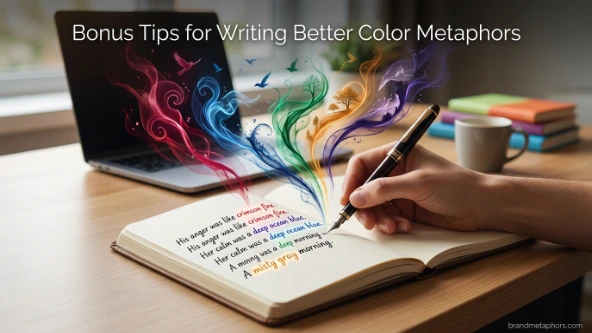
Bonus Tips for Writing Better Color Metaphors
Avoid Overused Comparisons
Instead of:
- “Red as a rose”
Try:
- “Red as a warning siren in the rain.”
Fresh imagery feels more powerful.
Mix Unexpected Senses
Combine sight with sound, smell, or touch.
Example:
- “The green garden smelled like cool music after rain.”
This creates layered sensory writing.
Match Mood Carefully
A bright yellow metaphor may not fit a tragic scene unless used ironically.
Always consider emotional consistency.
Read Poetry for Inspiration
Poets are masters of color imagery. Reading poetry improves metaphor skills naturally.
Keep a Color Journal
Write down unusual color descriptions you notice in daily life:
- Rust-colored sunsets
- Milk-white fog
- Copper evening light
Over time, you’ll build a personal library of imagery.
The Emotional Psychology Behind Color Metaphors
Humans psychologically respond to colors before words are fully processed.
That is why advertisers, filmmakers, and authors carefully choose color palettes.
Red
Creates excitement and urgency.
Blue
Encourages trust and calm.
Green
Suggests health and renewal.
Black
Adds sophistication or fear.
White
Feels pure or empty.
Writers can use these associations strategically to influence readers emotionally without directly stating feelings.
A scene described in pale grays feels emotionally different from one glowing with orange warmth.
Color quietly shapes storytelling beneath the surface.
FAQs About Metaphors for Colors
1. What are color metaphors?
Color metaphors use colors symbolically or imaginatively to represent emotions, ideas, or experiences. For example, “feeling blue” represents sadness.
2. Why are color metaphors important in writing?
They create vivid imagery, emotional depth, and memorable descriptions that help readers connect more strongly with the text.
3. How can I create original color metaphors?
Combine colors with emotions, movement, sensory details, or natural imagery. Avoid clichés and focus on unique experiences.
4. Are color meanings universal across cultures?
Not always. Some meanings vary culturally. For example, white symbolizes purity in some cultures but mourning in others.
5. Can color metaphors improve social media captions?
Yes. They make captions more emotional, poetic, and visually memorable, helping posts stand out.
Conclusion
Colors are more than decoration. They are emotional languages hidden inside everyday life. A gray morning can feel heavy with worry. A golden sunset can heal exhaustion. A red scarf can carry passion, confidence, or danger depending on the story surrounding it.
Metaphors for colors allow writers to transform ordinary descriptions into emotional experiences. They paint atmosphere across the reader’s imagination and make scenes linger long after the words are gone.
The next time you write about love, fear, hope, loneliness, or joy, pause before choosing a simple adjective. Ask yourself what color that feeling might become. Maybe grief is not merely sadness but “a room filled with blue rain.” Maybe hope is “a thin gold thread pulling dawn across the sky.”
Language becomes unforgettable when colors begin to breathe.