
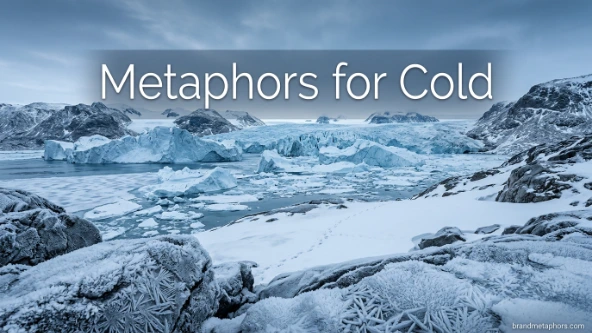
Introduction: When Cold Feels Like More Than Temperature
The wind rattled the windowpanes like nervous teeth. Outside, the trees stood stiff and silent beneath a pale winter sky. Inside, a mug of tea cooled too quickly in trembling hands. Everyone knows what cold feels like, yet simple words like freezing or chilly often fail to capture its deeper emotional texture. Sometimes cold is sharp as broken glass. Sometimes it is lonely, distant, or quiet enough to hear your own heartbeat.
That is where metaphors for cold become powerful.
Metaphors transform ordinary descriptions into vivid experiences. They help writers paint emotions, atmospheres, personalities, and memories in unforgettable ways. A cold room can become “a tomb of forgotten warmth.” A cold person may seem “like marble untouched by sunlight.” Whether you are writing poetry, fiction, captions, songs, speeches, or even social media posts, strong metaphors add emotional depth and imagery that readers can almost feel on their skin.
In this guide, you will discover creative metaphors for cold, practical writing tips, sensory descriptions, literary inspiration, and exercises to sharpen your imagination. From icy emotions to winter landscapes, these comparisons will help your writing breathe frosty air into every sentence.
Why Metaphors for Cold Matter in Writing
Cold is not just physical. It often symbolizes fear, loneliness, emotional distance, death, silence, or mystery. Writers across cultures have used cold imagery for centuries because readers instantly understand it.
Think about classic stories. In many fairy tales, winter arrives when hope disappears. In films, cold blue lighting often signals danger or sadness. Even in daily conversation, we say someone gave us “the cold shoulder.”
Metaphors make these ideas stronger.
Instead of saying:
- “The room was cold.”
You could write:
- “The room felt like the inside of an abandoned freezer.”
Immediately, readers imagine sterile air, icy breath, and discomfort.
Why readers connect with cold metaphors
- They trigger sensory memories.
- They create emotional atmosphere quickly.
- They make descriptions memorable.
- They help readers feel rather than simply understand.
Cold metaphors work beautifully in:
- Poetry
- Horror stories
- Romance novels
- Winter-themed writing
- Song lyrics
- Social media captions
- Motivational writing
- Character descriptions
Metaphors for Cold Weather That Feel Vivid and Cinematic
Weather descriptions often become repetitive. Metaphors help turn ordinary winter scenes into immersive experiences.
Here are some creative examples.
“The air was a knife”
This metaphor suggests sharp, painful cold.
Meaning: The cold feels cutting and aggressive.
Example sentence: “The morning air was a knife against his cheeks as he walked to work.”
Alternative expressions:
- The wind sliced through me.
- Frost bit at my skin.
- Winter sharpened its claws.
“The town sat beneath a frozen blanket”
This creates a quieter, softer image.
Meaning: Snow covers everything peacefully.
Example sentence: “The sleepy town sat beneath a frozen blanket of white silence.”
Emotional detail: This metaphor feels calm, dreamy, and nostalgic.
“Winter crept like a silent thief”
This metaphor gives winter a personality.
Meaning: Cold arrives slowly and unexpectedly.
Example scenario: One autumn afternoon still smelled of leaves and smoke. By dawn, winter had stolen the warmth from the earth.
Mini Storytelling Example
Imagine a child waking before sunrise. They touch the window and pull back quickly.
“The glass was colder than a ghost’s fingertips.”
That single metaphor instantly adds mood and emotion.
Emotional Metaphors for Cold Hearts and Distant People
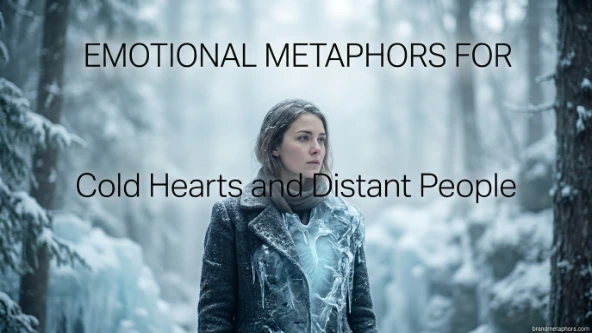
Cold is often linked with emotionless behavior. These metaphors are useful for character writing, relationships, and dramatic storytelling.
“Her voice was ice”
Meaning: Her tone felt harsh, emotionless, or unfriendly.
Example sentence: “When she answered, her voice was ice sliding across stone.”
“He carried winter in his chest”
Meaning: Someone emotionally distant or burdened.
Alternative ideas:
- A heart made of frost
- Eyes colder than December rain
- A soul trapped in snow
“Their silence became a frozen ocean”
Meaning: Emotional distance growing between people.
Example scenario: After the argument, they sat at opposite ends of the couch while silence spread between them like a frozen ocean no one could cross.
Cultural and Literary Reference
In many myths and fantasy stories, icy kingdoms symbolize emotional isolation. In Hans Christian Andersen’s The Snow Queen, cold reflects emotional numbness and separation from love.
Writers continue using this symbolism because readers instinctively associate warmth with connection and cold with distance.
Powerful Winter Metaphors for Poetry and Creative Writing
Poetry thrives on sensory language. Cold metaphors can sound musical, haunting, or beautiful depending on the imagery.
“Snowflakes were feathers from a broken sky”
Meaning: Snow appears soft and delicate.
Why it works: It combines beauty and sadness.
“The moon hung like frozen silver”
This metaphor creates elegance and stillness.
“The night breathed frost”
Meaning: The darkness itself feels alive and cold.
Sensory Writing Tip
When creating metaphors for cold, involve multiple senses:
- Sight: pale skies, blue shadows
- Sound: cracking ice, whistling wind
- Touch: numb fingers, stinging cheeks
- Smell: wood smoke, frozen air
Practice Prompt
Write three sentences describing winter without using these words:
- cold
- snow
- ice
- freezing
Force yourself to rely on imagery instead.
Example:
“The trees stood brittle beneath a sky the color of steel.”
Funny and Creative Metaphors for Cold Temperatures
Not every metaphor needs to sound dramatic. Some can be playful and humorous.
“It was colder than a penguin’s pajamas”
A lighthearted exaggeration perfect for casual writing.
“The wind slapped me awake”
This metaphor gives cold weather personality.
“My toes turned into popsicles”
A common but effective visual metaphor.
Alternative Funny Comparisons
- Cold as a forgotten pizza in the fridge
- Like hugging a snowman made of metal
- Air-conditioning from the Arctic itself
- A freezer with attitude
Social Media Caption Ideas
- “Today’s weather feels like the universe forgot to pay the heating bill.”
- “Stepped outside and instantly became a human icicle.”
- “This wind has personal problems with me.”
These playful metaphors work well on Instagram, TikTok, or seasonal blog content.
Dark and Haunting Metaphors for Cold
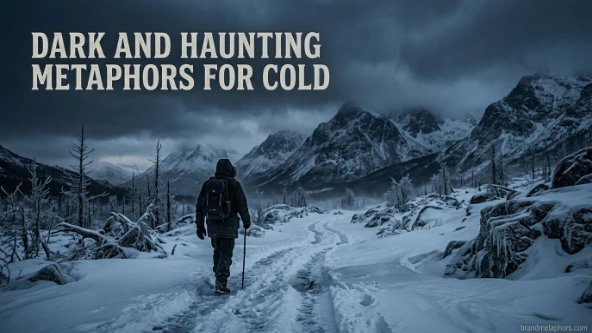
Cold often appears in horror and suspense writing because it naturally creates discomfort and tension.
“The basement breathed like a corpse”
Meaning: The air feels unnaturally cold and unsettling.
“Fear crawled through him like winter water”
This metaphor combines emotional and physical discomfort.
“The graveyard slept beneath icy teeth of moonlight”
A poetic horror image that creates atmosphere.
Real-Life Inspiration
Many horror films use cold environments because they amplify vulnerability. Think of isolated cabins, snowy forests, or frozen wastelands. The absence of warmth mirrors the absence of safety.
Writing Tip for Horror
Pair cold metaphors with silence.
Example:
“The hallway was cold enough to preserve secrets.”
That creates unease without explicitly describing danger.
Metaphors for Cold Water, Ice, and Frozen Landscapes
Nature imagery can become unforgettable with fresh comparisons.
“The lake was a sheet of shattered glass”
Meaning: The frozen water appears fragile and reflective.
“Icicles hung like crystal daggers”
This creates visual tension and danger.
“The river moved like liquid winter”
A poetic description of icy water.
Sensory Exercise
Picture standing beside a frozen lake at dawn.
Now describe:
- the color of the sky
- the sound of the ice
- the feeling in your hands
- the smell of the air
Use metaphors in every sentence.
Example:
“The air smelled like wet stone and sleeping forests.”
Metaphors for Cold in Love and Relationships

Coldness in relationships is emotionally relatable, making these metaphors powerful for readers.
“Love faded into winter”
Meaning: Affection slowly disappeared.
“Her hugs felt like empty snowfall”
A poetic metaphor for emotional absence.
“Their marriage became an unlit fireplace”
Meaning: The warmth disappeared though the structure remained.
Example Scenario
A couple sits in a café. Steam rises from untouched coffee while neither speaks.
“The silence between them was colder than the rain outside.”
That metaphor captures emotional tension instantly.
Alternative Expressions
- Frost settled over their friendship.
- His smile carried no warmth.
- Their conversations froze midair.
How to Create Your Own Metaphors for Cold
Strong metaphors come from observation and imagination.
Here are three useful strategies.
1. Compare Cold to Sharp Objects
Cold often feels painful.
Examples:
- Cold like needles
- Wind like broken glass
- Frost like claws
Why it works
Readers physically understand sharpness.
2. Use Emotional Associations
Cold often symbolizes isolation.
Examples:
- Silence like a frozen lake
- Eyes colder than abandoned streets
- Loneliness wrapped in snow
Why it works
It connects physical sensation with emotion.
3. Turn Cold Into a Living Thing
Personification creates dynamic imagery.
Examples:
- Winter knocked at the door.
- Frost climbed the windows.
- The wind hunted us through the alley.
Why it works
Readers experience weather as active and threatening.
Interactive Exercise: Build Your Own Cold Metaphors
Try these prompts to strengthen your creativity.
Exercise 1: Finish the Sentence
Complete these creatively:
- “The wind was like…”
- “Her silence felt colder than…”
- “Winter arrived like…”
Exercise 2: Use Unexpected Comparisons
Compare cold to things unrelated to weather.
Examples:
- A forgotten apology
- An empty theater
- A dead phone battery at midnight
Unexpected imagery feels fresh and memorable.
Exercise 3: Write a Tiny Scene
Describe someone waiting for a bus during winter using at least three metaphors.
Focus on:
- body language
- atmosphere
- sound
- emotion
Bonus Tips for Using Cold Metaphors in Daily Writing
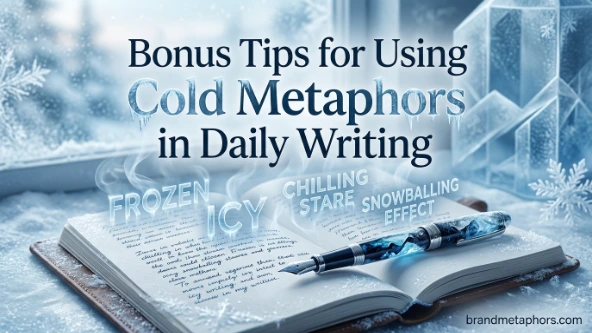
Metaphors are useful beyond novels and poetry.
In Social Media
Use short, punchy imagery.
Example:
- “This Monday morning feels dipped in glacier water.”
In Storytelling
Match the metaphor to mood.
Romantic winter scene:
- “Snow drifted softly like whispered promises.”
Horror scene:
- “The wind clawed at the cabin walls.”
In Speeches or Essays
Cold metaphors can explain emotional topics.
Example:
- “Indifference creates a colder world than winter ever could.”
Avoid Overused Clichés
Some metaphors feel too familiar:
- cold as ice
- freezing cold
- icy stare
Try refreshing them.
Instead of:
- “Her stare was icy.”
Write:
- “Her stare could have frosted glass.”
Famous Literary Uses of Cold Imagery
Many great writers use cold symbolism masterfully.
Charles Dickens
In A Christmas Carol, cold weather reflects emotional coldness and greed.
Robert Frost
Winter landscapes in Frost’s poetry often symbolize loneliness and reflection.
C.S. Lewis
In The Lion, the Witch and the Wardrobe, endless winter represents fear and oppression.
Why These Examples Matter
They show how cold can symbolize much more than temperature:
- emotional isolation
- fear
- stillness
- grief
- transformation
- survival
When readers recognize these emotional layers, your writing becomes richer.
Common Mistakes When Writing Metaphors for Cold
Even beautiful imagery can lose impact if overused.
Using Too Many Metaphors Together
Avoid piling comparisons endlessly.
Weak example:
“The wind was knives, the snow was ghosts, the sky was steel, and the road was death.”
This overwhelms readers.
Mixing Conflicting Images
Stay consistent in tone.
If your scene is gentle and nostalgic, avoid sudden violent metaphors unless intentional.
Forgetting Emotion
The best metaphors reveal feeling, not just appearance.
Compare:
- “The room was cold.”
- “The room felt abandoned by warmth.”
The second carries emotional depth.
FAQs About Metaphors for Cold
1. What is a metaphor for cold?
A metaphor for cold compares coldness to something else without using “like” or “as.” For example, “The wind was a knife” suggests sharp, painful cold.
2. Why are cold metaphors important in writing?
They create stronger imagery, emotional atmosphere, and sensory detail. Readers can feel the scene more vividly.
3. Can cold symbolize emotions?
Yes. Cold often symbolizes loneliness, emotional distance, fear, sadness, or lack of affection.
4. What are some good poetic metaphors for cold?
Examples include:
- “The moon hung like frozen silver.”
- “Winter carried silence in its hands.”
- “Snow fell like forgotten feathers.”
5. How can I improve my own metaphors?
Observe real sensations, combine emotions with imagery, and avoid clichés. Practice describing ordinary scenes in unusual ways.
Conclusion
Cold is more than weather. It is an emotion, a memory, a warning, a silence, and sometimes even a character in the story itself. Through metaphors, writers can transform icy mornings into cinematic scenes, broken relationships into frozen landscapes, and ordinary winter air into something readers can almost touch.
The best metaphors for cold do not merely describe temperature. They reveal mood, tension, beauty, loneliness, or wonder. They sharpen poetry, deepen fiction, energize captions, and make language unforgettable.
Next time you sit beside a fogged window, walk through winter rain, or feel emotional distance in a conversation, pause for a moment. Listen to the wind. Notice the silence. Watch how frost creeps across the edges of the world.
Then turn that feeling into metaphor.
Because sometimes the coldest things are also the most beautifully written.