

Introduction: The Bell Tower in the Rain
On a gray Sunday morning, the old church at the edge of town stood quietly beneath the rain. Water rolled down stained-glass windows like tears on painted faces. Inside, wooden pews creaked as people settled into familiar places. A child whispered a question. Someone lit a candle. Somewhere in the back, a tired man bowed his head as if laying down a heavy suitcase he had carried all week.
Church is more than a building. It is memory, refuge, family, tradition, hope, and sometimes even struggle. Because it carries so many meanings, writers and speakers often turn to metaphors for church to describe its emotional and spiritual depth. A metaphor can transform an ordinary sentence into something vivid and unforgettable. Instead of saying “church is important,” we might call it “a lighthouse in a storm” or “a garden where souls grow.” Suddenly, readers can feel the meaning rather than simply understand it.
In literature, sermons, poetry, and everyday conversations, metaphors help express faith in ways that are relatable and moving. They connect spiritual experiences to ordinary life. Whether you are writing creatively, preparing a speech, creating social media captions, or simply searching for deeper ways to talk about faith and community, these metaphors for church can inspire you.
This article explores meaningful church metaphors, creative writing ideas, symbolic comparisons, and practical ways to use them in daily life. Along the way, you will find examples, mini stories, writing prompts, and poetic imagery designed to spark imagination and reflection.
Church as a Lighthouse in the Storm
One of the most powerful metaphors for church is the image of a lighthouse. A lighthouse does not stop storms from happening, but it guides lost ships safely through darkness.
In the same way, many people see church as a place of direction during confusing seasons of life. It becomes a source of wisdom, comfort, and hope when everything else feels uncertain.
Meaning and Symbolism
The lighthouse metaphor suggests:
- Guidance during hardship
- Stability in uncertain times
- Hope in darkness
- Spiritual direction
Example Sentence
“The little church on the hill stood like a lighthouse, guiding weary hearts through the storms of life.”
Alternative Ways to Express It
- A beacon in the night
- A lantern for wandering souls
- A harbor light in rough seas
- A compass for the brokenhearted
Sensory and Emotional Details
Imagine rain striking church windows while warm candlelight glows inside. The contrast between chaos outside and peace inside strengthens the metaphor emotionally.
Mini Storytelling Example
During difficult economic times, many families in small towns gathered at church not only for worship but also for food drives and emotional support. The church became more than a building; it became a steady light reminding people they were not alone.
Bonus Writing Tip
Use weather imagery with this metaphor. Storms, thunder, fog, and waves make the emotional contrast stronger and more cinematic.
Church as a Family Table
Another beautiful metaphor for church compares it to a family table where everyone gathers together.
A table represents connection, conversation, nourishment, and belonging. Throughout history and scripture, meals often symbolized fellowship and unity.
Why This Metaphor Works
The image of a shared table reminds people that church is not just about rituals. It is about community and human connection.
Example Sentence
“The church was a long family table where lonely people found a seat waiting for them.”
Alternative Comparisons
- A welcoming kitchen
- A banquet hall of grace
- A shared loaf of bread
- A circle of chairs around warmth
Emotional Layer
This metaphor is especially powerful for people who have felt isolated or disconnected. It evokes hospitality and inclusion.
Literary Reference
In many classic novels, meals symbolize reconciliation and belonging. The same emotional symbolism applies when church is described as a gathering table.
Creative Exercise
Think about a memorable family meal from your childhood. Write three sentences comparing that feeling to the atmosphere of church.
Example prompt:
- Did the room feel warm?
- Was there laughter or quiet peace?
- How could those emotions become metaphorical imagery?
Church as a Garden for the Soul
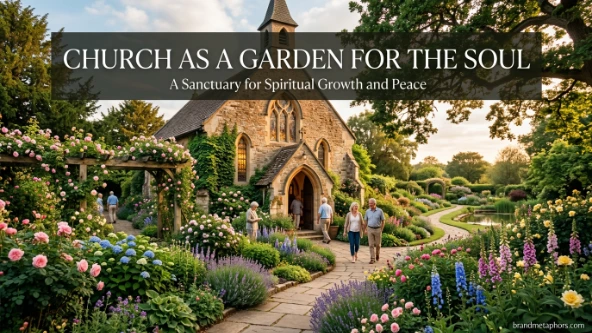
Gardens appear constantly in spiritual and literary traditions. They symbolize growth, patience, beauty, and renewal.
When church is compared to a garden, the focus shifts toward spiritual transformation.
Meaning Behind the Metaphor
A garden requires:
- Care
- Time
- Watering
- Sunlight
- Patience
Faith often grows the same way.
Example Sentence
“The church was a garden where wounded hearts slowly learned how to bloom again.”
Alternative Expressions
- A vineyard of faith
- A field of renewal
- A greenhouse for hope
- Soil for spiritual roots
Sensory Details
Describe the scent of flowers, damp soil, sunlight through leaves, or birds singing nearby. Nature imagery creates calm and emotional richness.
Real-Life Reflection
Many churches literally maintain gardens or outdoor prayer spaces because nature naturally encourages reflection and peace.
Writing Strategy
Pair this metaphor with seasonal imagery:
- Spring = spiritual rebirth
- Summer = flourishing faith
- Autumn = wisdom and maturity
- Winter = endurance and waiting
Church as a Hospital for the Broken
This metaphor has become widely used because it speaks directly to emotional healing.
People often come to church carrying grief, guilt, fear, exhaustion, or loneliness. Calling church a hospital emphasizes compassion instead of perfection.
Core Symbolism
The hospital metaphor suggests:
- Healing
- Restoration
- Compassion
- Support during pain
Example Sentence
“Church is not a museum for saints but a hospital for wounded souls.”
Alternative Ways to Say It
- A shelter for the hurting
- A healing room for the spirit
- A refuge for the weary
- A place where scars are tended
Emotional Power
This metaphor resonates deeply because nearly everyone understands pain. It removes pressure and replaces judgment with empathy.
Mini Story Example
A man who had struggled with addiction once described his church as “the emergency room where my spirit learned to breathe again.” The image feels immediate and human.
Bonus Tip for Social Media
Short metaphorical lines work beautifully in captions:
- “Some people find medicine in silence. Others find it in church pews.”
- “Church is where tired souls learn to walk again.”
Church as an Anchor in Life’s Ocean

Life often feels unpredictable. Storms come suddenly. Plans fail. Relationships shift. In literature, oceans symbolize uncertainty, while anchors symbolize stability.
Meaning of the Anchor Metaphor
This comparison highlights:
- Steadiness
- Security
- Faithfulness
- Emotional grounding
Example Sentence
“In a restless world, the church became an anchor holding people steady against crashing waves.”
Alternative Metaphors
- A rooted tree in strong winds
- A stone foundation
- A mountain that does not move
- A steady hand in rough water
Sensory Imagery
Use sounds and movement:
- Waves crashing
- Wind howling
- Ships rocking
- Chains tightening beneath water
The stronger the storm imagery, the stronger the emotional effect of the anchor.
Interactive Prompt
Write about a difficult season in your life. Then ask yourself:
- What kept you grounded?
- What place or person felt stable?
- Could church be compared to that image?
Church as a Bridge Between Heaven and Earth
This metaphor feels poetic and deeply spiritual. Bridges connect separated places. In faith traditions, church often symbolizes connection between humanity and the divine.
Why It Resonates
A bridge suggests movement, transition, and access. It allows people to cross from one place to another.
Example Sentence
“The old chapel stood like a bridge between earthly sorrow and heavenly hope.”
Alternative Comparisons
- A doorway to grace
- A staircase toward peace
- A window into eternity
- A pathway of light
Literary and Cultural Symbolism
Bridges appear in myths, novels, and spiritual stories around the world. They often represent transformation and discovery.
Writing Exercise
Describe entering a church as if crossing a bridge. Focus on:
- Sounds
- Smells
- Emotions
- Light and shadow
This creates immersive, poetic writing.
Church as a Campfire in the Dark

A campfire gathers people together. It offers warmth, storytelling, protection, and companionship.
This metaphor highlights the emotional comfort and togetherness church can provide.
Symbolic Meaning
The campfire image suggests:
- Warmth
- Community
- Shared stories
- Emotional safety
Example Sentence
“After a long week of loneliness, the church felt like a campfire glowing gently in the darkness.”
Alternative Expressions
- A hearth for the weary
- A warm fire in winter
- A circle of shared light
- A glowing ember of hope
Sensory Richness
This metaphor becomes vivid when you describe:
- Crackling wood
- Orange light
- Cold air outside
- Faces illuminated by firelight
Storytelling Connection
For centuries, humans gathered around fires to tell stories and preserve traditions. Church gatherings often carry a similar sense of shared narrative and belonging.
Church as a Ship Carrying Travelers Together
Ancient Christian symbolism often compared the church to a ship traveling across dangerous waters.
This metaphor emphasizes journey, teamwork, and perseverance.
Deeper Meaning
No one sails entirely alone. Everyone aboard faces storms together.
Example Sentence
“The church moved like an old ship across troubled seas, carrying hopeful travelers toward calmer shores.”
Alternative Versions
- A vessel of faith
- A boat of pilgrims
- A caravan through wilderness
- A train carrying wandering souls
Emotional Details
Ships evoke adventure and uncertainty. Combining them with spiritual imagery creates dramatic and memorable writing.
Historical Reference
Some old churches were even designed architecturally like overturned ships, symbolizing spiritual journey and protection.
Creative Prompt
Imagine life as an ocean voyage. What role does church play?
- Captain?
- Anchor?
- Lifeboat?
- Compass?
Write a short paragraph exploring the metaphor.
Church as a Symphony of Different Voices
Church communities include people of different ages, backgrounds, personalities, and stories. A symphony metaphor beautifully captures unity within diversity.
Symbolic Meaning
Every instrument sounds different, yet together they create harmony.
Example Sentence
“The church was a symphony where imperfect voices blended into something beautiful.”
Alternative Comparisons
- A choir of souls
- An orchestra of faith
- A tapestry of stories
- A mosaic of lives
Sensory and Emotional Details
Include sounds:
- Choir music echoing
- Organs vibrating
- Quiet harmonies rising together
Music naturally creates emotional resonance.
Bonus Tip for Writers
Use rhythm in your sentence structure when discussing music metaphors. Flowing sentences mirror musical movement.
Church as a Home Away from Home
Perhaps the most comforting metaphor of all is the idea of church as home.
Home represents safety, identity, memory, and belonging. Even imperfect homes carry emotional meaning.
Why This Metaphor Endures
Many people search for a place where they feel accepted and understood. Church can become that emotional shelter.
Example Sentence
“For travelers with tired hearts, the church became a home away from home.”
Alternative Ways to Phrase It
- A shelter from the world
- A spiritual living room
- A roof for wandering souls
- A resting place for hearts
Emotional Imagery
Describe familiar sounds:
- Doors opening
- Quiet greetings
- Hymns echoing softly
- The smell of old wood and candles
These details create intimacy and nostalgia.
Real-Life Reflection
Immigrants, students, and lonely individuals often describe faith communities as substitute families far from their original homes.
How to Create Your Own Metaphors for Church
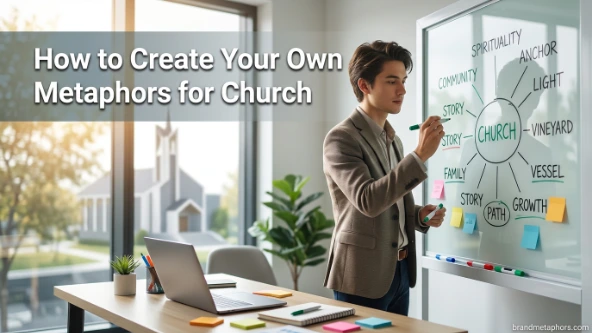
Writing original metaphors can make your work more personal and memorable.
Step 1: Think About Emotion
Ask yourself:
- What feeling does church create?
- Peace? Hope? Healing? Strength?
Step 2: Match That Emotion to an Image
Examples:
- Peace → calm lake
- Hope → sunrise
- Community → woven blanket
Step 3: Add Sensory Detail
Strong metaphors use sight, sound, smell, touch, or movement.
Weak example:
- “Church is comforting.”
Stronger example:
- “Church felt like warm light spilling through a frozen window.”
Step 4: Avoid Overused Phrases
Instead of only using “light” or “home,” experiment with unique comparisons:
- A greenhouse during winter
- A stitched quilt of stories
- A train station for wandering hearts
Bonus Tips for Using Church Metaphors in Writing and Daily Life
In Creative Writing
Use metaphors to reveal emotion subtly instead of explaining everything directly.
In Sermons or Speeches
Simple metaphors are memorable and emotionally engaging.
On Social Media
Short poetic lines often connect strongly with readers.
Examples:
- “Church is where cracked hearts learn to sing again.”
- “Some buildings hold echoes. Churches hold prayers.”
In Journaling
Metaphors can help process emotions more honestly and creatively.
In Conversations
Symbolic language often communicates feelings more deeply than literal explanations.
FAQs About Metaphors for Church
1. What is a metaphor for church?
A metaphor for church is a symbolic comparison that describes church in a creative or emotional way. Examples include calling church a lighthouse, garden, hospital, or family table.
2. Why are church metaphors important in writing?
Church metaphors make spiritual ideas more relatable and vivid. They help readers emotionally connect with themes like faith, healing, hope, and community.
3. What are some popular metaphors for church?
Common metaphors include:
- Lighthouse
- Hospital
- Garden
- Anchor
- Home
- Campfire
- Bridge
- Symphony
4. How can I create my own church metaphor?
Focus on the emotion or experience church represents to you. Then compare it to an object, place, or experience that creates a similar feeling.
5. Can church metaphors be used in poetry and social media?
Absolutely. Metaphors work beautifully in poetry, captions, devotionals, sermons, blogs, and personal reflections because they create memorable imagery.
Conclusion
Church has always been more than brick walls, stained glass, or Sunday rituals. For some, it is a lighthouse during storms. For others, it is a garden, a campfire, a ship, or a family table filled with grace and conversation. Metaphors allow us to capture these layered meanings in ways that feel alive and deeply human.
The beauty of metaphors for church lies in their ability to bridge the visible and invisible. They turn abstract feelings into tangible images readers can see, hear, and feel. A single metaphor can hold comfort, longing, faith, memory, and hope all at once.
Whether you are writing poetry, preparing a sermon, crafting social media captions, or reflecting on your spiritual journey, metaphors can help your words resonate more deeply. They invite readers not just to understand church intellectually, but to experience it emotionally.
And perhaps that is the true power of metaphor itself: it transforms ordinary language into something sacred enough to carry the weight of the human soul.