
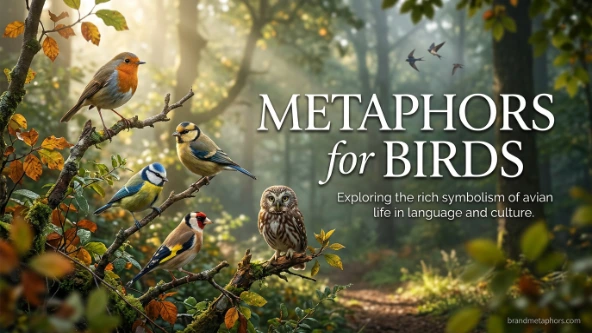
A Sky Full of Meaning: The First Whisper of Wings
Early in the morning, before the world fully wakes, there is a sound that feels older than language itself—the soft flutter of wings cutting through cool air. A bird lifts from a wire, hesitates for a second, then disappears into the vastness of the sky as if it were never bound by gravity at all. Watching this simple moment, you might not just see a bird—you might see hope, freedom, or even your own thoughts escaping the cage of routine.
This is where metaphors for birds begin their magic. Birds have always lived at the intersection of earth and sky, making them perfect symbols for human emotion, imagination, and transformation. In writing, metaphors involving birds allow us to express ideas that feel too big for ordinary words—freedom, fragility, dreams, longing, escape, and even silence.
In this article, we will explore how bird metaphors enrich language, storytelling, poetry, and everyday expression. You’ll discover vivid comparisons, creative examples, storytelling inspiration, and practical exercises to help you use these metaphors in your own writing and communication.
Understanding Metaphors for Birds in Literature and Language
A metaphor is a way of describing one thing in terms of another to create deeper meaning. When we say “the heart is a cage” or “time is a river,” we are not speaking literally—we are painting emotions with imagination.
Bird metaphors work especially well because birds themselves symbolize multiple layered ideas:
- Freedom and escape
- Hope and dreams
- Fragility and vulnerability
- Spirituality and transcendence
- Travel and migration
- Silence and observation
Writers from poetry to modern storytelling use birds to express what cannot easily be said directly. A character “like a bird in a storm” instantly communicates fear and vulnerability without explanation. A dream “spreading wings” suggests growth and possibility.
Bird metaphors are powerful because they connect emotion with motion—something grounded becoming something airborne.
Metaphor 1: “A Bird in a Cage” – The Symbol of Confinement
Meaning and Explanation
One of the most classic bird metaphors, “a bird in a cage,” represents restriction, limitation, or trapped potential. It reflects a being that was made to fly but is held back by invisible or visible barriers.
Example Sentence or Scenario
“She walked through the office every day like a bird in a cage, her dreams pressing against the walls of routine.”
Alternative Expressions
- A soul in chains
- Wings clipped by circumstance
- A dream locked away
- Flight denied by walls
Sensory and Emotional Detail
You can almost hear the faint fluttering inside the cage—the restless movement, the longing for open air, the silence of a world that refuses to open its door.
Mini Storytelling Moment
Imagine a young artist living in a crowded city apartment. Every night, she sketches skies filled with birds escaping windows. She never speaks of it, but each drawing is her silent flight. Her life is ordinary, but her imagination is always airborne.
Why It Works
This metaphor resonates because everyone has felt trapped at some point—by expectations, fear, responsibility, or circumstance.
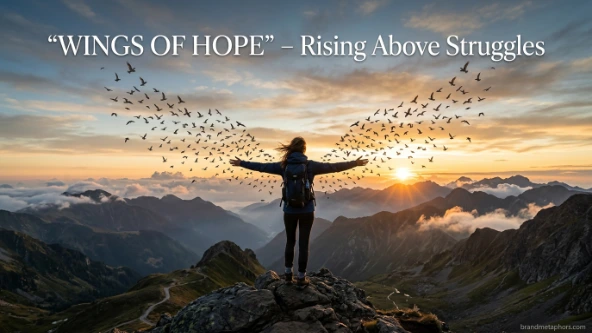
Metaphor 2: “Wings of Hope” – Rising Above Struggles
Meaning and Explanation
“Wings of hope” symbolizes the ability of hope to lift a person beyond hardship. It suggests that hope is not passive—it is active, powerful, and elevating.
Example Sentence or Scenario
“Even after losing everything, he held onto the wings of hope that carried him through the darkest days.”
Alternative Expressions
- Hope that lifts like wind
- Faith with feathers
- Dreams taking flight
- Courage in motion
Sensory and Emotional Detail
Imagine a bird lifting against a strong wind. Each beat of its wings is resistance, effort, and belief. That is hope—not effortless, but determined.
Mini Cultural Reference
In many cultures, birds like doves symbolize peace and renewal. In ancient myths, birds often acted as messengers between earth and heaven, carrying human wishes upward.
Interactive Prompt
Think of a difficult moment in your life. How would you describe the hope that helped you move forward using a bird metaphor? Try writing one sentence.
Metaphor 3: “Feathers of Memory” – The Fragile Past
Meaning and Explanation
“Feathers of memory” represents how memories are light, delicate, and easily scattered. Some stay with us, while others drift away like feathers in the wind.
Example Sentence or Scenario
“Her childhood memories floated through her mind like feathers of memory, soft and fading at the edges.”
Alternative Expressions
- Fragments of the past like drifting wings
- Memories as light as down
- Echoes carried on feathers
- The gentle fall of remembrance
Sensory and Emotional Detail
Feathers don’t fall heavily—they float, twist, and disappear slowly. Similarly, memories are not always sharp; they blur, soften, and sometimes vanish into emotional distance.
Mini Storytelling Moment
An old man sits on a bench feeding pigeons. Each bird reminds him of someone he once knew. He doesn’t remember names clearly anymore, but feelings return like feathers brushing against his heart.
Bonus Writing Tip
Use this metaphor when describing nostalgia, aging, or emotional reflection in storytelling or poetry.
Birds as Symbols of Freedom and Escape in Creative Writing
Bird metaphors are most commonly linked with freedom. This is because birds are one of the few creatures that naturally inhabit the sky—a space humans can only dream of reaching without help.
Writers often use birds to represent:
- Breaking free from restrictions
- Traveling beyond boundaries
- Emotional liberation
- Spiritual awakening
Example in Writing
“The moment she left the small town, she felt like a bird finally released into an endless sky.”
Creative Exercise
Write three sentences describing your personal idea of freedom using different bird metaphors. Try not to repeat the same bird image twice.
Birds as Messengers: Communication Beyond Words
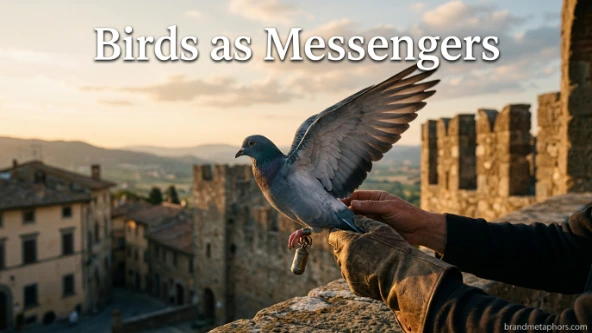
Across mythology and literature, birds often act as messengers. From ravens in folklore to doves in spiritual texts, they represent communication between worlds, people, or emotions.
Meaning and Explanation
Bird metaphors for communication suggest messages that are subtle, intuitive, or emotional rather than spoken.
Example Sentence
“His silence carried messages like a bird crossing unseen skies.”
Alternative Expressions
- Words carried on wings
- Silent messages in flight
- Thoughts delivered by wind-birds
- Emotions soaring between minds
Sensory Detail
Imagine a bird flying from one horizon to another, unseen but purposeful. That is how unspoken emotions travel between people.
Real-Life Connection
Have you ever thought about someone just before they contacted you? Bird metaphors capture that mysterious sense of emotional connection.
Birds in Flight: Growth, Transformation, and Change
Flight represents change—moving from one state of being to another. Bird metaphors often symbolize personal growth or transformation.
Example Sentence
“She wasn’t the same person anymore; something inside her had learned to fly.”
Alternative Expressions
- Wings of transformation
- Rising into new selves
- Flight of becoming
- Growth in motion
Mini Storytelling
A student struggling with self-doubt slowly begins to improve. Each success feels like a small lift off the ground until one day, confidence replaces fear. She doesn’t notice the moment she starts flying—it happens quietly.
Bonus Tip for Writers
Use bird flight metaphors when describing character development arcs in fiction or motivational writing.
Interactive Practice: Create Your Own Bird Metaphors
Try these creative exercises:
- Emotion Flight Exercise Choose an emotion (joy, sadness, fear). Now describe it as a bird. What kind of bird is it? How does it move?
- Daily Life Transformation Take a simple daily activity (walking to school, working, studying). Rewrite it using bird metaphors.
- Metaphor Expansion Game Start with “My thoughts are birds…” and complete the sentence in three different ways.
These exercises help train your imagination to think symbolically, improving both creative writing and expressive communication.
Birds in Poetry, Culture, and Storytelling Traditions
Birds appear in literature across the world. In poetry, they often symbolize longing or unreachable beauty. In folklore, they may represent souls, omens, or divine messages.
For example:
- In Romantic poetry, birds often reflect emotional intensity and nature’s beauty.
- In Eastern traditions, cranes symbolize longevity and wisdom.
- In modern storytelling, birds often represent inner freedom or psychological escape.
Why This Matters
Understanding cultural meanings helps you use bird metaphors more effectively and meaningfully in writing.
Using Bird Metaphors in Writing, Social Media, and Daily Life
Bird metaphors are not just for poetry—they are useful everywhere.
In Writing
Use them to add emotional depth to stories, essays, or descriptions.
In Social Media
Instead of saying “I feel free,” you might say:
- “Today, my thoughts finally learned how to fly.”
In Daily Communication
Metaphors make language more expressive and memorable:
- “My mind feels like a restless bird today.”
Bonus Tip
Don’t overuse metaphors. One strong bird image is more powerful than many weak ones.
Final Reflection: What Birds Teach Us About Being Human
Birds are more than symbols—they are reflections of human emotion. They remind us that even when we feel grounded, we still carry the desire to rise. Even when life feels like a cage, imagination can open invisible doors.
Metaphors for birds help us translate invisible feelings into visible language. They allow us to speak not just with words, but with wings of imagination.
FAQs About Metaphors for Birds
1. What are bird metaphors used for?
Bird metaphors are used to express emotions like freedom, hope, memory, and transformation in a vivid and symbolic way.
2. Why are birds common in literature?
Because birds naturally symbolize flight, freedom, and connection between earth and sky, making them powerful literary symbols.
3. Can bird metaphors be used in everyday speech?
Yes, they can make everyday communication more expressive and poetic.
4. What is the most common bird metaphor?
“A bird in a cage” is one of the most common metaphors for restriction or lack of freedom.
5. How can I create my own bird metaphors?
Start with an emotion or idea, then imagine how a bird would represent or behave like that concept.
Conclusion
Bird metaphors open a window into imagination where feelings take flight and thoughts become wings. Whether expressing freedom, memory, hope, or transformation, birds give language a sense of movement and depth that ordinary words cannot achieve.
When you next look at a bird in the sky, don’t just see feathers and flight—see stories waiting to be told, emotions waiting to be shaped, and metaphors waiting to be written.