
Introduction: Walking Into the Language of Trees
The forest was quiet, but not truly silent. Leaves whispered overhead like old friends sharing secrets. Damp earth breathed beneath wandering feet. Somewhere in the distance, a branch snapped, and suddenly the woods felt alive—watching, listening, waiting. Forests have always stirred the human imagination. They appear in myths, fairy tales, poems, films, and dreams because they symbolize something larger than trees alone. A forest can represent mystery, danger, peace, growth, confusion, wisdom, or even the human soul itself.
That is why metaphors for a forest are so powerful in writing and everyday speech. Instead of simply saying “the forest was dark,” you can say “the forest was a cathedral of shadows.” One phrase paints an entire emotional landscape. Good metaphors help readers feel the texture of moss, hear the wind in branches, and sense hidden stories between the trees.
Whether you are a writer, student, poet, teacher, or creative thinker, learning forest metaphors can transform your language. They make storytelling richer, social media captions more memorable, and conversations more expressive. In this guide, you will discover imaginative metaphors for a forest, practical writing tips, creative exercises, literary inspiration, and ways to use these comparisons in daily life.
So step carefully onto the leafy trail. The woods of language are deep, beautiful, and full of surprises.
Why Forest Metaphors Matter in Writing and Storytelling
Forests are more than landscapes. They are emotional worlds. Writers use them because forests naturally carry symbolism. A single image of dense trees can suggest mystery, isolation, adventure, fear, or healing.
Think about famous stories. Amid fairy tales, forests often represent uncertainty or transformation. In fantasy novels, they become magical realms. In poetry, forests symbolize reflection and inner journeys. Even in modern films, characters enter forests when they are searching for answers or facing emotional change.
A strong metaphor allows readers to connect instantly with these feelings.
For example:
- “The forest was a sleeping giant.”
- “The forest spread like an emerald ocean.”
- “The forest was a maze woven by nature.”
Each metaphor creates a different emotional effect. One feels powerful, another peaceful, and another confusing.
Forest metaphors also help writers avoid repetitive descriptions. Instead of constantly saying “thick woods” or “many trees,” you can create vivid images that stay in the reader’s mind long after reading.
Beyond literature, these metaphors appear in everyday speech:
- “Life feels like a dark forest.”
- “My thoughts are tangled like jungle vines.”
- “Her calmness was a quiet woodland.”
These comparisons connect nature to human emotion, making language more meaningful and memorable.
The Forest as a Living Cathedral
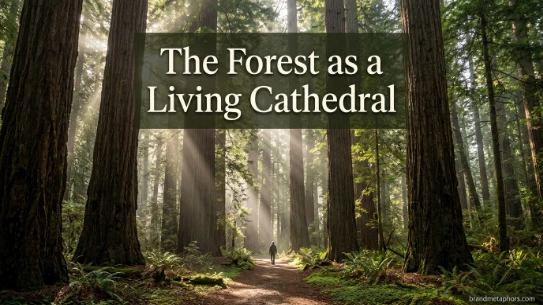
One of the most popular metaphors for a forest is comparing it to a cathedral. Tall trees resemble towering pillars. Sunlight filters through branches like stained glass windows. The silence feels sacred.
Meaning Behind the Metaphor
This metaphor emphasizes awe, peace, spirituality, and reverence. Forests often make people feel small in the best possible way.
Example Sentence
“The pine forest rose around us like a green cathedral where every whisper sounded like prayer.”
Alternative Expressions
- Temple of leaves
- Sanctuary of trees
- Nature’s chapel
- Woodland cathedral
Sensory Details
Imagine cool air carrying the scent of pine resin. Shafts of sunlight drift through mist like golden ribbons. Footsteps soften against mossy ground.
Mini Storytelling Example
A tired traveler hikes alone after months in a noisy city. As he enters the forest, the sounds of traffic disappear. The trees stand tall and silent, and suddenly the woods feel holier than any building he has ever entered.
This metaphor works beautifully in poetry, fantasy writing, and reflective personal essays.
Forest Metaphors for Mystery and Darkness
Forests often symbolize the unknown. Ancient woods hide paths, creatures, and secrets. That makes them perfect metaphors for confusion, fear, or uncertainty.
Popular Metaphors
- A forest is a maze of shadows
- A forest is a tangled dream
- A forest is a locked diary
- A forest is a mouth swallowing light
Meaning and Emotional Tone
These metaphors create suspense and tension. They work well in thrillers, gothic fiction, horror stories, or emotional writing about uncertainty.
Example Sentence
“The forest swallowed the road like a secret refusing to be spoken.”
Alternative Phrases
- Jungle of confusion
- Wilderness of fear
- Labyrinth of branches
- Ocean of darkness
Cultural and Literary References
In many old folktales, characters enter forests before major transformations happen. In stories like Hansel and Gretel or Little Red Riding Hood, the woods symbolize danger and the unknown.
Even modern fantasy novels continue this tradition. Dark forests often represent emotional struggles or hidden truths.
Writing Tip
When using mysterious forest metaphors, focus on sensory details:
- Rustling leaves
- Twisting roots
- Dim light
- Sudden silence
- Cold mist
These details deepen the emotional atmosphere.
The Forest as a Symbol of Growth and Life
Not every forest metaphor needs darkness. Forests also symbolize renewal, resilience, and growth. Trees survive storms, seasons, droughts, and time itself.
Common Growth Metaphors
- A forest is a breathing world
- A forest is nature’s heartbeat
- A forest is an orchestra of life
- A forest is a tapestry of growth
Example Sentence
“After years of hardship, her confidence grew like a forest after rain.”
Emotional Meaning
These metaphors communicate healing, hope, and endurance. They are perfect for motivational writing, self-growth content, and emotional storytelling.
Real-Life Reflection
Many people describe walking in forests as emotionally restorative. Scientists even study “forest bathing,” a practice inspired by spending mindful time among trees to reduce stress and improve well-being.
This connection explains why forest metaphors often feel deeply comforting.
Alternative Expressions
- Garden of resilience
- River of roots
- Green heartbeat
- Living tapestry
Beautiful Metaphors for a Forest in Poetry
Poets love forests because they combine movement, sound, color, and emotion in endless ways.
Here are some poetic metaphors for inspiration:
MetaphorMeaningThe forest was a sea of emerald wavesSuggests movement and beautyThe woods were a blanket of whispersCreates softness and mysteryThe forest stood like an ancient kingdomImplies age and majestyThe trees were frozen dancersEvokes elegance and stillnessThe woods were a choir of leavesEmphasizes sound and harmony
Example Poetic Line
“The forest breathed beneath the moon like a sleeping animal.”
Bonus Tip for Poets
Combine metaphors with personification:
- Trees stretching their arms
- Branches whispering gossip
- Roots clutching the earth
- Leaves applauding the wind
This creates stronger emotional imagery.
Creative Prompt
Write three lines describing a forest without using the words tree, woods, or green. Force yourself to rely entirely on metaphor and sensory detail.
Three Powerful Forest Metaphor Examples Explained
Let’s examine three detailed metaphors more deeply.
1. “The Forest Was an Emerald Ocean”
Meaning
This metaphor compares swaying treetops to waves. It emphasizes vastness, beauty, and movement.
Example Scenario
A traveler looks down from a mountain and sees endless green stretching to the horizon.
Alternative Versions
- Sea of pines
- Ocean of leaves
- Green tide
Emotional Effect
Peaceful, majestic, expansive.
2. “The Forest Was a Sleeping Giant”
Meaning
This metaphor gives the forest power and hidden life. It suggests the woods are calm now but capable of awakening.
Example Scenario
A storm approaches while the forest remains eerily still.
Alternative Versions
- Slumbering beast
- Resting titan
- Quiet giant
Emotional Effect
Powerful, mysterious, slightly intimidating.
3. “The Forest Was a Labyrinth”
Meaning
This comparison highlights confusion, complexity, or emotional struggle.
Example Scenario
Someone lost both physically and emotionally wanders through twisting paths.
Alternative Versions
- Maze of branches
- Knot of shadows
- Tangled puzzle
Emotional Effect
Claustrophobic, suspenseful, uncertain.
Using Forest Metaphors in Social Media and Everyday Life
Forest metaphors are not limited to novels and poetry. They can enrich captions, journaling, speeches, and conversations.
Social Media Caption Ideas
- “Lost in an emerald maze.”
- “The forest teaches silence.”
- “Wandering through nature’s cathedral.”
- “Among trees, the soul remembers itself.”
Everyday Speech Examples
- “My schedule is a jungle this week.”
- “Her thoughts were tangled like vines.”
- “That meeting felt like wandering through foggy woods.”
Bonus Tip
Short metaphors work especially well online because they create emotional imagery quickly.
For Instagram, Pinterest, or TikTok captions, pair forest metaphors with sensory words:
- Misty
- Wild
- Whispering
- Ancient
- Mossy
- Hidden
These details increase emotional engagement.
How to Create Your Own Forest Metaphors
Writing original metaphors is easier than many people think. The secret is observation.
Ask yourself:
- What does the forest look like?
- What emotion does it create?
- What else in life feels similar?
Simple Formula
Forest + Emotion/Shape/Movement = Metaphor
Examples:
- Forest + mystery = “a locked diary”
- Forest + movement = “an emerald ocean”
- Forest + silence = “a sleeping cathedral”
Practice Exercise
Complete these prompts:
- The forest was a __________.
- The trees moved like __________.
- The woods felt like __________.
- The branches reached out like __________.
Do not overthink. Creativity grows through experimentation.
Sensory Writing Challenge
Describe a forest using:
- One sound
- One smell
- One texture
- One emotional feeling
Then combine them into a metaphor.
Example: “The forest smelled like forgotten rain and felt like a memory wrapped in moss.”
Forest Metaphors in Literature, Mythology, and Culture
Throughout history, forests have carried symbolic meaning.
In Mythology
Ancient cultures viewed forests as sacred spaces filled with spirits, gods, or magic. Druids worshipped in groves. Norse mythology described mystical woods connected to other realms.
In Fairy Tales
Forests often mark the beginning of transformation. Characters enter the woods innocent and emerge changed.
In Modern Literature
Writers still use forests symbolically:
- To represent emotional confusion
- To symbolize freedom
- To create danger
- To explore identity
Real-Life Symbolism
Even today, people retreat to forests for healing, solitude, and reflection. That emotional connection keeps forest metaphors timeless.
Mini Reflection
Think about the last time you walked through trees. Did the forest feel peaceful? Lonely? Magical? Heavy? The emotions you experienced can become the foundation of your own metaphors.
Creative Writing Exercises Using Forest Metaphors
Practice strengthens imagination. Try these exercises to sharpen your metaphor skills.
Exercise 1: Emotional Forests
Describe the same forest in three different emotional tones:
- Joyful
- Frightening
- Lonely
Notice how the metaphors change.
Exercise 2: Character Perspective
Imagine:
- A child entering the forest
- A lost traveler
- A hunter
- A poet
Each person would describe the woods differently.
Example: A child might call the forest “a kingdom of giants,” while a hunter might call it “a breathing camouflage.”
Exercise 3: Seasonal Forest Metaphors
Write one metaphor for each season:
- Spring
- Summer
- Autumn
- Winter
Example: “Winter turned the forest into a frozen kingdom of glass.”
Exercise 4: Five-Sense Description
Use all five senses in one paragraph about a forest.
Focus on:
- Smell of wet bark
- Sound of birds
- Touch of moss
- Taste of cold air
- Sight of shifting light
This creates immersive imagery.
Bonus Tips for Writing Better Forest Descriptions
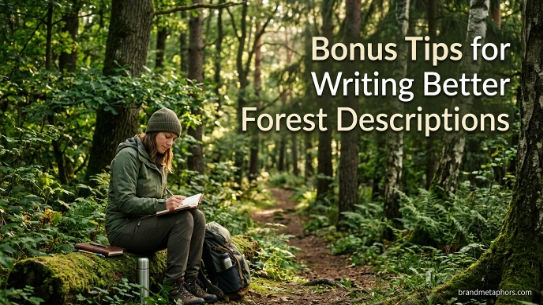
Strong metaphors become stronger with careful writing techniques.
1. Avoid Overused Comparisons
Instead of “the forest was dark,” try:
- “The woods folded around us like smoke.”
- “The trees stitched shadows across the ground.”
Fresh imagery feels more memorable.
2. Mix Metaphor With Movement
Static descriptions can feel dull.
Instead of: “The forest was beautiful.”
Try: “The forest rippled in the wind like a green river.”
Movement brings scenes alive.
3. Use Emotional Contrast
Combine beauty with danger.
Example: “The forest looked peaceful, but its silence felt hungry.”
Contrast creates tension and depth.
4. Read Nature Poetry
Poets often create extraordinary metaphors. Reading them expands your imagination and vocabulary.
Look for works inspired by:
- Mountains
- Rivers
- Seasons
- Wilderness
Nature writing trains your eye for detail.
5. Keep a Metaphor Journal
Whenever you notice a striking image, write it down.
Examples:
- Clouds like torn cotton
- Fog like spilled milk
- Trees like watchful soldiers
Over time, you will build your own library of imagery.
Conclusion
Forests have fascinated humanity for centuries because they mirror our inner worlds. They can feel peaceful or threatening, ancient or alive, comforting or mysterious. That emotional richness makes them perfect subjects for metaphor.
When you describe a forest as an emerald ocean, a cathedral of shadows, or a sleeping giant, you do more than decorate language. You invite readers into an experience. You transform ordinary scenery into emotion, memory, and imagination.
The best forest metaphors are not only seen—they are felt. They carry the scent of pine, the hush of moss underfoot, and the eerie beauty of light slipping through branches. Whether you are writing poetry, stories, captions, journals, or speeches, these metaphors can make your words vivid and unforgettable.
So the next time you wander through woods, pause for a moment. Listen carefully. Somewhere between the rustling leaves and quiet shadows, language is waiting to bloom.
FAQs About Metaphors for a Forest
1. What is a metaphor for a forest?
A metaphor for a forest is a comparison that describes the forest as something else to create imagery or emotion. For example, calling a forest “an emerald ocean” emphasizes its vastness and beauty.
2. Why are forests commonly used in metaphors?
Forests symbolize mystery, growth, danger, peace, and transformation. Because they carry strong emotional and cultural meanings, they work well in literature and everyday language.
3. What are some good poetic metaphors for a forest?
Popular poetic metaphors include:
- A cathedral of trees
- A sea of green
- A maze of shadows
- A sleeping giant
- A choir of leaves
4. How can I create original forest metaphors?
Focus on emotions, movement, and sensory details. Ask yourself what the forest reminds you of emotionally or visually, then build comparisons from those observations.
5. Can forest metaphors be used outside creative writing?
Yes. Forest metaphors work well in speeches, journaling, social media captions, motivational writing, and everyday conversation because they make language more vivid and relatable.