
Introduction: The Night the Blank Page Felt Like a Locked Door
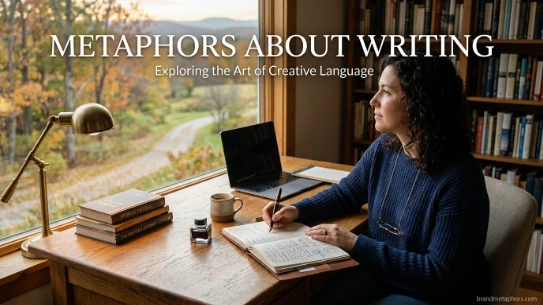
The room was quiet except for the tapping of rain against the window. A writer sat hunched over a notebook, staring at a page so empty it almost seemed to stare back. The coffee had gone cold. The cursor blinked like a tiny impatient heartbeat. Every sentence felt trapped somewhere behind a wall of thought.
Then one line appeared:
“Writing is like digging for buried treasure with a spoon.”
Suddenly, the page no longer looked empty. It looked like earth waiting to be uncovered.
That is the strange magic of metaphors about writing. They transform an abstract process into something we can see, hear, taste, and feel. Writing becomes a river, a battlefield, a dance, a garden, or even a lighthouse in a storm. These comparisons help writers explain frustration, creativity, inspiration, and storytelling in ways ordinary language often cannot.
Whether you are a student, novelist, blogger, poet, or someone trying to write better captions online, understanding metaphors for writing can sharpen your creativity and deepen your emotional expression. In this guide, you will explore vivid metaphors, practical examples, creative exercises, and imaginative ways to use them in daily life.
So sharpen your pencil like a sword and step into the world where words become living things.
Why Metaphors About Writing Matter
Writing is invisible work. Thoughts swirl inside the mind before becoming marks on paper or glowing pixels on a screen. Because the process is difficult to explain directly, writers often rely on metaphors.
A metaphor gives shape to feeling.
Instead of saying writing is “hard,” someone might say:
- “Writing is climbing a mountain in the fog.”
- “Writing is untangling a knot in the dark.”
- “Writing is building a bridge between strangers.”
Each image creates emotional understanding instantly.
Metaphors also help readers remember ideas longer. A student may forget grammar rules, but they will remember that “editing is pruning a tree.” The image sticks.
Great authors have used writing metaphors for centuries. Ernest Hemingway compared writing honestly to bleeding. Virginia Woolf described thoughts flowing like waves. Stephen King famously called writing “telepathy.”
These comparisons endure because they feel true.
Writing as a Journey: The Most Timeless Writing Metaphor
One of the oldest metaphors about writing compares it to a journey.
The writer becomes a traveler. The story becomes a road.
Sometimes the road is smooth and golden beneath the sun. Sometimes it disappears into dark woods. Every paragraph feels like another mile traveled.
Meaning Behind the Metaphor
This metaphor works because writing unfolds step by step. You rarely know the full destination at the beginning.
A novel may start with one idea and end somewhere entirely unexpected.
Example Scenario
A student beginning an essay may feel uncertain at first. After writing several paragraphs, clarity emerges gradually like signs appearing along a highway.
Example sentence:
“Writing the memoir felt like wandering through unfamiliar cities, discovering pieces of myself at every turn.”
Alternative Ways to Express It
- Writing is a road trip.
- Writing is crossing a desert.
- Writing is sailing toward an unseen shore.
- Writing is hiking through fog.
Sensory Details
Think about dusty boots, rustling maps, distant horizons, and aching legs. Those sensations mirror the emotional exhaustion and excitement of creating something meaningful.
Mini Storytelling Example
Many famous adventure novels mirror the writing process itself. The Odyssey is not only about Odysseus traveling home; it also reflects the winding path storytellers travel while shaping narratives.
Creative Exercise
Write three sentences describing your current writing project as a journey. That obstacles appear? What weather surrounds you? What destination waits ahead?
Writing as Gardening: Growing Ideas Slowly

Some stories do not explode into existence. They grow quietly.
That is why many writers compare writing to gardening.
Seeds become ideas. Paragraphs become stems. Revision becomes watering and pruning.
Why This Metaphor Feels Powerful
Gardens require patience. So does writing.
You cannot rush a flower into blooming, just as you cannot force creativity instantly.
Example Sentence
“Her poetry collection grew like a garden after winter, slowly revealing color and fragrance.”
Alternative Metaphors
- Writing is planting seeds.
- Editing is pulling weeds.
- Creativity is sunlight.
- Drafts are seasons.
Emotional Texture
This metaphor carries calmness and hope. Even when progress seems invisible, growth may still be happening underground.
Real-Life Writer Connection
J. R. R. Tolkien spent years slowly cultivating the world of Middle-earth, much like tending an enormous literary garden.
Interactive Prompt
Imagine your current writing project as a garden.
Answer these questions:
- What type of garden is it?
- Which ideas are blooming?
- Which weeds need removing?
- What parts still need sunlight?
Bonus Tip for Social Media Writers
Use gardening metaphors in captions for relatable emotional impact:
“Some dreams bloom slowly. Keep watering them.”
Writing as Painting: Creating Images with Words
Painters use brushes. Writers use language.
Both artists create pictures.
This metaphor emphasizes the visual nature of storytelling. Great writing allows readers to see scenes vividly inside their minds.
What This Metaphor Teaches Writers
Specific details matter. Colors, textures, shadows, and movement can transform plain sentences into immersive experiences.
Example Sentence
“The novelist painted grief in shades of gray and silver.”
Alternative Expressions
- Words are brushstrokes.
- Sentences are colors.
- Dialogue adds contrast.
- Imagery creates texture.
Sensory Layer
Imagine the smell of paint, the scrape of brushes, and sunlight spilling across a canvas. Those sensory details can inspire richer descriptions in your own work.
Literary Reference
F. Scott Fitzgerald painted dazzling emotional landscapes in The Great Gatsby using luxurious imagery and symbolism.
Practice Exercise
Describe a rainy street without using the word “rain.”
Paint the scene entirely through imagery, sound, and movement.
Writing as Cooking: Mixing Ingredients into Meaning
Writing and cooking share surprising similarities.
Both require ingredients, timing, experimentation, and intuition.
A weak story may lack flavor. A rushed article may feel undercooked.
Why This Metaphor Works
Every piece of writing combines multiple ingredients:
- Vocabulary
- Emotion
- Structure
- Tone
- Rhythm
- Imagination
Too much of one ingredient can overwhelm the whole piece.
Example Sentence
“The essay simmered slowly until every idea blended into something rich and satisfying.”
Alternative Comparisons
- Dialogue is seasoning.
- Plot twists are spices.
- Editing removes excess fat.
- First drafts are messy kitchens.
Emotional and Sensory Detail
Think about sizzling pans, rising steam, cinnamon in the air, or dough being kneaded by hand. Writing often feels equally physical and immersive.
Mini Storytelling Example
Many family recipes evolve over generations. Writing does too. A writer may revise the same story repeatedly until it finally tastes right emotionally.
Interactive Prompt
Describe your writing style as a meal.
Is it spicy? Sweet? Comforting? Chaotic? Minimalist?
Writing as Building a House

Some writers approach creativity like architects.
Every chapter becomes a room. Every sentence acts as a brick.
Without structure, the entire story may collapse.
Meaning of the Metaphor
This metaphor highlights organization and planning.
Strong writing needs foundations, frameworks, and support systems.
Example Sentence
“She built the novel carefully, one chapter at a time, until the structure stood solid and complete.”
Alternative Versions
- Introductions are front doors.
- Paragraphs are hallways.
- Conclusions are rooftops.
- Outlines are blueprints.
Emotional Dimension
Building something sturdy creates pride. Writers often feel deeply attached to the worlds they construct.
Literary Example
George R. R. Martin created a massive narrative structure in A Song of Ice and Fire with intricate interconnected “rooms” of storytelling.
Creative Exercise
Sketch your story or article as a house.
Where are the windows? Which room contains the emotional center?
Writing as War: Battling the Blank Page
Not every writing metaphor feels peaceful.
Sometimes writing feels brutal.
The blinking cursor becomes an enemy. Self-doubt attacks from every direction. Deadlines march closer like approaching armies.
Why Writers Relate to This Metaphor
Creative work often involves struggle.
You battle distractions, perfectionism, exhaustion, and fear.
Example Sentence
“Every paragraph felt like a battlefield between inspiration and doubt.”
Alternative Expressions
- Writer’s block is an enemy fortress.
- Editing is sharpening weapons.
- Deadlines are ticking bombs.
- Revisions are scars.
Emotional Intensity
This metaphor captures tension, adrenaline, frustration, and determination.
Cultural Reference
Sylvia Plath often portrayed emotional struggle through fierce and haunting imagery in her poetry.
Practice Prompt
Write about your biggest writing challenge as if it were a mythical monster.
How would you defeat it?
Writing as Music: Finding Rhythm in Language
Some sentences sing.
Others stumble awkwardly.
That is why many writers compare writing to music.
The Meaning Behind the Comparison
Writing has rhythm, tone, pacing, and harmony. Even silent reading carries sound internally.
Good prose flows naturally like melody.
Example Sentence
“His dialogue danced like jazz, unpredictable yet perfectly timed.”
Alternative Comparisons
- Sentences are notes.
- Paragraphs are verses.
- Stories are symphonies.
- Punctuation controls tempo.
Sensory Detail
Imagine violin strings trembling, drums echoing, or piano notes drifting through darkness. Language can create the same emotional resonance.
Literary Example
Maya Angelou infused her writing with musical cadence and spoken-word rhythm.
Interactive Exercise
Read one paragraph from your writing aloud.
Does it sound smooth or awkward? Where does the rhythm break?
Bonus Tip for Everyday Communication
Musical writing works beautifully in speeches, captions, and storytelling posts online because rhythm keeps readers engaged.
Writing as Fishing: Catching Elusive Ideas

Ideas rarely arrive on command.
Sometimes writers wait patiently for inspiration like fishermen beside quiet water.
Why This Metaphor Resonates
Creativity often requires stillness and patience.
You cannot force the perfect idea to bite.
Example Sentence
“She sat quietly for hours, fishing for the right opening sentence.”
Alternative Expressions
- Ideas swim beneath the surface.
- Inspiration bites unexpectedly.
- Drafts are tangled nets.
- Journals are tackle boxes.
Emotional Feeling
This metaphor creates peaceful anticipation mixed with uncertainty.
Mini Storytelling Moment
Many writers describe sudden inspiration arriving unexpectedly during walks, showers, or sleepless nights, much like catching a fish when least expected.
Creative Prompt
Imagine your next story idea as a mysterious sea creature. Describe how you discover it.
Writing as Magic: Turning Thoughts into Reality
Few things feel stranger than writing.
Tiny black symbols on paper somehow create laughter, tears, fear, and love inside another person’s mind.
That almost feels supernatural.
Why Writers Love This Metaphor
Writing transforms invisible thoughts into emotional experiences.
It creates worlds from nothing.
Example Sentence
“The poet stitched spells from ordinary words.”
Alternative Comparisons
- Stories are enchantments.
- Books are portals.
- Pens are wands.
- Imagination is alchemy.
Emotional and Sensory Imagery
Picture candlelight flickering across ancient pages, ink glowing like moonwater, or libraries whispering with hidden power.
Literary Reference
J. K. Rowling built an entire cultural phenomenon around the magical power of words in Harry Potter and the Philosopher’s Stone.
Practice Exercise
Write a paragraph where writing itself becomes literal magic.
What happens when someone writes a single sentence?
How to Create Your Own Metaphors About Writing
The strongest metaphors often come from personal experience.
Instead of copying common comparisons, look at your own life.
Ask yourself:
- What does writing physically feel like?
- What activity resembles your creative process?
- What emotions appear while drafting?
Simple Formula for Building Metaphors
Use this structure:
Writing is like ______ because ______.
Examples:
- Writing is like surfing because balance matters.
- Writing is like stitching because details hold everything together.
- Writing is like mining because valuable ideas hide underground.
Three Quick Tips
1. Use Sensory Details
Good metaphors involve texture, sound, smell, movement, or temperature.
2. Avoid Overused Comparisons
Try fresh imagery beyond “writing is a journey.”
3. Match the Emotion
A joyful writing experience may resemble dancing, while a stressful one may resemble surviving a storm.
Interactive Challenge
Create three original metaphors for writing based on:
- Nature
- Sports
- Food
Keep each one under fifteen words.
Best Ways to Use Writing Metaphors in Daily Life
Metaphors are not only for novels or poetry. They can strengthen communication everywhere.
In Blogging
Creative metaphors make articles memorable and emotionally engaging.
In Social Media Captions
Short metaphorical lines often feel more relatable and shareable.
Example:
“My thoughts were tangled headphones until writing sorted them out.”
In Speeches
Metaphors help audiences visualize abstract ideas quickly.
In Journaling
Comparisons reveal emotions that direct language sometimes hides.
In Teaching
Teachers often use metaphors to explain writing structure, creativity, and revision more clearly to students.
FAQs About Metaphors About Writing
What is a metaphor about writing?
A metaphor about writing compares the writing process to another experience, object, or activity to create deeper understanding and vivid imagery.
Why do writers use metaphors?
Writers use metaphors to make abstract emotions and ideas easier to imagine, feel, and remember.
What are common metaphors for writing?
Popular metaphors include writing as a journey, garden, painting, battle, recipe, or form of magic.
How can metaphors improve my writing?
Metaphors add emotion, creativity, rhythm, and visual imagery, helping readers connect more deeply with your words.
Can metaphors be used in everyday communication?
Yes. Metaphors strengthen storytelling, social media captions, speeches, conversations, and even business writing.
Conclusion
For some people, writing feels like planting seeds beneath spring soil. For others, it feels like wrestling storms at sea. One writer paints with words while another cooks emotions into carefully seasoned paragraphs.
That diversity is the beauty of metaphors about writing.
They remind us that creativity is not mechanical. It is alive, emotional, and deeply human. A metaphor can turn frustration into understanding or transform ordinary language into something unforgettable.
The next time you sit before a blank page, ask yourself one simple question:
What does writing feel like today?
Maybe it feels like lighting a lantern in darkness.
Maybe it feels like building wings from paper.
Or maybe, just maybe, it feels like opening a hidden door and discovering an entirely new world waiting behind it.