
Introduction
The first time a child realizes the world is larger than their backyard, something shifts quietly inside them. Maybe it happens on the first day of school, when tiny hands loosen their grip on a parent’s sleeve. Maybe it happens during a heartbreak, a graduation, or a sleepless night spent wondering who they are becoming. Growing up rarely arrives all at once. It creeps in like dawn—slow, golden, almost invisible until suddenly the sky has changed.
That is why metaphors about growing up feel so powerful. They give shape to emotions that are otherwise difficult to explain. Life becomes a winding road, a changing season, a butterfly leaving its cocoon. Through metaphor, we understand maturity not as a single event, but as a transformation filled with beauty, fear, mistakes, and discovery.
Writers, poets, teachers, and everyday storytellers use metaphors to capture the confusing magic of becoming older. These comparisons help us describe childhood, adulthood, identity, and personal growth in vivid and emotional ways. Whether you are writing creatively, posting on social media, journaling, or simply reflecting on life, metaphors can turn ordinary thoughts into unforgettable images.
In this article, you’ll explore meaningful metaphors about growing up, learn how to use them naturally, and discover creative exercises to build your own. Along the way, you’ll find storytelling ideas, literary inspiration, and practical tips to make your writing more expressive and memorable.
Growing Up as a Journey on a Long Road
One of the most common metaphors about growing up compares life to a road or journey. It works because growing older often feels like traveling through unfamiliar places while learning along the way.
A child begins on a smooth path guided by others. As time passes, the road bends. Some parts become steep hills. Others open into breathtaking landscapes. Mistakes become detours, and wisdom becomes a map.
Meaning Behind the Metaphor
This metaphor highlights:
- Personal growth
- Unexpected challenges
- Emotional discovery
- The idea that life keeps moving forward
Example Sentence
“Growing up felt like walking down a foggy road with only a few steps visible at a time.”
Alternative Expressions
- Life is a winding highway
- Adulthood is an unmarked trail
- Maturity is a long train ride
- Youth is the first mile of a marathon
Sensory Details
Imagine dusty shoes, endless horizons, rain-soaked roads, and signposts pointing in uncertain directions. These images make the metaphor feel alive.
Mini Storytelling Example
In many coming-of-age novels, characters physically travel while emotionally changing. In the book The Alchemist, Santiago’s journey across deserts mirrors his inner growth. The road becomes both literal and symbolic.
Creative Exercise
Write about a moment in your life as if it were part of a road trip. Was it a crossroads? A bridge? A dead end? A scenic overlook?
Bonus Tip for Social Media
Short road metaphors work beautifully in captions:
- “Still figuring out the map.”
- “Growing up is learning to drive your own direction.”
Metaphors About Growing Up Through the Seasons
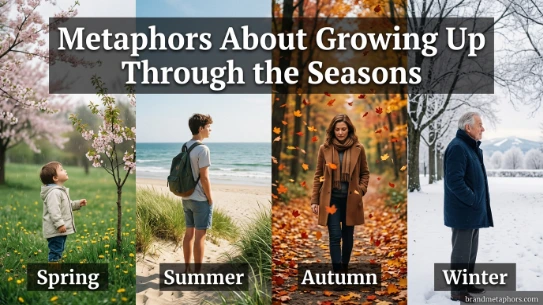
Another timeless metaphor compares growing up to the changing seasons of the year. Childhood blooms like spring, teenage years burn with summer intensity, adulthood settles into autumn wisdom, and old age reflects winter calm.
This metaphor resonates because nature mirrors human change so perfectly.
Meaning Behind the Metaphor
The seasons symbolize:
- Natural transformation
- Emotional cycles
- Aging and renewal
- The passing of time
Example Sentence
“She was standing between summer and autumn, no longer a child but not fully grown.”
Alternative Ways to Say It
- Youth is springtime energy
- Adolescence is a summer storm
- Adulthood is autumn harvest
- Aging is winter silence
Emotional Details
Spring suggests innocence and fresh beginnings. Autumn carries nostalgia and maturity. Winter often symbolizes reflection and wisdom.
Literary Reference
Poets like Robert Frost frequently used seasons to describe stages of life. His natural imagery gives emotional weight to ordinary moments.
Interactive Prompt
Choose one season that best represents your current stage of life. Write five words describing why.
Writing Tip
Seasonal metaphors work especially well in:
- Poetry
- Memoirs
- Instagram captions
- Graduation speeches
Growing Up as a Butterfly Leaving the Cocoon
Perhaps no metaphor captures transformation more beautifully than the butterfly metaphor. A child begins hidden and protected, slowly changing until they emerge as someone entirely new.
Meaning and Symbolism
This metaphor represents:
- Transformation
- Emotional evolution
- Independence
- Beauty through struggle
The cocoon symbolizes safety, but also limitation. Leaving it requires courage.
Example Sentence
“College became the cocoon where she slowly unfolded her wings.”
Alternative Comparisons
- Breaking out of a shell
- Emerging from darkness
- Spreading new wings
- Becoming something unrecognizable
Emotional Impact
Butterfly imagery often carries tenderness and hope. It reminds readers that growth can be painful yet beautiful.
Cultural Reference
Butterflies appear in stories worldwide as symbols of rebirth and maturity. In many cultures, they represent the soul’s transformation.
Practice Exercise
Describe your younger self as a caterpillar. What were you afraid of? What changed you?
Bonus Writing Tip
Avoid overusing the exact word “butterfly.” Try variations like:
- Wings unfolding
- Cracked cocoon
- Emerging colors
These sound fresher and more poetic.
The Tree Metaphor for Personal Growth
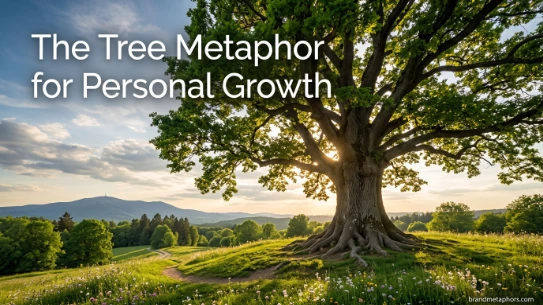
Trees are powerful symbols for growing up because they develop slowly over time. Their roots deepen while their branches stretch toward the sky.
Like people, trees survive storms, seasons, and harsh environments.
Meaning Behind Tree Metaphors
Trees symbolize:
- Stability
- Wisdom
- Family roots
- Emotional resilience
Example Sentence
“Growing up meant learning how to bend like a tree without breaking.”
Alternative Expressions
- Planting roots
- Branching out
- Standing tall
- Weathering storms
Sensory and Visual Imagery
Think of rough bark, rustling leaves, deep roots, and branches reaching toward sunlight.
Real-Life Connection
Parents often describe children as “saplings” needing care before becoming strong on their own.
Interactive Exercise
Draw a tree representing your life:
- Roots = values or family
- Trunk = your identity
- Branches = dreams and future goals
Bonus Tip for Creative Writers
Tree metaphors work well in emotional scenes because they naturally suggest time and endurance.
Metaphors About Growing Up and Climbing Mountains
Growing up can feel exhausting, which is why mountain metaphors are so relatable. Every stage of life becomes another climb.
Some hills are easy. Others leave us breathless.
Meaning of the Metaphor
Mountains symbolize:
- Challenges
- Ambition
- Achievement
- Emotional endurance
Example Sentence
“Turning eighteen felt like reaching one mountain peak only to discover another waiting ahead.”
Alternative Comparisons
- Climbing uphill
- Reaching the summit
- Carrying emotional weight
- Scaling impossible heights
Emotional Depth
This metaphor reflects both struggle and accomplishment. It acknowledges that maturity requires effort.
Cultural Reference
Many hero stories, from ancient myths to modern films, include mountain climbing as a symbol of transformation.
In The Lord of the Rings: The Return of the King, difficult journeys across mountains symbolize emotional and moral growth.
Reader Prompt
Think of a difficult moment in your life. If it were a mountain, what would its terrain look like?
Social Media Tip
Mountain metaphors create motivational captions:
- “Still climbing.”
- “The view changes after every hard step.”
Growing Up as Learning to Sail the Ocean
The ocean metaphor captures uncertainty beautifully. Childhood may feel like floating near shore, while adulthood pushes people into deeper waters.
Meaning Behind Ocean Metaphors
The sea often symbolizes:
- Uncertainty
- Emotional depth
- Freedom
- Fear of the unknown
Example Sentence
“Growing up was learning how to steer through storms without sinking.”
Alternative Expressions
- Drifting into adulthood
- Navigating rough waters
- Sailing toward the horizon
- Surviving emotional tides
Sensory Imagery
Salt air, crashing waves, dark storms, and endless blue horizons all strengthen the emotional effect.
Literary Connection
In Moby-Dick, the ocean represents obsession, fear, and humanity’s struggle against forces larger than itself.
Practice Exercise
Write about adulthood as a storm at sea. What acts as your anchor?
Bonus Writing Idea
Ocean metaphors pair beautifully with emotions like anxiety, freedom, loneliness, or hope.
The Metaphor of Growing Up as Building a House
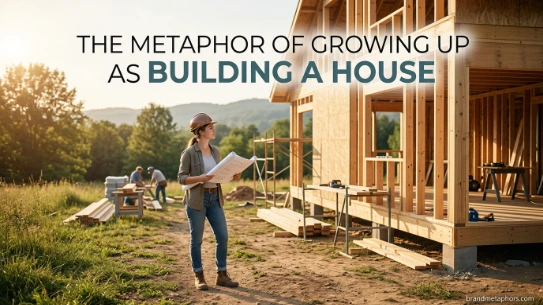
Another meaningful metaphor compares growing up to constructing a house brick by brick.
Each experience becomes part of the structure.
Meaning and Symbolism
This metaphor represents:
- Identity formation
- Responsibility
- Emotional foundation
- Long-term growth
Example Sentence
“Every mistake became another brick in the house she was building.”
Alternative Expressions
- Laying foundations
- Building character
- Repairing cracks
- Creating emotional walls
Emotional Details
Houses can symbolize safety, memory, and belonging. A damaged house may reflect emotional struggles.
Real-Life Example
People often say childhood “shapes the foundation” of adulthood. The metaphor appears naturally in psychology and self-help discussions.
Interactive Prompt
If your personality were a house:
- What rooms exist?
- Which room do you hide in most?
- Which room still needs repair?
Bonus Tip
This metaphor works especially well in reflective essays and personal storytelling.
Metaphors About Growing Up Through Fire and Forging
Some growth happens gently. Other growth happens painfully. Fire metaphors capture difficult transformation.
Meaning Behind Fire Metaphors
Fire symbolizes:
- Painful lessons
- Strength through hardship
- Emotional refinement
- Survival
Example Sentence
“The struggles of adolescence forged him like iron in a furnace.”
Alternative Ways to Express It
- Tempered by fire
- Burned into wisdom
- Melted and reshaped
- Rising from ashes
Emotional Power
Fire metaphors feel intense and dramatic. They are excellent for describing hardship and resilience.
Cultural Reference
The phoenix myth remains one of the strongest symbols of rebirth. The bird burns before rising stronger than before.
Writing Exercise
Describe a painful lesson in your life using fire imagery. Was it a spark, wildfire, or slow-burning flame?
Bonus Social Media Caption
“Some growth only happens in the fire.”
Growing Up as Turning Pages in a Book
Books naturally symbolize life because stories unfold chapter by chapter.
Meaning Behind the Metaphor
Books represent:
- Memory
- Personal evolution
- Life stages
- Reflection
Example Sentence
“Graduation felt like turning the final page of one chapter and beginning another.”
Alternative Expressions
- Starting a new chapter
- Rewriting your story
- Closing old pages
- Becoming the author of your life
Emotional Imagery
This metaphor creates feelings of nostalgia, anticipation, and curiosity.
Literary Connection
Coming-of-age stories like To Kill a Mockingbird use childhood memories as chapters leading toward maturity.
Interactive Exercise
Name the chapters of your life so far. For example:
- “The Year of Fear”
- “The Summer Everything Changed”
- “Learning to Let Go”
Bonus Writing Tip
Book metaphors are highly relatable because nearly everyone understands the feeling of beginning a new chapter.
Metaphors About Growing Up and Becoming the Sky
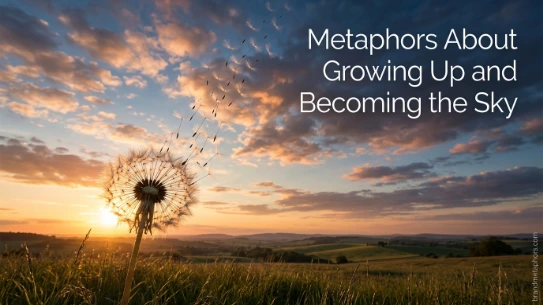
Some metaphors focus less on struggle and more on emotional expansion. The sky metaphor suggests becoming larger, freer, and more open over time.
Meaning and Symbolism
The sky symbolizes:
- Freedom
- Possibility
- Emotional growth
- Perspective
Example Sentence
“As she grew older, her mind widened like the evening sky.”
Alternative Expressions
- Expanding horizons
- Learning to breathe wider
- Carrying clouds and sunlight together
- Becoming open as the sky
Emotional Tone
This metaphor feels peaceful and philosophical rather than dramatic.
Cultural Reference
Many spiritual traditions use sky imagery to symbolize wisdom and awareness.
Practice Prompt
If your emotions were weather patterns in the sky, what would today look like?
Bonus Creative Tip
Sky metaphors pair beautifully with themes of healing, freedom, and self-discovery.
How to Create Your Own Metaphors About Growing Up
The strongest metaphors often come from personal experience. You do not need to sound overly poetic. You only need honest imagery.
Step 1: Choose an Emotion
Ask yourself:
- Does growing up feel exciting?
- Lonely?
- Confusing?
- Liberating?
Step 2: Compare It to Something Physical
Think of:
- Nature
- Weather
- Journeys
- Buildings
- Animals
- Music
Step 3: Add Sensory Details
Strong metaphors include:
- Sound
- Texture
- Color
- Movement
Instead of: “Growing up was hard.”
Try: “Growing up felt like walking barefoot across hot pavement, unsure where the shade was.”
Quick Practice Activity
Finish these prompts:
- Growing up is like…
- Adulthood feels like…
- Childhood disappeared like…
Bonus Tip for Writers
Avoid clichés by adding personal details. Instead of “life is a journey,” say: “Life felt like a late-night bus ride with missing street signs.”
Specificity creates originality.
FAQs About Metaphors About Growing Up
1. Why are metaphors about growing up important?
Metaphors help people express emotional experiences in vivid and relatable ways. They make complex feelings easier to understand and remember.
2. What is the most common metaphor for growing up?
Life as a journey or road is one of the most popular metaphors because it reflects movement, change, and discovery over time.
3. How can I use growing-up metaphors in writing?
You can use them in poetry, essays, stories, speeches, journals, captions, and social media posts to make your language more emotional and imaginative.
4. Are metaphors useful for children and students?
Yes. Metaphors help students think creatively and understand emotions or abstract ideas more clearly.
5. How do I create original metaphors?
Focus on personal experiences, emotions, and sensory details. Compare feelings to real-world objects, places, or natural events in unique ways.
Conclusion
Growing up is one of the most universal experiences in human life, yet it often feels impossible to describe directly. That is why metaphors matter so deeply. They transform confusion into imagery, emotions into stories, and memories into something tangible.
Sometimes growing up feels like climbing a mountain. Other times it feels like turning a page, weathering a storm, or stepping onto an endless road beneath a changing sky. Each metaphor reveals a different truth about maturity and self-discovery.
The beauty of these comparisons lies in their flexibility. No single metaphor fully explains growing up because every person experiences change differently. Your journey may resemble a forest, a wildfire, or an unfinished song. What matters is finding images that feel honest to you.
So the next time you struggle to explain who you are becoming, try speaking in metaphor. You may discover that the heart often understands imagery long before it understands plain words.