
Introduction
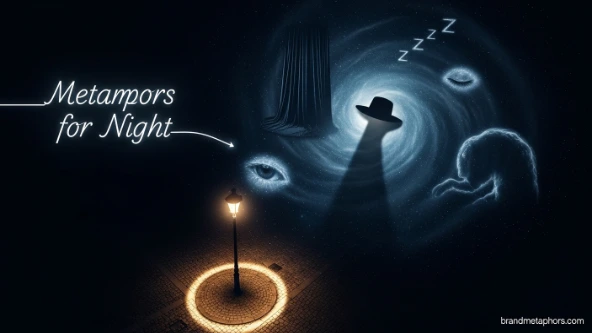
The world changes when night arrives. Streetlights flicker awake. Crickets begin their hidden orchestra. Windows glow like floating lanterns in the distance, and the sky stretches above us like an endless black ocean sprinkled with silver dust. Night has always carried mystery. It can feel peaceful, lonely, romantic, frightening, or magical—all at once.
That is why writers, poets, storytellers, and even everyday people often search for powerful metaphors for night. A simple comparison can transform ordinary darkness into something vivid and emotional. Instead of saying “it was nighttime,” you might describe night as a velvet curtain falling over the world or a silent wolf prowling through the streets. Suddenly, readers do not just see the night—they feel it.
Metaphors for night are useful in creative writing, poetry, journaling, speeches, captions, storytelling, and social media posts. They help create mood, deepen emotion, and paint memorable mental pictures. Whether you want your writing to feel dreamy, eerie, romantic, or dramatic, the right metaphor can completely change the atmosphere.
In this guide, you will explore powerful and imaginative metaphors for night, learn what they mean, see examples in action, and discover ways to use them creatively in your own writing. You’ll also find exercises, storytelling ideas, and bonus tips to make your descriptions more vivid and unforgettable.
Why Metaphors for Night Matter in Writing
Night is more than a time of day. It often symbolizes emotions, secrets, endings, beginnings, fear, or peace. Because of this, writers use metaphors to give night emotional depth and personality.
A metaphor compares one thing to another without using “like” or “as.” Instead of saying:
- “The night was dark.”
You might say:
- “Night wrapped the city in a black cloak.”
The second sentence feels cinematic and alive.
Why these metaphors are powerful
- They create mood instantly.
- They help readers visualize scenes.
- They make writing more emotional.
- They add poetry and beauty to simple ideas.
- They make descriptions memorable.
Real-life example
Think about classic novels or films. In many mystery stories, night becomes a character itself—watching, hiding, whispering, or threatening. In romance stories, night often feels soft, intimate, and magical.
Night changes depending on the metaphor you choose.
Night as a Velvet Curtain
One of the most classic metaphors for night is the image of a velvet curtain falling over the world.
Meaning and symbolism
Velvet feels soft, luxurious, smooth, and rich. Comparing night to velvet creates a calm and elegant atmosphere.
Example sentence
- “A velvet curtain of darkness drifted across the hills.”
Alternative ways to express it
- Midnight’s velvet blanket
- A satin sky
- The soft cloak of darkness
- A curtain of ink
Emotional effect
This metaphor creates:
- Peacefulness
- Comfort
- Romance
- Quiet beauty
Mini storytelling example
Imagine sitting beside a campfire while the last orange glow fades from the horizon. Slowly, darkness settles over the forest. The trees disappear into shadow, and the stars begin to emerge. The world feels wrapped in velvet silence.
This metaphor works beautifully in poetry, fantasy writing, and emotional storytelling.
Night as an Endless Ocean
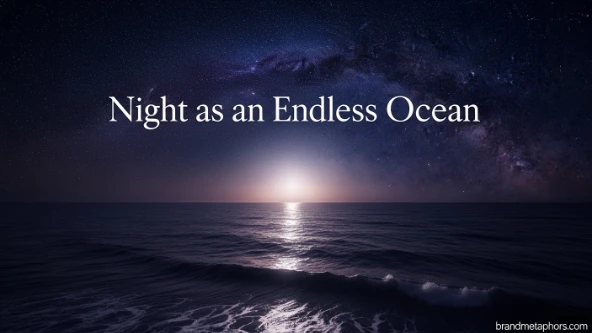
Another powerful metaphor describes night as a vast ocean.
Meaning and symbolism
The ocean is deep, mysterious, endless, and sometimes dangerous. Comparing night to an ocean creates a feeling of wonder or uncertainty.
Example sentence
- “The city floated beneath an ocean of midnight blue.”
Alternative expressions
- A sea of darkness
- Midnight tides
- A black horizon without end
- Waves of shadow
Sensory details
This metaphor often brings:
- Cool air
- Silence
- Moonlight reflections
- A sense of drifting or floating
Literary connection
Many poets describe stars as ships or islands floating in the dark sea of the night sky. Sailors throughout history also relied on the stars while traveling through real oceans, making this metaphor especially meaningful.
Best uses
Use this metaphor when writing:
- Adventure stories
- Reflective journal entries
- Fantasy worlds
- Emotional or lonely scenes
Night as a Blanket Covering the Earth
This is one of the most comforting metaphors for night.
Meaning and symbolism
A blanket represents warmth, rest, and protection. When night becomes a blanket, darkness feels safe instead of frightening.
Example sentence
- “Night spread its quiet blanket across the sleeping town.”
Alternative ways to say it
- Darkness tucked the world into bed
- The earth rested beneath a midnight quilt
- Shadows covered the land like soft fabric
Emotional tone
This metaphor creates:
- Safety
- Relaxation
- Sleepiness
- Gentleness
Real-life application
Parents often use comforting night metaphors when speaking to children:
- “The stars are tiny lanterns watching over you tonight.”
Simple imagery like this can make nighttime feel magical rather than scary.
Bonus writing tip
Pair blanket metaphors with sensory details:
- Cool wind
- Soft moonlight
- Rustling leaves
- Distant owl calls
These details make scenes feel immersive.
Night as a Silent Predator
Not every metaphor for night feels peaceful. Sometimes night represents danger.
Meaning and symbolism
A predator moves quietly, hides in darkness, and creates tension. This metaphor works perfectly for thrillers, mysteries, or horror stories.
Example sentence
- “Night stalked the streets like a hungry wolf.”
Alternative expressions
- Darkness crept like a panther
- Midnight hunted in silence
- Shadows prowled through the alleyways
Emotional effect
This creates:
- Fear
- Suspense
- Uneasiness
- Mystery
Mini storytelling moment
A lone traveler walks through an empty city street. Windows are dark. Footsteps echo behind him, though nobody is there. Above, clouds swallow the moon. Night no longer feels peaceful—it feels alive.
Cultural connection
In many myths and legends, dangerous creatures emerge after sunset. Vampires, werewolves, ghosts, and spirits often belong to the night, which strengthens predator imagery in storytelling.
Night as a Kingdom of Stars
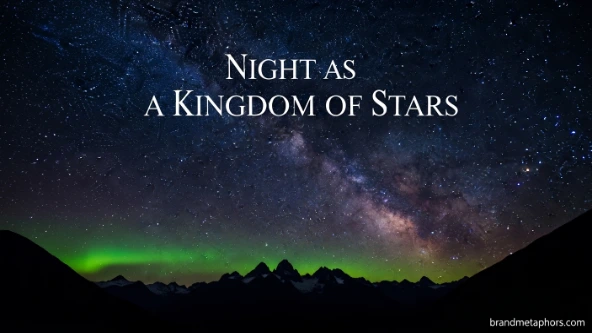
This metaphor transforms night into a magical realm.
Meaning and symbolism
Night becomes a royal kingdom ruled by stars, moons, and constellations. It creates wonder and fantasy.
Example sentence
- “The heavens opened into a glittering kingdom of stars.”
Alternative ways to express it
- A celestial empire
- The queendom of moonlight
- A palace of constellations
- A crown of silver lights
Emotional tone
This metaphor inspires:
- Awe
- Imagination
- Curiosity
- Beauty
Creative writing idea
Fantasy writers often describe the moon as a queen or king ruling over the sky. Stars become loyal subjects shining across the heavens.
Social media caption idea
- “Tonight the stars built a kingdom above us.”
This metaphor works beautifully for:
- Instagram captions
- Poetry
- Fantasy novels
- Romantic writing
Night as a Prison of Loneliness
Sometimes night intensifies human emotions.
Meaning and symbolism
Darkness can make people feel isolated, trapped, or emotionally overwhelmed.
Example sentence
- “He sat alone inside the prison of the night.”
Alternative expressions
- A cage of darkness
- Midnight walls closing in
- Shadows locking the world away
Emotional effect
This metaphor creates:
- Sadness
- Isolation
- Reflection
- Emotional depth
Real-life example
People often feel more emotional late at night. Thoughts grow louder when the world becomes quiet. This is why many songs, poems, and journals written at night carry deep emotional intensity.
Writing tip
If you use darker metaphors, balance them with emotional detail:
- trembling hands
- distant sirens
- empty streets
- fading lights
These elements strengthen atmosphere.
Night as a Painter Using Shadows
This metaphor gives night artistic personality.
Meaning and symbolism
Night becomes an artist painting the world with darkness and moonlight.
Example sentence
- “Night painted silver shadows across the lake.”
Alternative ways to say it
- Darkness brushed the hills in black ink
- Midnight colored the sky with indigo
- The moon painted pale rivers of light
Emotional tone
This metaphor creates:
- Creativity
- Beauty
- Elegance
- Dreaminess
Literary inspiration
Many famous painters, including Vincent van Gogh, captured the emotional beauty of nighttime skies in artwork. Paintings such as The Starry Night show how artistic and emotional night can feel.
Bonus tip for writers
Use color words when building painting metaphors:
- indigo
- silver
- charcoal
- midnight blue
- violet-black
Color-rich descriptions make scenes vivid.
Night as a Giant Curtain of Secrets
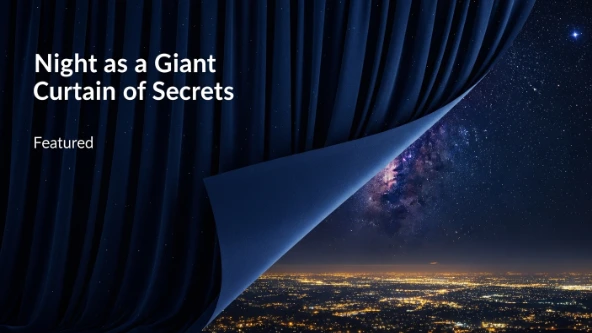
Night often hides things from view, making it perfect for mystery metaphors.
Meaning and symbolism
Darkness conceals truth, secrets, and hidden emotions.
Example sentence
- “The night hid the town beneath a curtain of secrets.”
Alternative expressions
- Shadows swallowed the truth
- Darkness concealed every whisper
- Midnight buried the evidence
Emotional effect
This metaphor creates:
- Curiosity
- Mystery
- Suspense
- Intrigue
Best uses
Perfect for:
- Detective fiction
- Psychological thrillers
- Crime stories
- Dramatic storytelling
Mini storytelling example
A stranger disappears into the foggy darkness. The streets fall silent. Somewhere behind shuttered windows, secrets wait unseen.
That is the power of night metaphors—they transform ordinary scenes into cinematic moments.
Creative Exercises for Practicing Night Metaphors
The best way to master metaphors is through practice.
Exercise 1: Finish the sentence
Complete these creatively:
- “Night was a…”
- “The moon floated like…”
- “Darkness wrapped the city in…”
Try to avoid obvious answers.
Exercise 2: Use emotions
Describe night through different feelings:
- Happy night
- Lonely night
- Scary night
- Romantic night
Notice how your metaphors change.
Exercise 3: Build sensory imagery
Add:
- sounds
- smells
- textures
- temperature
Example:
- “Night smelled of rain and wet pavement.”
Exercise 4: Social media challenge
Write three nighttime captions using metaphors.
Example:
- “The sky wore diamonds tonight.”
Exercise 5: Story prompt
Write a short paragraph beginning with:
- “The night opened its dark wings above the town…”
This instantly creates atmosphere.
Bonus Tips for Using Metaphors for Night Effectively
Strong metaphors feel natural, emotional, and specific.
Avoid clichés when possible
Some phrases become overused:
- dark as night
- black as coal
- silent as the grave
Try fresher imagery instead.
Match the mood
Choose metaphors that fit the emotion:
- Soft metaphors for romance
- Sharp metaphors for fear
- Dreamy metaphors for fantasy
Use contrast
Night becomes more vivid beside light:
- glowing lanterns
- silver moonlight
- golden windows
Keep descriptions balanced
Too many metaphors can overwhelm readers. Mix poetic lines with simple sentences.
Read poetry for inspiration
Poets often create incredible nighttime imagery. Reading poems helps you discover new ways to describe darkness, stars, silence, and moonlight.
Using Night Metaphors in Daily Life and Social Media
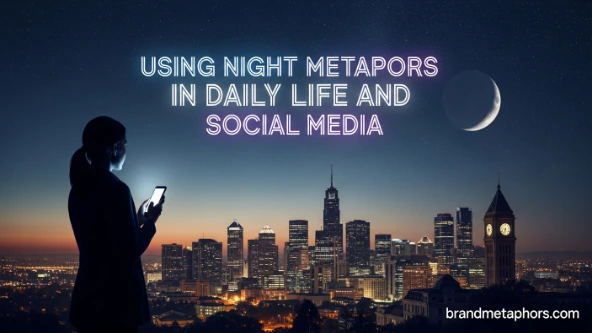
Metaphors are not only for novels and poetry. They also work beautifully in everyday communication.
Instagram captions
- “Night stitched stars across the sky.”
- “The moon kept watch over the sleeping world.”
- “Darkness bloomed softly tonight.”
Journaling prompts
- What emotion does night remind you of?
- If night were a person, who would it be?
- What colors describe your ideal night?
Creative conversations
Instead of saying:
- “It’s a beautiful night.”
Try:
- “The sky looks like spilled ink and silver dust.”
It instantly sounds more expressive and memorable.
Songwriting and poetry
Night metaphors are common in music because they create emotional atmosphere quickly. Themes of heartbreak, dreams, loneliness, and hope often feel stronger beneath nighttime imagery.
FAQs About Metaphors for Night
1. What is a metaphor for night?
A metaphor for night compares nighttime to another object, feeling, or experience without using “like” or “as.” For example, “Night is a velvet curtain.”
2. Why do writers use night metaphors?
Writers use them to create mood, emotion, imagery, and atmosphere. They help readers feel scenes more deeply.
3. What are some beautiful metaphors for night?
Popular examples include:
- Night as a velvet blanket
- Night as an endless ocean
- Night as a kingdom of stars
- Night as a silent predator
4. Can night metaphors be positive and negative?
Yes. Night can symbolize peace, romance, mystery, fear, loneliness, or imagination depending on the metaphor used.
5. How can I create my own metaphor for night?
Think about:
- emotions connected to night
- colors and textures
- sounds and memories
- natural elements like oceans, forests, or storms
Then compare night to something that shares those qualities.
Conclusion
Night has inspired human imagination for centuries. It is not merely darkness between sunset and sunrise—it is emotion, mystery, silence, beauty, fear, and wonder woven together beneath the stars. Through metaphors, night becomes far more than a backdrop. It transforms into velvet, oceans, predators, kingdoms, prisons, paintings, and secret worlds waiting to be explored.
The best metaphors for night do more than decorate writing. They create atmosphere readers can feel in their bones. A single vivid comparison can turn an ordinary sentence into something unforgettable.
Whether you are writing poetry, fiction, captions, journals, or personal reflections, nighttime imagery gives your words emotional depth and cinematic beauty. The next time darkness falls outside your window, pause for a moment and observe it carefully. Listen to the silence. Watch the moonlight. Notice the shadows.
You may discover that night is speaking in metaphors already.